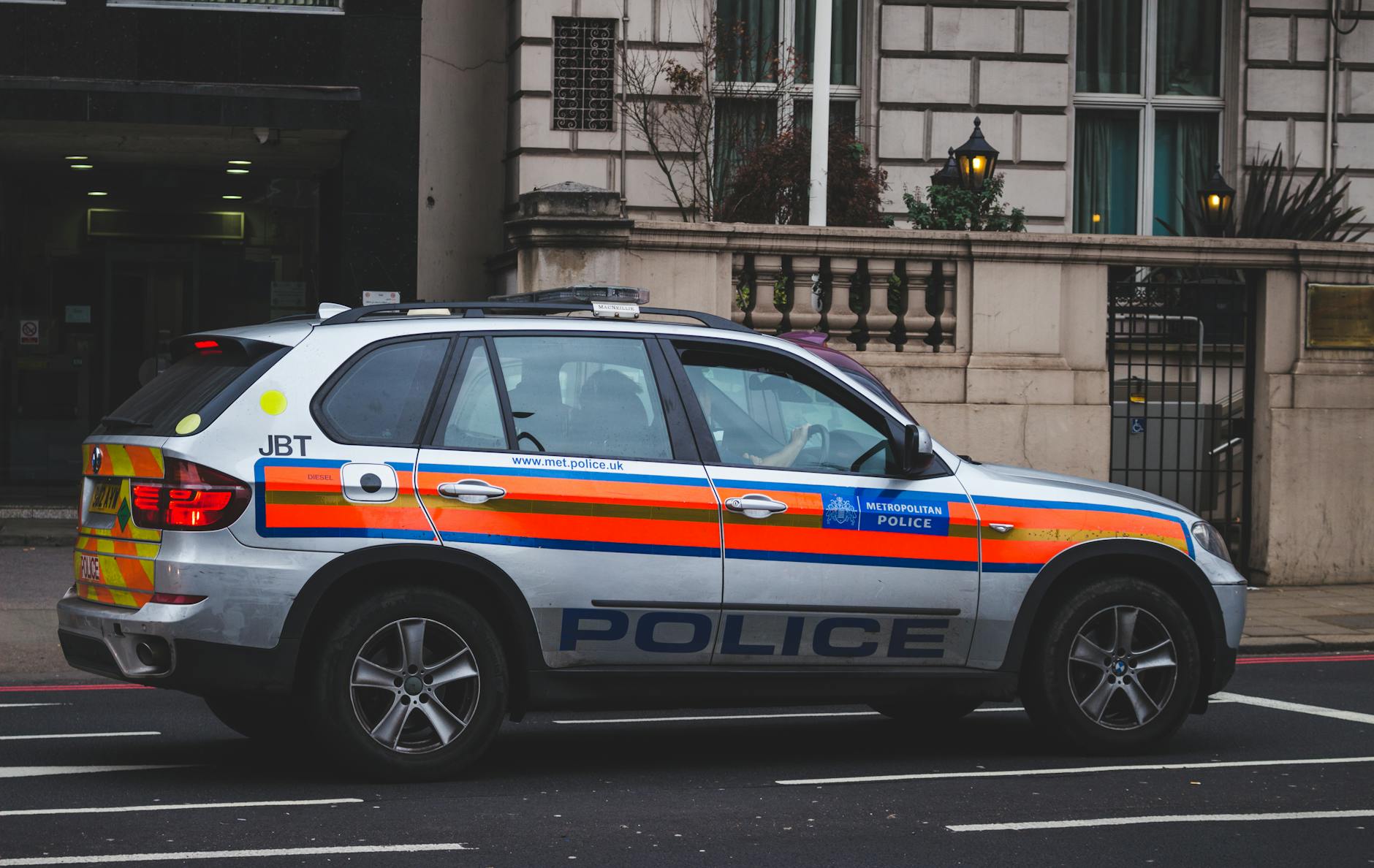
In This Guide
This guide answers every common UK driving question — from what age you can drive and how to get a provisional licence, to driving test costs, theory test pass marks, MOT rules, and what is and isn't legal on UK roads. What Age Can You Drive in the UK?Quick Answer What age can you drive in the UK?You can start driving a car on public roads at age 17 in the UK. You can apply for a provisional driving licence from age 15 years and 9 months. At 16, you can drive a moped (up to 50cc) with a provisional licence and CBT certificate. There is no upper age limit for driving in the UK, but you must renew your licence every 3 years from age 70.
Provisional Driving Licence — Cost and How to ApplyQuick Answer How much is a provisional driving licence?A provisional driving licence costs £34 when applied for online via gov.uk/apply-for-your-first-provisional-driving-licence. Paper applications cost £43. You must be at least 15 years and 9 months old to apply. The licence arrives within 1 week for online applications. Quick Answer How to apply for a provisional driving licence?Apply online at gov.uk/apply-for-your-first-provisional-driving-licence. You need: your UK passport or birth certificate, National Insurance number, your address for the last 3 years, and a digital photo (or your passport photo is used automatically). Pay £34 by debit or credit card. The licence arrives within 1 week. Quick Answer Can you drive with a provisional licence?Yes — but only on public roads with a qualified supervising driver who: is aged 21 or over, has held a full driving licence for at least 3 years, and is sat in the passenger seat. The car must display L plates front and rear. Provisional licence holders cannot drive on motorways alone — but can with an approved driving instructor.
How Many Driving Lessons Do You Need?Quick Answer How many driving lessons do you need?The DVSA recommends an average of 45 hours of professional lessons plus 22 hours of private practice. In reality, most learners take between 20 and 60 lessons depending on natural ability, how often they practise privately, and how frequently they have lessons. Those who practise privately between lessons typically pass faster and with fewer paid lessons. Quick Answer How much are driving lessons?Driving lessons cost approximately £35–45 per hour in 2026, though prices vary by location. London and South East lessons are typically £45–60/hour. Northern England and Scotland average £30–40/hour. Block booking 10 lessons in advance typically saves £50–£100 vs paying per lesson.
Driving Theory Test — Cost, Length and Pass MarkQuick Answer How much is the driving theory test?The driving theory test costs £23 in 2026. Book at gov.uk/book-theory-test. You need your provisional driving licence to book. Theory test results are valid for 2 years — you must pass your practical test within this period. Quick Answer How long is the driving theory test?The theory test has two parts: the multiple choice section (57 minutes, 50 questions) and the hazard perception section (approximately 20 minutes). Total time in the test centre is approximately 1 hour 25 minutes including introduction and results. You must pass both sections in the same sitting.
Theory test tip: Use the official DVSA theory test app (£4.99) — it contains the full question bank. Most people need 4–6 weeks of revision. The hazard perception test rewards early clicks — click as soon as you see a developing hazard, not after it has fully developed. Practical Driving Test — Cost, Length and What to ExpectQuick Answer How much is a practical driving test?The practical driving test costs £62 on weekdays and £75 on evenings, weekends and bank holidays in 2026. Book at gov.uk/book-your-driving-test. You need your provisional licence and theory test pass certificate. You can take the test in your instructor's car or your own car (if it meets DVSA requirements). Quick Answer How long is the driving test?The practical driving test lasts approximately 40 minutes of actual driving, plus time for eyesight check, vehicle safety questions (“show me, tell me”), and results. Total time at the test centre is approximately 1 hour. Quick Answer What are the manoeuvres on the driving test?The examiner will ask you to complete one of the following manoeuvres: parallel parking, bay parking (reversing in or driving in then reversing out), or pulling up on the right side of the road. You will also complete an independent driving section (around 20 minutes) following sat-nav directions or road signs. An emergency stop may also be included — requested in about 1 in 3 tests.
Quick Answer How many minors can you have on the driving test?You can have up to 15 minor (driver) faults and still pass. One major (serious or dangerous) fault means an automatic fail. The same minor fault repeated multiple times can be upgraded to a major. Accumulating 16 or more minors also results in a fail. Quick Answer What to bring to your driving test?You must bring: your provisional driving licence (photocard) — no licence = test cancelled and fee forfeited. If you have an old-style paper licence, you also need your passport. If taking the test in your own car: a valid MOT certificate (if applicable), valid insurance, and L plates displayed. Arrive 10 minutes early. Driving Licence Number, Categories and ChangesQuick Answer Where is my driving licence number?Your driving licence number is printed on the front of your photocard licence in field 5. It is 16 characters long — derived from your surname, date of birth, and initials. Format: first 5 letters of surname + date of birth encoded + initials + check digits. If you cannot find your physical licence, check at gov.uk/view-driving-licence using your NI number. Quick Answer What is the driver number on a driving licence?The driver number (field 5 on your photocard) is a unique 16-character identifier assigned to you by DVLA. It is different from your licence number in the legal sense — the driver number stays with you permanently even if you get a replacement licence. It is used by insurance companies, DVLA, and the courts. Quick Answer How to change address on driving licence?Update your driving licence address at gov.uk/change-address-driving-licence. It is free and takes 5 minutes. You must update within 28 days of moving — failure to do so is technically an offence. A new photocard is posted to your new address within 2–3 weeks. Also update your vehicle log book (V5C) address at the same time. Quick Answer How to change name on driving licence?Apply for a name change at gov.uk/change-name-driving-licence. You need your current licence and evidence of the name change (marriage certificate, deed poll, or gender recognition certificate). The fee is £14. A new photocard is issued with your new name. You must also update your vehicle insurance with your new name. Quick Answer What is category B on a driving licence?Category B is the standard car driving entitlement — vehicles up to 3,500kg with up to 8 passenger seats. It is what most people get when they pass their UK driving test. Category B also automatically includes subcategory B1 (light quadricycles) and BE (car with trailer up to 3,500kg combined).
Quick Answer What motorbike can I ride with a full driving licence?A full car (Category B) driving licence automatically includes entitlement to ride mopeds (up to 50cc, 45 km/h) without L plates — but only if you are over 21 and have held the licence for over 2 years. To ride a motorcycle of any size, you need a separate motorcycle licence (A1, A2, or A category). You cannot ride a motorcycle on your car licence alone. Driving Without MOT — Rules and PenaltiesQuick Answer Can you drive without an MOT?It is illegal to drive a vehicle on a public road without a valid MOT — with one exception: you can drive directly to a pre-booked MOT test. The penalty for driving without MOT is a fine of up to £1,000. Your insurance may also be invalidated, as most policies require a valid MOT. Check your MOT status free at gov.uk/check-mot-status. Quick Answer When is it legal to drive without an MOT certificate?The only legal exceptions are: driving directly to a pre-booked MOT test appointment, driving to have the vehicle broken down/repaired after a failed MOT (in some circumstances), or if the vehicle is exempt from MOT (manufactured before 1960, or some historic vehicles pre-1980). There is no grace period — the MOT must be valid on the day of driving. Quick Answer Can I drive my car if it fails its MOT?If your car fails its MOT: you can drive it home or to a garage to be repaired, provided the failure is not a dangerous defect (which would make it illegal to drive at all). If the tester identifies a dangerous fault, the car must not be driven on a public road. A failure notice is not the same as being banned from driving the car — it depends on the severity of the failure. Insurance warning: Most car insurance policies require your vehicle to have a valid MOT. Driving without MOT may invalidate your insurance — meaning you could be driving uninsured even if you pay premiums. Check your policy wording before driving without a valid MOT. UK Driving Rules — What Is and Isn't LegalQuick Answer Is it illegal to drive barefoot?No — driving barefoot is not illegal in the UK. There is no law that requires you to wear shoes while driving. However, if barefoot driving contributes to an accident and a police officer judges you were not in proper control, you could face a careless driving charge. The Highway Code recommends suitable footwear that does not restrict ankle movement. In practice, barefoot driving is uncommon but not an offence in itself. Quick Answer Is it illegal to drive in flip flops?Flip flops are not explicitly banned by UK law. However, if flip flops prevent you from operating the pedals correctly and cause or contribute to an accident, you could be charged with driving without due care and attention. The Highway Code advises wearing footwear that allows you to operate controls properly. Loose or ill-fitting footwear is a practical risk even if not a specific offence. Quick Answer Can you drive with a cracked windscreen?It depends on where the crack is. A crack in the driver's primary vision area (a 290mm zone centred on the steering wheel) that is larger than 10mm will cause an MOT fail and is illegal to drive with. A crack outside this zone that is under 40mm wide may be legal but is still a risk. The AA recommends replacing any windscreen with a crack larger than a £1 coin in the driver's line of sight. Quick Answer Can you eat while driving?Eating while driving is not specifically illegal in the UK. However, if it causes distraction and leads to careless driving, you can be charged with driving without due care and attention — up to £5,000 fine and 9 penalty points. Police do have the power to stop and fine drivers if they judge their driving to be careless, including due to eating or drinking non-alcoholic drinks. Quick Answer Can you wear headphones while driving?Wearing headphones while driving is not explicitly illegal in the UK, but it is strongly inadvisable. If wearing headphones prevents you from being aware of your surroundings and causes an accident, you can be charged with careless or dangerous driving. Using a mobile phone via headphones is subject to the same rules as any mobile phone use — fully hands-free is required. Quick Answer Which driving technique can save fuel?Eco-safe driving techniques that save fuel include: smooth acceleration and braking (no harsh inputs), changing up to a higher gear as early as possible (by 2,500 RPM in petrol, 2,000 in diesel), maintaining a steady speed, anticipating traffic to avoid unnecessary braking, switching off the engine when stationary for more than a minute, and keeping tyres inflated to the correct pressure. These can reduce fuel consumption by 10–15%. Quick Answer Why is coasting a bad driving technique?Coasting means travelling with the clutch depressed or in neutral — so the engine is not driving the wheels. It is dangerous because: you have less control of the vehicle, engine braking is not available, it can cause overheating of brakes on long descents, and it can increase fuel consumption. Coasting is flagged as a fault in the driving test. Learner Drivers on MotorwaysQuick Answer Can learner drivers drive on the motorway?Yes — since June 2018, learner drivers in England, Scotland and Wales can drive on motorways, but only with an approved driving instructor (ADI) in a car with dual controls. Learners cannot drive on motorways with a supervising friend or family member. Motorway lessons are voluntary — they are not part of the standard driving test — but are strongly recommended. Driving in France and EuropeQuick Answer What do I need to drive in France?To drive in France you need: your valid full UK driving licence, vehicle registration document (V5C), valid insurance certificate (check your insurer covers EU/France), reflective warning triangle, high-visibility jacket (must be in the car, not the boot), headlight beam deflectors (so UK right-hand headlights don't dazzle oncoming traffic), and a GB or UK sticker (if your number plate does not show the UK national identifier). Speed limits in France: 50 km/h town, 80 km/h single carriageway, 110 km/h dual carriageway, 130 km/h motorway. Quick Answer Which countries drive on the left?Approximately 76 countries drive on the left, including: UK, Ireland, Australia, New Zealand, Japan, India, South Africa, Malta, Cyprus, Jamaica, and most former British colonies. The majority of the world (163 countries) drives on the right. The UK drives on the left due to historical tradition dating back to horse-riding customs. UK Driving Laws Explained 2026Drink driving limits, penalty points, driving without insurance and moreBest Car Insurance UK 2026Compare comprehensive, TPFT and third party car insuranceIs My Car Insured? How to CheckCheck your car insurance status free at askMID in 30 secondsUK Tax Explained 2026Car tax (VED), road tax rules and how to cancelUK Insurance Explained 2026Car insurance groups, GAP insurance, Cat S and Cat N explained Frequently Asked QuestionsWhat age can you drive in the UK? You can drive a car on public roads from age 17 with a provisional licence. You can apply for a provisional licence from age 15 years 9 months. Mopeds can be ridden from age 16. How much is a provisional driving licence? £34 online at gov.uk. £43 by post. You must be at least 15 years 9 months old. Arrives within 1 week for online applications. How many driving lessons do you need? The DVSA recommends 45 hours of professional lessons plus 22 hours of private practice on average. Most learners take 20–60 lessons. Those who practise privately between lessons typically pass faster. How much is the driving theory test? £23 in 2026. Book at gov.uk/book-theory-test. Results valid for 2 years. Must pass both multiple choice (43/50) and hazard perception (44/75) sections. How long is the driving theory test? 57 minutes for multiple choice (50 questions) plus approximately 20 minutes for hazard perception. Total time at the centre is approximately 1 hour 25 minutes. How much is the practical driving test? £62 on weekdays. £75 on evenings, weekends and bank holidays in 2026. Book at gov.uk/book-your-driving-test. How long is the practical driving test? Approximately 40 minutes of driving plus eyesight check, vehicle safety questions, and results. Total time at the test centre is approximately 1 hour. How many minors can you have on the driving test? Up to 15 minor (driver) faults. One major (serious or dangerous) fault means an automatic fail. 16 or more minors also results in a fail. Can you drive without an MOT? No — except to drive directly to a pre-booked MOT test. Penalty: up to £1,000 fine. Your insurance may also be invalidated. Is it illegal to drive barefoot? No — driving barefoot is not illegal in the UK. However, if it causes an accident due to lack of control, you could face a careless driving charge. Can learner drivers drive on the motorway? Yes — since June 2018, but only with an approved driving instructor (ADI) in a dual-control car. Not permitted with a supervising friend or family member. What do I need to drive in France? UK driving licence, V5C, valid insurance, reflective warning triangle, high-vis jacket, headlight beam deflectors, and a GB/UK sticker on your number plate. This article is for informational purposes only. Driving laws, fees and rules change regularly. Always verify with DVLA at gov.uk or a qualified legal adviser before making any driving-related decision. |
UK Driving Guide 2026 — Licence, Tests, Rules & MOT Explained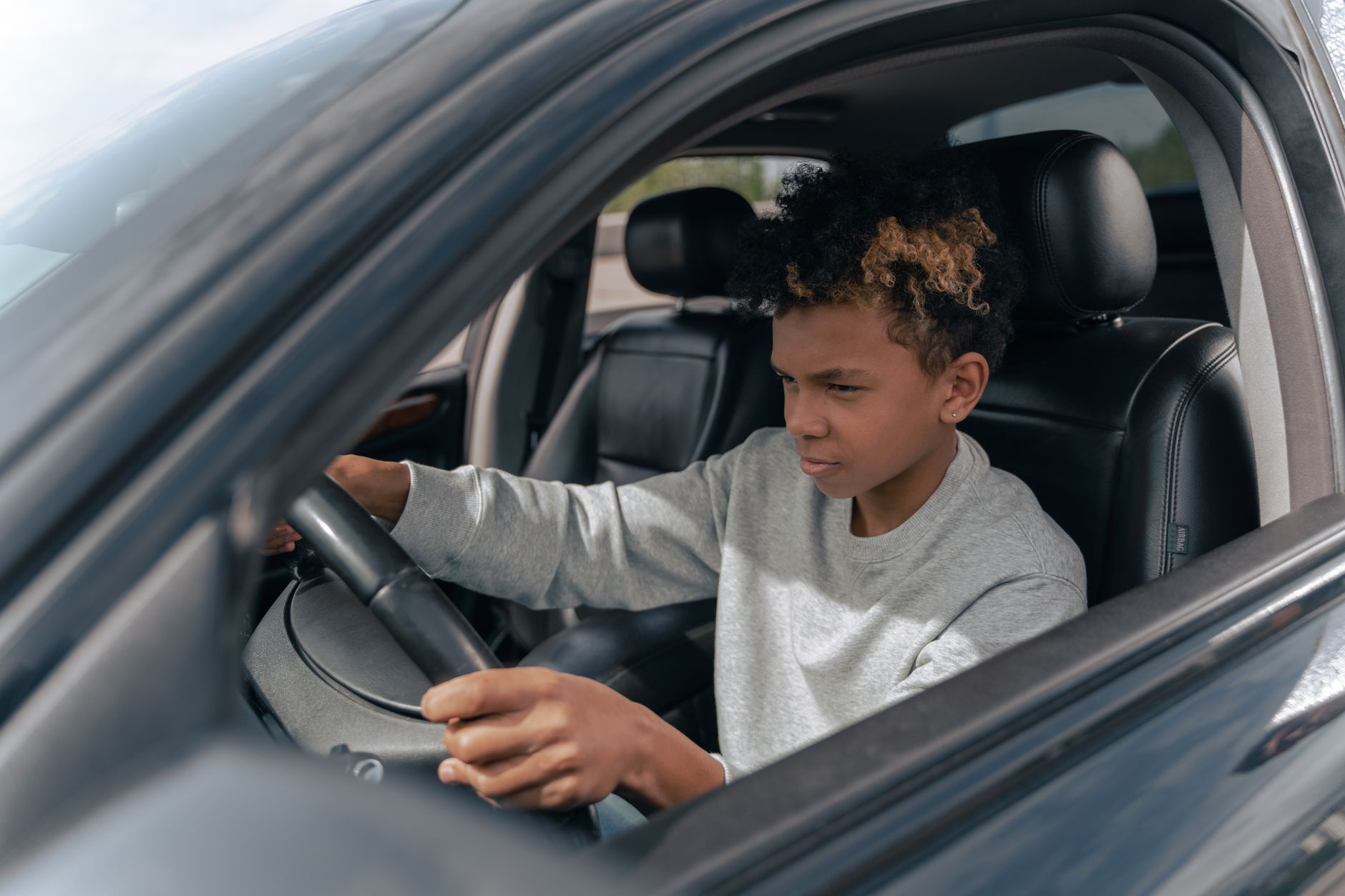
|
|