
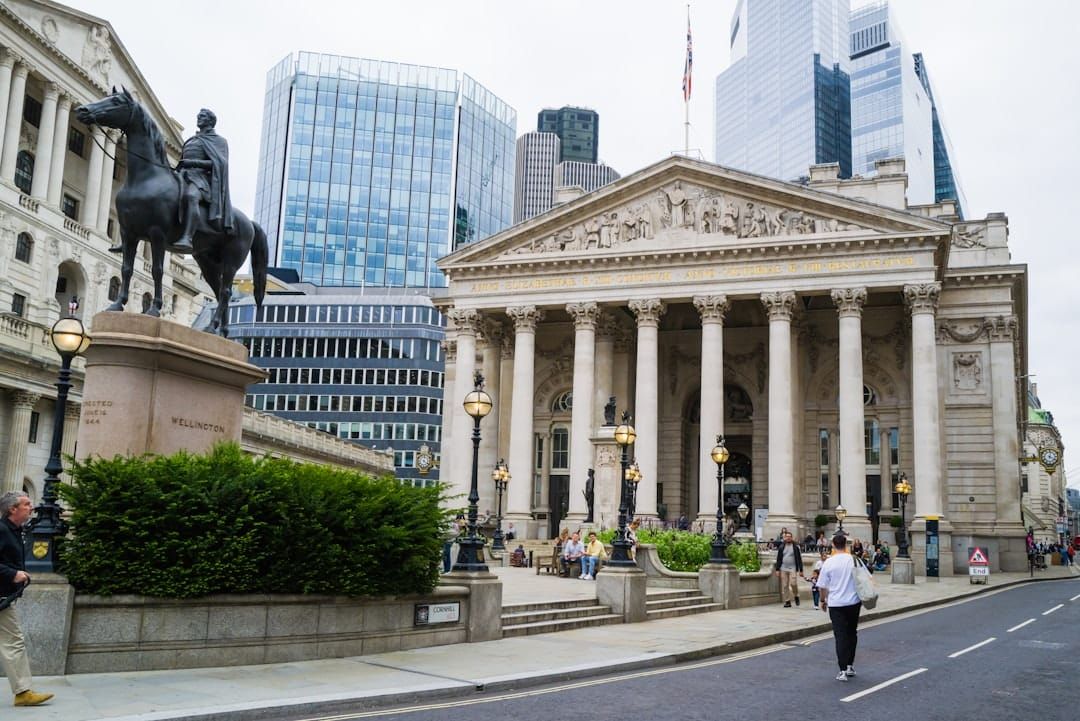
The Bank of England held Bank Rate at 3.75% on 30 April 2026, marking the third consecutive meeting without a change. For UK households, the decision keeps mortgage costs broadly where they are, leaves savings rates flat, and pushes the timing of any future rate cut deeper into the year.
The Monetary Policy Committee, which sets Bank Rate, voted to hold against a backdrop of higher oil prices, weaker sterling, and stickier services inflation. The accompanying Monetary Policy Report flagged that the path back to the 2% inflation target is now expected to take longer than the Bank had assumed at the start of 2026.
This guide walks through what the hold means in practical terms for fixed and variable mortgage holders, savers, ISA investors, and anyone with credit card or personal loan debt. All figures are drawn from the Bank of England, HM Treasury, and the Office for National Statistics.
What Bank Rate is and why it matters
Bank Rate is the interest rate the Bank of England pays to commercial banks holding money with it. It sets the floor for the cost of money across the UK economy. When Bank Rate rises, banks pass higher borrowing costs to households through mortgages, loans, credit cards, and overdrafts. When it falls, those costs ease.
The same mechanism works in reverse for savings. Higher Bank Rate generally pulls easy access savings rates and fixed bond rates upwards. A hold means the status quo continues until the next decision.
The MPC meets eight times a year. The next decision is due in June 2026.
What the hold means for mortgage holders
About 1.6 million UK households are on a tracker or standard variable rate (SVR) mortgage according to UK Finance industry data. Tracker rates move directly with Bank Rate, so a hold means no change to the monthly payment. SVR rates are set by individual lenders and tend to follow Bank Rate with a lag.
For fixed-rate mortgage holders, the picture depends on when your deal ends.
- If your fix ends in the next six months: You will be remortgaging into a market where two-year and five-year fixes have edged higher since February 2026 on the back of stickier inflation expectations. Average two-year fixed rates were around 4.6% at the end of April 2026 according to Bank of England data, broadly unchanged from the start of the year.
- If your fix ends in 12 to 24 months: Markets are currently pricing in modest rate cuts toward the end of 2026 and through 2027, but those expectations have shifted later. Locking in now versus waiting is now a closer call than it was three months ago.
- If you are on a long fix taken in 2023 or 2024: No immediate impact. Continue overpaying within your annual allowance if affordable, since principal reduction always wins regardless of rate path.
The Money and Pensions Service free remortgage guidance through MoneyHelper is the safest first stop for anyone unsure about timing.
What the hold means for savers
Easy access savings rates have stabilised in the 3.0% to 4.5% range across the UK market. The hold means the upward pressure on these rates from earlier rate hikes has now fully worked through. Banks are unlikely to compete much harder on rates while Bank Rate sits flat.
Fixed-term savings bonds tell a different story. One-year fixes from challenger banks were paying 4.3% to 4.6% at the end of April 2026 according to Bank of England effective rate data. Two-year and three-year fixes were lower, reflecting market expectations of cuts further out. For savers willing to lock money away, the curve currently rewards shorter durations.
Cash ISAs follow the same pattern but with the added benefit that interest is paid tax-free. The annual ISA allowance for 2026/27 is £20,000.
What it means for credit cards and personal loans
Credit card APRs and personal loan rates are only loosely tied to Bank Rate. They reflect lender risk pricing, funding costs, and competitive dynamics in the unsecured credit market. A Bank Rate hold does not translate into an automatic change either way.
Borrowers with persistent credit card debt continue to face APRs that often exceed 25%, regardless of where Bank Rate sits. The single highest-impact action remains shifting balances to a 0% balance transfer card and repaying within the promotional window.
What it means for the pound and inflation
Sterling has weakened against the US dollar through April 2026, partly because the rate differential between the UK and the US has narrowed less than markets expected. A weaker pound makes imports more expensive, which feeds directly into petrol prices, food prices, and energy costs.
The Office for National Statistics reported CPI inflation at 3.4% for March 2026, with the Bank of England expecting CPI to peak higher in the second half of the year before returning toward the 2% target. The full Monetary Policy Report on Bank of England website sets out the central case in detail.
What you should do this week
- If your mortgage fix expires this year, request a remortgage offer from your existing lender plus quotes from two whole-of-market sources for comparison.
- If you hold easy access savings paying under 3%, move to a higher-paying account. The gap between the best and worst easy access rates is over 200 basis points and entirely closable through a single transfer.
- Use your remaining 2026/27 ISA allowance early in the tax year rather than waiting until March 2027. Tax-free interest compounds for the full year only if money is in the account.
- Check whether your credit card balance is on a promotional 0% rate. If it has expired, switch.
This article is for informational purposes only and does not constitute financial advice. Always verify rates with official sources and consider speaking to a qualified financial adviser before making decisions about mortgages, savings, or investments.
Frequently asked questions
When is the next Bank of England rate decision?
The Monetary Policy Committee next meets in June 2026. The full schedule is published on the Bank of England website at bankofengland.co.uk.
Will Bank Rate be cut in 2026?
Market pricing as of early May 2026 suggests one or possibly two 25 basis point cuts during the second half of 2026, though this depends heavily on incoming inflation data and global oil prices. The Bank of England has not committed to any path.
Should I fix my mortgage now or wait?
This depends on your existing rate, how long until your current deal ends, and your tolerance for payment uncertainty. The MoneyHelper service operated by the Money and Pensions Service offers free guidance. A qualified mortgage broker can compare your options against the whole market.
Why has the Bank of England not cut rates yet?
The Bank has cited stickier-than-expected services inflation, higher energy prices following recent geopolitical disruption, and a tight labour market. Cutting too early risks letting inflation re-accelerate above the 2% target.
Where can I read the official MPC decision?
The Monetary Policy Summary, voting record, and full Monetary Policy Report are published on the Bank of England website at bankofengland.co.uk on the day of each decision.
Sources and verification
- Bank of England, Monetary Policy Committee decision and minutes, 30 April 2026
- Bank of England, Monetary Policy Report, May 2026
- Office for National Statistics, Consumer Price Inflation, March 2026 release
- HM Treasury, Bank Rate background and policy framework
- UK Finance, Mortgage market data


