The Ofgem energy price cap for April to June 2026 is set at £1,849 per year for a typical dual-fuel household using 11,500 kWh gas and 2,700 kWh electricity. The cap limits the unit rate and standing charge suppliers can charge on default variable tariffs. It does not apply to fixed-rate tariffs. The cap resets quarterly in January, April, July and October (Ofgem, 2026). |
|
Part of:
Best Energy Suppliers UK 2026
|
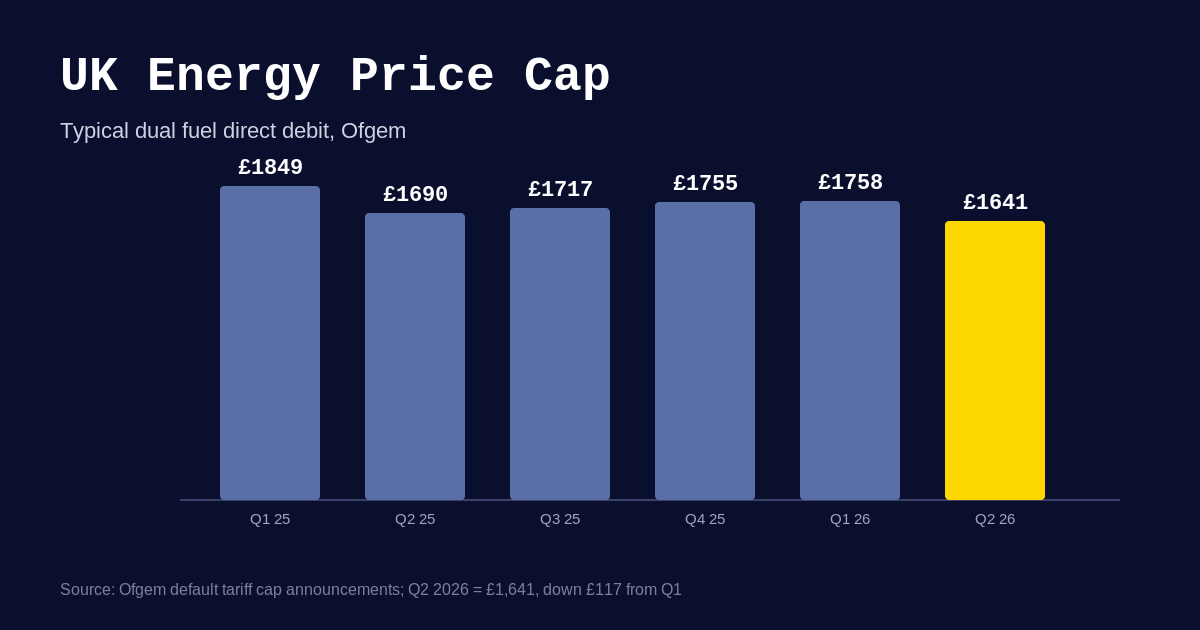
Ofgem confirmed the second-quarter 2026 default tariff cap at £1,641 per year for a typical dual fuel direct debit household, a fall of £117 from the £1,758 cap that applied from 1 January to 31 March 2026. The new rates apply from 1 April 2026 until 30 June 2026 and represent the largest quarterly cap reduction in over two years. The cut is driven by two factors: easing wholesale gas prices following partial recovery from the 2022-2023 energy crisis, and the £6.9 billion bill discount scheme announced in the Autumn 2025 Budget that removes certain renewable energy and policy charges from household bills for three years. This live tracker page sets out the current cap rates, what they mean in practice, and what to expect when Ofgem announces the Q3 2026 cap on 27 May. Key figures at a glance
What is the energy price cap from 1 April 2026The Ofgem default tariff cap is set at £1,641 per year for a typical dual fuel household paying by direct debit between 1 April and 30 June 2026. The cap is a maximum on the unit rate (price per kWh) and the daily standing charge that suppliers can charge on standard variable tariffs, not a maximum on the total annual bill. A household using more energy than the typical Ofgem assumption will pay more than £1,641 even with the cap in place. Ofgem assumes typical consumption of 11,500 kWh of gas and 2,700 kWh of electricity per year. Households with bigger homes, larger families or older heating systems will commonly use more. The cap is reviewed every three months. The current Q2 2026 cap is the lowest level since spring 2022 and reflects partial recovery in wholesale gas prices plus the government's £6.9 billion bill discount scheme that removes certain renewable energy and policy levies from household bills for three years. How much does it cost per unitAverage unit rates and standing charges for direct debit customers from 1 April 2026 are: electricity unit rate around 25.7 pence per kWh (down from 27.69p in Q1) with a standing charge of around 50p per day, and gas unit rate around 5.85 pence per kWh with a standing charge of around 31p per day. These are England, Scotland and Wales averages including 5 percent VAT. Ofgem sets different cap rates for each of the 14 distribution regions, so customers in the North Wales and Mersey area typically pay more for electricity than London customers and rural areas usually pay more than urban ones. The total daily standing charge for a dual fuel direct debit household averages around 81p, or roughly £296 a year, before any energy is actually used. Standing charges have been criticised for falling disproportionately on low-usage households and Ofgem has been consulting on alternative tariff structures. Why is the energy price cap fallingTwo distinct factors drove the £117 reduction. The first is wholesale gas prices, which had been falling steadily through late 2025 and early 2026 as European storage levels remained high after a mild winter and supply routes broadly stabilised after the 2022-2023 disruption. The second, and arithmetically the larger, factor is the government's £6.9 billion bill discount scheme announced at the Autumn 2025 Budget. The scheme removes the Energy Company Obligation and 75 percent of the Renewables Obligation policy costs from household bills for three years from April 2026. Ofgem director general for markets Tim Jarvis said the reduction is largely driven by lower wholesale prices and the policy cost changes. The Resolution Foundation estimates the net effect of the Autumn Budget energy package will deliver an average saving of around £200 per year compared with 2024 bills, larger than the headline cap reduction figure alone. How does the cap compare for different payment methodsDirect debit customers benefit from the cheapest cap level at £1,641. Customers on standard credit (paying by cash, cheque or quarterly direct debit) face a cap of £1,772, around £130 a year more, reflecting Ofgem's allowance for the additional costs suppliers incur in billing and collecting payment. Prepayment customers face a cap of £1,597, lower than direct debit because of a separate cap mechanism aligned to the Energy Affordability Fund. From April 2024 prepayment customers no longer pay more than direct debit customers for the same energy, ending a long-running anomaly. Customers on fixed deals are not subject to the cap. A fixed deal at or below £1,641 per year for typical use is a competitive choice if it carries no exit fees and runs for at least 12 months. Avoid any fixed deal priced significantly above £1,641 unless there is a specific reason to want long-term certainty. What happens to the cap in July 2026Ofgem will announce the Q3 2026 cap on 27 May 2026, with the new rates applying from 1 July to 30 September 2026. The Q3 cap will reflect wholesale prices over the three months from mid-February to mid-May 2026, which captures the period of higher oil and gas prices following the late February Middle East conflict. Cornwall Insight forecasts a Q3 cap of around £1,690, an increase of about £49 (3 percent) from Q2 2026. KPMG warns that inflation could peak at 3.6 percent in September 2026 partly because of higher energy costs, suggesting that part of the April price cut may be reversed in the second half of 2026. Beyond Q3, the longer-term trajectory depends on how quickly wholesale gas prices fall back from the conflict-driven peak. Long-term forecasts suggest the price cap is unlikely to return to pre-2021 levels this decade because of ongoing investment in grid upgrades, renewable capacity and nuclear infrastructure. Energy price cap quarterly history
This article is for informational purposes only and does not constitute financial, legal, or immigration advice. Always verify with official sources before making decisions. Frequently asked questionsWhat is the energy price cap from April 2026?The Ofgem default tariff cap is £1,641 per year for a typical dual fuel direct debit household between 1 April and 30 June 2026. This is a fall of £117 from the £1,758 Q1 2026 cap. Does the energy price cap apply to my bill?The cap applies to standard variable tariffs (default tariffs) only. It does not apply to fixed-rate deals or to non-domestic customers. The cap limits the unit rate and standing charge, not the total bill, so use more energy and you will pay more. Will the price cap rise in July 2026?Most likely yes, modestly. Cornwall Insight forecasts the Q3 2026 cap at around £1,690, up £49 from Q2. The forecast reflects higher wholesale gas and oil prices over the assessment period that includes the Middle East conflict spike. Ofgem confirms the Q3 cap on 27 May 2026. What is the difference between direct debit and prepayment caps?The Q2 2026 cap is £1,641 for direct debit, £1,772 for standard credit, and £1,597 for prepayment, all based on Ofgem typical consumption. From April 2024, prepayment customers do not pay more than direct debit customers for the same energy, although Ofgem applies separate cap calculations. How are unit rates set under the price cap?Ofgem sets different cap rates for each of the 14 distribution regions and each payment method. The cap is calculated based on wholesale energy costs (about 40 percent of a typical bill), network costs, supplier operating costs, policy and environmental scheme costs, and VAT at 5 percent. Should I switch to a fixed energy deal?Compare any fixed deal carefully against the current £1,641 cap. A fixed deal at or below the cap with no exit fee and at least 12 months term offers price certainty, particularly if you expect the Q3 cap to rise. Avoid fixing significantly above £1,641 unless you have a specific reason to want long-term certainty. Where can I check my regional unit rate?Ofgem publishes regional unit rates and standing charges on its website at ofgem.gov.uk/energy-price-cap. Your supplier must also show your specific tariff details on every bill and on your online account. Sources and verification
|