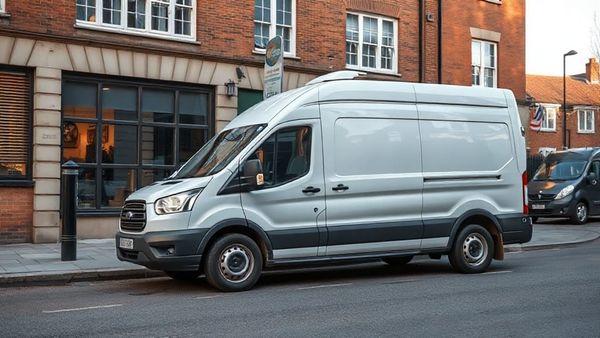
Admiral van insurance review 2026: Gladiator, multi-van and fleet
KAEL TRIPTON - BRAND REVIEW Admiral van insurance 61/100KT Score FRN 310848EUI Limited GladiatorCommercial sub-brand FlockFleet acquisition Feb 2026 LAST REVIEWED:
Van insurance is a legal requirement for any van used on UK public roads. The three cover levels are third-party only, third-party fire and theft, and comprehensive. Commercial van insurance covers business use; carriage of own goods and carriage of goods for hire or reward are separate classes requiring different policy endorsements. Goods-in-transit cover is typically separate. All van insurance providers must be FCA-authorised (Road Traffic Act 1988, FCA ICOBS, ABI, 2026). |
| Home › Insurance › Van Insurance |
|
KAELTRIPTON · VAN INSURANCE
Van insurance is a structurally distinct commercial vehicle product. Use class, payload, goods in transit, and hire and reward status drive underwriting in ways that car insurance pricing models do not capture.
Commercial vehicle data ·
ABI 2026 ·
FCA-aware ·
Updated monthly
|
Van insurance and car insurance are often discussed as though they occupy the same product category. They do not. Van insurance is underwritten as a commercial vehicle product, and the pricing variables, policy structures, and market architecture that govern it are materially different from the personal lines motor market. The use class declared on a van policy, ranging from social domestic and pleasure through to hire and reward, is the single most consequential underwriting variable. Getting the use class wrong exposes a policyholder to a policy that does not respond to the claim because the vehicle was being used in a way the insurer did not price. Goods-in-transit cover, which protects cargo being carried, is a separate product from van insurance in most standard policies and is routinely absent from policies purchased through comparison sites without an explicit add-on or extension. Tools-in-transit cover, which addresses the gap between standard vehicle contents limits and the actual replacement cost of specialist trade equipment, is similarly absent from most base policies. The ABI's motor insurance statistics series includes commercial vehicle data showing that average claim costs for commercial vehicles exceeded those for private cars across every year from 2021 to 2025, driven by higher payload vehicle repair costs and the increasing concentration of high-value tools and goods in transit. This branch hub addresses the structural differences between van and car insurance, the use class framework that governs UK commercial vehicle underwriting, and the specialist market segments that aggregator platforms consistently fail to reach as of May 2026.
UK van insurance pricing is built around four primary use class declarations that define the scope of covered activities. These classes are not simply administrative categories: they determine the insurer's exposure model, the premium loaded to the policy, and whether a claim arising from a specific use will be honoured. Declaring a lower use class than the actual use of the vehicle to obtain a lower premium constitutes material misrepresentation under the Insurance Act 2015 and can result in the insurer declining the claim, voiding the policy from inception, or both.
Social, domestic, and pleasure (SDP) only covers the vehicle for personal use by the named driver or named drivers. It does not cover any use connected with employment, self-employment, or business activities, including driving to a permanent place of work other than the policyholder's home. SDP plus business use (Class 1) extends cover to the policyholder's own business use, including travelling to multiple work locations, visiting clients, and driving to sites. It does not cover the carriage of goods or materials by the vehicle. Carriage of own goods covers the use of the van to transport tools, materials, stock, or equipment owned by or belonging to the policyholder's business. This is the standard use class for tradespeople and sole traders. It does not cover carriage of goods belonging to third parties for reward. Hire and reward covers the vehicle being used to carry goods or passengers for payment on behalf of third parties. It is the use class required for courier drivers, parcel delivery operators, food delivery drivers, and taxi and private hire operators. It is priced at significantly higher premium levels than carriage-of-own-goods policies because the commercial use frequency, driver turnover, and liability profile are substantially higher.
A further dimension is the insurer's treatment of the driver schedule. Van policies may be issued for a named driver or named drivers, for any driver meeting specified age and licence conditions, or for any driver. Any-driver policies carry the highest premium because the insurer cannot model the individual risk profiles of all potential drivers. Named-driver policies require every regular driver to be declared and typically result in lower premiums where all named drivers have clean licences and established no-claims histories.
| Use class | Covered activities | Key exclusion | Typical user | Relative premium (index) |
|---|---|---|---|---|
| SDP only | Personal use; leisure; non-work travel | Any business or work-related use | Personal van owner with no commercial use | 100 (baseline) |
| SDP + business use (Class 1) | Personal use plus own-business travel to multiple sites | Carriage of any goods or materials | Consultant; estate agent; sales representative | 110 to 125 |
| Carriage of own goods | Business use plus transport of own tools, stock, or materials | Carriage of third-party goods for payment | Plumber; electrician; builder; sole trader | 130 to 160 |
| Hire and reward | All above plus carriage of third-party goods or passengers for payment | N/A (widest scope); specific exclusions by operator type | Courier; parcel delivery; food delivery; private hire | 200 to 350+ |
Premium index figures in the table above are illustrative relative multiples based on market research for a typical medium-payload van and a 35-year-old male driver with five years no-claims. Actual premiums vary significantly by vehicle, postcode, driver profile, and use intensity.
The business use classification on a van policy is not a binary decision between personal and commercial. The graduated class structure reflects the insurer's assessment of how the vehicle is used, how frequently, and with what commercial liability exposure. Each step up the use class ladder brings a premium increase that reflects the increased frequency of use, the commercial loading that applies to vehicles involved in business activities, and the greater likelihood of a claim during the extended hours a commercially used vehicle is on the road.
Consider James, a self-employed plumber based in Coventry, who drives a 2019 Ford Transit panel van. He uses the vehicle to travel to residential and commercial plumbing jobs daily, carrying copper fittings, power tools, and specialist diagnostic equipment. He occasionally assists a colleague on larger commercial sites, driving the colleague's van when his own is in for service. His van insurance requirement is carriage of own goods for the Transit, covering both his daily trade use and the carriage of tools and materials. The business use Class 1 extension, which covers him driving to multiple sites, is subsumed within the carriage-of-own-goods declaration; he does not need both. If he wishes to be covered when occasionally driving his colleague's van, he needs either a named-driver extension on the colleague's policy or a separate blanket any-driver van policy for those instances; his own van policy's driving-other-vehicles extension, where it exists at all, typically does not cover commercial vehicles owned by third parties.
The premium impact of use class is compounded by vehicle payload rating. Light commercial vehicles under 3.5 tonnes gross vehicle weight (GVW) include the majority of panel vans and pickup trucks used by tradespeople. Vehicles between 3.5 and 7.5 tonnes GVW attract specialist HGV underwriting rather than standard van insurance. Getting the GVW category correct matters for policy validity as well as premium accuracy.
| Driver and vehicle profile | Appropriate use class | Common misclassification | Claim consequence if misclassified |
|---|---|---|---|
| Plumber; tools in van; travels to multiple sites daily | Carriage of own goods | SDP + business use Class 1 (misses goods carriage) | Claim declined if accident occurs while goods are in vehicle and goods carriage not declared |
| Amazon Flex driver; personal van; delivers parcels at weekends | Hire and reward | Carriage of own goods (parcels belong to third party) | Claim declined; hire and reward void if not declared |
| IT consultant; laptop and samples only; visits clients | SDP + business use Class 1 | SDP only (misses business travel) | Claim declined if accident occurs en route to client site |
| Campervan conversion; leisure use only; no commercial activity | SDP with campervan or motorhome endorsement | Standard van SDP (vehicle classification changed by conversion) | Insurer may argue vehicle type mismatch voids cover |
Standard van insurance policies cover the vehicle and its third-party liabilities. They do not, in most cases, cover the cargo inside the van. The vehicle contents limit included in a base van policy, where it exists at all, typically applies to items belonging to the policyholder personally, set at a nominal limit of £100 to £500, and excludes commercial goods, stock, or materials. A sole trader who carries stock worth several thousand pounds in their van has no cover for that stock under a standard van policy unless a specific goods-in-transit extension or a standalone goods-in-transit policy is in place.
Goods-in-transit (GIT) cover is a separate insurance product that addresses cargo risk: loss, theft, or damage to goods while being transported. The relevant policy variables are the maximum any-one-load limit, the maximum any-one-item limit, the territorial scope (UK only or including European transit), whether the goods are covered while in a vehicle left unattended overnight, and the specific exclusions for high-value or fragile items. Goods left in an unattended vehicle overnight are excluded under many GIT policies unless the vehicle is kept in a locked garage or a specified secure location, a condition that sole traders operating from residential addresses frequently cannot meet.
The underwriting approach to GIT differs by cargo type. General goods (building materials, plumbing supplies, electrical components) are priced at standard GIT rates. High-value electronics, jewellery, cash, and controlled goods attract specialist underwriting and substantially higher premiums or lower any-one-item limits. Fragile items including glazing, ceramics, and artwork require specific declaration and are often subject to additional packing and packaging conditions that, if not met, void the relevant claim.
| GIT policy variable | Standard GIT extension | Standalone GIT policy | Common exclusion to check |
|---|---|---|---|
| Any-one-load limit | Typically £2,500 to £5,000 | £5,000 to £50,000+ (buyer specified) | Unattended vehicle overnight; specific high-value goods |
| European transit cover | Rarely included | Available as extension; CMR liability included in specialist policies | CMR convention compliance requirements for international haulage |
| Theft from unattended vehicle | Often excluded or limited to daylight hours | Available with approved security conditions (van vault, deadlocks) | Security device conditions; approved locks; alarm systems |
| Cash and high-value items | Typically excluded | Specialist declaration required; sublimits apply | Per-item limit; packaging conditions; transit route restrictions |
Tools-in-transit cover is a distinct product from goods-in-transit cover, designed specifically for the risk profile of tradespeople who carry specialist equipment in their work vehicles. The distinction matters because GIT policies are designed around the transit of commercial goods from supplier to customer, while tools cover addresses the loss or theft of equipment that the tradesperson owns and uses repeatedly across multiple jobs. The insured interest is different, the theft risk profile is different, and the policy conditions are typically structured differently.
Theft of tools from tradespeople's vans has been a persistent and growing claim category in the UK commercial vehicle market. The ABI has noted in its motor insurance statistics series that tool theft from commercial vehicles represents a disproportionately high proportion of van insurance claims by volume relative to average claim value, reflecting both the frequency of opportunistic break-ins and the relatively modest individual claim values compared to vehicle damage claims. However, for individual tradespeople, a tool theft event can represent a significant uninsured loss if tools are not covered and a significant business disruption while replacement equipment is sourced.
Consider an electrician carrying a thermal imaging camera (£1,200), cable detection equipment (£900), a professional drill set (£600), and general hand tools and consumables (£1,500 replacement cost). Total tool value in the van is approximately £4,200. A standard van policy's vehicle contents limit of £200 to £500 would leave an uninsured gap of approximately £3,700 to £4,000. A tools-in-transit policy with an any-one-load limit of £5,000 and per-item limit of £1,500 would cover the full replacement cost of the kit, subject to the standard conditions on overnight storage and security.
| Cover type | Typical limit | Overnight storage condition | Typical annual cost (sole trader) |
|---|---|---|---|
| Standard van policy vehicle contents | £200 to £500 | None specified; applies in transit | Included in van premium; no separate cost |
| Tools-in-transit extension to van policy | £2,500 to £5,000 | Tools removed to secure premises overnight in some policies | £80 to £200 additional premium |
| Standalone tools and equipment policy | Up to £25,000 (declared value basis) | Approved van vault or deadlock required; or removal to secure premises | £150 to £400 depending on total declared value |
Hire and reward cover is not an extension to a standard van policy. It is a distinct product class with its own underwriting framework, pricing architecture, and legal requirements. Any operator carrying goods or passengers belonging to third parties for payment is legally required to hold hire and reward cover. Operating a vehicle for hire and reward without the correct insurance is a criminal offence under the Road Traffic Act 1988, and a van policy without the hire and reward class will not respond to any claim arising from a delivery or passenger-carrying event.
The UK courier and last-mile delivery market expanded significantly between 2020 and 2025, driven by e-commerce growth and the proliferation of gig-economy delivery platforms. Amazon Flex, Evri, DPD, and similar operators require their self-employed driver partners to hold appropriate hire and reward insurance for their vehicles. Standard van policies purchased through aggregator sites do not include hire and reward cover; a specific hire and reward product must be purchased either as a standalone policy or as a separately rated extension from a specialist commercial vehicle insurer.
The premium differential between carriage-of-own-goods and hire and reward policies reflects the substantially higher risk profile of hire and reward operations: higher annual mileage, extended operational hours, more frequent loading and unloading events, and a customer liability dimension absent from own-goods carriage. As of Q1 2026, hire and reward premiums for a single-van operator in London running a medium-payload transit on last-mile delivery duties typically range from £2,500 to £5,000 per year at comprehensive cover level, compared to £800 to £1,800 for an equivalent carriage-of-own-goods policy for a tradesperson in a similar vehicle.
| Factor | Carriage of own goods | Hire and reward |
|---|---|---|
| Legal requirement for use type | Required for any trade goods or materials carriage | Required for any third-party goods or passenger carriage for payment |
| Typical annual premium (medium van, London, comprehensive) | £800 to £1,800 | £2,500 to £5,000+ |
| Available on main comparison sites | Yes, from most van insurance providers | Limited; specialist brokers required for full market access |
| Goods liability cover included | Not standard; GIT required separately | Often bundled in specialist courier policies |
| Criminal offence if used incorrectly | Yes if hire and reward activity conducted without correct class | Policy covers all permitted uses |
Fleet insurance consolidates cover for two or more vehicles under a single policy and a single renewal date. The commercial case for fleet insurance is administrative efficiency and, for larger fleets, aggregate pricing based on the fleet's claims experience rather than individual vehicle and driver risk profiles. For businesses with three or more vehicles, the administrative burden of managing separate renewals, declarations, and mid-term adjustments across multiple policies is material, and a fleet policy eliminates it.
The minimum fleet threshold varies by insurer. Some fleet underwriters accept policies from two vehicles; others require a minimum of four or five. The pricing model for fleet policies differs fundamentally from individual policy pricing: a fleet insurer assesses the fleet's aggregate claims history, the types of vehicles in the fleet, the nature of operations, and the operator's safety management systems, rather than pricing each vehicle on a per-driver basis. This can produce premium savings relative to individual policies for fleets with clean claims histories and systematic vehicle management, but can produce higher premiums than individual policies for fleets with poor claims records.
Consider FleetCo Ltd, a last-mile delivery operator running eight vans on Amazon Flex and Evri delivery contracts across the East Midlands. Each van is a hire and reward vehicle requiring specific hire and reward cover. Individually priced, eight hire and reward policies for medium-payload vans in the East Midlands might total £18,000 to £32,000 per year across the fleet based on Q1 2026 market rates. A fleet policy for the same eight vehicles, assessed on the fleet's aggregate three-year claims history and with a fleet management statement demonstrating driver vetting and vehicle maintenance records, might be priced at £14,000 to £22,000, representing a saving of 15 to 30 percent. The saving is conditional on the fleet's claims record; a fleet with two or three at-fault accidents in the three-year period would see the fleet premium approach or exceed the individual policy aggregate.
| Fleet size | Individual policy aggregate (hire and reward, East Midlands) | Fleet policy estimate (clean claims) | Typical saving range |
|---|---|---|---|
| 2 to 3 vans | £5,000 to £12,000 | £4,500 to £10,500 | 5 to 15 percent |
| 4 to 7 vans | £10,000 to £24,000 | £8,000 to £18,000 | 10 to 25 percent |
| 8 or more vans | £18,000 to £40,000+ | £14,000 to £28,000 | 15 to 30 percent (clean record); reduced if claims history poor |
New business start-ups face a specific challenge in the van insurance market: the absence of a commercial no-claims discount (NCD) history. Commercial vehicle NCD accrues on policies held in the name of the business or sole trader, not on the owner's personal car insurance history. A sole trader who has held a personal car insurance policy with five years NCD has no commercial vehicle NCD to apply to their first van policy, and will be priced as a new business risk without the discount benefit of their personal insurance history.
Some insurers allow a personal car insurance NCD to be used as evidence of driving experience and claims history for the purposes of van insurance underwriting, though this concession is at the insurer's discretion and is not a universal market practice. Specialist brokers with access to multiple commercial vehicle underwriters are more likely to find insurers willing to apply this flexibility than a standard aggregator search, where the quote engine applies rigid rules.
New businesses that anticipate operating multiple vehicles from the outset should discuss fleet inception with a specialist broker from the start. Entering a fleet policy with no claims history on the fleet results in a higher initial premium, but the fleet NCD accrues on the fleet policy from year one and can produce meaningful savings within two to three years of clean claims. Individual policies that later migrate to a fleet arrangement do not automatically carry their individual NCD into the fleet pricing model; the fleet underwriter assesses the aggregate history.
The van insurance comparison market has the same structural limitation as the commercial vehicle market more broadly: the aggregator panels represent a subset of the available market, and the subset is biased toward standard risk profiles in personal use and light trade use categories. As of May 2026, specialist commercial vehicle underwriters including Aviva's commercial fleet division, Zurich's SME van products, and several Lloyd's of London syndicates that write specialist hire and reward and high-payload commercial vehicle risks either do not list on the main comparison platforms or list only standard-risk products that exclude specialist use classes.
The gap is most acute for hire and reward operators. The main comparison platforms return limited or no results for hire and reward van insurance, reflecting both the specialist underwriting required and the higher liability profile that standard aggregator-listed insurers are reluctant to price competitively. A courier or last-mile delivery operator who relies on an aggregator search for their van insurance is likely to receive quotes that either exclude hire and reward use (making the policy commercially invalid for their actual operations) or include it as a theoretical option at an uncompetitive premium.
For tradespeople in the carriage-of-own-goods category, aggregator searches are more productive but still miss tools-in-transit combinations, specialist high-value goods cover, and policies designed for specific trades such as refrigerated vehicle operators or hazardous materials carriers. A specialist van insurance broker operating in the commercial vehicle market will access underwriters whose products are architecturally designed for trade use, with goods-in-transit and tools cover integrated into the policy structure rather than bolted on as afterthoughts. The FCA's Consumer Duty obligations require brokers operating in commercial insurance markets to assess whether their products deliver fair value for the customer's specific commercial risk profile; this obligation can be used to hold brokers to account when their recommendations do not match the actual business need.
Coming soon:
| Editorial disclaimer: Kaeltripton is not authorised or regulated by the Financial Conduct Authority to give regulated financial advice. All content on this page is informational and educational only, and does not constitute a personal recommendation to purchase any insurance product. Premium ranges cited are indicative estimates based on market research at the time of publication; actual quotes will vary by vehicle, use class, driver profile, postcode, and insurer underwriting. Readers should verify their correct use class with their insurer or an FCA-authorised commercial insurance broker before purchasing a policy. Operating a vehicle without appropriate insurance cover is a criminal offence under the Road Traffic Act 1988. |
Van insurance is underwritten as a commercial vehicle product with a distinct pricing architecture from personal lines motor insurance. The primary differences are the use class framework, which reflects commercial activity rather than personal use, the payload and gross vehicle weight variables that affect commercial risk, the separate goods-in-transit and tools-in-transit cover requirements not present in car insurance, and the hire and reward category applicable to commercial delivery and passenger-carrying operations. A personal car insurance policy cannot be extended to cover a van used for commercial purposes.
If you use your van for any purpose connected with your employment or self-employment, including travelling to client sites, carrying materials or tools, or making deliveries, you need a use class that reflects that commercial activity. Social, domestic, and pleasure cover does not extend to any business-related driving. Carriage of own goods is the standard use class for self-employed tradespeople. The correct use class must be declared at inception; using a van for business purposes on an SDP policy exposes any claim arising from that business use to being declined.
Social, domestic, and pleasure cover extends to personal and leisure use of the vehicle and does not include any commercial activity. Carriage of own goods extends the policy to cover business use of the vehicle including the transport of tools, materials, stock, or equipment belonging to the policyholder's business. Carriage of own goods does not cover the transport of goods belonging to third parties for payment; that requires hire and reward cover. A plumber, builder, or electrician who carries tools and materials to job sites requires carriage of own goods as a minimum use class.
Yes. Any driver carrying goods belonging to third parties for payment, including parcel delivery for Amazon Flex, Evri, DPD, or similar platforms, requires hire and reward van insurance. This applies regardless of whether the activity is full-time or part-time. Operating a vehicle on a carriage-of-own-goods or SDP policy while conducting hire and reward activities is a criminal offence under the Road Traffic Act 1988 and will result in any claim being declined by the insurer. Hire and reward cover must be purchased as a specific product from a specialist commercial vehicle insurer or broker.
Goods-in-transit insurance covers loss, theft, or damage to cargo while it is being transported in a vehicle. It is a separate product from van insurance and is not included in standard van policies. Key policy variables include the any-one-load limit, any-one-item limit, territorial scope, and conditions around unattended vehicles. It does not cover the vehicle itself (covered by van insurance) or personal tools and equipment (covered by tools-in-transit policies). Business operators who carry stock, materials, or third-party goods require GIT cover in addition to their van insurance.
No. Standard van policies include only a nominal vehicle contents limit of £200 to £500, which is insufficient to cover the replacement cost of most tradesperson's tools. Tools-in-transit cover must be purchased as an extension to the van policy or as a standalone tools and equipment policy. The any-one-load and per-item limits under a tools policy should be checked against the actual replacement value of the tools carried. Most policies require tools to be removed to a secure premises or locked in an approved van vault overnight; failure to comply with this condition can result in an overnight theft claim being declined.
Fleet insurance typically becomes economically advantageous relative to individual policies from three or more vehicles, though some insurers accept fleets from two. The saving depends heavily on the fleet's claims history: a clean three-year record on a fleet of five or more vehicles typically produces savings of 15 to 25 percent against the aggregate of individual policies. The saving is also an administrative one; a single renewal date and single policy document reduces management burden. For start-up fleets with no claims history, the first-year premium may not show savings, but NCD accrues on the fleet from year one.
Most van insurance policies do not include a driving-other-vehicles extension for commercial vehicles, unlike some personal car insurance policies. Named-driver policies cover only the vehicles listed on the policy. If you need to drive a van belonging to another business or a hired vehicle, a short-term or temporary van insurance policy should be obtained for those specific driving events. Alternatively, the vehicle owner's insurance may include coverage for named additional drivers; this should be confirmed with the vehicle owner's insurer before driving.
No. Amazon Flex, food delivery, and all other forms of third-party goods or passenger carriage for payment require hire and reward insurance. A standard van policy, even one with carriage-of-own-goods cover, does not respond to claims arising from delivery operations. Carrying out hire and reward activities without the correct insurance is a criminal offence. Amazon, Evri, Uber Eats, and similar platforms typically require proof of appropriate insurance documentation before permitting drivers to operate. Hire and reward policies must be purchased specifically from specialist commercial vehicle insurers or brokers.
A van that has been converted to a campervan changes its vehicle classification from a commercial vehicle to a motorhome or campervan for insurance purposes. Standard van insurance is not appropriate for a converted campervan because the vehicle type and use profile have changed materially. A specialist campervan or motorhome insurance policy is required, which covers the conversion value, habitation equipment, and personal contents in addition to the vehicle structure. The V5C registration document should reflect the correct vehicle classification; driving a reclassified vehicle on the wrong insurance policy category can affect policy validity.
|
VAN INSURANCE - 10 GUIDES
Browse all van insurance guides
|
KAEL TRIPTON - BRAND REVIEW Admiral van insurance 61/100KT Score FRN 310848EUI Limited GladiatorCommercial sub-brand FlockFleet acquisition Feb 2026 LAST REVIEWED:
 Hub: Insurance
Cheap van to insure UK 2026: insurance groups, smallest commercial vehicles, common tradesperson choices and which UK vans sit lowest.
Hub: Insurance
Pickup truck insurance UK 2026: commercial vs personal cover for Ranger, Hilux, L200 and Amarok. HMRC tax rules, groups and modifications.
Hub: Insurance
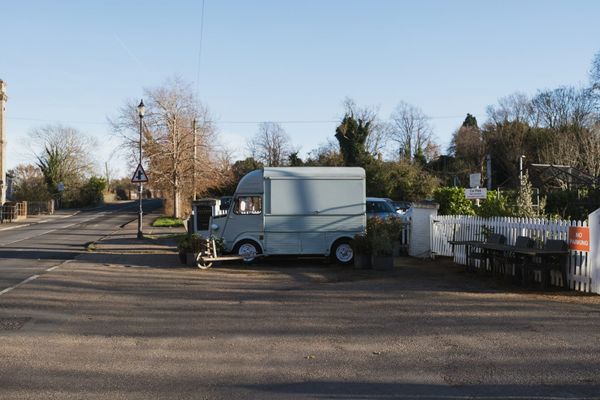
Ice cream van insurance UK 2026: commercial motor, public liability, refrigeration breakdown and food hygiene cover for mobile catering operators.
Hub: Insurance
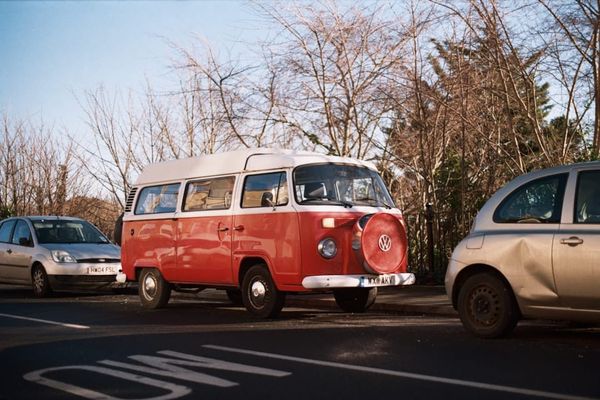
Self build camper van insurance UK 2026: DVLA reclassification, specialist insurers, agreed value cover and conversion documentation explained in full.
Hub: Insurance
Vehicle transporter insurance UK 2026: cover for car transporters, recovery trucks and trailers carrying motor vehicles. Goods in transit explained.
Hub: Insurance
VW Transporter insurance UK 2026 covers T5, T6 and T6.1 panel vans, Kombi and Caravelle. See typical insurance groups, costs and modifications guidance.

Part of: Van Insurance UK 2026 TL;DR * TL;DR: Van insurance premiums sit above the £622 private car average (ABI Q4
 Insurance
Part of: Van Insurance UK 2026 TL;DR ★ Featured Partner · Sponsored Compare Insurance Quotes Search and compare quotes from leading UK insurers.
 business
Part of: Van Insurance UK 2026 By Chandraketu Tripathi | Updated April 2026 Business van insurance covers vans used for work purposes — from
 Insurance
★ Featured Partner · Sponsored Compare Insurance Quotes Search and compare quotes from leading UK insurers. Quotezone's panel includes specialist insurers not
 Insurance
★ Featured Partner · Sponsored Compare Insurance Quotes Search and compare quotes from leading UK insurers. Quotezone's panel includes specialist insurers not
 Insurance
★ Featured Partner · Sponsored Compare Insurance Quotes Search and compare quotes from leading UK insurers. Quotezone's panel includes specialist insurers not
 Insurance
★ Featured Partner · Sponsored Compare Insurance Quotes Search and compare quotes from leading UK insurers. Quotezone's panel includes specialist insurers not
| Advertise with KT → |
Get Kael Tripton in your Google feed
⭐ Add as Preferred Source on Google