

Buying a used car in the UK is one of the larger purchases most households make - average used car price in 2026 is around £15,000-£18,000. The difference between a good purchase and a disastrous one comes down to 45 minutes of due diligence before you hand over the money. This checklist covers every step: running the free MOT history check, DVLA vehicle tax lookup, V5C verification, HPI check for outstanding finance or theft, insurance setup, the test drive checklist, and the pickup-day process. Follow it and you avoid the typical £2,000-£5,000+ mistakes (mileage fraud, outstanding finance seizure, undisclosed accident damage, tax surprises). Most checks are free or low-cost. The peace of mind is worth the time.
| ★ EDITOR'S VERDICT 45 minutes of free checks prevents £2,000-£5,000 in mistakes. Do them all. |
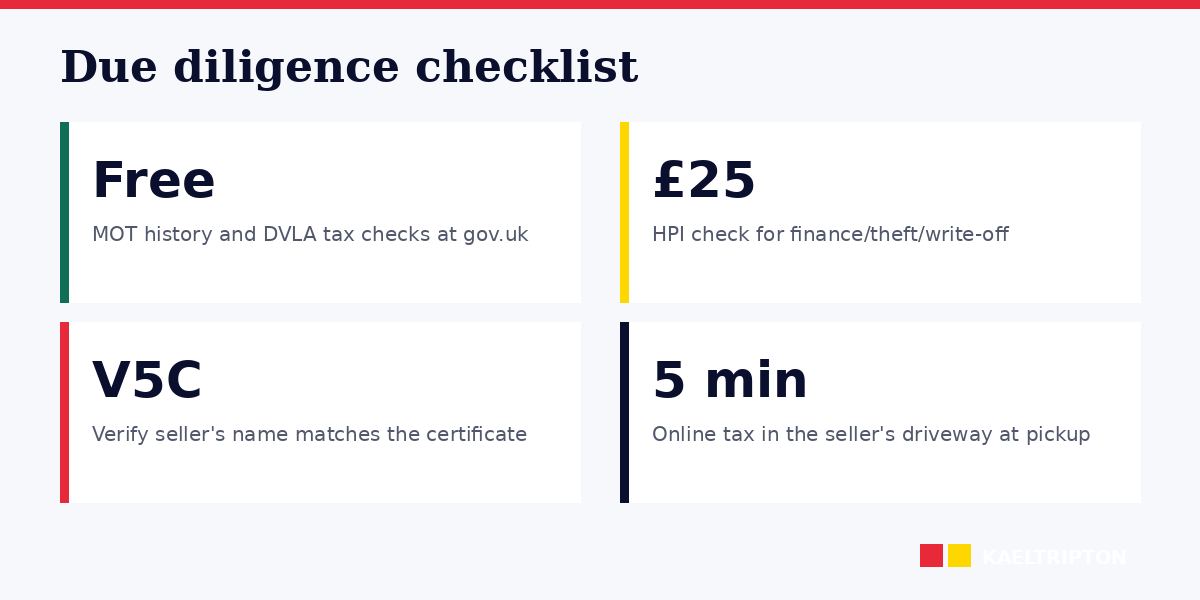
Before handing over money: MOT history check (30 seconds, free), DVLA vehicle tax check (30 seconds, free), HPI check (£25) for outstanding finance, insurance quote (5 minutes, free). At viewing: V5C matches seller ID, VIN matches registration, service history complete, physical inspection of bodywork and mechanicals, comprehensive test drive. At pickup: bank transfer payment, V5C transfer immediate, tax in your name via phone in the driveway, insurance active from that moment. Dealer purchases give Consumer Rights Act protection; private sales are 'sold as seen' - the checks matter more when buying private. |
Before you view: free due diligence
Get the registration from the seller (private ad, dealer listing, or auction). Refuse to deal with any seller who won't provide the reg before you view - it's a red flag. Then run these checks:
1. MOT history check (30 seconds, free)
Go to check-mot.service.gov.uk. Enter the registration. Review:
- Mileage progression - should be steady, typically 8,000-15,000 miles/year. Drops in recorded mileage between tests = odometer fraud
- Pass/fail pattern - regular fails that were repaired = normal. Multiple tests in short periods = concerning
- Advisory items - recurring advisories over years suggest the owner ignored warnings
- Last test date and next due - confirms you can drive legally from purchase
2. DVLA vehicle tax check (30 seconds, free)
At gov.uk/get-vehicle-information-from-dvla. Shows:
- Current tax status and expiry
- Next VED annual rate
- CO2 emissions
- First registration date
- Whether Expensive Car Supplement applies
- Fuel type (verify against the ad)
3. Insurance indicative quote (5 minutes, free)
Get an insurance quote at a major comparison site (Compare the Market, GoCompare, MoneySuperMarket). Confirms:
- The vehicle is insurable for you (some cars have high insurance costs)
- Realistic annual premium range - factor into total ownership cost
- Any specific restrictions (e.g., mileage caps, storage requirements)
4. HPI check (paid, £20-£30 but worth it)
HPI and similar services (AA Vehicle Check, Carwow Check, MyCarCheck) verify:
- Outstanding finance - critical. Cars with finance registered against them can be repossessed by the finance company, leaving you without the car and without compensation
- Stolen vehicle status - rare but serious. A flagged stolen car = police seizure
- Written-off status - Category A (scrapped), B (recovered from total loss), N (non-structural damage), or S (structural damage repaired). Cat S and N are driveable but affect value significantly
- Previous registration changes - multiple keepers in short windows can be concerning
- Plate changes - cars with recent plate changes can hide accident history
HPI is the gold standard for second-hand vehicle due diligence. The £25 cost is cheap insurance against a £5,000+ mistake.
At the viewing
Documentation verification
- V5C registration certificate - current, in the seller's name, matches the car's VIN (on the chassis plate typically in the engine bay or door jamb)
- Service history - complete maintenance records. Full dealer history is premium; independent garage stamps are acceptable
- MOT certificates - matches the MOT history you checked online
- Previous owner manuals, spare keys, any extras (tyre kit, first aid)
Physical inspection
Don't rely on the seller's word. Inspect:
- Bodywork - mismatched paint, panel gaps, ripples, signs of welding or filler
- Tyres - tread depth (should be over 3mm for good value), even wear, matching brand on same axle
- Brakes - brake pedal firmness during test drive
- Suspension - push each corner firmly; car should settle in 1-2 bounces
- Engine - oil level and condition (black oil = overdue service), coolant level, no visible leaks, no blue smoke on startup
- Interior - wear on steering wheel, driver's seat, pedals should match claimed mileage
- Electrics - all controls work, warning lights behave correctly (all on at startup, clear after engine starts)
- Audio/tech - parking sensors, cameras, infotainment, Bluetooth all functional
Test drive essentials
- Drive for at least 15 minutes including different speeds (30mph, 50mph, motorway if possible)
- Listen for clunks, vibrations, pulling to one side (alignment or brakes)
- Check brakes - should stop firmly without judder, pedal shouldn't be spongy
- Check gearbox - smooth shifts, no whine or clunk
- Check steering - no vibration, precise feel, no wander at speed
- Check clutch (manual) - no slipping under load, smooth engagement
- Check air conditioning, heater, demister - all operational
- Check the cruise control and any advanced safety systems
If the test drive reveals any issues, either negotiate the price down to reflect repair cost, walk away, or ask the seller to fix before sale. Don't accept "it's fine" assurances on obvious issues.
Negotiation and pricing
Research fair market value before negotiating:
- Autotrader, Parkers, CAP HPI Value - online valuation tools
- eBay completed listings - what similar cars actually sold for
- Dealer forecourt prices for the same model/year/mileage - typically 10-20% above private sale
Typical negotiation margin on a private sale: 5-15% below asking price. On a dealer car: 3-8% below asking. Use issues found at viewing as justification for price reductions.
For finance: be aware that low monthly payments can hide high interest rates. Always check the total cost over the term, not just the monthly figure. Dealer finance APRs typically 6-15% in 2026; compare to personal loans at 6-10%.
Arranging insurance before pickup
Critical: insurance must be valid from the moment you drive the car off. Options:
- Annual policy starting day of purchase - the standard approach. Arrange 1-3 days before pickup with the intended start date
- Short-term temporary insurance - Cuvva, Tempcover, Dayinsure offer cover from 1 hour to 30 days (£18-£40/day) - useful if you're picking up the car far from home and want to drive it home only, or need time to research annual policies
- Driving other cars extension on existing policy - rarely useful now; most modern policies have stripped or limited this
Do not rely on verbal assurance of insurance cover - have the policy document or confirmation email accessible on your phone at pickup. Police checks at random roadside stops check insurance against the Motor Insurance Database.
Pickup day process
The actual purchase should follow a specific sequence:
- Final inspection - confirm vehicle is as described, no new damage, keys and documents all present
- Payment - bank transfer is safest (traceable, no physical cash risk). Large cash transactions raise money laundering concerns and some sellers refuse them. Avoid crypto payments for anything except trusted dealers.
- V5C transfer - seller completes the "new keeper" section (V5C/2 green slip for you). Seller notifies DVLA immediately via gov.uk/sold-bought-vehicle or hands you the V5C to post yourself
- Tax the car in your name - use the V5C/2 reference at gov.uk/vehicle-tax. Takes 5 minutes on your phone in the seller's driveway. Tax from that moment onwards
- Insurance active - confirm policy is live. Some insurers require you to call to activate "from now" rather than a pre-set future date
- Drive home - with all documentation accessible
You are now legally tax-insured to drive. Update DVLA with your details within 2 weeks. Update insurance address and personal details as needed.
After purchase: additional steps
- Full service - if service history is sparse, consider a fresh oil change and vehicle inspection at a reputable garage (typically £80-£150) for peace of mind
- Register for automatic MOT reminders with DVLA or your insurer
- Store documentation - V5C, MOT certificates, service history in a safe place (not in the car - theft risk)
- Note MOT expiry and tax expiry dates - set phone reminders 6 weeks before each
- Update DVLA address if you've moved via gov.uk/change-address-driving-licence - legal requirement
A real 2026 scenario: successful used purchase
A 42-year-old in Newcastle finds a 2019 Honda CR-V for sale at £16,500 on Autotrader. 55,000 miles.
Friday evening: runs DVLA check (currently taxed to October 2026, standard rate £200) and MOT history check (clean pass record, mileage progression consistent at 12,000 miles/year). HPI check via AA (£25) confirms no outstanding finance, not stolen, no Cat write-off history. Gets insurance quote at £620/year - reasonable.
Saturday morning: views the car. V5C confirms current owner name matches the seller's driving licence. VIN on chassis plate matches V5C. Service history complete at Honda dealers. Test drive reveals car runs well, brakes firm, no warnings. Negotiates £15,800 based on one missing service entry.
Saturday afternoon: pays £15,800 by bank transfer. Seller completes V5C transfer immediately online via phone. Hands over V5C/2 green slip. Buyer taxes car via gov.uk on his phone: £200 annual. Insurance activates at 2pm. Drives home.
Sunday: registers with DVLA in new keeper's name. Updates insurance with his personal address. Notes MOT expiry (March 2027) in calendar.
Total cost: £15,800 + £25 HPI + £200 tax + £50 insurance setup fees = £16,075 all in. Fully legal and safe within 2 hours of pickup. No surprises.
Frequently asked questions
Can I return a used car if I change my mind?
Depends on where you bought. Dealers: 14-day cooling-off period under Consumer Contracts Regulations if you bought online or by phone. In-person dealer purchases: no statutory cooling-off, though some offer their own return policy. Private sellers: no right to return - the sale is generally final once money changes hands.
What if the car breaks down immediately after purchase?
From a dealer: consumer rights apply - dealer must rectify under the Consumer Rights Act 2015 for defects present at the point of sale. From a private seller: the "sold as seen" rule generally applies, and you have no statutory return right unless deliberate misrepresentation is proven. This is why HPI checks and test drives are critical before purchase.
Is buying from a dealer or private safer?
Dealer: more expensive but better consumer protection. Private: cheaper but no statutory right to return. For first-time buyers or those unable to run full due diligence, dealer is safer. For knowledgeable buyers, private sales offer better value.
Can I view a used car before the tax expires?
Yes. Tax is the seller's obligation until the sale; once sold, tax ends automatically and you tax in your name. View at any point regardless of current tax status - the check is on MOT validity (for driving) not tax.
How much should I budget for extras on a used car purchase?
HPI check £25, insurance from day 1 (typically £500-£1,200 annual, proportional daily from day of purchase), first-year VED (£200 or relevant band), potentially a service (£80-£150 fresh oil change for peace of mind). Total extras beyond purchase price: typically £600-£1,500 in year one.
Should I buy a used car with category write-off history?
Depends. Cat N (non-structural) and Cat S (structural but repaired to roadworthy standards) can be fine if properly repaired, but resale value is affected. Cat B (recovered total loss, parts only) should not be on the road. Cat A (scrapped) is illegal to register. HPI check reveals write-off status; consider whether the price discount justifies the resale impact.
Do I need to insure the car before viewing?
No, not for a viewing. For a test drive, yes - your own insurance with driving-other-cars extension, the seller's insurance if they're legally permitting you to drive under their cover, or a temporary 1-hour Cuvva/Tempcover policy (£10-£20) specifically for the test drive. Never drive without insurance even for a "quick test".
Sources
- GOV.UK, Buying a used vehicle - gov.uk/buy-sell-used-vehicle
- DVSA, Check MOT history - check-mot.service.gov.uk
- GOV.UK, Get vehicle information from DVLA - gov.uk/get-vehicle-information-from-dvla
- HPI Check, AA Vehicle Check, MyCarCheck - vehicle history check providers
- Consumer Rights Act 2015 - statutory protections for dealer purchases
- Consumer Contracts Regulations 2013 - 14-day cooling-off on distance sales
- Parkers, Autotrader, CAP HPI - valuation sources
- Motor Ombudsman - dispute resolution for motor trade complaints


