

- A standard UK home EV charger install in 2026 costs 800 pounds to 1,400 pounds for a 7kW unit including labour, mounting, cable run and commissioning. Premium tethered units (Andersen A2, Wallbox Pulsar Max) push 1,400 pounds to 2,000 pounds.
- The OZEV EV Chargepoint Grant of 350 pounds is now restricted to people living in flats and renters in single-occupancy houses. Homeowners in houses have not been eligible since April 2022; landlords claim through the separate EV Chargepoint Grant for landlords.
- Every domestic chargepoint sold in Great Britain since 30 June 2022 must comply with the Electric Vehicles (Smart Charge Points) Regulations 2021: default off-peak charging, randomised delay up to 600 seconds, tamper protection and security requirements.
- A 22kW (three-phase) install only works where the property has a three-phase supply. Most UK homes are single-phase. A 7kW charger is the practical default and matches the maximum AC charge rate of nearly every plug-in vehicle sold in the UK.
- Chargers above 16A per phase (over 3.6kW single-phase) need DNO notification under G99 prior approval; smaller units fall under G98 connect-and-notify. The Energy Networks Association maintains the ENA register and the DNO Open Networks portal.
Last reviewed: 17 May 2026 | Chandraketu Tripathi, finance editor
EV Chargers · Installation
- Typical 7kW install: 800 pounds to 1,400 pounds; premium tethered (Andersen, Wallbox): 1,400 to 2,000 pounds.
- OZEV grant: 350 pounds, flats and renters only since April 2022. Separate grants exist for landlords and employers.
- Smart Charge Point Regulations 2021: default off-peak, 600-second randomised delay, tamper protection (mandatory since 30 June 2022).
- DNO notification: G98 up to 16A per phase (3.6kW); G99 prior approval required for 7kW and 22kW units.
- Installer credentials: NICEIC/NAPIT competent person scheme, OZEV authorisation for grant claims, BS 7671 18th Edition Amendment 2 compliance, IET Code of Practice for EV Charging Equipment Installation (5th edition).
UK home EV charger installation in 2026 has settled into a mature market, with prices on a typical 7kW wall-mounted unit landing between 800 pounds and 1,400 pounds installed and a clear set of regulatory requirements covering smart functionality, network notification, and electrical compliance. The 350 pound OZEV grant remains available but is now limited to flat dwellers and renters; homeowners in single-occupancy houses lost eligibility in April 2022 and have to pay the install in full. This guide covers what each component of an install actually costs, how the Smart Charge Point Regulations affect day-to-day use, when a consumer unit upgrade is triggered, how the major tariffs integrate with the charger, and what credentials to verify in the installer.
7kW versus 22kW: which charger speed actually fits a UK home
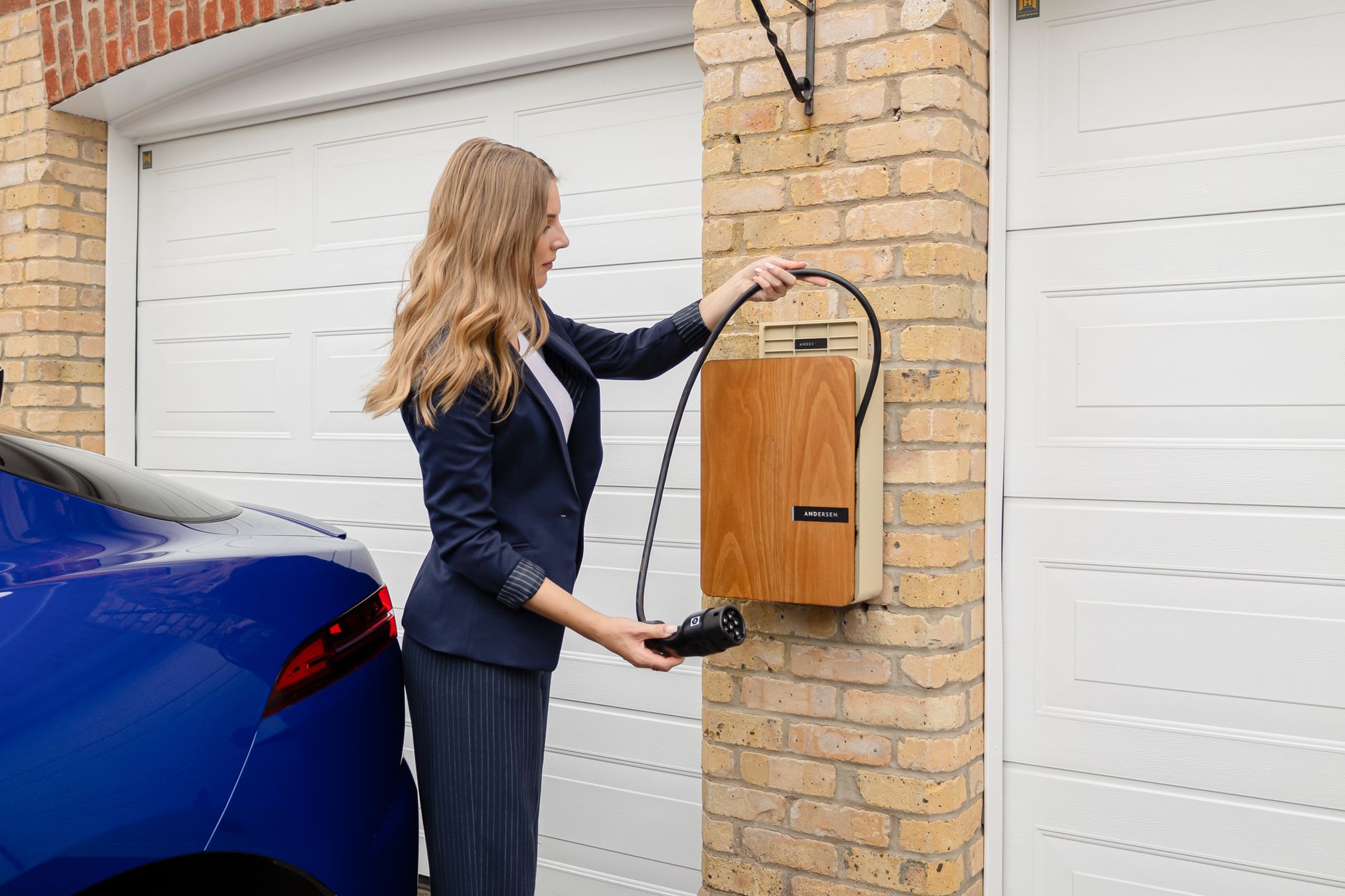
The first decision is the unit's charge rate, and for almost every UK home the answer is 7kW. A 7kW single-phase charger draws 32A on a 230V supply, which is the maximum a typical UK domestic electrical supply can comfortably deliver to a single appliance after diversity calculations. It charges a 60kWh battery from 20 percent to 80 percent in roughly five hours, which fits an overnight charging window on any UK off-peak tariff.
A 22kW charger is three-phase: it draws 32A across three phases, totalling around 22kW. Most UK domestic supplies are single-phase only, which means installing a 22kW charger first requires the property to have a three-phase supply or for the local DNO to grant a three-phase upgrade. DNO upgrades for three-phase are slow (often three to six months) and can run into thousands of pounds in trenching, cable, cut-out and meter work, with the homeowner usually paying a contribution. Outside of larger detached properties, rural houses with three-phase already present for an outbuilding or workshop, and a handful of new-builds, three-phase is not the typical UK domestic situation.
The second reason most homeowners stay at 7kW is that nearly every plug-in vehicle sold in the UK has an onboard AC charger that caps at 7kW or 11kW. Tesla Model 3 and Model Y both cap at 11kW (which on a single-phase 22kW charger still only pulls 7kW because the car cannot exceed its onboard limit on a single phase). Volkswagen ID.3, Hyundai Ioniq 5, Kia EV6, BMW i4 and similar cars all sit at 11kW. A small number of premium vehicles can take the full 22kW AC, but for those owners the home charger speed rarely matters because they are also using rapid DC public charging.
The practical recommendation: 7kW for a single-phase UK home; only consider 22kW where the property already has three-phase or where a confirmed DNO upgrade is in progress for other reasons.
Typical 2026 install costs: hardware, labour and the tethered choice
2026 prices on a fully installed 7kW domestic chargepoint, including labour, mounting, cable run up to around 10 metres, isolators and commissioning, look like this:
Mid-range smart chargers: Pod Point Solo 3, Ohme Home Pro, Hypervolt Home 3 Pro, Easee One and EO Mini Pro 3 typically land between 900 pounds and 1,200 pounds installed. These are the high-volume units sold through dealer-bundled and energy-supplier-bundled programmes and they all meet the Smart Charge Point Regulations 2021 by default. Most ship as either tethered (cable attached) or untethered (socket only) variants at similar price points.
Premium chargers: Andersen A2 and Wallbox Pulsar Max sit between 1,400 pounds and 2,000 pounds installed. Andersen positions itself as a design-led unit with internal cable management; Wallbox Pulsar Max is one of the most compact 22kW-capable wall units on the market, useful for owners who anticipate a future three-phase upgrade.
Budget end: Direct-import or supermarket-bundled units occasionally appear at 600 pounds to 800 pounds installed. The risk here is post-install warranty support and firmware update commitment; cheaper units sometimes lack the seven-year manufacturer support that the Smart Charge Point Regulations require for security patching, and the OEM may exit the UK market before the unit reaches end of life.
Tethered (cable attached) versus untethered (just the socket) is mostly a usability choice. A tethered cable is faster to use day-to-day (no need to pull a cable from the boot each time), but the cable lives outside in all weather and is harder to replace if damaged. Untethered units are cleaner-looking and let you bring a longer cable when away from home, but every use involves unspooling and re-spooling a cable. Pricing is usually within 50 pounds either way.
Additional install cost variables: cable runs over 10 metres add 30 pounds to 60 pounds per additional metre depending on whether the run is surface clipped, in trunking, or in a buried duct. Penetration through a cavity wall, brick wall, or rendered exterior adds 60 pounds to 150 pounds for proper sealing. A 100A main fuse upgrade by the DNO is sometimes required and is free in itself, but trigger costs of meter relocation can apply.
OZEV EV Chargepoint Grant 2026: who is actually eligible
The OZEV (Office for Zero Emission Vehicles) EV Chargepoint Grant is a 350 pound contribution towards the cost of a domestic chargepoint installation, paid to the OZEV-authorised installer who then deducts it from the homeowner's invoice. The grant is administered through gov.uk and the rules changed materially in April 2022. The current 2026 position is:
Eligible: people living in flats (whether owner-occupier or renter), and renters of single-occupancy houses. The applicant must own or have ordered an eligible electric or plug-in hybrid vehicle. Eligible vehicle lists are published by OZEV on gov.uk and broadly cover battery electric vehicles, eligible plug-in hybrids, and certain electric motorcycles.
Not eligible: homeowners in single-occupancy houses. This was the largest category historically and was deliberately removed because the policy reasoning was that house-dwelling homeowners had had three years to take the grant up and the residual subsidy should target flat-dwellers and renters who face higher per-install barriers (landlord permissions, shared parking).
Landlords: there is a separate EV Chargepoint Grant for landlords (residential and commercial), available to landlords who install chargepoints for their tenants. It is also 350 pounds per socket with a cap on units per landlord per year. Landlords need a separate application and supporting documentation including landlord status and parking-bay evidence.
Workplace Charging Scheme: employers can claim up to 350 pounds per socket for chargepoints at workplace car parks, up to 40 sockets per applicant. This is a separate scheme administered through gov.uk and is not the same form as the homeowner grant.
Paperwork is handled almost entirely by the installer, but applicants should retain copies of the V5C log book for the vehicle, the tenancy agreement (if renting), and the installer's OZEV authorisation number. The grant cannot be claimed retrospectively for installs already paid in full; the installer must apply on the applicant's behalf as part of the install booking.
When a consumer unit upgrade is triggered
A modern 7kW chargepoint install requires several things on the consumer unit side: a dedicated 32A breaker (typically a type-A or type-B RCBO depending on the chargepoint's internal DC fault protection), surge protection (SPD), and adequate spare capacity in the existing consumer unit. Where the existing fusebox is too old or too full, the installer will quote for a consumer unit replacement before the charger goes in.
Typical 2026 consumer unit replacement cost: 350 pounds to 700 pounds for an 18th Edition compliant consumer unit installed, with the price spread driven by the number of circuits in the property, whether existing wiring needs to be reterminated, and whether the position of the unit needs to move.
The most common triggers for a consumer unit upgrade at chargepoint install are: an older split-load board without per-circuit RCD protection (BS 7671 18th Edition Amendment 2 requires individual circuit protection for most situations), insufficient spare ways for the new dedicated chargepoint circuit, a board with damaged or obsolete breakers, or an old rewireable-fuse board.
BS 7671 18th Edition Amendment 2, which has been in force since 28 September 2022, also makes surge protection (SPD) mandatory in most domestic installations. Where the existing consumer unit does not include an SPD, the chargepoint installer will either fit an SPD module if there is space and the unit accepts it, or quote for a board replacement that includes SPD as standard. An SPD module retrofit on a compatible board is usually 80 pounds to 180 pounds; a full board replacement that includes the SPD adds little marginal cost over a board replacement without SPD.
The chargepoint itself contains its own DC fault detection (RDC-DD type-A or equivalent), required by BS EN 61851-1. This means a downstream type-A or type-AC RCD is normally enough on the chargepoint circuit, but the installer must confirm the chargepoint's internal protection class and select the upstream device accordingly.
Smart Charge Point Regulations 2021: what the rules actually require
The Electric Vehicles (Smart Charge Points) Regulations 2021, in force for sales from 30 June 2022, applied four major requirements to every domestic chargepoint sold in Great Britain. These are technical rules the manufacturer must comply with, not paperwork the homeowner has to fill in, but they shape the user experience after install.
Default off-peak charging: the chargepoint must default to a charging schedule that avoids peak grid hours (defined in the regulations as 0800 to 1100 and 1600 to 2200 on weekdays). The user can override and choose to charge immediately, but the default position out of the box is off-peak. This pushes new chargepoints into overnight charging windows by default and supports grid balancing.
Randomised delay: when a charging session is scheduled or initiated remotely, the chargepoint must apply a randomised delay of up to 600 seconds (10 minutes) before starting. This prevents fleet-level synchronous switch-on across many homes at the same scheduled time, which would otherwise cause sudden network demand spikes at 0001 or 0030 when off-peak windows open. The user can override the randomisation per session, but cannot disable it permanently.
Tamper protection and security: the chargepoint must include cyber-security measures, secure firmware update mechanisms, and tamper-evident hardware. Manufacturers must provide security updates for a defined minimum period; this is one reason cheaper unbranded imports may struggle to meet the regulations long-term.
Measurement, transparency and statement of compliance: the chargepoint must provide accurate measurement of energy delivered, display a session log, and the manufacturer must publish a statement of compliance. Buyers can check that any chargepoint sold in the UK from mid-2022 onward is compliant; the OZEV approved chargepoint model list on gov.uk is the practical reference.
| KT | Kaeltripton Partner Programme |
Take a Featured Partner placement on Kaeltripton's UK energy hub and reach UK homeowners at the moment they decide they need help. Gas Safe, MCS or TrustMark authorisation verified before activation.
See partnership tiers →Tariff integration: how the charger pairs with off-peak electricity
A home EV charger only delivers its full cost saving when it is paired with an off-peak electricity tariff. UK off-peak EV tariffs in 2026 typically charge 7 to 9 pence per kWh during a defined overnight window (often four to six hours), compared with a standard unit rate around 27 to 30 pence per kWh on the default price-cap rate. The four major EV tariffs and how they integrate are:
Octopus Intelligent Octopus Go: smart integration with the charger or vehicle via API. Octopus dispatches charging to the cheapest grid window and the homeowner pays the off-peak rate even if the actual delivery extends outside the contracted window. Works with Ohme, Wallbox, Hypervolt, Easee, certain Tesla, Volkswagen and Hyundai vehicles. Octopus publishes the supported integrations list on its own site.
OVO Charge Anytime: works via vehicle or charger API. Charging credit is rebated against the bill so the customer effectively pays a flat charge-anytime rate for car-bound electricity regardless of when the car actually drew it. Charger and vehicle compatibility lists are published by OVO.
EDF GoElectric: a time-of-use tariff with a defined off-peak window (often 0000 to 0500 or similar, varying by product version). The charger is set to a schedule that matches the window. No API dispatch required; the homeowner sets the charger schedule manually or through the charger app.
British Gas Electric Driver: similar time-of-use product with a fixed off-peak window. Designed to be simple to set up: schedule the charger to the window and the off-peak rate applies to all electricity used (including non-car loads such as a dishwasher) during the window.
The dispatch-based tariffs (Octopus Intelligent, OVO Charge Anytime) are usually the cheapest option for high-mileage drivers because the supplier can match the car's charging to the absolute cheapest grid half-hour, but they require an approved charger or vehicle. Time-of-use tariffs work with any charger and are easier to set up, but the off-peak window is fixed and the homeowner has to plug in within it.
DNO notification: G98 versus G99
Every chargepoint connected to the UK distribution network must be notified to the local Distribution Network Operator (DNO). There are two notification regimes depending on the size of the unit, both administered through the Energy Networks Association.
G98 (connect and notify): applies to small generators and loads up to and including 16A per phase. A 3.6kW single-phase chargepoint falls under G98. The installer connects the unit and then notifies the DNO within 28 days. No prior approval is required. In practice, 3.6kW domestic chargers are now rare because the same installation effort is required for a 7kW unit and the user benefit is much higher.
G99 (prior approval): applies to anything above 16A per phase, which includes every 7kW (32A single-phase) and every 22kW (three-phase) domestic chargepoint. The installer must submit a G99 application to the DNO before the install and wait for approval. The DNO checks that the local network has capacity to accept the additional demand; approval is usually granted within 10 to 45 working days and is most commonly straightforward in suburban networks.
Where the network is constrained, the DNO may approve the chargepoint with a limit (typically capping the charge rate to a lower value through the charger's own load-management), may require an upgrade contribution, or in rare cases may decline until network reinforcement is complete. The Energy Networks Association maintains the ENA register of installers and the DNO Open Networks portal, which standardises the application process across the six UK DNOs.
A competent OZEV-authorised installer will handle the G99 application as part of the install booking and the homeowner should not need to do anything other than provide property details. The DNO reference number from the approval should appear in the install paperwork; ask for it if it is not provided.
Installer credentials: what to verify before booking
Three credentials matter on a UK home chargepoint install in 2026 and each can be verified independently before booking. Skipping verification is a known source of post-install dispute and lost warranty cover.
NICEIC or equivalent electrical registration. The installing electrician must be registered with a recognised competent person scheme (NICEIC, NAPIT, ELECSA, STROMA, Certsure). Registration certifies competence to issue an Electrical Installation Certificate under BS 7671 and to self-certify the work for Building Regulations Part P compliance. The NICEIC public register is searchable at niceic.com; NAPIT operates a similar public register.
OZEV authorisation. Only OZEV-authorised installers can claim the 350 pound EV Chargepoint Grant on the applicant's behalf. The current authorised installer list is published by OZEV on gov.uk. The installer's OZEV authorisation number should appear on any quote where the grant is to be applied; if it does not, the grant cannot be processed.
BS 7671 18th Edition Amendment 2 compliance. The work itself must comply with the current IET Wiring Regulations. The Code of Practice for Electric Vehicle Charging Equipment Installation (IET, 5th edition) is the controlling technical document and is the working reference for compliant chargepoint installation in Great Britain. The installer should be able to discuss the Code of Practice by reference: which sections cover earthing arrangements, PEN-loss protection, mounting heights and cable routing. An installer who cannot reference the Code of Practice by section is not the installer to use.
Two final checks: confirm the installer carries public liability insurance (typically 2 million pounds minimum) and that they will provide an Electrical Installation Certificate at handover. Without the certificate, the installation is not formally documented as compliant and downstream warranty and insurance claims become much harder.
|
Editorial Listing Available
From £299/month
A named row in Kaeltripton's UK energy directory plus a mention on this page. Verified trades and suppliers only.
|
Get listed → |
| Editorial note: Kaeltripton.com is an independent editorial publisher and is not authorised by the Financial Conduct Authority, Ofgem, MCS, TrustMark or Gas Safe. This article is for informational purposes only and does not constitute regulated advice. UK energy regulations, prices, tariff caps and grant schemes change without notice. Always verify current requirements directly on GOV.UK, ofgem.gov.uk, mcscertified.com, gassaferegister.co.uk or trustmark.org.uk, and obtain a fixed written quote from a registered tradesperson before committing to work. |
Frequently asked questions
How much does it cost to install a home EV charger in the UK in 2026?
A standard 7kW home EV charger install typically costs 800 pounds to 1,400 pounds in 2026, including the unit, labour, mounting, a cable run up to about 10 metres and commissioning. Premium tethered units such as the Andersen A2 or Wallbox Pulsar Max push 1,400 pounds to 2,000 pounds. Extra costs apply for longer cable runs (30 to 60 pounds per metre above 10 metres), exterior wall penetrations, or a consumer unit upgrade (350 to 700 pounds for an 18th Edition compliant board).
Am I eligible for the 350 pound OZEV EV Chargepoint Grant?
As of 2026 the grant is restricted to people living in flats (owner-occupier or renter) and to renters in single-occupancy houses. Homeowners in single-occupancy houses lost eligibility in April 2022 and pay the full install cost. Landlords have a separate EV Chargepoint Grant of 350 pounds per socket. Employers have the Workplace Charging Scheme at up to 350 pounds per socket and up to 40 sockets per applicant. All three schemes are administered through gov.uk and claimed by an OZEV-authorised installer on the applicant's behalf.
Do I need a 7kW or a 22kW charger at home?
A 7kW (single-phase, 32A) charger is the right choice for almost every UK home. 22kW chargers are three-phase and only work where the property already has a three-phase supply, which most UK domestic properties do not. Almost every plug-in vehicle sold in the UK has an onboard AC charger that caps at 7kW or 11kW, so 22kW capability at home rarely delivers any practical benefit. A 7kW charger delivers a full overnight charge on a 60kWh battery in around five to six hours.
What is the randomised delay on a smart EV charger and can I disable it?
Under the Electric Vehicles (Smart Charge Points) Regulations 2021, every domestic chargepoint sold in Great Britain since 30 June 2022 must apply a randomised delay of up to 600 seconds (10 minutes) before starting a scheduled or remotely initiated charge. This prevents fleet-wide synchronous switch-on at the start of off-peak windows, which would otherwise spike grid demand. The driver can override the randomisation per session through the charger app, but cannot permanently disable it.
Does my chargepoint need to be approved by the DNO?
Yes. Every 7kW or larger domestic chargepoint requires G99 prior approval from the local Distribution Network Operator before install, because it exceeds 16A per phase. The OZEV-authorised installer handles the G99 application as part of booking; approval typically takes 10 to 45 working days. Smaller units up to 16A per phase (3.6kW single-phase) fall under G98 connect-and-notify, where the installer notifies the DNO within 28 days of install. The Energy Networks Association maintains the ENA register and the DNO Open Networks portal.
What credentials should my EV charger installer hold?
The installer should be registered with a recognised competent person scheme (NICEIC, NAPIT, ELECSA, STROMA or Certsure) so they can self-certify the work for Building Regulations Part P, and they should hold OZEV authorisation if any grant is being claimed. The work itself must comply with BS 7671 18th Edition Amendment 2 (the IET Wiring Regulations) and the IET Code of Practice for Electric Vehicle Charging Equipment Installation (5th edition). At handover, ask for an Electrical Installation Certificate and the DNO reference number from the G99 approval.
How we verified this article
Cost ranges in this article are 2026 typical UK figures drawn from published price lists of OZEV-authorised installers and from chargepoint manufacturer recommended install prices. Where ranges are quoted, they reflect the spread between standard urban installs at the lower end and longer cable runs, awkward access or premium tethered units at the upper end.
OZEV EV Chargepoint Grant eligibility rules reflect the position published at gov.uk for the homeowner grant, the landlord grant, and the Workplace Charging Scheme as accessed during preparation. The April 2022 change that removed eligibility for owner-occupiers in single-occupancy houses is documented in OZEV scheme guidance on gov.uk.
The technical requirements summarised under the Smart Charge Point Regulations 2021 reflect the Electric Vehicles (Smart Charge Points) Regulations 2021 as published on legislation.gov.uk, including the 0800 to 1100 and 1600 to 2200 weekday peak windows, the 600-second randomised delay cap, and the tamper and security requirements. The IET Code of Practice for Electric Vehicle Charging Equipment Installation (5th edition) and BS 7671 18th Edition Amendment 2 are the controlling technical references for compliant installation.
G98 and G99 connection rules reflect the Energy Networks Association engineering recommendations and the DNO Open Networks portal. No figure on this page has been provided by an advertising or sponsored relationship. Kaeltripton does not accept commission on installs and our editorial does not recommend specific chargepoint brands or installers.
Sources
- GOV.UK - Government grants for low-emission vehicles (OZEV)
- legislation.gov.uk - The Electric Vehicles (Smart Charge Points) Regulations 2021
- Energy Networks Association - EV chargepoint connection guidance
- ENA Open Networks - DNO connection portal
- NICEIC - Find a registered contractor
- GOV.UK - EV chargepoint grant for landlords
- GOV.UK - Workplace Charging Scheme
- DESNZ - Electric vehicle charging device statistics


