

- A standard 270mm mineral-wool loft insulation install on a UK semi-detached house typically costs 350 pounds to 750 pounds in 2026, including labour, materials, edging and loft hatch insulation. DIY material costs alone run 250 pounds to 400 pounds for the same property.
- 270mm is the current Building Regulations Part L depth target for England, equivalent to roughly U=0.16 W/m2K at the ceiling line. Existing depths under 100mm leave the largest savings on the table and are usually the priority for fabric-first work.
- ECO4 (the Energy Company Obligation phase 4, 2022 to 2026) and the Great British Insulation Scheme can both cover the install at no cost to eligible households. Eligibility is set by qualifying benefits, EPC rating, or ECO4 Flex local-authority referral.
- Any installer working under ECO4 or GBIS must be TrustMark registered and PAS 2030 certified. Under PAS 2035, a retrofit coordinator oversees whole-house retrofit work including ventilation and the interaction between loft, walls, glazing and heating.
- A correctly insulated loft is one of the highest-impact preparatory steps before an air source heat pump install. MCS heat-loss surveys factor in the loft U-value when sizing the heat pump; an under-insulated loft pushes the heat pump size up and reduces the running efficiency.
Last reviewed: 17 May 2026 | Chandraketu Tripathi, finance editor
Insulation · Loft
- Typical install at 270mm mineral wool: 350 pounds to 750 pounds for a UK semi-detached; 250 to 500 pounds mid-terrace; 550 to 1,200 pounds detached.
- Depth standard: 270mm to meet Approved Document Part L (England); equivalents apply across Scotland, Wales and Northern Ireland.
- Free routes: ECO4 (qualifying benefits or ECO4 Flex council referral) and Great British Insulation Scheme (council tax band A-D plus EPC D-G).
- Installer credentials: PAS 2030 certified and TrustMark registered. Multi-measure work requires a PAS 2035 retrofit coordinator.
- Heat pump prep: loft insulation should be installed and certificated before the MCS heat-loss survey, to avoid heat pump oversizing.
Loft insulation remains the single highest-return fabric improvement available to most UK homeowners, with the typical 270mm install paying back in saved heating bills within two to four years on an uninsulated or thinly insulated property at 2026 default tariff prices. The 2026 picture has three moving parts: 270mm has been the Building Regulations depth target for some years and is the practical benchmark for any new install, ECO4 and the Great British Insulation Scheme can both cover the install at no homeowner cost for eligible households, and the PAS 2035 retrofit framework now coordinates loft work alongside walls, ventilation and heating where multiple measures are being installed. This guide walks through the depth and material choices, what the typical install actually costs, the eligibility and verification routes under ECO4 and GBIS, and the condensation and ventilation risks that a careless install can introduce.
Depth, U-value and the 270mm Building Regulations target
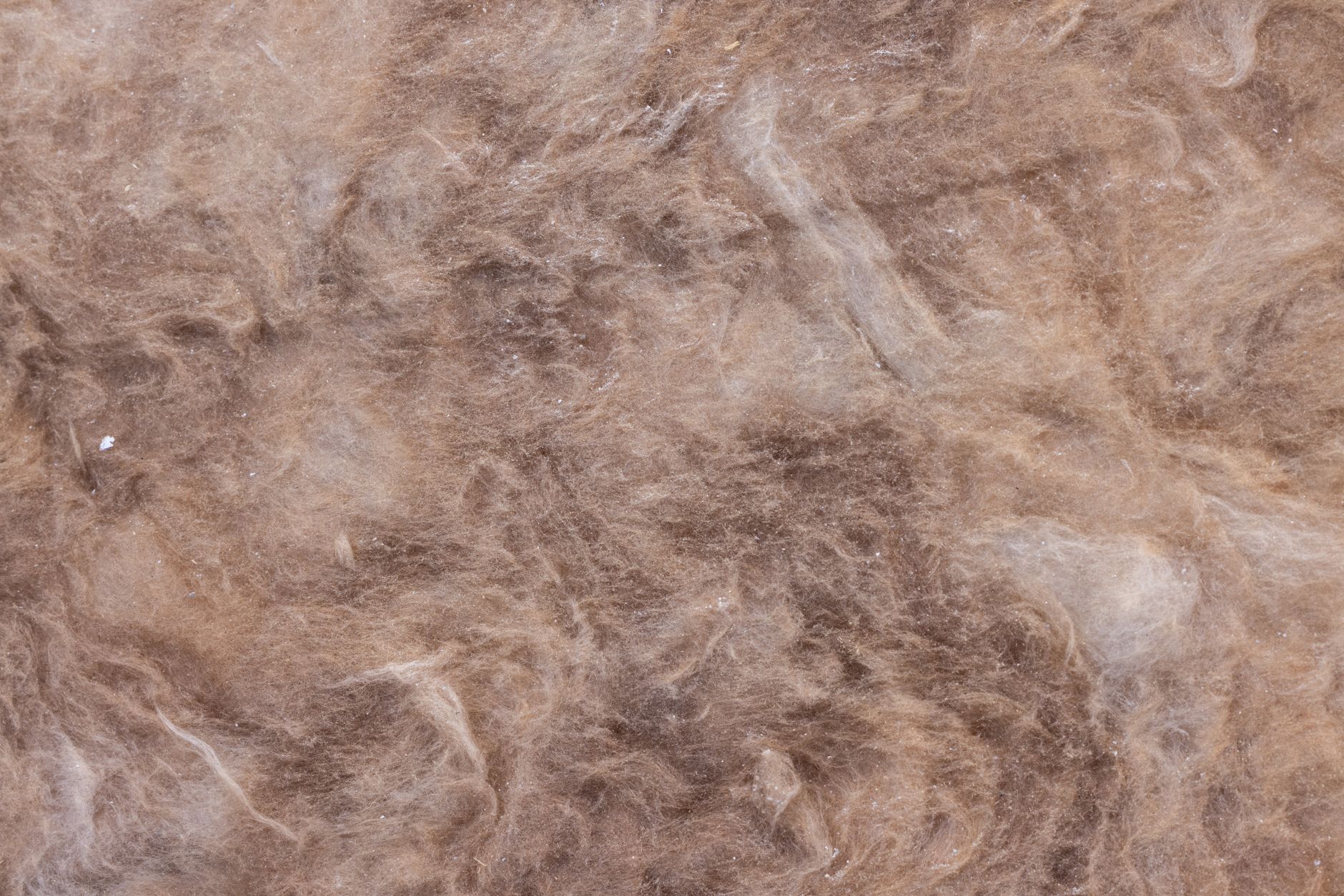
The thermal performance of a pitched-roof loft is measured by the U-value at the ceiling line, in watts per square metre per kelvin. A lower number is better. Building Regulations Approved Document Part L (England) sets the target U-value for new and upgraded loft insulation work, and 270mm of mineral wool laid in two crossed layers (typically 100mm between joists and 170mm across the top) achieves approximately U=0.16 W/m2K, which has been the working benchmark for compliant work in England in recent years.
Equivalent rules apply in Scotland (Building Standards Technical Handbooks), Wales (Approved Document Part L Wales) and Northern Ireland (Technical Booklet F). The depth target is broadly similar across the four nations, though the precise wording and U-value figures differ. The Energy Saving Trust publishes per-property savings estimates for the typical step from uninsulated, from 100mm, and from 200mm up to the 270mm standard; these estimates are the working reference used by ECO4 and GBIS measures and they update each year as wholesale gas and electricity prices move.
Where the existing depth sits matters more than the headline target. The biggest savings come from the first 100mm laid on an otherwise uninsulated loft; the marginal benefit from 200mm to 270mm is real but smaller. Properties built before 1985 frequently have less than 100mm or no loft insulation at all and are the highest-priority targets for fabric-first work. Properties built between 1985 and 2002 typically have 100mm to 200mm and benefit from a top-up to 270mm. Properties built since 2002 are usually compliant with the depth standard in force at construction and only need top-up if material has settled or been disturbed.
The depth target only applies where the loft is unheated (a cold roof, with the insulation at ceiling level). If the loft has been converted into living space, the insulation moves to the rafters and the depth and material choice change significantly; this guide focuses on the unheated loft case, which is by far the most common UK situation.
Material choice: mineral wool, sheep wool, rigid PIR
Three main material families dominate UK loft insulation in 2026. Each has different cost, install behaviour, condensation handling and end-of-life characteristics.
Mineral wool (glass wool or rock wool): Knauf, Rockwool and Isover are the dominant brands. Mineral wool is the default for the unheated loft case for cost, ease of install and thermal performance. A 270mm install uses two crossed layers and the material is rolled into place between and across joists. Thermal conductivity is typically 0.044 W/mK for glass wool and around 0.037 W/mK for higher-density rock wool. Rock wool has better fire performance and acoustic damping but is more expensive and heavier to handle.
Sheep wool: Thermafleece and similar UK manufacturers produce natural sheep wool batts at comparable thermal conductivity (around 0.038 to 0.042 W/mK) and a similar working depth. Sheep wool handles moisture differently to mineral wool: it absorbs and releases vapour without losing thermal performance, which suits older breathable construction. The cost is roughly two to three times higher than mineral wool, which keeps it a niche choice in mainstream installs but a strong fit for older solid-wall properties undergoing whole-house retrofit.
Rigid PIR boards: Kingspan Therma TR26, Celotex GA4000 and similar high-performance polyisocyanurate boards have a much lower thermal conductivity (around 0.022 W/mK) and reach equivalent insulation performance at a third of the depth. PIR is the right choice where the loft is converted, where headroom matters, or where the insulation is moving to the rafter line. PIR costs significantly more per square metre and is unnecessary in the typical unheated cold-roof loft, where the cheaper mineral wool already meets the depth target.
The condensation behaviour of each material is different and matters where the existing loft has signs of damp or where the roof construction includes a non-breathable underlay. Mineral wool is hygroscopic in handling but does not buffer vapour the way sheep wool does; a damp loft fitted with mineral wool can trap moisture against the joists unless ventilation is corrected at the same time.
Typical 2026 install costs for a UK loft
Loft insulation pricing in 2026 is dominated by labour, not materials. A typical UK semi-detached house has 40 to 60 square metres of loft floor and a paid install at 270mm mineral wool runs 350 pounds to 750 pounds inclusive of materials, labour, edging, loft hatch insulation and rubbish removal. The wider spread looks like this:
Mid-terrace house, around 30 square metres: 250 pounds to 500 pounds installed at 270mm mineral wool. The smaller loft area pulls the labour figure down but the per-square-metre material cost is unchanged.
Semi-detached house, around 40 to 60 square metres: 350 pounds to 750 pounds installed. This is the volume mid-range and the figure most homeowners will see on quotes.
Detached house, 70 to 100 square metres: 550 pounds to 1,200 pounds installed. The larger area drives both materials and labour up; access through tight loft hatches or restricted eaves can push the labour higher within this band.
DIY material cost only: 250 pounds to 400 pounds for a semi-detached house. Mineral wool rolls retail around 5 pounds to 7 pounds per square metre at the 270mm depth equivalent. DIY makes sense for confident homeowners with a fully boarded loft and easy access, but the labour saved is offset by the awkwardness of working at height, dealing with edging around the eaves and integrating with loft hatches and downlights. Most homeowners choose the paid install route.
Three cost variables move the figure within the band: whether the existing insulation needs to be removed first (typically 100 pounds to 200 pounds extra for disposal); whether the loft hatch needs a new insulated hatch fitted at the same time (50 pounds to 120 pounds); and whether eaves baffles need to be installed to maintain ventilation across the new insulation (40 pounds to 80 pounds, important for condensation control).
ECO4 eligibility: who qualifies for a free loft insulation install
The Energy Company Obligation phase 4 (ECO4) ran from 2022 to 2026 and required larger energy suppliers (British Gas, E.ON Next, Octopus Energy, EDF, Scottish Power, OVO and others above the supply threshold) to deliver energy efficiency measures to eligible households. Loft insulation is one of the highest-volume measures under ECO4. Eligibility comes through two routes.
Route 1: qualifying benefits. Households receiving Universal Credit, Pension Credit (Guarantee or Savings Credit), Income-Based Jobseeker's Allowance, Income-Related Employment and Support Allowance, Income Support, Housing Benefit, Child Tax Credit or Working Tax Credit are generally eligible. Pension Credit Guarantee Credit alone is the single largest qualifying benefit by volume. The exact benefit list and any income thresholds are published at gov.uk under the ECO4 scheme guidance.
Route 2: ECO4 Flex. Local authorities can refer households outside the standard benefit list where the property is low-EPC (E, F or G) and the household is on a low income or has a member with a specific health condition that is exacerbated by cold. ECO4 Flex referrals are made through the local council's home energy or housing team and follow a Statement of Intent published by each participating council on its own website. ECO4 Flex routes vary slightly between councils.
Once eligibility is confirmed, the homeowner is connected to an obligated supplier or an ECO4-authorised installer working under that supplier's obligation. The installer carries out a property assessment, confirms the measure (loft insulation, cavity wall insulation, heating upgrade or other) and books the install at no cost to the household. The supplier claims the work against their obligation.
ECO4 ends on 31 March 2026 in its current form. A successor scheme (often referred to in policy circles as ECO5) is under DESNZ consultation; the timing and shape of any replacement obligation are not finalised at time of writing and homeowners should check gov.uk for the current published position before applying.
Great British Insulation Scheme (GBIS): the supplementary route
The Great British Insulation Scheme (GBIS, formerly known as ECO+ during consultation) sits alongside ECO4 and is designed to reach households just outside the ECO4 benefit thresholds. The eligibility criteria are broader and the typical measure is a single insulation measure rather than a full multi-measure upgrade.
GBIS eligibility: the property is in council tax bands A to D in England, A to E in Scotland or A to C in Wales, and has an EPC rating of D, E, F or G. There is no benefit requirement under the standard GBIS route. The combination of low EPC and lower council tax band targets owner-occupiers in lower-value properties with poor energy performance, which is the demographic ECO4 historically reached less effectively.
GBIS measures typically include loft insulation, cavity wall insulation, room-in-roof insulation and certain solid-wall measures. Loft insulation is by far the highest-volume measure delivered under the scheme. The scheme is delivered through the same obligated suppliers as ECO4 (British Gas, E.ON Next, Octopus, EDF, Scottish Power and OVO) and the install is at no cost to the eligible household where the property and council tax band criteria are met.
The GBIS status is reviewed periodically by DESNZ and the scheme's running period and measure list can change. Homeowners should verify current status at gov.uk before assuming eligibility for a free install. The Energy Saving Trust also operates a free advice helpline (0808 808 2282 in England and Wales, separate numbers in Scotland and Northern Ireland) which can confirm current scheme status for a postcode.
| KT | Kaeltripton Partner Programme |
Take a Featured Partner placement on Kaeltripton's UK energy hub and reach UK homeowners at the moment they decide they need help. Gas Safe, MCS or TrustMark authorisation verified before activation.
See partnership tiers →TrustMark, PAS 2030 and PAS 2035: the verification chain
Any installer working under ECO4 or GBIS must hold two credentials. Both are publicly verifiable and both should be checked before any work starts on the property.
PAS 2030 certification. PAS 2030 is the publicly available specification for the installation of energy efficiency measures in domestic premises, published by BSI. It sets the technical standards for how loft insulation, cavity wall, solid wall, room-in-roof and other measures must be installed, including site practice, materials handling, ventilation considerations and post-install handover documentation. An installer certified to PAS 2030:2023 holds a UKAS-accredited certificate from a recognised certification body.
TrustMark registration. TrustMark is the government-endorsed quality scheme for tradespeople. Every installer working under ECO4 or GBIS must be TrustMark registered. The TrustMark register is searchable at trustmark.org.uk by company name or postcode and returns the firm's registration status, the trades they are registered for, and any current complaints record.
PAS 2035 retrofit framework. PAS 2035 is the companion standard that covers the planning, monitoring and evaluation of whole-house domestic retrofit. Where a household is having multiple measures installed (loft plus cavity, or loft plus ventilation upgrade, or any combination of fabric and heating measures), a retrofit coordinator role under PAS 2035 oversees the work. The retrofit coordinator is independent of the installer and is responsible for ensuring measures do not introduce unintended consequences such as condensation, overheating, or ventilation failures. PAS 2035 became mandatory for most multi-measure publicly funded retrofit work from June 2021.
Single-measure loft insulation installs under ECO4 or GBIS can usually be delivered under PAS 2030 alone, without a full PAS 2035 retrofit coordinator engagement. But where the household is also adding cavity wall, solid wall, or heating measures, the PAS 2035 coordination becomes mandatory and the assessment includes a whole-house ventilation review.
Why loft insulation matters before a heat pump install
An air source heat pump install is sized by an MCS-compliant heat-loss survey, which calculates the steady-state heat loss of the property at design outside temperature (typically minus 2 to minus 3 degrees Celsius for most of England). The loft U-value is one of the largest single inputs in that calculation, second only to walls for a detached house and often the largest single input for a bungalow.
An under-insulated loft increases the calculated heat loss, which pushes the heat pump up to the next size unit. The cost difference between a 6kW and an 8kW heat pump is typically 600 pounds to 1,200 pounds at install, and the larger unit also has a higher minimum modulation rate, which means it cycles on and off more in mild weather and runs less efficiently across the year. Upgrading the loft first (which costs 350 pounds to 750 pounds) avoids the heat pump oversizing cost and leaves the property with a better SCOP (seasonal coefficient of performance) for the same heat pump unit.
MCS publishes the heat-loss calculation methodology and certified installers must use a method compliant with the relevant standards (often based on BS EN 12831 or similar). The Energy Saving Trust and the Heat Pump Association both publish guidance on the fabric-first sequence: loft, then airtightness, then walls, then heat pump. The Committee on Climate Change (theccc.org.uk) has consistently identified fabric-first as the most cost-effective decarbonisation route for the UK housing stock.
Two practical sequencing points. First, where loft insulation is being installed under ECO4 or GBIS, that work should be completed and certificated before the MCS heat-loss survey is carried out, so the heat-loss calculation reflects the post-insulation state. Second, the loft-hatch insulation and edge-of-rafter ventilation work matter as much as the depth itself for the heat-loss calculation; an installer who only fits the field area and skips the hatch or eaves baffles is leaving thermal performance on the table.
Condensation, ventilation and the eaves problem
A correctly installed loft insulation job preserves ventilation across the loft. A badly installed job blocks it, and the consequences (condensation, rot in the roof timbers, mould on the underside of the felt or membrane, and damaged sarking) take six months to two years to become visible and are expensive to put right.
The mechanism is simple. Warm moist air from the heated rooms below rises through the ceiling and into the loft, especially around loft hatches, ceiling roses and downlights. In an uninsulated or under-insulated loft the warm air keeps the loft itself warm enough that the moisture stays in vapour form. Once 270mm of insulation is installed at the ceiling, the loft above the insulation becomes much colder, and any moisture that does reach it can condense on the cold roof timbers or the underside of the felt.
The defence is ventilation across the loft, achieved through soffit vents, eaves vents, ridge vents or a combination. Insulation pulled hard against the eaves and blocking the soffit gap is one of the most common installer errors and shows up in damp-survey reports across the UK housing stock. Eaves baffles (rigid or semi-rigid plastic strips that hold the insulation back from the eaves while maintaining the air path) are the standard fix and should be included in any 270mm install on a roof with soffit ventilation.
Recessed downlights cutting through the insulated ceiling are a second risk: they create localised cold spots and air leakage paths and many cheap downlights are not rated to be covered with insulation. Where a 270mm install is going in over existing downlights, fire-rated or IC-rated downlight covers should be fitted to maintain both fire performance and air-leakage control. The PAS 2035 retrofit coordinator should flag this on the assessment; on a standalone PAS 2030 single-measure install the installer should still note and address it.
|
Editorial Listing Available
From £299/month
A named row in Kaeltripton's UK energy directory plus a mention on this page. Verified trades and suppliers only.
|
Get listed → |
| Editorial note: Kaeltripton.com is an independent editorial publisher and is not authorised by the Financial Conduct Authority, Ofgem, MCS, TrustMark or Gas Safe. This article is for informational purposes only and does not constitute regulated advice. UK energy regulations, prices, tariff caps and grant schemes change without notice. Always verify current requirements directly on GOV.UK, ofgem.gov.uk, mcscertified.com, gassaferegister.co.uk or trustmark.org.uk, and obtain a fixed written quote from a registered tradesperson before committing to work. |
Frequently asked questions
How much does loft insulation cost in the UK in 2026?
A 270mm mineral wool install on a typical UK semi-detached house costs 350 pounds to 750 pounds in 2026 including labour, materials, edging and loft hatch insulation. Mid-terrace houses are 250 pounds to 500 pounds and detached houses 550 pounds to 1,200 pounds. DIY material costs alone for a semi-detached are 250 pounds to 400 pounds. Eligible households can have the install done at no cost under ECO4 or the Great British Insulation Scheme.
Am I eligible for free loft insulation under ECO4 or GBIS?
ECO4 eligibility comes through qualifying benefits (Universal Credit, Pension Credit, Income Support, Housing Benefit, ESA, JSA, Child Tax Credit, Working Tax Credit) or through ECO4 Flex local-authority referral where the property is EPC E, F or G and the household is on a low income or has a member with a cold-aggravated health condition. GBIS is broader: it covers council tax band A to D in England (A to E in Scotland, A to C in Wales) with an EPC of D, E, F or G, with no benefit requirement. Apply through gov.uk or contact an obligated energy supplier (British Gas, E.ON Next, Octopus, EDF, Scottish Power, OVO) directly.
What depth of loft insulation is current Building Regulations standard?
270mm is the working benchmark for Building Regulations Approved Document Part L (England), giving roughly U=0.16 W/m2K at the ceiling line. Equivalent rules apply in Scotland, Wales and Northern Ireland through Building Standards Technical Handbooks, Approved Document Part L Wales and Technical Booklet F. A typical install achieves 270mm using two crossed layers of mineral wool: 100mm between the ceiling joists and 170mm laid across the top.
Which material is best for UK loft insulation?
Mineral wool (Knauf, Rockwool, Isover) is the default choice for unheated cold-roof loft insulation in the UK for cost, thermal performance and install ease. Sheep wool (Thermafleece) costs two to three times as much but suits older breathable construction. Rigid PIR boards (Kingspan, Celotex) achieve equivalent performance at a third of the depth and are the right choice for converted loft rooms or where the insulation is moving to the rafter line, but they are overkill for a typical cold-roof install where mineral wool already meets the depth target at lower cost.
What credentials should a loft insulation installer hold?
An installer working under ECO4 or the Great British Insulation Scheme must be PAS 2030 certified and TrustMark registered. The TrustMark register is searchable at trustmark.org.uk by company name or postcode. Where multiple measures are being installed together (loft plus cavity, or loft plus heating), the PAS 2035 retrofit framework applies and a retrofit coordinator independent of the installer oversees the work to prevent unintended consequences such as condensation or ventilation failures.
Will loft insulation cause condensation in the loft?
Not if it is installed correctly. The risk arises because adding insulation makes the loft itself colder and any moist air rising from the heated rooms below can then condense on cold roof timbers. The defence is to maintain ventilation across the loft using soffit vents, eaves vents or ridge vents, and to use eaves baffles to stop the insulation pulling tight against the eaves and blocking the air path. A competent installer should fit eaves baffles as part of a 270mm install and should address recessed downlights with IC-rated covers to maintain fire and air-leakage performance.
How we verified this article
Cost ranges in this article are 2026 typical UK figures drawn from published price guides of TrustMark-registered insulation installers and from Energy Saving Trust per-property savings estimates. Where ranges are quoted, they reflect the spread between mid-terrace and detached property sizes and the variability in access conditions (boarded versus unboarded lofts, hatch size, eaves accessibility).
Building Regulations Part L depth and U-value targets reflect Approved Document Part L (England) and the equivalent Building Standards Technical Handbooks (Scotland), Approved Document Part L Wales and Technical Booklet F (Northern Ireland) as accessed during preparation. The 270mm working benchmark is the standard expressed in those documents and used by the Energy Saving Trust in its published savings calculations.
ECO4 eligibility rules reflect the Energy Company Obligation phase 4 scheme guidance published at gov.uk, including the qualifying benefit list and the ECO4 Flex local-authority referral route. GBIS rules reflect the Great British Insulation Scheme guidance at gov.uk, including the council tax band and EPC criteria. The PAS 2030 and PAS 2035 standards are published by BSI; TrustMark operates the government-endorsed trades quality scheme. The Committee on Climate Change has identified fabric-first as the most cost-effective decarbonisation route for the UK housing stock.
No figure on this page has been provided by an advertising or sponsored relationship. Kaeltripton does not accept commission on insulation installs and our editorial does not recommend specific installer firms or material brands.
Sources
- GOV.UK - Energy Company Obligation ECO4 2022 to 2026
- GOV.UK - Great British Insulation Scheme
- TrustMark - Find a registered tradesperson
- GOV.UK - Approved Document L: Conservation of fuel and power (Part L)
- Energy Saving Trust - Loft and roof insulation
- BSI - PAS 2030 and PAS 2035 retrofit standards
- Climate Change Committee - UK housing fabric-first guidance
- DESNZ - Household Energy Efficiency Statistics


