Prominent brand placement on this hub
Editorial-chrome card with sponsor brand, 100-word blurb, tracked CTA. Reaches readers comparing providers across all categories within the hub.
Advertise with us →First-time buyer, remortgage and BTL deals from the UK's leading lenders. Rates, fees and eligibility criteria compared with primary-source data.
Three editorial-grade placement tiers available on this hub. Reach first-time buyers, remortgage seekers and BTL landlords actively comparing options. All placements editorial-chrome, primary-source adjacent, brand-consistent.
Hub-level brand presence with logo on every page in this category. Custom integration with Kaeltripton's primary-source editorial framework. Read-only analytics dashboard. Quarterly editorial collaboration.
Editorial-chrome card with sponsor brand, 100-word blurb, tracked CTA. Reaches readers comparing providers across all categories within the hub.
Same editorial-grade chrome and brand-consistent layout. Reaches the same audience as the first Featured Partner slot, with separate sponsor brand and CTA.
Brand name, short blurb, tracked link. Subtle placement alongside Kaeltripton's editorial recommendations on this hub.
|
★ Editor's Note
All guides in this hub follow the same editorial standard: primary-source figures from FCA, Bank of England, HMRC and Ofgem; reviewed monthly; written by Chandraketu Tripathi; not regulated financial advice.
|
Every Kaeltripton mortgages guide is built from primary-source UK regulatory data only. We cite the Financial Conduct Authority register for provider authorisation, the Bank of England for base rate context, HM Revenue and Customs for tax-treatment confirmation, and Ofgem where utility-linked products apply. Rates are reviewed monthly and updated when material changes occur.
Our editorial position is consistent across the hub: we do not rank one provider above another for commercial reasons, paid placements are always clearly labelled and never influence editorial rankings, and every page on this site is published under the byline of Chandraketu Tripathi, finance editor at Kaeltripton.
|
How is the Kaeltripton Mortgages hub updated?
Every mortgages guide on Kaeltripton is reviewed monthly against live rates from FCA-authorised providers, updated when material changes occur, and verified against primary sources including the Financial Conduct Authority register, Bank of England base rate, and HMRC guidance.
|
|
Who writes Kaeltripton's Mortgages comparisons?
All Kaeltripton finance content is published under the editorial direction of Chandraketu Tripathi, citing primary regulatory sources only: FCA, Bank of England, HMRC, Ofgem, and Office for National Statistics.
|
|
Are these comparisons regulated financial advice?
No. Kaeltripton is an independent editorial publisher and is not authorised or regulated by the FCA. Content is for informational purposes only. For regulated advice, consult an FCA-authorised firm holding the relevant permissions.
|
|
|
|
Related: Salary Hub
47 individual salary band guides covering £20,000 to £200,000 with HMRC 2026/27 rates. Exact monthly, weekly and daily take-home, marginal rate explainer, pension worked example, regional rent comparison, student loan plans, and ONS occupation context for each band.
Open the salary hub →
|
| Editorial Disclaimer: Content on Kaeltripton.com is for informational and educational purposes only and does not constitute financial, investment, tax, legal or regulatory advice. Kaeltripton.com is not authorised or regulated by the Financial Conduct Authority (FCA). Always verify rates and product details directly with the relevant provider, the FCA register, HMRC or the Bank of England before any financial decision. If you require regulated advice, please consult a qualified adviser authorised by the FCA. |
Mortgage
How a joint borrower sole proprietor mortgage works in the UK, why families use it to boost borrowing without putting a helper on the title, the stamp duty implications and surcharge considerations, and which lenders offer it.
Mortgage
A UK mortgage calculator shows your monthly payment, total interest and affordability. How mortgage calculators work, what affects the result and how to use one effectively.
Mortgage
A complete remortgage guide covering when to remortgage, how the process works, what it costs and how to find the best remortgage deal in 2026.
Mortgage
Stamp duty rates differ across England, Scotland and Wales. A complete stamp duty calculator guide covering SDLT, LBTT and LTT rates, thresholds and how to calculate your bill.
Mortgage
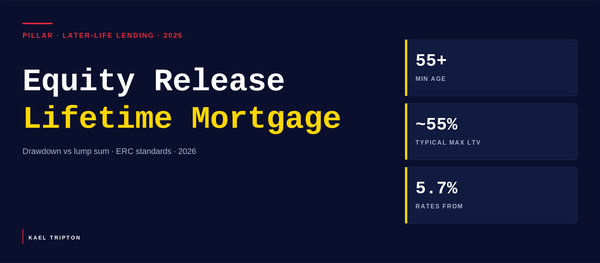
Equity release lets older homeowners access property wealth without selling. How lifetime mortgages and home reversion plans work, costs, risks and alternatives explained.
Mortgage
A loan overpayment calculator shows how extra payments reduce the outstanding balance and total interest on a personal loan. How it works and when overpaying makes sense.
Mortgage
Help to Buy closed to new applicants in 2022-23. What replaced Help to Buy, the current alternatives and how to get on the property ladder without it.
Mortgage
Property development finance funds the purchase and build costs of development projects. Types of development finance, how rates work and what lenders assess explained.
Mortgage
A buy to let mortgage finances a property you plan to rent out. How buy to let mortgages work, current rates, eligibility criteria and the application process explained.
Mortgage
Porting a mortgage means transferring your existing rate to a new property when you move. How porting works, when it makes sense and what happens if you need to borrow more.
Mortgage
A bridging loan provides short-term property finance while a longer-term solution is arranged. How bridging loans work, current rates, costs and when they make sense.
Mortgage
Conveyancing fees cover the legal work of transferring property ownership. What conveyancing costs in 2026, what is included and how to find competitive quotes.
Mortgage
Wales does not have stamp duty - it uses Land Transaction Tax (LTT). Current LTT rates, thresholds, first time buyer position and how to calculate your bill.
Mortgage
A mortgage application typically takes 2 to 6 weeks from submission to formal offer. How long each stage takes, what causes delays and how to speed up the process.
Mortgage
Remortgaging to release equity lets you borrow against your home's value for home improvements, debt consolidation or other purposes. How the process works and what to watch for.
Mortgage
A mortgage broker searches the market on your behalf to find the best deal. What mortgage brokers do, how they charge, the difference between types and how to choose one.
Mortgage
UK mortgage rates in 2026 explained - what drives them, how fixed and tracker rates compare, and how to find the best rate for your circumstances.
Mortgage
A complete first time buyer guide covering every step from saving a deposit to getting the keys. Schemes, costs, mortgage options and the buying process explained.
Mortgage
A house valuation estimates what your property is worth. How house valuations work, what they cost, the different types and how accurate they are.
Mortgage
A retirement interest only mortgage (RIO) lets older borrowers pay interest monthly with the capital repaid when the property is sold. Who qualifies, rates and alternatives.
Mortgage
A limited company mortgage finances buy-to-let properties through a special purpose vehicle. Tax advantages, rates, lender criteria and how SPV mortgages work explained.
Mortgage
A remortgage typically takes 4 to 8 weeks from application to completion. How long does a remortgage take, what affects the timeline and how to speed up the process.
Mortgage
A homebuyers survey assesses a property's condition before purchase. Types of house survey, what each covers, typical costs and whether you need one alongside a mortgage valuation.
Mortgage
A decision in principle is a lender's initial indication of how much they will lend before you find a property. What it means, how to get one and the difference from a mortgage offer.
Mortgage
Land Registry fees apply when you buy, remortgage or transfer a property. How the land registry fee calculator works, current fee scales and who pays.
Mortgage
Scotland does not have stamp duty - it uses Land and Buildings Transaction Tax (LBTT). Rates, thresholds, first time buyer relief and how to calculate your LBTT bill.
Mortgage
First time buyers pay no stamp duty on the first 300,000 pounds of a property purchase. How stamp duty first time buyer relief works, thresholds and eligibility explained.
Mortgage
A buy to let mortgage calculator helps you work out monthly payments, rental yield and whether a BTL property stacks up. How the numbers work and what lenders assess.
Mortgage
The main types of mortgages in the UK explained - fixed rate, tracker, discount, offset and interest-only. How each works, the risks and which suits different borrowers.
Mortgage
Remortgaging means switching your mortgage to a new deal. When to remortgage, how the process works, costs, and the difference between a product transfer and full remortgage.
Mortgage
Negative equity means your mortgage exceeds your home's value. How it happens, the risks and the options available to UK homeowners explained.
Mortgage
A halal mortgage avoids interest through profit-sharing or rental structures. How halal mortgage products work, UK lenders and the regulatory treatment explained.
Mortgage
A mortgage overpayment calculator shows how extra payments reduce your term and total interest. How overpayments work, the 10 percent rule and when to overpay.
Mortgage
Fixed, tracker, offset, and discount mortgages each serve different needs. This guide explains how each type works, what the 2026 rate environment means for your choice, and the decisions that matter most.
Mortgage
Current UK remortgage rates 2026: avg 2-year fix 5.68%, 5-year 5.63%. With 1.8 million deals maturing this year, here is what remortgagers need to know.
Mortgage
UK mortgage rates today June 2026: avg 2-year fixed 5.68%, 5-year 5.63%, SVR 7.13%. Base rate held at 3.75%. What is moving rates and what borrowers should know.
Mortgage
Average UK mortgage rates 2026: 2-year fixed 5.68%, 5-year 5.63%, SVR 7.13% per Moneyfacts. How averages are calculated and what they mean for borrowers.
Mortgage
How to find the best fixed mortgage rates UK in 2026. With 2-year fixes at 5.68% and 5-year at 5.63%, LTV, fees and term length are the key variables.
Mortgage
Current fixed mortgage rates UK June 2026: 2-year fix 5.68%, 5-year 5.63% per Moneyfacts. How fixed rates are priced and what affects your offer.
Mortgage
Current UK mortgage rates for June 2026. Average 2-year fixed at 5.68% and 5-year at 5.63% per Moneyfacts. Bank of England base rate held at 3.75%.
Mortgage brokers are paid by commission from lenders, fees from borrowers, or both. This guide covers what mortgage broker fees are, how FCA rules govern disclosure, how to compare fee-charging and fee-free brokers and what questions to ask.
Conveyancing is the legal process of transferring property ownership. This guide covers the key stages of residential conveyancing for mortgage buyers in the UK, typical timescales and what to expect from a solicitor.
Exchange of contracts is the point at which a property purchase becomes legally binding. This guide covers what exchange means, what happens between exchange and completion, and what the buyer is committed to from exchange onward.
Mortgage completion is the final stage of a property purchase when funds transfer and ownership changes hands. This guide covers what happens on completion day, how mortgage funds are released and what to expect.
A mortgage offer is valid for a defined period after which it expires. This guide covers standard mortgage offer validity periods, new build extensions, how to extend an expiring offer and what happens if market conditions change before completion.
Mortgage
Student loan repayments reduce disposable income in mortgage affordability assessments. This guide covers how lenders treat student loan debt, the difference between plan types and whether paying off student loans before applying improves affordability.
Porting a mortgage to a new property at the same time as starting a new job can complicate lender assessment. This guide covers how lenders treat recent job changes in porting applications and what to do if you are changing employer when you move house.
Mortgage
Mortgage prisoners are borrowers trapped on expensive rates with inactive lenders who cannot remortgage to cheaper deals. This guide covers who mortgage prisoners are, why they are trapped, FCA interventions and the current options available.
Mortgage
Mortgage repossession is a last resort when a borrower cannot maintain payments. This guide covers the UK repossession process, FCA conduct rules that protect borrowers, legal rights at each stage and how to prevent repossession.
Mortgage
Falling into mortgage arrears triggers a process governed by FCA conduct rules. This guide covers what happens when payments are missed, lender obligations, forbearance options and what borrowers can do to protect their home.
Mortgage
Buy-to-let taxation has changed significantly since 2015. This guide covers the key changes - Section 24 mortgage interest restriction, additional SDLT, CGT changes and the abolition of furnished holiday let status - and their impact on landlord finances.
Mortgage
Mortgage interest tax deductions work differently for owner-occupiers, individual landlords and limited company landlords. This guide clarifies what can and cannot be deducted in 2026 and where to find definitive HMRC guidance.
Mortgage
Section 24 of the Finance Act 2015 restricted mortgage interest relief for individual landlords to a basic rate tax credit. This guide explains how the restriction works, who it affects and strategies landlords use to manage the impact.
Mortgage
Mortgage interest tax relief differs significantly for owner-occupiers and landlords in the UK. This guide covers what relief remains available, how Section 24 changed landlord relief and what relief owner-occupiers can claim.
Mortgage
Universal Credit is a means-tested benefit that most mainstream lenders do not accept as qualifying mortgage income. This guide covers the challenges of getting a mortgage on Universal Credit, which lenders are more flexible and what alternatives exist.
Mortgage
Receiving state benefits does not automatically prevent getting a mortgage. This guide covers which benefits lenders accept as income, how benefit income is assessed and which lenders are most flexible for applicants with benefit income.
Mortgage
A property survey assesses condition for the buyer's benefit, unlike the lender's valuation. This guide covers RICS Level 1, 2 and 3 surveys, what each includes, how much they cost and when to upgrade to a full structural survey.
Mortgage
A mortgage valuation assesses the property's value for the lender's security purposes. This guide covers what a mortgage valuation includes, why it differs from a survey, what happens if the property values low and whether you need an additional survey.
Mortgage
The UK mortgage application process involves multiple stages from the initial agreement in principle to completion. This guide covers every step of the process, typical timescales and what to expect at each stage.
Mortgage
First time buyers in England benefit from stamp duty land tax relief on properties up to £500,000. This guide covers the current SDLT thresholds for first time buyers, eligibility criteria and what happens above the relief threshold.
Mortgage
The deposit needed for a UK mortgage depends on the property price, the LTV tier targeted and the product type. This guide covers minimum deposits for different scenarios and how much more deposit improves the available rate.
Mortgage
A mortgage deposit is the upfront sum you contribute to a property purchase. Minimum deposit requirements, how deposit size affects rates and the fastest ways to save.
Mortgage
Existing debts reduce the maximum mortgage available by increasing committed expenditure in the affordability assessment. This guide covers how lenders assess debt-to-income in UK mortgage underwriting and how to reduce debt to improve affordability.
Mortgage
Loan to income (LTI) ratios determine how much a lender can offer relative to a borrower's income. This guide covers LTI multiples, the Bank of England's 4.5x cap on most lending and how lenders calculate the maximum mortgage.
Mortgage
Loan to value (LTV) is the ratio of the mortgage to the property value. This guide covers how LTV affects the interest rate available, which LTV bands produce the best rates and how to improve LTV through a larger deposit or property value growth.
Mortgage
The mortgage stress test checks whether a borrower could afford higher payments if interest rates rise. This guide covers how UK mortgage stress tests work, the FPC's role, why the 3% floor was withdrawn in 2022 and what lenders currently use.
Mortgage
Mortgage affordability determines how much you can borrow. How lenders assess income, outgoings and stress tests, and what you can do to improve your mortgage affordability.
Mortgage
Online mortgage brokers offer digital-first advice and applications. This guide covers how online brokers work, the advantages and limitations compared with traditional face-to-face brokers and what to check before using an online service.
Mortgage
A whole-of-market mortgage broker can search products from every lender in the market, not just a panel. This guide covers why whole-of-market access matters, how to verify it and when it makes a material difference to the outcome.
Mortgage
Independent mortgage advisers search the whole market without restriction. This guide explains the difference between independent, restricted and tied advisers, what FCA rules say and what to check before taking advice.
Mortgage
A mortgage broker searches the market for the right mortgage for your circumstances. This guide covers what mortgage brokers do, the difference between tied and whole-of-market brokers, how they are paid and what to look for when choosing one.
Mortgage
A history of payday loan use can affect mortgage eligibility even if loans were repaid on time. This guide covers how UK mortgage lenders treat payday loan history, how long the impact lasts and what to do if payday loans have been used recently.
Mortgage
A county court judgment on your credit file restricts mainstream lender access but does not prevent getting a mortgage. This guide covers how CCJs affect mortgage eligibility, what specialist lenders look for and how satisfaction affects your options.
Mortgage
A mortgage application can be declined for many reasons. This guide covers the most common reasons UK mortgage applications fail, what to do after a decline and how to improve the chances of success on a future application.
Mortgage
A credit score affects which lenders will consider a mortgage application and what rate they offer. This guide covers how UK credit scores work for mortgage purposes, what lenders actually look at and how to improve your credit before applying.
Mortgage
Buildings insurance is a mandatory requirement for virtually all UK mortgage lenders. This guide covers what lenders require, what buildings insurance covers, how the sum insured is calculated and whether you need additional cover.
Mortgage
Income protection pays a monthly benefit if illness or injury prevents you from working, enabling mortgage payments to continue. This guide covers how income protection works, the deferred period, benefit level and how it differs from other protection products.
Mortgage
Critical illness cover pays a lump sum on diagnosis of a serious specified condition, which can be used to repay the mortgage. This guide covers what critical illness insurance covers, how policies differ and how to choose the right cover.
Mortgage
When a mortgage holder dies, the mortgage obligation passes to the estate or surviving borrower. This guide covers what happens to a mortgage on death, life insurance, probate and lender processes for bereaved families.
Mortgage
Separation with a joint mortgage creates challenges for getting a new mortgage. This guide covers how lenders assess applications where a joint mortgage from a previous relationship remains, and what to do if you cannot be released from the old mortgage.
Mortgage
Divorce or separation with a joint mortgage requires decisions about the property. This guide covers the main options: selling, one party buying out the other, and court orders - and how lenders and solicitors handle mortgage changes in divorce.
Mortgage
A transfer of equity changes the legal ownership of a mortgaged property without a full sale. This guide covers how transfer of equity works, the lender consent process, stamp duty implications and when it is used.
Mortgage
Removing someone from a mortgage requires the remaining borrower to demonstrate they can afford the full mortgage alone. This guide covers the transfer of equity process for removing a joint owner, lender requirements and the common scenarios where this arises.
Mortgage
Adding someone to an existing mortgage requires lender consent and a new affordability assessment. This guide covers the process of adding a person to a mortgage, the legal implications and the alternatives.
Mortgage
Porting a mortgage transfers an existing deal to a new property without triggering an early repayment charge. This guide covers how porting works, what lenders require, what happens if you need a larger loan and the risks of porting.
Mortgage
Comparing mortgages requires looking beyond the headline interest rate to fees, total cost of credit and product features. This guide covers how to compare UK mortgage deals properly and what to look for in 2026.
Mortgage
Online mortgage calculators estimate how much you can borrow and what monthly payments would be. This guide explains how UK mortgage calculators work, their limitations and how to interpret the results before speaking to a lender or broker.
Mortgage
A comprehensive glossary of UK mortgage terms covering everything from AIP to SVR. This guide defines the most important mortgage terms used by lenders, brokers and conveyancers in plain English.
Mortgage
Sharia-compliant mortgages enable Muslims and others to purchase property without paying interest. This guide covers the sharia principles involved, the main product structures available in the UK and how to compare sharia home finance with conventional mortgages.
Mortgage
An Islamic mortgage avoids interest through profit-sharing or rental structures. How diminishing musharaka and ijara work, UK lenders and regulatory treatment explained.
Mortgage
Eco mortgages link lending incentives to a property's environmental credentials. This guide covers what eco mortgages cover in the UK, how they relate to green and energy efficient mortgages, and what lenders are doing to support sustainable home ownership.
Mortgage
An energy efficient mortgage ties borrowing incentives to a property's energy rating or improvement plans. This guide covers how energy efficient mortgages work in the UK, which lenders offer them and how they relate to government energy policy.
Mortgage
A green mortgage offers preferential rates for energy-efficient properties with high EPC ratings. How green mortgages work, which lenders offer them and what qualifies.
Mortgage
A part-and-part mortgage splits the loan into a repayment portion and an interest only portion. This guide covers how part-and-part mortgages work, why borrowers use them, lender availability and the repayment vehicle requirement for the interest only element.
Mortgage
Extending a mortgage term reduces monthly payments but increases total interest paid. This guide covers how to extend a mortgage term, when it makes sense, what lenders require and how term extensions affect the total cost of the mortgage.
Mortgage
A mortgage payment holiday lets you pause payments temporarily. How payment holidays work, the long-term cost, eligibility and the alternatives available in 2026.
Mortgage
Some flexible mortgages allow underpayments by drawing on previous overpayments. This guide covers how mortgage underpayment works, which products offer this feature, the risks involved and how lenders handle payment shortfalls.
Mortgage
An early repayment charge applies when you leave a fixed-rate mortgage before the deal ends. How ERCs are calculated, when they apply and how to avoid paying them.
Mortgage
When a fixed rate deal ends, borrowers must choose between a product transfer with their existing lender or a full remortgage to a new lender. This guide compares the two options on cost, speed, risk and when each makes more sense.
Mortgage
Self-employed borrowers remortgaging face the same income verification challenges as at purchase. This guide covers the documentation required for a self-employed remortgage, how lenders assess variable income and the difference between product transfer and full remortgage.
Mortgage
Remortgaging replaces an existing mortgage with a new product, either with the same lender or a different one. This guide covers when to remortgage, the costs involved, how the process works and what to watch for in 2026.
Mortgage
A second home mortgage finances a holiday home or additional property. Deposit requirements, stamp duty surcharge, lender criteria and tax implications explained.
Mortgage
A holiday home mortgage finances a second property used primarily for personal holidays rather than let to paying guests. This guide covers how lenders assess second home applications, stamp duty implications and how holiday home mortgages differ from buy-to-let.
Mortgage
A multi-unit freehold block mortgage finances the purchase of an entire residential building containing multiple flats. This guide covers how MUFB mortgages work, lender criteria, valuation methods and how they differ from standard BTL.
Mortgage
Portfolio landlords with four or more mortgaged properties face stricter lender assessment under PRA rules introduced in 2017. This guide covers how portfolio mortgages work, the additional underwriting requirements and which lenders serve portfolio landlords.
Mortgage
Getting a mortgage under £50,000 is harder than a standard loan due to lender minimum thresholds. This guide covers which lenders consider sub-£50,000 mortgages, the costs involved and alternatives to consider.
Mortgage
Small mortgages below £50,000 are harder to arrange than standard loans as many lenders impose minimum thresholds. This guide covers minimum loan sizes, which lenders accept small mortgages and alternatives for low-value property finance.
Mortgage
Mortgages of £1 million or more require specialist lenders and manual underwriting. This guide covers the income required, LTV available, which lenders operate at this level and the tax considerations on high-value property purchases.
Mortgage
High value mortgages cover loans typically above £500,000 where standard automated underwriting gives way to specialist assessment. This guide covers how high value mortgage applications work in the UK and which lenders to approach.
Mortgage
The term jumbo mortgage, borrowed from US usage, refers to very large residential loans above standard lender thresholds. This guide covers how very large UK residential mortgages are sourced, which lenders operate in this space and how they differ from standard products.
Mortgage
Large mortgages above standard income multiples require specialist lender assessment. This guide covers how high-value mortgage applications are assessed in the UK, which lenders offer large loans and what documentation is required.
Mortgage
Many interest only mortgages taken out before 2008 are now approaching their term end. This guide covers the options available to borrowers in retirement whose interest only mortgage is maturing and who cannot repay the capital.
Mortgage
Borrowers in their seventies still have mortgage options including retirement interest only mortgages, equity release and specialist later life products. This guide covers what is available to over 70s in the UK and how income and age affect eligibility.
Mortgage
Borrowers in their sixties have access to standard mortgages, retirement interest only products and equity release. This guide covers which mortgage options are available to over 60s in the UK, how income is assessed and what to consider.
Mortgage
Later life mortgage options include standard mortgages with age-flexible criteria, retirement interest only mortgages and equity release products. This guide maps all the options available to borrowers aged 55 and over in the UK.
Mortgage
A retirement interest only mortgage requires monthly interest payments with no capital repayment, and is repaid when the property is sold. This guide covers how RIO mortgages differ from standard interest only and equity release, eligibility and lender availability.
Mortgage
A home reversion plan involves selling part or all of a property to a provider in exchange for a lump sum or income, while retaining the right to live there. This guide covers how home reversion works, the valuation discount and how it compares to a lifetime mortgage.
Mortgage
A lifetime mortgage is a loan secured against a property for older homeowners, with interest rolling up rather than paid monthly. This guide covers how interest compounds, the no-negative-equity guarantee, product types and FCA regulation.
Mortgage
Equity release allows homeowners aged 55 and over to access property wealth without moving. This guide covers the two main types - lifetime mortgage and home reversion - how each works, the costs involved and FCA regulation.
Mortgage
A freehold property means the owner owns both the building and the land it stands on. This guide explains how freehold mortgages differ from leasehold, the advantages of freehold ownership and what to check when buying freehold.
Mortgage
A short lease makes a property harder to mortgage and sell. This guide covers what counts as a short lease, the options available including simultaneous lease extension, which specialist lenders consider short leases and the cost of lease extension.
Mortgage
Leasehold mortgages are subject to minimum remaining lease length requirements and ground rent restrictions. This guide covers what lenders require for leasehold flats and houses, how to extend a lease and what the Leasehold Reform Act means for buyers.
Mortgage
Studio flats face minimum floor area restrictions from many mortgage lenders. This guide covers the typical size thresholds, which lenders are most flexible and how studio flat mortgages compare with standard flat lending.
Mortgage
Ex local authority properties are often cheaper than comparable private stock but face mortgage restrictions from some lenders. This guide covers which lenders accept ex-council properties, common restrictions and the LTV available.
Mortgage
High rise flats face specific mortgage restrictions following the Grenfell Tower fire and subsequent cladding safety reviews. This guide covers EWS1 requirements, the Building Safety Act 2022, lender criteria and the current market position.
Mortgage
Flats situated above commercial premises face specific lender restrictions. This guide covers which lenders consider flats above shops, what LTV is available and how the type of commercial use below affects mortgage eligibility.
Mortgage
Non-standard construction properties require specialist mortgage assessment. This guide covers which construction types are considered non-standard, how lenders assess them and which specialists operate in this space.
Mortgage
Listed buildings face additional planning restrictions that affect mortgage availability and insurance requirements. This guide covers how lenders assess listed buildings, the types of listing, consent requirements and insurance considerations.
Mortgage
Agricultural mortgages finance the purchase of farms, farmland and rural properties. This guide covers how lenders assess agricultural income and land value, the role of specialist lenders and the key considerations for rural buyers in the UK.
Mortgage
Development finance funds the construction or conversion of residential and commercial properties. This guide covers how development loans are structured, how GDV is used in lending calculations and the difference between development finance and a standard mortgage.
Mortgage
Mixed use mortgages cover properties with more than one planning use on a single freehold or leasehold title. This guide covers how lenders assess multi-use properties, the regulatory position and which specialists operate in this space.
Mortgage
A semi-commercial mortgage finances properties that have both residential and commercial elements, such as a shop with a flat above. This guide covers how lenders assess mixed-use properties, LTV levels and which lenders offer semi-commercial products.
Mortgage
A commercial mortgage finances business premises or commercial property investment. This guide covers how commercial mortgages are assessed, what property types qualify, typical LTV and rates and how commercial lending differs from residential.
Mortgage
Bridging loans and mortgages both provide property finance but work very differently. This guide compares the two products on cost, term, purpose and regulation, and explains when a bridging loan is appropriate and when a mortgage is the right choice.
Mortgage
A bridge to let mortgage finances the purchase and renovation of a property before refinancing onto a buy-to-let mortgage. This guide covers how bridge to let works, the exit to BTL process and lender availability.
Mortgage
A renovation mortgage provides funds for both purchasing and improving a property in need of refurbishment. This guide covers the types of renovation mortgage available in the UK, how lenders assess renovation projects and how funds are released.
Mortgage
Custom build allows buyers to design their home within a developer's framework. This guide covers how custom build mortgages differ from self build, the Help to Build scheme, finance stages and lender availability in the UK.
Mortgage
A self build mortgage releases funds in stages as construction progresses rather than in a lump sum. This guide covers how self build mortgages work, the stage release schedule, eligibility and how to plan for cost overruns.
Mortgage
New build mortgages have specific lender criteria around the new build premium, builder incentives and reservation periods. This guide covers how new build mortgages differ from standard residential mortgages and what buyers need to know.
Mortgage
A shared equity scheme provides a loan toward the property purchase price, reducing the mortgage required. This guide covers how shared equity works, the schemes available in 2026 and the difference between shared equity and shared ownership.
Mortgage
Right to Buy allows council tenants to buy their home at a discount. Eligibility, the mortgage process, discount limits and repayment rules explained.
Mortgage
Visa holders in the UK can apply for mortgages but face specific lender criteria around remaining visa validity and deposit requirements. This guide covers which visa types are accepted, what lenders require and how to find the right product.
Mortgage
EU citizens living in the UK can access mortgages, but eligibility depends on their immigration status under the EU Settlement Scheme. This guide covers how EU Settlement Scheme status affects mortgage eligibility and lender assessment.
Mortgage
Non-UK residents can purchase UK property but face additional stamp duty, restricted lender choice and overseas income verification requirements. This guide covers the key considerations for non-UK residents buying UK property in 2026.
Mortgage
Foreign nationals living in the UK can access residential mortgages, but lender criteria vary based on residency status and visa type. This guide covers how UK mortgage lenders assess non-UK citizens, which visa types are eligible and what to expect.
Mortgage
Key workers including NHS staff, teachers, police and social workers may access specific mortgage schemes and preferential income multiples. This guide covers what key worker mortgage options exist in the UK in 2026.
Mortgage
UK armed forces personnel have access to a government loan scheme to help with mortgage deposits and specific mortgage products recognising military service income. This guide covers Forces Help to Buy, income assessment and lender options.
Mortgage
Teachers in England and Wales may access professional mortgage products with higher income multiples and government housing schemes designed for key workers. This guide covers what is available to teachers in 2026.
Mortgage
NHS employees can access specific mortgage schemes and benefit from lender recognition of NHS income structures including overtime, bank shifts and enhanced pay. This guide covers the options available to NHS staff in the UK in 2026.
Mortgage
Zero hours contract workers can get a mortgage in the UK but face additional income verification requirements. This guide covers how lenders assess variable hours income, which lenders are most flexible and how to build the strongest possible application.
Mortgage
Day rate contractors can have their income assessed by annualising their daily contract rate rather than using accounts. This guide covers which lenders use the day rate method, how the calculation works and what documentation is needed.
Mortgage
Limited company directors often draw low salaries and take profits as dividends, which can affect mortgage affordability calculations. This guide covers how lenders assess director income, which methods produce the best outcome and what documents are required.
Mortgage
Sole traders applying for a mortgage are assessed on net profit rather than turnover. This guide covers how lenders verify sole trader income, which documents are required and how to present a sole trader mortgage application effectively.
Mortgage
Freelancers with variable monthly income can still get a mortgage in the UK, but lenders assess income differently than for salaried employees. This guide covers how lenders average freelance income, what documents are needed and which lenders are most flexible.
Mortgage
Contractors can face challenges getting a mortgage when lenders assess income in the standard way. This guide covers contractor-friendly lenders, day rate income assessment methods and the documentation required for a contractor mortgage in the UK.
Mortgage
A self employed mortgage requires different documentation from employed applicants. How self employed mortgages work, what lenders assess, and how to maximise your application.
Mortgage
An IVA (Individual Voluntary Arrangement) does not permanently prevent getting a mortgage. This guide covers how long an IVA stays on the credit file, when lenders will consider applications and what deposit and rate to expect after an IVA.
Mortgage
Bankruptcy does not permanently prevent getting a mortgage in the UK. This guide covers when you can apply after bankruptcy, which specialist lenders consider discharged bankrupts and what deposit and rate to expect.
Mortgage
Having a default on your credit file does not automatically prevent getting a mortgage in the UK. This guide covers how lenders assess defaults, the difference between satisfied and unsatisfied defaults and which specialist lenders consider default applications.
Mortgage
A 100% mortgage requires no deposit from the borrower. This guide covers the limited availability of no-deposit products in the UK in 2026, how family-assisted 100% mortgages work, the risks involved and which lenders offer them.
Mortgage
A 95% mortgage allows buyers to purchase with just a 5% deposit. This guide covers which lenders offer 95% LTV products, how they are priced, government support schemes and the risks of high LTV borrowing in the UK.
Mortgage
A gifted deposit uses funds given by a family member to make up part or all of the mortgage deposit. This guide covers lender requirements, the gifted deposit letter, anti-money laundering checks and what to do if the gift has conditions attached.
Mortgage
A family offset mortgage links a family member's savings to a first time buyer's mortgage, reducing the interest charged without the family member losing access to their money. This guide covers how family offset mortgages work, lender availability and the key considerations.
Mortgage
A guarantor mortgage uses a parent or family member's finances to support your application. Risks, eligibility, types and alternatives explained for UK borrowers.
Mortgage
A joint mortgage is taken out by two or more borrowers. How joint mortgages work, who is liable, what happens if couples separate and how to remove someone from a joint mortgage.
Mortgage
The Lifetime ISA provides a 25% government bonus on savings that can be used toward a first home purchase. This guide covers LISA eligibility, the property price cap, withdrawal rules and how the bonus interacts with a mortgage.
Mortgage
The Help to Buy equity loan scheme in England closed to new applicants in March 2023. This guide explains how the scheme worked, what alternatives exist for first time buyers in 2026 and the current government support landscape.
Mortgage
A shared ownership mortgage finances your share of a home while you pay rent on the rest. Eligibility, lenders, staircasing and costs explained.
Mortgage
A limited company buy-to-let mortgage finances a rental property held through a special purpose vehicle company. This guide covers the tax case for limited company ownership, SPV structure, lender criteria and the costs involved.
Mortgage
An HMO mortgage finances a house in multiple occupation let to several unrelated tenants. This guide covers HMO mortgage criteria, mandatory licensing under the Housing Act 2004, rental income assessment and how HMO finance differs from standard buy-to-let.
Mortgage
A holiday let mortgage finances a short-term rental property. How holiday let mortgages differ from buy-to-let, rates, lenders and the tax changes affecting holiday lets.
Mortgage
A let to buy mortgage lets you rent out your current home and use the equity to buy a new one. How let to buy works, the tax implications and who it suits.
Mortgage
A capped rate mortgage sets a maximum interest rate above which the pay rate cannot rise, while still allowing payments to fall if rates drop. This guide covers how caps work, their current availability and how they compare to fixed rate products.
Mortgage
A discount mortgage sets your rate at a fixed discount below the lender's standard variable rate. This guide explains how discount mortgages work, the risks of SVR dependency and how they compare to tracker deals.
Mortgage
A variable rate mortgage has an interest rate that can change during the mortgage term. This guide explains the different types of variable rate mortgage, how each is set and the risks and benefits compared with fixed rate products.
Mortgage
A fixed rate mortgage locks in the interest rate for a set period, providing payment certainty regardless of base rate movements. This guide covers how fixed rates work, how terms compare and what happens at the end of the deal.
Mortgage
A tracker mortgage follows the Bank of England base rate plus a fixed margin. How tracker mortgages work, current rates, the risks and when a tracker mortgage makes sense.
Mortgage
An offset mortgage links your savings to your mortgage balance, reducing the interest charged. How offset mortgages work, who offers them and when they make financial sense.
Mortgage
A second charge mortgage lets you borrow against your home equity without disturbing your existing mortgage. Rates, lenders, eligibility and risks explained.
Mortgage
A repayment mortgage clears both interest and capital over the term so the loan is fully paid off at the end. This guide explains how payments are structured, what affects total cost and how lenders assess affordability.
Insurance
Buildings insurance covers the structure of your home against damage from fire, flood and subsidence. This guide explains what UK buildings insurance covers, what is excluded and when it is legally required.
Business
A commercial mortgage funds property used for business. This guide explains how it differs from a residential mortgage, typical LTV of 65 to 75 percent, fixed, variable and SONIA-linked rates, what lenders assess, FCA regulation, broker fees and commercial stamp duty in the UK as of 2026.
The Rightmove House Price Index tracks asking prices on newly listed UK homes. It is the earliest signal in the market, but it is not the same as the Halifax, Nationwide, HM Land Registry or ONS UK House Price Index, which all measure something different.
With the Bank of England base rate at 3.75% and the next MPC decision on 18 June 2026, mortgage holders coming off fixed deals face a difficult choice. Here is how to think about fixing versus staying on a variable rate in the current environment.
UK house prices fell 0.6 percent in May 2026, the first monthly decline of the year and three times the expected fall, Nationwide data shows. The average price slipped to £278,024 with annual growth slowing to 1.7 percent.
The Bank of England held Bank Rate at 3.75 percent by 8 to 1 on 30 April. With the next MPC vote on 18 June and the Iran conflict still feeding inflation, mortgage pricing is being driven by swap rates rather than the official rate.
Mortgage rates in June 2026 are above 5% on two-year fixed deals as lenders price in uncertainty ahead of the Bank of England MPC meeting on 18 June. Here is what is available and what the decision could mean for fixed and variable rate borrowers.
Content Desk Cluster
How estate agents, property developers, and proptech firms win organic visibility under RICS, ARLA, and TCPD-aware content programmes.
Property
Older borrowers took out £6 billion in mortgage lending in Q1 2026, UK Finance confirmed on 28 May. Retirement interest-only mortgages rose 5.4% while lifetime mortgages fell 8%.
Rob Dix co-hosts the UK Property Podcast and has built a substantial buy-to-let portfolio. This abstract covers his practical framework for evaluating deals, understanding the tax landscape, and building a property business that survives changing regulation.
The Bank of England held the base rate at 4.25% in May 2026. With inflation at 2.8%, here is what rate decisions mean for mortgage holders and sa...
Property
UK mortgage rates have started rising again after a brief easing earlier this spring. Brent crude above $110, 10-year gilt yields at the highest since the 2008 financial crisis, and Bank of England warnings about a possible further hike have shifted lender funding costs sharply upward.
Editor's Picks
Rightmove's May 2026 House Price Index shows new seller asking prices rose 1.2% month-on-month to £378,304, but 32% of homes on the market have already had a price reduction and buyer choice is at its highest May level since 2015.
Mortgage
Statutory Maternity Pay (SMP) is paid by employers to eligible employees for up to 39 weeks: 90% of average weekly earnings for the first 6 weeks, then the lower of the standard statutory rate or 90% of earnings for the remaining 33 weeks. Eligibility requires 26 weeks of continuous employment by t
Mortgage
Marriage to a British citizen or settled person does not automatically grant residence in the UK; immigration status depends on the visa route used. The Spouse (Family) visa, Fiance visa, and Marriage Visitor visa each carry distinct eligibility, financial, and English language tests, and route to
Mortgage
UK marriage paperwork has three legal layers: documents presented at notice, the marriage schedule or document signed at the ceremony, and the registered marriage certificate issued afterwards. Each layer is governed by statute and operated by the General Register Office and local register offices.
Mortgage
Child Benefit is a payment from HMRC for people responsible for bringing up a child under 16 (or under 20 in approved education or training). It is paid at one rate for the eldest or only child and a lower rate for each additional child, with current figures published on gov.uk. Higher earners may
Mortgage
UK car insurance is a legal requirement for any vehicle kept on the road and falls under the Road Traffic Act 1988. Cover is sold in three tiers, third party, third party fire and theft, and comprehensive, with premiums driven by driver risk, vehicle group, postcode, mileage, and claims history. Th
Mortgage
Prenuptial agreements are not automatically binding under English law but, following the Supreme Court decision in Radmacher v Granatino [2010] UKSC 42, courts give them decisive weight where specific safeguards are met. Scots law treats pre-marital agreements as enforceable contracts. Couples cons
Mortgage
A mortgage in principle is a lender's initial indication of how much they may lend before you find a property. What it is, how to get one and its limitations explained.
Property
Loan-to-value, or LTV, is the ratio of the mortgage amount to the property's value, expressed as a percentage. It is one of the most important variables in a UK mortgage application because lenders price products in LTV bands and use the ratio as a key indicator of risk. A first-time buyer with a 1
Mortgage
Marriage in the UK does not automatically merge a couple's finances, but it does change several tax, inheritance, and credit positions. The Marriage Allowance, inheritance tax spousal exemption, and capital gains tax inter-spouse transfer rules are statutory benefits triggered by marriage. Joint ac
Mortgage
Getting married in the UK involves giving formal notice at a register office, satisfying eligibility checks, and holding a legally recognised ceremony. The process differs between England and Wales, Scotland, and Northern Ireland, with notice periods, age rules, and venue rules set by statute. Coup
Mortgage
Mortgage affordability in the UK refers to the assessment a lender makes of whether a borrower can sustainably meet mortgage payments. It is governed by FCA Mortgage Conduct of Business rules requiring responsible lending, the Bank of England loan-to-income flow limit, and each lender's internal af
Property
A first-time buyer deposit is the share of a property purchase price paid in cash by the buyer, with the rest covered by a mortgage. The size of the deposit drives the loan-to-value ratio, which in turn shapes the interest rate available, the range of lenders willing to lend, and the resilience of
Visa status is the first underwriting question on any expat mortgage application involving a foreign national resident in the UK, and it determines lender appetite before product comparison becomes meaningful. Lenders divide applicants by route (Skilled Worker, Health and Care, Family, Graduate, St
The pool of UK lenders willing to underwrite expat and non-resident mortgage applications is significantly narrower than the mainstream residential market, and the categories within it operate to materially different criteria. Lender appetite divides broadly into international banking arms, special
Applying for a UK mortgage while earning in a foreign currency runs on a separate regulatory and underwriting track to sterling-paid applicants. FCA rules implementing the Mortgage Credit Directive set a 20% foreign-currency threshold, and lenders apply currency haircuts, stressed exchange rates an
Deposit thresholds on expat and non-resident UK mortgages are materially higher than the 5-10% available on mainstream residential lending, with most specialist lenders working to a 25-40% range as a starting point. The exact deposit required is a function of visa status, country of residence, curr
Dogs and cats in the United Kingdom share several cost categories, but the relative weight of each category differs. Dog ownership typically carries higher food, walking, training, and boarding costs, while cat ownership tends to involve lower routine costs but similar veterinary and microchipping
Raising a child in the UK involves a layered set of costs across housing, childcare, food, clothing, transport, and education incidentals. There is no single official total: the Office for National Statistics publishes household spending data, and research from independent charities estimates broad
Owning a pet in the UK involves more than the initial purchase or adoption fee. Ongoing costs include food, insurance, routine veterinary care, microchipping, parasite prevention, and occasional boarding. Year-one setup costs, breed-specific variation, and end-of-life care each materially affect th
UK car buyers can choose between Personal Contract Purchase, Hire Purchase, Personal Contract Hire (leasing), unsecured personal loans, and outright cash. Each product carries a different ownership profile, statutory protection, total cost shape, and flexibility at term end. Choice should be driven
Buying a used car in the UK turns on three risks: vehicle condition, legal title, and finance encumbrance. Dealer purchases carry full Consumer Rights Act 2015 protection including a thirty-day right to reject, while private sales rely on accurate description and good title only. Pre-purchase check
Buying a car in the UK involves more than picking a model and paying the seller. Ownership transfers through the V5C registration document with DVLA, while road use depends on a valid MOT, vehicle tax (VED), and insurance held in the keeper's name. New, used, private, dealer, and auction purchases
Mortgage
Buying a car as a new arrival to the UK is constrained less by the car than by the documentation around the new arrival: visa status determines what address evidence and right-to-rent style checks dealers will accept, the absence of a UK credit footprint blocks most mainstream PCP and HP applicatio
Property
A remortgage solicitor is the legal professional who handles the conveyancing side of a UK remortgage.
Property
Almost every UK remortgage requires some legal work because the lender's charge over the property has to be redeemed with the old lender and registered...
Property
For a UK homeowner, the question "do I need a solicitor to remortgage" is really a question about which type of remortgage is being done.
Mortgage
Paying off a mortgage early is one of the most emotionally satisfying financial decisions a UK homeowner can make.
Mortgage
Home reversion is one of two equity release products regulated by the Financial Conduct Authority in the UK, alongside the lifetime mortgage.
Mortgage
"Should I pay off my mortgage?" is one of the most common personal finance questions in the UK, and one of the most context-dependent.
Mortgage
"What credit score do I need for a mortgage?" is one of the most-searched mortgage questions in the UK, and one of the most frequently answered wrongly.
Mortgage
For a buyer in a property chain, the mortgage offer is one of the few documents whose validity period is fixed and largely outside the buyer's control.
Mortgage
Equity release in the UK has two main forms: lifetime mortgages (overwhelmingly the more common modern product) and home reversion plans.
Mortgage
Home reversion is the older of the two main forms of equity release available to UK homeowners.
Mortgage
A trainee mortgage advisor role is a regulated entry point into UK financial services.
Mortgage
Modern UK mortgage broking runs on software. The days of a broker keeping a paper file, phoning a business development manager, and posting a paper...
Mortgage
"Mortgage in principle" is the phrase used to describe a lender's indicative pre-approval of a mortgage application. The phrase covers a range of products.
Property
"Equity release horror stories" is a category of media coverage with a wide spread of underlying scenarios.
UK mortgages come in three main rate structures: fixed (the rate is set for the deal period and does not change), discounted variable (the rate is the...
Mortgage
A self-build mortgage finances the construction of a new home, a substantial renovation, or a conversion (such as a barn conversion or an industrial...
Mortgage
A second-charge mortgage (also called a homeowner loan or secured loan) is a loan secured by a second-priority charge on a property that already has a...
Mortgage
A mortgage broker (or mortgage adviser, or mortgage intermediary) is an FCA-authorised firm or individual who advises on and arranges mortgages on...
Mortgage
The mortgage advisor profession in the UK is one of a small number of FCA-regulated advisory roles.
Mortgage
In a residential conveyance in England, Wales and Northern Ireland, exchange of contracts and completion are two separate, sequential events.
Property
Remortgaging means moving the mortgage on an existing property from one product or one lender to another.
Mortgage
Stamp Duty Land Tax in England and Northern Ireland, Land and Buildings Transaction Tax in Scotland, and Land Transaction Tax in Wales are paid by the...
Mortgage
A second-charge mortgage (also called a homeowner loan or secured loan) is a loan secured against a residential or buy-to-let property where there is...
Property
UK fixed mortgage rates have climbed above 5% in mid-May 2026 as the rate outlook shifts. Where deals stand, the SVR risk and what borrowers should know.
Mortgage
UK borrowers often ask "what credit score do I need for a mortgage?" expecting a single threshold number.
Mortgage
An unencumbered property is one that has no mortgage and no other secured charge registered against it at HM Land Registry (or the Registers of...
Mortgage
Buying a second residential property in the UK triggers an additional Stamp Duty Land Tax charge in England and Northern Ireland, an Additional...
Property
UK mortgage brokers are paid by some combination of a fee charged to the borrower and a commission paid by the lender.
Mortgage
A mortgage application moves through several distinct stages: agreement in principle, full application, lender underwriting, valuation, mortgage offer...
Property
A mortgage agent (more commonly called a mortgage broker or, in regulated terms, a mortgage adviser) is paid by some combination of a fee charged...
Mortgage
A mortgage advisor (the UK regulated term is "mortgage adviser", and the practical job is the same as "mortgage broker") helps borrowers find and apply...
Property
Equity release is the umbrella term for a group of products that allow homeowners aged 55 or over to release cash from their home without selling it or...
Mortgage
First Direct is the digital and telephone arm of HSBC UK and is consistently among the top-rated UK banks in customer satisfaction surveys.
Property
Equity release is a regulated financial product that allows homeowners aged 55 or over (the typical minimum) to release cash from their home without...
Mortgage
A second charge mortgage is a regulated loan secured against a property that already has a first charge mortgage in place.
Mortgage
Shared Ownership is the longest-running affordable home ownership scheme in the UK.
Editor's Picks
Santander cut selected fixed, tracker and product transfer rates by up to 50bps from 11 May 2026, with Halifax following on remortgage products. We explain what changed, what the best buys look like as of 12 May, and how to think about timing your remortgage.
Last updated: 11 May 2026. The Bank of England's Monetary Policy Committee (MPC) most recently cut the Bank Rate to
Tax & HMRC
Mortgages TL;DR It is possible to get a mortgage with bad credit, but you will pay a higher rate, need a
Tax & HMRC
Mortgages TL;DR A buy-to-let (BTL) mortgage is used to purchase a property you intend to rent out rather than
Tax & HMRC
A first-time buyer guide for the UK in 2026: who qualifies, how much deposit is realistic, the Lifetime ISA bonus, stamp duty relief, government schemes such as Shared Ownership and First Homes, and the buying process from search to keys.
Tax & HMRC
Mortgages TL;DR Loan-to-value (LTV) is the mortgage amount expressed as a percentage of the property value. A £150,000
Tax & HMRC
Mortgages TL;DR The Help to Buy Equity Loan scheme in England closed to new applicants in October 2022. The Mortgage Guarantee
Mortgage
Choosing between a fixed and variable rate mortgage is one of the most consequential decisions for borrowers. This guide compares the two structures on cost, certainty, flexibility and when each is most appropriate in 2026.
Tax & HMRC
A plain-English guide to UK stamp duty in 2026-27, covering SDLT in England and Northern Ireland, LBTT in Scotland and LTT in Wales. Worked examples show how tiered bands, first-time buyer relief and the additional property surcharge combine.
Tax & HMRC
Calculate how much you can borrow for a UK mortgage based on income, deposit and outgoings. Understand how lenders assess affordability in 2026.
Tax & HMRC
Mortgages TL;DR Remortgaging means switching to a new mortgage deal, either with your existing lender (product transfer) or with a new
Tax & HMRC
Mortgages TL;DR Most UK lenders require a minimum 5% deposit for a residential mortgage, but the best rates are available from
Tax & HMRC
Mortgages TL;DR A joint borrower sole proprietor (JBSP) mortgage allows a parent or family member to be added to the mortgage
Tax & HMRC
Expat Finance TL;DR UK nationals living abroad can apply for an expat mortgage to buy UK residential or buy-to-let
Tax & HMRC
A free UK second charge mortgage calculator for monthly payment, total amount payable, and total interest over the term. Capital and interest repayment basis. Excludes lender fees, valuation, legal, and HMLR charges.
Tax & HMRC
A default does not stop you getting a UK mortgage in 2026, but narrows lender choice and means higher rates. Mainstream typically decline; specialist near-prime and adverse lenders accept on a graded basis depending on age and amount.
Tax & HMRC
UK low-rate secured loans are property-secured loans priced at the lowest tier of the lender's product card. Available to borrowers with low combined LTV, clean credit, standard property, and verifiable income. Compare APRC, not headline.
Tax & HMRC
A UK barrister mortgage is tailored to barristers' specific income structure: high gross billings, irregular cash flow, aged debt, complex tax-efficient structures. Specialist UK lenders use gross billings rather than retained profit.
Tax & HMRC
A UK investment property mortgage is secured against a property purchased to generate rental income or capital appreciation. The most common form is buy-to-let. Most UK investment property lending is unregulated commercial lending.
Listicle
A UK shared ownership mortgage broker is an FCA-authorised intermediary specialising in matching shared ownership buyers to lenders that accept the scheme's specific structure. The mortgage market is narrower than for standard residential.
Tax & HMRC
UK mortgage life insurance quotes are individual premium estimates from life insurers based on age, health, sum assured, term, and policy type. Prices vary 30-50% between insurers for the same case. Like-for-like comparison finds value.
Tax & HMRC
A UK second mortgage for home improvements is a second-charge mortgage with proceeds funding building work. Best for borrowers tied into a low fixed-rate first mortgage with high ERCs. This article covers when second charge wins.
Vat
UK private mortgage lenders are non-bank lenders, ranging from FCA-regulated specialist banks to unregulated commercial private wealth funds. This article lists active 2026 lenders, explains how to verify, and when private lenders fit.
A UK secured loan for home improvements funds building work using property as security. Three main routes: remortgage with capital raise, second-charge mortgage, or further advance. Smaller projects under £25,000 may suit unsecured loans.
Tax & HMRC
UK bad credit secured loans are FCA-regulated property-secured loans for borrowers excluded from mainstream high-street lenders. 2026 lenders include Pepper, Together, Norton, Step One, Spring Finance. Rate premium typically 1-3 points.
Using a UK second charge mortgage for debt consolidation rolls multiple unsecured debts into a single secured loan against your home. Lower monthly payment, longer term, higher lifetime interest. Trade-offs are significant.
Tax & HMRC
UK secured loan interest rates in 2026 are driven by combined LTV, credit profile, product type, and lender funding cost. Headline rates apply to clean credit at low LTV. APRC is the FCA total cost figure that matters for comparison.
Tax & HMRC
UK second charge loans are loans secured behind your existing first-charge mortgage at HM Land Registry. FCA-regulated as mortgages since the Mortgage Credit Directive came into force in 2016. Lenders include Pepper, Selina, Together.
Tax & HMRC
UK subprime mortgages are mortgages for borrowers outside mainstream credit criteria. UK regulators use 'specialist' or 'non-standard' rather than subprime. Served by Pepper, Kensington, Vida, Bluestone, Together. All FCA-regulated.
Tax & HMRC
A UK mortgage default is a formal lender record that payments have not been made as agreed. It stays on credit files for 6 years and seriously restricts future borrowing. This article covers triggers, FCA forbearance rules, and options.
Tax & HMRC
Secured loan with no mortgage describes a UK homeowner who owns outright and wants to borrow with the property as security. The right product is usually an unencumbered first-charge mortgage rather than a second-charge secured loan.
Tax & HMRC
A UK unencumbered mortgage is a first-charge mortgage on a property with no existing mortgage. UK homeowners who own outright can take one to release equity. Rates match mainstream first-charge levels.
Tax & HMRC
UK secured borrowing covers any loan secured against an asset, almost always a property: first and second-charge mortgages, bridging, equity release, BTL. This article covers each type and how secured compares to unsecured.
Tax & HMRC
The UK does not have a 'home equity loan' product in the strict American sense. UK borrowers asking for one typically need a second-charge mortgage, remortgage with capital raise, or further advance. This article explains each.
Tax & HMRC
Getting a UK second mortgage is a five-step process: assess eligibility, choose route (broker vs direct), get a decision in principle, submit full application, complete and drawdown. Standard cases complete in 3-6 weeks.
Tax & HMRC
A UK secured loan on a house is a loan with a registered legal charge against your home. Mortgaged houses use a second-charge mortgage; unencumbered houses use a first-charge mortgage. This article covers both routes and eligibility.
Tax & HMRC
A CCJ does not stop you getting a UK mortgage in 2026, but narrows lender choice and usually means higher rates and larger deposits. Mainstream typically decline; specialist near-prime and adverse-credit lenders accept on a graded basis.
Tax & HMRC
Bad credit covers a wide UK spectrum from single old satisfied CCJ through discharged bankruptcy. The UK adverse credit mortgage market is well-served by specialist lenders in 2026. This article explains how lenders categorise each tier.
Listicle
A UK second charge mortgage broker is an FCA-authorised intermediary specialising in second-charge lender criteria. The market is broker-led: roughly a dozen specialist lenders, mostly intermediary-only. This article covers fees and choice.
Tax & HMRC
UK contractor mortgages use day-rate income assessment (typically day rate × 5 × 46 weeks) rather than self-employed accounts. Mainstream lenders accept limited company, umbrella, and sole trader contractors with appropriate track record.
Tax & HMRC
A UK debt consolidation mortgage rolls multiple unsecured debts into a single secured loan against your home. Lower monthly payment, longer term, more total interest, debt now secured. This article covers the trade-off in detail.
Tax & HMRC
UK mortgage life insurance is a life policy taken alongside a mortgage to clear the balance on the policyholder's death. Not legally required but commonly taken. This article covers policy types, pricing factors, and how to compare cover.
Tax & HMRC
No, you do not need life insurance to get a UK mortgage. There is no statutory requirement and most lenders do not make it a condition. Buildings insurance is required; life cover is not. This article explains when life cover helps.
Tax & HMRC
UK adverse mortgage lenders serve borrowers whose credit profile prevents them qualifying at mainstream banks. Active 2026 lenders include Pepper Money, Kensington, Vida, Bluestone, Together. All FCA-authorised. This article lists each.
Tax & HMRC
A UK 2nd mortgage is a regulated loan secured behind your existing main mortgage. Most borrowers consider one to release equity without remortgaging. This article covers process, costs, timeline, and when it fits.
Tax & HMRC
A UK second mortgage is one of three routes to release home equity: second charge (alongside first mortgage), remortgage with capital raise (replaces first), or further advance (top-up from current lender). They differ in cost and timeline.
Tax & HMRC
UK second mortgage rates sit above first-charge rates because second-charge lenders take a junior position. Rates depend on combined LTV, credit profile, income type, property type, and product structure.
Second Charge Mortgage
A five-factor framework for comparing UK secured loans in 2026: APRC, fees, early repayment charges, criteria fit, and product features. Includes how to read a UK secured loan illustration document and the comparison traps to avoid.
Tax & HMRC
Compare UK secured loans on APRC (the FCA-regulated total cost figure), not headline rate. Same loan size, same term, same product type. Headline-rate comparison can mislead: low rates with high fees beat lower fees at higher rates.
Tax & HMRC
The 'best' UK secured loan in 2026 is the lowest APRC at the lender that approves your specific case. Compare like-for-like across mainstream and specialist lenders, model rate plus fees, factor in ERCs.
A UK secured loan broker is an FCA-authorised intermediary matching borrowers to specialist secured loan lenders. Most cases benefit from broker involvement: the lender pool is small and criteria vary widely.
Active 2026 UK secured loan lenders include Pepper Money, Selina Finance, United Trust Bank, Together Money, Norton Home Loans, Shawbrook, Equifinance, and others. All FCA-authorised. Most accept broker-only applications.
A secured loan against UK property is a regulated loan with a registered legal charge against the borrower's home. For mortgaged properties this is a second-charge mortgage; for unencumbered, a first-charge mortgage.
Second charge mortgages are FCA-regulated UK loans secured against a property already carrying a first-charge mortgage. They sit behind the main mortgage in priority order and let borrowers release equity without disturbing a low-rate first mortgage.
Yes, you can remortgage with a secured loan in place. The new first-charge lender either consolidates the secured loan into the new mortgage or runs both in parallel with a fresh deed of postponement. Combined LTV, affordability, and lender consent decide which.
A second charge mortgage is a regulated UK loan secured against a home that already has a first-charge mortgage. It sits behind the main mortgage at HM Land Registry and lets borrowers release equity without breaking a low-rate first mortgage.
A buy-to-let secured loan is a second-charge mortgage on an investment property already carrying a first BTL mortgage. UK landlords use them for deposits on new purchases, refurbishment, and tax bills. Combined LTV caps are tighter than residential and rental coverage matters as much as personal inc
A joint UK mortgage with a CCJ on one applicant's file does not necessarily stop the application. Specialist lenders accept where the CCJ is satisfied and aged. Mainstream lenders usually decline. Track record and clean recent credit help.
Most UK homeowners can hold one secured loan against their property in addition to their main mortgage. Two is possible from specialist lenders; three or more is rare. The real ceiling is combined loan-to-value plus consents from existing chargeholders, not a statutory cap.
A secured loan affects remortgaging in three ways: it appears on your credit file, on the title at HM Land Registry, and on bank statements. The new lender will factor the monthly payment into affordability and may require the secured loan to be cleared on completion.
Most UK secured loans complete in 3 to 6 weeks. Specialist lenders can complete in 10 to 14 days; complex cases can take 8 weeks or more. The biggest variable is how fast your first-charge mortgage lender returns its consent.
Tax & HMRC
Buy-to-let mortgages require a 25% deposit and rent must cover 125-145% of the mortgage payment at a stress rate of 5.5%. Section 24 removed mortgage interest relief for higher rate taxpayers from 2020, fundamentally changing the economics of leveraged property investment.
Tax & HMRC
The average first-time buyer deposit is 53,414 pounds in 2026. Using a Lifetime ISA adds up to 1,000 pounds per year in government bonuses. This guide covers the best accounts, government schemes and strategies to reach your target faster.
Mortgage
Porting lets you move your existing mortgage deal to a new property. Here is how it works, the hidden costs, when porting beats remortgaging, and the timing gap risk most borrowers miss.
Mortgage
Consolidating debts into your mortgage lowers your monthly payment but you pay interest for decades. Here is the true cost comparison, when consolidation makes sense, and the FCA rules that protect you.
Mortgage
Most UK lenders cap borrowing at 4.5× your income under Bank of England rules, but your real limit depends on stress-testing, income type and your existing commitments. Here is how the calculation actually works.
Mortgage
The Leasehold and Freehold Reform Act 2024 changed lease extension rights significantly. Here is the step-by-step process, how the premium is calculated, when to negotiate versus go statutory, and the changes to marriage value.
Mortgage
A complete moving house checklist for UK buyers and sellers in 2026, from offer accepted to moving in — with SDLT thresholds, searches, survey types and a week-by-week countdown.
Mortgage
If you cannot pay your mortgage, FCA rules require your lender to explore all options before taking court action. Here are the five steps to take immediately and the protections available under MCOB 13.
News & Guides
The MPC voted 8–1 to hold Bank Rate at 3.75% on 30 April 2026, with one member preferring 4%. Higher inflation is expected later in 2026 as the Iran conflict feeds through to energy prices.
Mortgage
Life insurance for mortgage borrowers pays off the loan if you die. Decreasing vs level term, critical illness, what lenders require and how to find cover.
Review
Frontier home insurance review May 2026. FRN 630440, underwritten by Red Sands. 14,288 Trustpilot reviews analysed, FCA-authorised intermediary status verified.
Finance
UK home renovation insurance May 2026. JCT contracts, contractor's all-risks, existing structure cover and specialist providers. FRN-verified, primary sources.
News & Guides
The Bank of England held Bank Rate at 3.75% on 30 April 2026. Here is what the third consecutive hold means for UK mortgages, savings rates, ISA returns, and credit card costs.
Tax & HMRC
How UK mortgage rates are set in May 2026, what fixed and tracker rates mean, how LTV affects the rate you are offered, and the FCA affordability rules lenders must follow.
Listicle
Mortgages ★ Editor’s Verdict Lowest 2-year fix: 4.45% (HSBC, 60% LTV, £999 fee). Lowest 5-year fix: 4.73% (Nationwide,
Property
HtB equity loan unwind, shared ownership staircasing, new-build lender lists.
Property
Currency rules, lender pools, BTL for expats, returning expats.
Property
Defaults, CCJs, IVAs, bankruptcy discharge, specialist lenders.
Property
1-year accounts, day-rate contractors, SA302 evidence.
Property
BTL stress tests, portfolio landlord rules, limited company SPVs.
Everything you need to know about remortgaging in the UK in 2026. When to start, how to compare deals, what it costs, product transfer vs full remortgage, and the SVR trap to avoid.
Property
LTV ladders, deposit thresholds, schemes still available.
Buy To Let
Buy-to-let UK from abroad 2026: property income rates from 6 April 2026 are 22%/42%/47% (Autumn Budget 2025 OOTLAR). NRLS withholds 20% from rent unless NRL1 approval is held. Section 24 caps mortgage interest at a 20% credit. Expat BTL rates run 0.5-1.5% above UK resident rates.
Property
A UK expat mortgage broker must hold FCA MCOB authorisation (register.fca.org.uk). Expat rates run 0.5-1.5% above resident rates; minimum deposits are 25-40% for buy-to-let. Broker fees run £500-1,500. Specialist lenders handle most expat cases in 2026.
Uk Expat Finance
Remortgage UK property as expat 2026: Skipton International, HSBC Expat and Paragon Bank offer remortgage products at 0.5-1.5% above standard UK rates. Two-year fixed rates average 5.1-6.5% at 75% LTV. Overseas income evidence required. NRLS applies if the property is rented.
Buy To Let
UK buy to let expat 2026: NRLS withholds 20% basic rate tax from gross rents; form NRL1 allows gross payment. Mortgage interest restricted to a 20% basic rate credit. Non-Resident SDLT Surcharge of 2% applies on purchase. Non-resident CGT 18-24% on sale; report within 60 days.
Mortgage
UK expats living abroad can purchase UK property using an expat mortgage. This guide covers how expat mortgages work, which lenders offer them, how overseas income is assessed and the tax implications of owning UK property from abroad.
Investing
How a UK lifetime mortgage actually works in 2026 — ERC Standards 2.0, drawdown vs lump sum, the no-negative-equity guarantee, and how compound interest affects the estate.
Property
1.8m UK fixed-rate mortgages expire in 2026. If you have adverse credit, specialist lenders are the route — at higher rates and tighter LTVs. Here is what to expect.
Live UK mortgage rate tracker. Average 2-year fix 5.56%, 5-year fix 5.54% in April 2026. Best rates, lender activity and remortgage outlook.
Mortgages
Ongoing editorial coverage of FCA-authorised UK mortgage intermediaries — residential, buy-to-let, commercial and specialist lending brokers on The Kaeltripton Desk.
Mortgages
Part of our UK mortgage rates guide. See the main pillar for the full lender comparison, FRN-verified best buys by LTV
Mortgages
Best UK mortgage rates April 2026: Nationwide 2-year fix at 4.71%, Yorkshire Skipton 5-year at 4.74%. Bank of England holds at 3.75%. Middle East conflict has sent swap rates up and many lenders have hiked fixes. Full breakdown and what to do now.
Buy To Let
Average two-year BTL fixed rates jumped from 4.66% to 5.44% in a single month. 93,000 landlords exited in 2025 and Pepper Money forecasts another 220,000 exits by end of 2026. The perfect storm for UK BTL brokers and landlords explained.
Property
No new Stamp Duty changes in 2026 — but the cuts from April 2025 still catch buyers out. First-time buyer relief at £300,000, standard threshold £125,000, additional property surcharge up to 5%. Full rates, worked examples and when you pay.
Mortgages
The Bank of England held the base rate at 3.75% in March, with 90% of economists expecting another hold on 30 April. Middle East tensions have shifted the rate outlook — here's what borrowers, remortgagers and brokers need to know.
The average 2-year fix is 5.84% and the 5-year is 5.75% in April 2026, pushed up by Iran war swap rate volatility. Moneyfacts signals rates may have peaked. BoE meets 30 April.
Mortgages
Residential, buy-to-let, commercial and specialist mortgage intermediaries — UK firms on editorial record with Kaeltripton.
Oil above $100, rates rising and 1.3 million UK homeowners facing higher payments. Here is what the Middle East conflict means for your mortgage — and what you should do today.
Mortgages
Credit score requirements for mortgages in the UK. What scores different lenders need and how to improve your credit rating before applying.
Mortgages
Mortgage application timelines in the UK from offer to completion. What slows applications down and how a broker speeds things up.
Mortgages
Yes, you can have two mortgages in the UK. Here is how lenders assess affordability for a second mortgage and when it makes financial sense.
Mortgages
Islamic mortgages in the UK are Sharia-compliant home finance products that avoid interest. Here is how they work and which providers offer them.
Head to Head
Should you use a mortgage broker or go direct to a bank in the UK? Here is an honest comparison of the two approaches and when each makes sense.
Mortgages
What income do you need for a £500,000 mortgage? Monthly repayments, deposit requirements, and how specialist brokers help with larger loans.
Mortgages
What income do you need for a £250,000 mortgage? Monthly repayments, deposit requirements, and tips from mortgage brokers.
Mortgages
What income do you need for a £200,000 mortgage? Monthly repayments, deposit requirements, and how a mortgage broker can help.
Mortgages
The 2 vs 5-year fixed mortgage decision in the UK — rate comparison, flexibility, and which makes more sense at current interest rate levels.
Mortgages
The standard mortgage affordability rule in the UK and how much of your income your mortgage should realistically take at current rates.
Mortgages
A mortgage in principle (MIP) is a conditional agreement from a lender showing how much they may lend you. Here is how to get one and why estate agents ask for it.
Mortgages
The average monthly mortgage payment in the UK in 2026, broken down by region, mortgage size, and interest rate. Plus how to reduce your monthly costs.
Mortgages
Browse the Kaeltripton Mortgage Broker Index — 106+ FCA-verified mortgage broker firms across the UK, from first-time buyer specialists to complex income experts.
Mortgages
Comparing the main sources of online mortgage leads in the UK — from Google Ads to directory listings.
Mortgages
LinkedIn is the most underused marketing tool for UK mortgage brokers. Here is how to build a consistent client pipeline.
Mortgages
Mortgage broker SEO in the UK requires a specific local approach. Here is exactly how to rank your brokerage on Google in 2026.
Property
Commercial mortgages are complex financial products requiring specialist broker expertise. Here is how they work.
Property
Getting a mortgage when self-employed is more complex but absolutely achievable with the right broker. Here is how the process works.
Property
Buy-to-let mortgage criteria is more complex than residential. Here is why using a specialist broker matters and how to find one.
Property
A mortgage broker can access deals first-time buyers cannot get direct and guides you through the entire process. Here is what to expect.
Remortgage
With thousands of fixed-rate deals maturing in 2026, remortgaging at the right time with the right broker could save you thousands.
Mortgages
Finding the right mortgage broker in the UK can save you thousands. Here is how to find, evaluate, and choose a qualified broker in 2026.
Mortgages
Find verified mortgage brokers in Nottingham and the East Midlands.
Mortgages
Find verified mortgage brokers in Sheffield and South Yorkshire.
Mortgages
Find verified mortgage brokers in Newcastle and the North East.
Mortgages
Find verified mortgage brokers in Birmingham and the West Midlands.
Mortgages
Find verified mortgage brokers in Bristol and the South West.
Mortgages
Find verified mortgage brokers in Leeds and West Yorkshire.
Mortgages
Find verified mortgage brokers across London. First-time buyer, complex income and buy-to-let specialists.
Mortgages
Find verified mortgage brokers in Cardiff and South Wales.
Mortgages
Find verified mortgage brokers in Glasgow and across Scotland.
Mortgages
Find verified mortgage brokers in Manchester. CeMAP-qualified mortgage advisers across Greater Manchester.
Mortgages
Growing your mortgage broker client base in the UK? These 6 strategies will help you attract more qualified enquiries, build your online reputation, and grow your brokerage in 2026.
Mortgages
Mortgage broker not showing on Google? Discover the real reasons your brokerage is invisible to potential clients and the step-by-step fixes to restore your online visibility in 2026.
Mortgages
UK mortgage defaults hit 6.2% in Q1 2026 — the highest in years — as rising rates and the Iran war squeeze homeowners. Here's what to do if you're remortgaging or at risk.
Mortgages
Updated April 2026 | Kaeltripton.com Since the US-Israel military strikes against Iran began on 28 February 2026, UK mortgage rates have
Mortgages
Part of our UK mortgage rates guide. See the main pillar for the full lender comparison, FRN-verified best buys by LTV
Mortgages
Part of our UK mortgage rates guide. See the main pillar for the full lender comparison, FRN-verified best buys by LTV
Buy To Let
Part of our UK mortgage rates guide. See the main pillar for the full lender comparison, FRN-verified best buys by LTV
Remortgage
Remortgaging to fund home improvements is one of the most common reasons UK homeowners release equity from their property. Unlike debt consolidation
Remortgage
Remortgaging for debt consolidation means adding unsecured debts — credit cards, personal loans, overdrafts — to your mortgage. This converts short-term unsecured debt
Mortgage
Remortgaging to release equity increases the mortgage to access cash tied up in the property. This guide covers how equity release through remortgage works, the affordability assessment, what the funds can be used for and how it compares to other equity release options.
Mortgages
Part of our UK mortgage rates guide. See the main pillar for the full lender comparison, FRN-verified best buys by LTV
Property
Kael TriptonPremium ResearchAll Reports › Premium Reports · Property · Property Tax Stamp duty land tax (SDLT) on the purchase of a second or additional
Mortgages
Part of our UK mortgage rates guide. See the main pillar for the full lender comparison, FRN-verified best buys by LTV
Buy To Let
Kael TriptonPremium ResearchAll Reports › Premium Reports · Property · Property Investment The proportion of buy-to-let mortgages taken in a limited company has
Mortgages
Second charge mortgages — borrow against equity without remortgaging. Rates from 6–8%.
Listicle
Best remortgage deals UK April 2026 — 2-year fix from 4.19%, 5-year fix from 4.09%.
Remortgage
How to remortgage UK 2026 — best rates, step-by-step process, costs and when to act.
Mortgage
A buy-to-let mortgage finances a property purchased to rent out. This guide covers lender criteria, rental coverage calculations, stamp duty, Section 24 tax changes and the regulatory framework for landlords in the UK.
Mortgages
Part of our UK mortgage rates guide. See the main pillar for the full lender comparison, FRN-verified best buys by LTV
Mortgage
An interest only mortgage means lower monthly payments but the capital remains at term end. How interest only mortgages work, who qualifies and what repayment vehicles lenders accept.
Mortgage
Overpaying a mortgage reduces the outstanding balance and the total interest paid. This guide covers how overpayments work, the 10% annual allowance, how lenders apply overpayments and whether overpaying is always the best use of spare funds.
Mortgages
Part of our UK mortgage rates guide. See the main pillar for the full lender comparison, FRN-verified best buys by LTV
Mortgages
Part of our UK mortgage rates guide. See the main pillar for the full lender comparison, FRN-verified best buys by LTV
Mortgages
What is shared ownership? Shared ownership is a government-backed scheme that lets you buy a share of a home (between 10%
Property
How much is stamp duty on a second home? In England and Northern Ireland, buying a second home or buy-to-let
Remortgage
Can you remortgage to fund home improvements? Yes. Remortgaging to release equity for home improvements is one of the most common reasons
Property
What is the average first time buyer deposit in the UK? The average deposit paid by first-time buyers in the UK
Mortgage
A flexible mortgage allows borrowers to overpay, underpay or take payment holidays within agreed limits. This guide covers how flexible mortgages work, which features are most useful and what the FCA rules say about payment concessions.
Property
Who pays stamp duty? Stamp Duty Land Tax (SDLT) in England and Northern Ireland is paid by the buyer, not the seller.
Mortgages
Part of our UK mortgage rates guide. See the main pillar for the full lender comparison, FRN-verified best buys by LTV
Mortgages
Part of our UK mortgage rates guide. See the main pillar for the full lender comparison, FRN-verified best buys by LTV
Personal Finance
Also in this series Best Remortgage Deals UK 2026: Rates, When to Switch and How to Save Best Remortgage Deals UK April
Mortgages
A UK mortgage in principle (MIP, AIP, DIP) is an indicative confirmation from a lender, based on a soft credit check, of the amount they would lend. Not binding. Valid 30-90 days. Estate agents expect one before accepting offers.
Mortgages
By Chandraketu Tripathi | Updated April 2026 Mortgage rates in the UK have fallen significantly from their 2023 peaks as the Bank of
Mortgages
Part of our UK mortgage rates guide. See the main pillar for the full lender comparison, FRN-verified best buys by LTV
Mortgages
By Chandraketu Tripathi | Updated April 2026 Having bad credit does not automatically mean you cannot get a mortgage in the UK — but
Mortgages
By Chandraketu Tripathi | Updated April 2026A self-build mortgage is specifically designed for people building their own home rather than buying an
Stamp Duty UK
By Chandraketu Tripathi | Updated April 2026Stamp Duty Land Tax (SDLT) is one of the biggest upfront costs when buying property in England.
Mortgage
A no deposit mortgage lets you buy a home without saving a deposit. How no deposit mortgages work, which lenders offer them, eligibility and the risks explained.
Mortgage
A bad credit mortgage is available even with missed payments, defaults or CCJs. How bad credit mortgages work, which lenders accept adverse credit and how to improve your chances.

Mortgage
Mortgage protection insurance covers your mortgage if you die, become critically ill or lose income. Guide to cover types, costs and what lenders require.
Money Guides
By Chandraketu Tripathi · Updated April 2026 · Fact-checked Property · April 2026 Stamp duty land tax (SDLT) is paid when purchasing a residential
Money Guides
Key facts (2026): Stamp Duty Land Tax (SDLT) in England applies on residential properties over £125,000 for home movers (£300,000
Mortgage
First time buyers in the UK face specific mortgage criteria, deposit requirements and government scheme eligibility rules. This guide covers the key options, lender assessment and schemes available in 2026.
The Finance Mortgage Calculator simplifies home buying and financial planning by providing instant, accurate calculations for monthly payments, total principal, and interest. Perfect for first-time buyers, investors, or those refinancing, it empowers smarter, informed decisions with ease.
Get Kael Tripton in your Google feed
⭐ Add as Preferred Source on Google