Last reviewed: June 2026
Video Assistant Referee technology has been used at the FIFA World Cup since the 2018 tournament in Russia. The system allows a video review team to check specific categories of decisions made by the on-field referee. From 2022, FIFA also introduced semi-automated offside technology that works alongside VAR to speed up and improve the accuracy of offside checks.
Key points
- VAR has been used at every World Cup since 2018 and checks four categories of decision only.
- The four reviewable categories are: goals, penalty decisions, direct red card incidents, and mistaken identity.
- VAR can only recommend a review - the on-field referee retains the authority to make the final decision.
- Semi-automated offside technology introduced in 2022 uses player tracking data to produce faster offside decisions.
- VAR cannot review yellow cards, indirect free kicks, throw-in decisions, or most other match incidents.
What Is VAR?
Video Assistant Referee is a system that uses video technology and a team of video officials to support the on-field referee's decision-making in specific categories of match incident. VAR was developed by FIFA and the International Football Association Board (IFAB), the body responsible for the Laws of the Game, over several years of trials before being approved for use in official competition.
IFAB gave permanent approval for VAR in March 2018, with FIFA implementing it at the 2018 World Cup in Russia as the first major tournament to use the system. VAR has since been adopted in UEFA Champions League, most major domestic leagues, and other significant international competitions including the UEFA European Championship.
The key principle of VAR is that it only checks specific categories of decision, not every incident in a match. The system is designed to correct clear and obvious errors in the reviewable categories rather than to review every refereeing decision. This principle is fundamental to understanding how VAR works and what it can and cannot address.
The Four Reviewable Categories
IFAB and FIFA have defined four specific categories of match incident that can be reviewed by VAR. These are: goal or no goal incidents, penalty decisions, direct red card incidents, and mistaken identity when the referee disciplines the wrong player.
Goal or no goal incidents encompass the full sequence leading to a goal, including whether the ball crossed the line, whether an offside violation occurred in the build-up, and whether there was a foul or handball before the goal was scored. This is the most commonly reviewed category at major tournaments and produces most of the widely discussed VAR interventions.
Penalty decisions include both the granting of a penalty where the on-field referee has not given one, and the overturning of a penalty awarded on-field where the video review shows no foul occurred. Direct red card incidents cover situations where VAR can recommend upgrading a yellow card to red, or where the referee missed a serious foul of play that merits a direct red card. Mistaken identity is the least commonly invoked category, covering cases where the referee disciplines the wrong player.
Critically, VAR cannot review yellow cards, indirect free kicks, offsides not leading to a goal, throw-in decisions, corners versus goal kicks, or the vast majority of other match incidents. A referee's decision on a foul awarded as a free kick rather than a penalty, for example, cannot be reviewed by VAR unless it falls within one of the four categories.
The Review Process
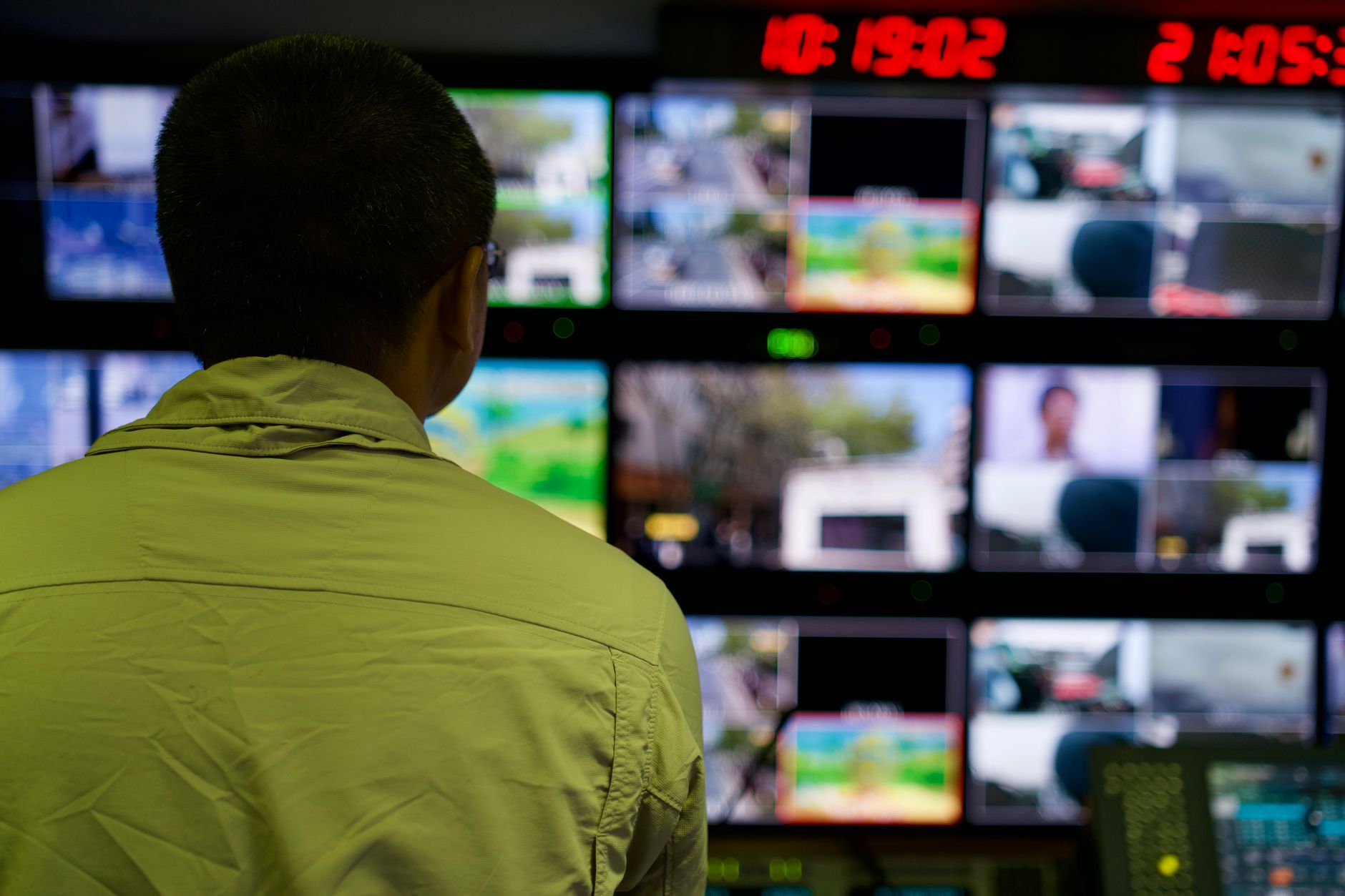
When the video assistant referee team, located in a video operation room either at the stadium or remotely, identifies a potential clear and obvious error in one of the four reviewable categories, the VAR team communicates with the on-field referee through an earpiece. The VAR team can recommend that the on-field referee conduct an on-field review by going to the pitchside monitor to watch replays.
The on-field referee retains full authority at all times. The VAR team can only recommend a review - they cannot override the referee or change the decision directly. If the referee goes to the pitchside monitor and reviews the footage, they may change or confirm their original decision. If the referee is satisfied with the VAR recommendation without needing to watch the footage themselves, they can act on the recommendation without using the monitor.
In practice at major tournaments, goal decisions involving potential offside are typically reviewed by the VAR team without necessarily triggering an on-field review visit, with the VAR team communicating their conclusion directly to the referee. Penalty and red card decisions are more likely to result in the referee visiting the pitchside monitor for a personal view of the incident.
Semi-Automated Offside Technology
FIFA introduced semi-automated offside technology at the 2022 World Cup in Qatar and has continued its use at subsequent major tournaments. This system addresses one of the key criticisms of VAR: that offside checks take too long and produce conclusions that appear to rest on millimetric measurements applied to imperfect video footage.
Semi-automated offside technology uses multiple cameras installed around the stadium to track 29 data points on every player's body at 50 frames per second. The system creates a three-dimensional model of each player's position throughout the match. When an offside check is required following a goal, the system uses this tracking data rather than two-dimensional video stills to determine the positions of the attacking and defending players at the moment the ball is played.
The technology produces a result faster than the traditional VAR frame-by-frame video analysis and generates a three-dimensional visualisation of the offside position that FIFA displays on broadcast screens and in stadia. FIFA and IFAB present the system as both more accurate and faster than the previous approach, though the principle that any body part that can legally play the ball is included in the offside calculation remains unchanged.
Criticism and Ongoing Debate
VAR has been one of the most debated topics in professional football since its introduction. Supporters argue that it corrects clear errors in the four reviewable categories and produces more accurate outcomes in crucial moments. Critics argue that it disrupts the flow of matches, creates uncertainty and confusion for fans in stadia, and that the standard of clear and obvious error is applied inconsistently.
The time taken for VAR reviews was a particular source of criticism in the early years of the system's use. Matches would pause for several minutes while reviews were conducted, with no information provided to fans in stadia about what was being checked. FIFA and IFAB have worked to reduce review times and improve communication, including through the introduction of referee microphone announcements in some competitions explaining decisions.
IFAB reviews the application of VAR on an ongoing basis through its annual business meeting and consultation processes. The Laws of the Game, including the provisions relating to VAR, are updated periodically following IFAB's review processes.
VAR at the World Cup in Practice
At the 2018 World Cup, VAR was used 335 times across 64 matches to check incidents. VAR led to 20 decisions being overturned. At the 2022 World Cup, the combination of VAR and semi-automated offside technology produced more consistent and faster offside decisions. The overall pattern across both tournaments shows that VAR reviews are common but overturned decisions remain a minority of all incidents checked.
For the 2026 tournament with 104 matches, the volume of VAR checks will be substantially higher in absolute terms than previous tournaments. FIFA has expanded the VAR operation room capacity to manage the increased match volume. The technology infrastructure and staffing requirements for VAR at a 104-match tournament are considerably greater than for a 64-match tournament.
Frequently Asked Questions
Can VAR review every refereeing decision?
No. VAR can only review four categories of decision: goal or no goal, penalty decisions, direct red card incidents, and mistaken identity. Yellow cards, indirect free kicks, corners, throw-ins, and the vast majority of other decisions cannot be reviewed by VAR.
Can VAR overrule the referee?
No. The on-field referee retains ultimate authority at all times. The VAR team can only recommend a review. The referee may then go to the pitchside monitor to review footage personally, or act on the VAR team's recommendation without using the monitor. The final decision always rests with the referee.
What is semi-automated offside technology?
A system that uses multiple cameras and player tracking data to determine offside positions more quickly and accurately than traditional video frame analysis. Introduced at the 2022 World Cup, it tracks 29 body points per player at 50 frames per second and produces a three-dimensional model of player positions for offside decisions.
How long do VAR checks typically take at the World Cup?
Review times vary depending on the complexity of the incident. Simple checks may take under a minute. Complex incidents involving multiple camera angles and fine marginal assessments can take several minutes. FIFA and IFAB have worked to reduce average review times through improved processes and technology, including the faster semi-automated offside system.
Who operates the VAR at the World Cup?
FIFA appoints a team of experienced international referees to serve as video assistant referees at each World Cup. These are qualified match officials who have been trained in VAR protocols. They work from a video operation room, either at the stadium or at a centralised hub, and communicate with on-field referees through dedicated audio systems.