

The Boiler Upgrade Scheme gives homeowners in England and Wales £7,500 off an air source or ground source heat pump. A higher £9,000 grant is available from 21 July 2026 to 31 March 2027 for off-gas-grid homes replacing oil or LPG heating, and £2,500 is offered for air-to-air heat pumps. An MCS-certified installer applies for you and the grant is taken off the installation cost.
TL;DR · LAST REVIEWED The Boiler Upgrade Scheme gives homeowners in England and Wales £7,500 off an air source or ground source heat pump. A higher £9,000 grant is available from 21 July 2026 to 31 March 2027 for off-gas-grid homes replacing oil or LPG heating, and £2,500 is offered for air-to-air heat pumps. An MCS-certified installer applies for you and the grant is taken off the installation cost.
- The Boiler Upgrade Scheme gives £7,500 towards an air-to-water (air source) or ground source heat pump in England and Wales.
- A higher £9,000 grant runs from 21 July 2026 to 31 March 2027 for off-gas-grid homes replacing oil or LPG heating - a 20% uplift.
- Air-to-air heat pumps qualify for £2,500; the £9,000 rate does not apply to homes on mains gas, which stay on £7,500.
- Around 865,000 oil and LPG homes in England and Wales are eligible for the £9,000 rate.
- The scheme is administered by Ofgem, funded by DESNZ, and now runs to 2030; an EPC is no longer required to apply.
- An MCS-certified installer applies on your behalf and the grant is deducted from the quote; Nesta estimates oil homes could save over £650 a year.
KEY FACTS
- Standard grant amount: £7,500
- Higher grant for off-gas-grid homes: £9,000
- Higher grant period: 21 July 2026 to 31 March 2027
- Grant for air-to-air heat pumps: £2,500
- Eligible oil and LPG homes: 865,000
- Scheme runs until: 2030
- Estimated annual savings for oil homes: over £650
- Scheme administrator: Ofgem
What the Boiler Upgrade Scheme is
The Boiler Upgrade Scheme is a UK government grant that reduces the cost of replacing a fossil-fuel boiler with a heat pump in England and Wales. It is administered by Ofgem and funded by the Department for Energy Security and Net Zero. The standard grant is £7,500 and the scheme now runs to 2030.
The scheme is designed to make low-carbon heating more affordable for homeowners. Instead of paying the full price for a new heat pump, eligible applicants receive a fixed contribution towards the installation. The grant is paid directly to the installer, who then deducts it from the overall cost of the work. This means the homeowner only pays the remaining balance.
The scheme covers both air source and ground source heat pumps, with a separate, lower rate for air-to-air models. It applies to existing properties in England and Wales, and is part of a wider government push to reduce carbon emissions from home heating. The scheme has been extended to run until 2030, providing longer-term certainty for households considering a heat pump.
There is no longer a requirement to have an Energy Performance Certificate before applying, which simplifies the process. The grant is available per household, and it is not repayable. The amount offered depends on the type of heat pump installed and, in some cases, the current heating fuel used by the property.
The higher £9,000 grant and who qualifies
From 21 July 2026 to 31 March 2027, the grant rises by 20% to £9,000 for off-gas-grid homes in England and Wales replacing oil or LPG heating. Around 865,000 homes qualify for this higher rate. This rate is not available to homes on mains gas.
The £9,000 grant is a temporary uplift designed to encourage households that rely on oil or liquid petroleum gas to switch to a heat pump. These homes typically have higher heating costs and are often in rural areas without access to the mains gas network. The uplift applies only to installations completed within the specified nine-month window.
Eligible households must be replacing an existing oil or LPG heating system with an air source or ground source heat pump. The property must be off the mains gas grid. According to estimates from Nesta, households moving from oil heating to a heat pump could save over £650 a year on their energy bills, depending on usage and the efficiency of the new system.
The £9,000 rate does not apply to homes heated by mains gas, electric storage heaters, or other fuels. Those properties remain on the standard £7,500 grant. The uplift is specifically targeted at the oil and LPG sector, where the upfront cost of switching has been a significant barrier.
How much for each type of heat pump
The grant is £7,500 for an air-to-water air source heat pump or a ground source heat pump. Air-to-air heat pumps qualify for £2,500. The £9,000 uplift applies only to eligible off-grid oil and LPG homes. The grant is deducted from the quote, not paid as a rebate.
Air-to-water heat pumps are the most common type installed under the scheme. They extract heat from the outside air and transfer it to a wet central heating system. Ground source heat pumps use buried pipes to capture heat from the ground, and typically cost more to install, but the grant remains the same at £7,500.
Air-to-air heat pumps work differently. They blow warm air directly into rooms rather than heating water for radiators. These systems qualify for a lower grant of £2,500. The £9,000 uplift does not apply to air-to-air units, even in off-gas-grid homes.
The grant is applied before installation. Your installer quotes a price, applies for the grant through Ofgem, and then reduces your bill by the grant amount. The grant does not always cover the full cost of the system. Additional work, such as upgrading radiators, installing a hot water cylinder, or improving insulation, will add to the final price.
Who is eligible
You must own a home in England or Wales, including landlords and second-home owners. The property must be an existing building, not a new build. You must be replacing a fossil-fuel or electric heating system. An Energy Performance Certificate is no longer required to apply.
Owner-occupiers are the main group eligible for the scheme. Landlords can also apply for grants on properties they rent out, and second homes qualify as long as they meet the other criteria. The property must be in England or Wales; Scotland has a separate scheme.
The property must be an existing dwelling. Newly built homes are not eligible, as they are expected to meet modern building regulations that already favour low-carbon heating. The scheme is intended to retrofit homes that currently use older, higher-emission systems.
You must be replacing an existing heating system that runs on fossil fuels or electricity. This includes gas, oil, LPG, and electric heating. The heat pump must be installed by an MCS-certified installer, and the system must meet the scheme's technical requirements. There is no longer any need to provide an Energy Performance Certificate as part of the application.
How to apply
You do not apply directly. Choose an MCS-certified installer who applies through Ofgem on your behalf and takes the grant off your quote. Vouchers issued before the uplift keep the £7,500 value, but eligible households can cancel and reapply at the higher rate.
The application process starts with finding an installer. They must be certified under the Microgeneration Certification Scheme, which ensures they meet quality standards for installing heat pumps. The installer will assess your property, provide a quote, and handle the grant application with Ofgem.
Once the application is approved, Ofgem issues a voucher. The installer then deducts the grant amount from your final bill. You pay the difference. The voucher has a validity period, and the installation must be completed within that time for the grant to be paid.
For households eligible for the £9,000 uplift, there is an important detail. If you receive a voucher before 21 July 2026, it will be for £7,500. If your installation is scheduled for the uplift period and you qualify, you can cancel the existing voucher and submit a new application at the higher rate. This must be done before the installation is completed.
Is it worth it and other help
Weigh the remaining cost after the grant, the potential running-cost savings, and your home's suitability before deciding. Scotland has its own Home Energy Scotland grant and loan, which is separate from the Boiler Upgrade Scheme.
The grant reduces the upfront cost, but it does not always cover the full installation. A typical heat pump installation can cost more than the grant amount, particularly if your home needs new radiators, a hot water cylinder, or improved insulation. You should get multiple quotes from MCS-certified installers to compare prices.
Running costs depend on your current fuel and the efficiency of the new system. Households moving from oil or LPG may see significant savings, as heat pumps are generally more efficient. Homes on mains gas may find the savings smaller, depending on gas and electricity prices. Your home's insulation levels and size will also affect performance.
Not every property is suitable for a heat pump. They work best in well-insulated homes with space for an outdoor unit and, for ground source systems, land for buried pipes. An installer will assess this during the quote process. If you live in Scotland, the Boiler Upgrade Scheme does not apply; instead, Home Energy Scotland offers its own grant and loan package for heat pumps.
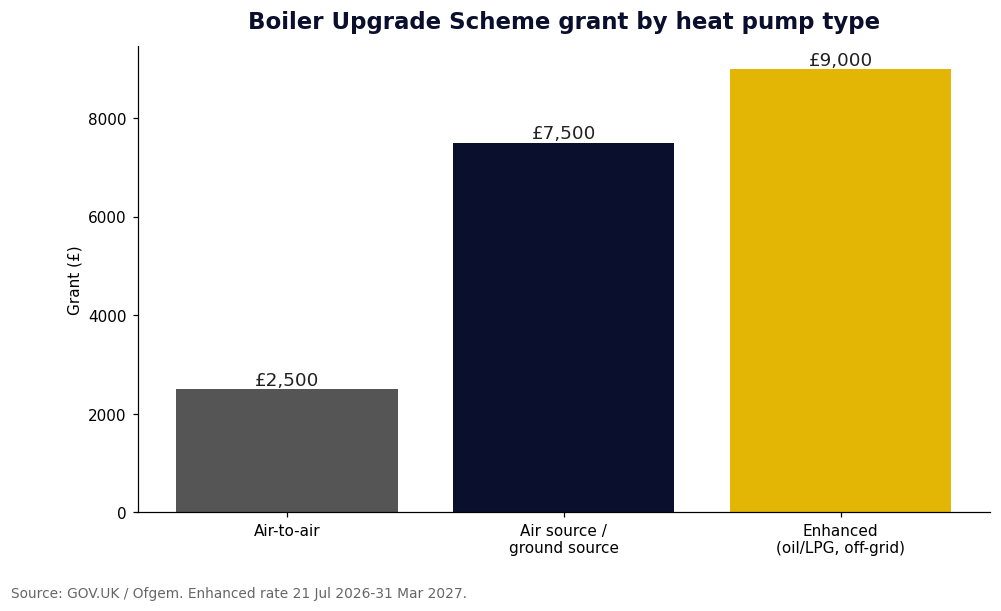
How much you can get
The grant is deducted from your installer's quote, not paid as a rebate. You pay any remaining cost.
| Heat pump type | Standard grant | Enhanced grant (off-gas-grid oil or LPG) |
|---|---|---|
| Air source (air-to-water) | £7,500 | £9,000 |
| Ground source | £7,500 | £9,000 |
| Air-to-air | £2,500 | Not eligible |
The enhanced £9,000 rate applies to applications submitted from 21 July 2026 to 31 March 2027. Vouchers issued before 21 July 2026 keep the £7,500 value, though eligible households can cancel and reapply.
DISCLAIMER
This article is editorial information, not financial advice. Kael Tripton Ltd is not authorised or regulated by the Financial Conduct Authority. Figures were correct at the last review date shown above; verify current rates and rules with the primary sources listed below before acting.
Frequently asked questions
How much is the Boiler Upgrade Scheme grant?
£7,500 for an air source or ground source heat pump, or £2,500 for air-to-air. A higher £9,000 grant runs from 21 July 2026 to 31 March 2027 for off-gas-grid homes on oil or LPG.
Who qualifies for the £9,000 heat pump grant?
Homeowners in England and Wales whose property is off the mains gas grid and currently heated by oil or LPG, replacing it with an air source or ground source heat pump between 21 July 2026 and 31 March 2027.
Do I get £9,000 if I have mains gas?
No. Homes on mains gas remain on the standard £7,500 grant; the £9,000 rate is only for off-gas-grid oil or LPG homes.
How do I apply for the Boiler Upgrade Scheme?
You do not apply directly. An MCS-certified installer applies through Ofgem on your behalf and the grant is taken off your installation quote.
Does the grant cover the full cost of a heat pump?
Not always. It reduces the price your installer quotes; you pay any remaining balance, and extras like radiators or a hot water cylinder may cost more.
Sources


