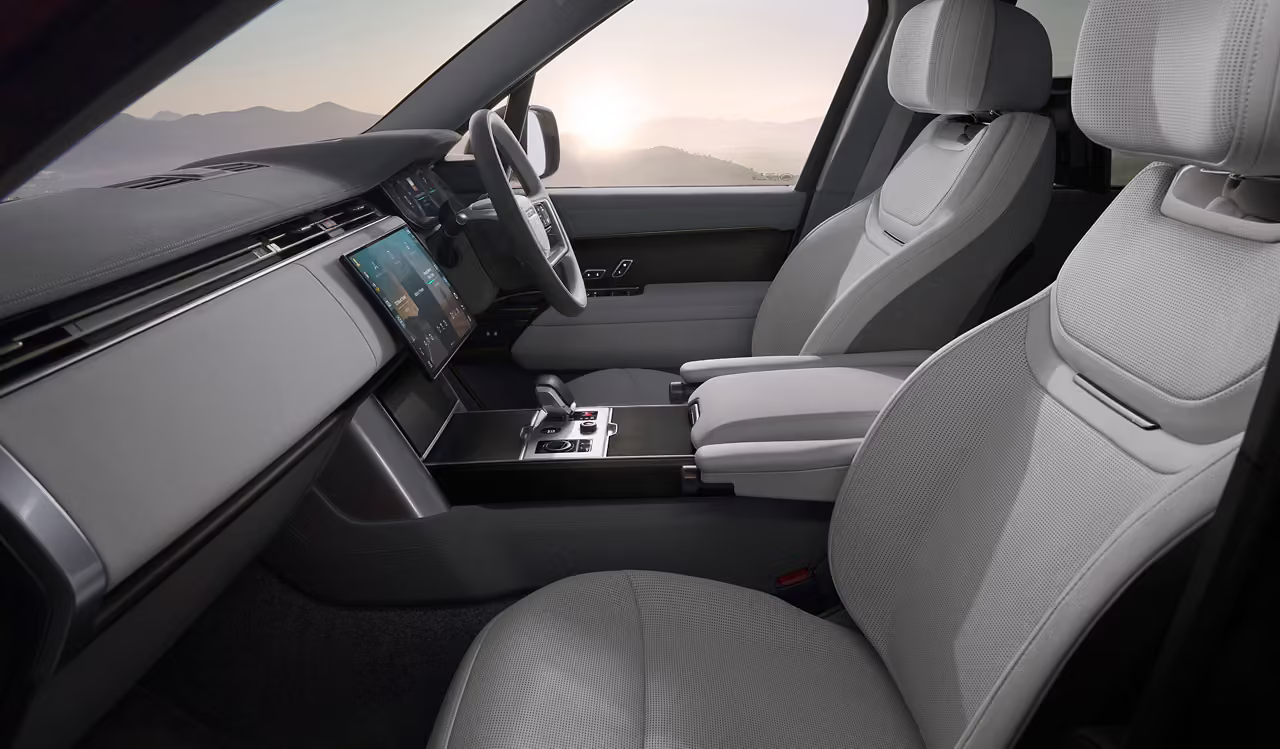
NEWS · CARS · 2 SEPTEMBER 2026 The first electric Range Rover opened for orders on 2 September 2026 at £154,070 on the road for the Autobiography short wheelbase, £6,390 more than the V8 petrol equivalent, with SV versions from £215,670. It offers 550PS, up to 372 miles WLTP range, a 118.5kWh battery and 10 to 80 per cent charging in 22 minutes. Source: JLR. TL;DR
KEY FACTS
What Range Rover Electric costs to buyThe Range Rover Electric starts at £154,070 on the road for the Autobiography short wheelbase, which is £6,390 more than the equivalent V8 petrol Autobiography. SV versions begin at £215,670, with SV Ultra and SV Black models priced above £225,240. Order books opened on 2 September 2026, with production at Solihull. The entry price of £154,070 places the electric Range Rover firmly in the upper echelons of the luxury SUV market. That figure applies to the Autobiography specification with the standard wheelbase, and it undercuts the V8 petrol Autobiography by a margin that reflects the different powertrain costs and positioning. The SV range, which adds more powerful motors, enhanced off-road capability and a higher level of standard equipment, starts at £215,670. The SV Ultra and SV Black variants, which are the most lavishly equipped versions, are priced above £225,240, making them some of the most expensive Range Rovers ever offered. For buyers who want the electric model without waiting for the full order cycle, a First Edition specification is available at launch, although JLR has not disclosed a separate price for it; it is understood to sit between the Autobiography and SV in cost. Lease deals have been reported by What Car at from £1,223 a month, which gives an indication of the monthly outlay for a typical three-year contract with an initial rental. That figure will vary depending on deposit, mileage and the chosen specification, but it shows that the electric Range Rover is accessible through business leasing at a level that is competitive with other electric luxury SUVs. The order books opened on 2 September 2026, and JLR has confirmed that all versions are built at the Solihull plant in the West Midlands, alongside the petrol, diesel and plug-in hybrid models. The price difference over the V8 petrol Autobiography is £6,390, which is a modest premium for an electric powertrain in this segment, particularly when the running cost advantages are taken into account. The SV models, with their higher output and additional equipment, are priced to compete with the likes of the Mercedes G 580 and the Porsche Cayenne Electric, although they are positioned above the standard BMW iX range. JLR has not published a full price list for every option and colour, but the key figures are clear: £154,070 for the Autobiography, £215,670 for the SV, and above £225,240 for the SV Ultra and SV Black. These prices are on the road, which means they include the first year's vehicle excise duty, the registration fee and delivery charges. For comparison, the V8 petrol Autobiography is priced at £147,680, so the electric version carries a premium that is typical for battery-electric powertrains in the luxury sector. What it costs to run: tax, charging and insuranceFor company-car drivers, the Range Rover Electric falls into the 4% benefit-in-kind band for 2026/27, giving a taxable benefit of £6,163 and an annual tax bill of roughly £2,465 for a 40% taxpayer. Vehicle excise duty is charged at the first-year rate for EVs, followed by the standard rate plus the expensive car supplement for five years. Insurance is likely to be in the top group. The benefit-in-kind calculation is based on the car's P11D value, which for the Autobiography is £154,070. At the 4% rate for 2026/27, the taxable benefit is £6,163. A 40% taxpayer will pay £2,465 a year in income tax on that benefit, which is significantly lower than the equivalent petrol V8, which attracts a higher BiK percentage. The 4% rate is set to rise in subsequent years, but for the 2026/27 tax year it makes the electric Range Rover a compelling choice for company-car buyers. Vehicle excise duty for electric cars is charged at the first-year rate, which is currently £0, but from the second year onwards the standard rate applies. Because the Range Rover Electric costs more than £40,000, it is subject to the expensive car supplement, which adds an extra amount to the VED for five years from the second year of registration. The exact figures change each year, so see GOV.UK for the current rate. In practice, this means the annual VED will be higher than for a cheaper EV, but still less than for a petrol car of similar value. Charging costs depend on where and when the car is charged. A full charge of the 118.5kWh battery at home on a standard domestic tariff will cost roughly £30 to £40, depending on the electricity rate, which gives a cost per mile of around 8 to 10 pence. Using a rapid charger, such as a 350kW unit, will cost more, typically 50 to 70 pence per kWh, which brings the cost per mile up to around 20 to 25 pence. Scheduled charging can be used to take advantage of cheaper off-peak tariffs, which can reduce the home charging cost further. Insurance for the Range Rover Electric is likely to be in the top group, given its value and performance. JLR has not published an official insurance group, but cars of this price and power typically fall into group 50. The battery is covered by an 8-year or 100,000-mile warranty, which protects against degradation, and JLR offers a Battery Digital Twin system that monitors the battery's health over time. Over-the-air software updates are included, which can reduce the need for dealer visits and lower maintenance costs. How it compares with the Mercedes G 580, BMW iX and Porsche Cayenne ElectricThe Range Rover Electric is priced similarly to the Mercedes G 580, but it is more expensive than the BMW iX and Porsche Cayenne Electric, and it is roughly half the price of the Rolls-Royce Spectre. It offers a longer range than the G 580 and Cayenne Electric, but the BMW iX has a higher WLTP figure. The Range Rover's strengths are its off-road capability and refinement. At £154,070, the Range Rover Electric sits in the same price bracket as the Mercedes G 580, which starts at around £150,000, and it is significantly more expensive than the BMW iX, which starts at around £70,000, and the Porsche Cayenne Electric, which is expected to start at around £80,000. The Rolls-Royce Spectre, which is a more direct rival in terms of luxury, costs over £300,000, so the Range Rover is positioned as a more accessible electric luxury SUV. In terms of range, the Range Rover Electric claims up to 372 miles on the WLTP cycle, which is more than the Mercedes G 580's 290 miles and the Porsche Cayenne Electric's expected 350 miles, but it is less than the BMW iX's 380 miles. The Range Rover's real-world range is claimed to be 333 miles, which is still competitive. Charging speeds differ: the Range Rover can go from 10 to 80 per cent in 22 minutes on a 350kW charger, which is similar to the Cayenne Electric, but the BMW iX is slower at around 35 minutes. The Mercedes G 580 is also slower, taking around 32 minutes. Where the Range Rover argues its case is in its off-road capability. It has a wading depth of 850mm, which is more than any of its rivals, and it comes with a full suite of terrain response systems, including a dedicated off-road mode that adjusts the suspension and traction control. The cabin is also quieter than the G 580, which has a boxy shape that creates more wind noise, and it is more refined than the BMW iX at motorway speeds. The Range Rover's air suspension and acoustic glass contribute to a serene driving experience. Where the rivals win is on price and charging speed. The BMW iX is substantially cheaper, and the Porsche Cayenne Electric offers faster charging on a 800V architecture, which can add up to 200 miles in 15 minutes. The Mercedes G 580 has a more rugged image and a unique quad-motor setup, but it is less efficient and has a shorter range. The Range Rover Electric, with its combination of range, off-road ability and luxury, is a strong contender, but buyers who prioritise value or charging speed may look elsewhere. Range, charging and real-world useThe Range Rover Electric has a WLTP range of up to 372 miles, with a real-world claim of 333 miles. On a 350kW charger, it can go from 10 to 80 per cent in 22 minutes, adding 137 miles in 10 minutes. There are over 1 million public chargers in the UK and EU, and in North America it will have access to Tesla Superchargers. The 118.5kWh battery provides a WLTP range of 372 miles for the Autobiography version, which is a strong figure for a large luxury SUV. JLR claims a real-world range of 333 miles, which is based on a mix of driving conditions and is more realistic for everyday use. This means that most owners will be able to cover a week's commuting and a weekend trip without needing to charge away from home. Charging is fast when using a 350kW DC rapid charger. The Range Rover Electric can accept up to 350kW, which allows it to go from 10 to 80 per cent in just 22 minutes. In a 10-minute stop, it can add 137 miles of range, which is enough for a long motorway journey. This is comparable to the best electric cars on the market, such as the Porsche Cayenne Electric, and it makes long-distance travel practical. Public charging infrastructure is now extensive. There are over 1 million public chargers across the UK and EU, including rapid chargers at motorway service areas and destination chargers at hotels and shopping centres. In North America, the Range Rover Electric will have access to Tesla Superchargers, which opens up a vast network of reliable fast chargers. This is a significant advantage for buyers in the US and Canada. For home charging, JLR offers a wallbox that can be installed at the owner's home. This provides up to 22kW of AC charging, which can fully charge the battery in around 6 hours. Scheduled charging can be set up to take advantage of cheaper off-peak electricity tariffs, which can reduce the cost of running the car. For example, charging overnight on a tariff that offers 5p per kWh would cost around £6 for a full charge, giving a cost per mile of less than 2 pence. In real-world use, the Range Rover Electric is designed to be as practical as its petrol counterparts. It has the same boot space and towing capacity, and the battery is mounted low in the chassis to maintain the car's centre of gravity. The range is sufficient for most journeys, and the fast charging capability means that longer trips are only slightly slower than in a petrol car, with a 22-minute stop every 200 miles or so. Why JLR built it this wayJLR designed the Range Rover Electric as a Range Rover first and an electric car second, keeping the same design language, with only the grille and wheels being aerodynamically optimised. It is built on a flexible architecture alongside petrol, diesel and plug-in hybrid models at Solihull, with electric motors produced at the Electric Propulsion Manufacturing Centre in Wolverhampton. The decision to make the electric version look almost identical to the petrol model was a deliberate one. JLR's designers wanted to preserve the Range Rover's iconic silhouette and presence, so they did not introduce a separate electric-only design. The only visual changes are a closed-off grille and specially designed aerodynamic wheels, which reduce drag and improve efficiency. This approach contrasts with some rivals, such as the BMW iX, which has a distinct electric-only look. The Range Rover Electric is built on the same MLA flexible architecture that underpins the petrol, diesel and plug-in hybrid versions. This allows JLR to produce all powertrains on the same production line at Solihull, which gives the company flexibility to respond to demand. The electric motors and battery packs are produced at the Electric Propulsion Manufacturing Centre in Wolverhampton, which is a new facility that has created jobs in the region. To support the transition to electric vehicles, JLR has upskilled over 9,000 employees in electric vehicle technology. This includes training for production staff, engineers and technicians. The company has also invested heavily in testing, with the Range Rover Electric undergoing extreme weather testing in Arjeplog, Sweden, where temperatures can drop to -40 degrees Celsius, and in Dubai, where temperatures can exceed 50 degrees Celsius. This ensures that the car performs reliably in all conditions. JLR has filed over 300 patents related to the electric powertrain and battery technology. These cover areas such as battery thermal management, motor control and regenerative braking. The company's engineers have developed a Battery Digital Twin system, which creates a virtual model of the battery to monitor its health and predict degradation over time. This is part of JLR's commitment to making the electric Range Rover as durable and reliable as its petrol predecessors. Who this is for and what to weigh upThe Range Rover Electric is aimed at company-car buyers who can benefit from the 4% benefit-in-kind rate, making it significantly cheaper to tax than the V8 petrol version. Private buyers should consider the potential depreciation of a first-generation electric flagship, as well as their access to home charging. Delivery timing and First Edition allocations are also factors. For company-car drivers, the financial case is strong. The 4% BiK rate for 2026/27 means that a 40% taxpayer will pay around £2,465 a year in tax, compared with over £10,000 for the V8 petrol Autobiography, which falls into a higher BiK band. Over a three-year lease, this can save thousands of pounds. The lease rate of £1,223 a month is also competitive when the tax savings are taken into account. Private buyers, however, need to think about depreciation. The Range Rover Electric is a first-generation electric vehicle, and while JLR has a strong reputation for building durable cars, the resale value of electric vehicles can be unpredictable. Battery technology is improving rapidly, and newer models with longer ranges and faster charging could make the first-generation car less desirable in a few years. Buyers should also consider the cost of a home charger, which is not included in the purchase price. Access to home charging is a key consideration. The Range Rover Electric has a range of over 300 miles, so most owners will only need to charge at home. However, if you do not have off-street parking or a driveway, you will need to rely on public charging, which is more expensive and less convenient. The 22-minute rapid charging time is good, but it is still slower than filling a petrol tank. Delivery timing is another factor. Order books opened on 2 September 2026, but JLR has not confirmed delivery dates. The First Edition allocation is likely to be limited, and buyers who want a specific specification may have to wait longer. Those who are not in a hurry may prefer to wait for the second model year, which could bring software updates and improvements based on early customer feedback. Ultimately, the Range Rover Electric is for buyers who want the luxury and capability of a Range Rover but with the running cost benefits of an electric powertrain. It is not the cheapest electric SUV, but it offers a combination of range, off-road ability and refinement that few rivals can match. For company-car drivers, the tax advantages make it a compelling choice, while private buyers should weigh the potential depreciation against the lower running costs. Before you order
Related guides Disclaimer. This article is general information, not immigration, tax or financial advice. Visa rules, thresholds and tax rates change; confirm current figures on GOV.UK and with a regulated adviser before acting. How much does the Range Rover Electric cost in the UK?The Range Rover Electric starts at £154,070 on the road for the Autobiography short wheelbase. SV versions begin at £215,670, with SV Ultra and SV Black above £225,240. Order books opened on 2 September 2026. What is the Range Rover Electric's range?What is the Range Rover Electric's range?The Range Rover Electric has a WLTP range of up to 372 miles, with a real-world claim of 333 miles. The battery capacity is 118.5kWh. How long does the Range Rover Electric take to charge?On a 350kW DC rapid charger, the Range Rover Electric can go from 10 to 80 per cent in 22 minutes. A 10-minute charge adds 137 miles of range. Is the Range Rover Electric cheaper to run than the V8?For company-car buyers, the 4% benefit-in-kind rate for 2026/27 results in a taxable benefit of £6,163, leading to an annual tax bill of around £2,465 for a 40% taxpayer. This is significantly lower than the V8 petrol, which attracts a higher BiK percentage. Charging costs are also lower than fuel costs, especially with home charging. Which electric SUVs compete with the Range Rover Electric?Key rivals include the Mercedes G 580, BMW iX, and Porsche Cayenne Electric. The Rolls-Royce Spectre is a more expensive alternative. The Range Rover Electric offers a longer range than the G 580 and Cayenne Electric, but the BMW iX has a higher WLTP figure. Sources LAST REVIEWED 2 SEPTEMBER 2026 |
Range Rover Electric: £154,070 to Buy, What It Costs to Run, and How It Compares With RivalsRange Rover Electric is on sale from £154,070, £6,390 above the V8 Autobiography, with SV models from £215,670: 550PS, 372 miles WLTP, 22-minute rapid charging. What it costs to buy, tax, insure and charge, and how it lines up against the Mercedes G 580, BMW iX and Porsche Cayenne Electric. 
Illustrative image. AI-generated and does not depict real people, places or events.
Editorial Disclaimer The content on Kaeltripton.com is for informational and educational purposes only and does not constitute financial, investment, tax, legal or regulatory advice. Kaeltripton.com is not authorised or regulated by the Financial Conduct Authority (FCA) and is not a financial adviser, mortgage broker, insurance intermediary or investment firm. Nothing on this site should be construed as a personal recommendation. Rates, figures and product details are indicative only, subject to change without notice, and should always be verified directly with the relevant provider, HMRC, the FCA register, the Bank of England, Ofgem or other appropriate authority before any financial decision is made. Past performance is not a reliable indicator of future results. If you require regulated financial advice, please consult a qualified adviser authorised by the FCA. 
|