

Govia Thameslink Railway will replace 60,000 standard class seat cushions across all 115 Class 700 trains, announced on 10 September 2026. The new cushions offer up to 57% more give, with winged backrests and seat back tables added to 69 trains. Installation begins in 2027, phased over two years.
TL;DR · LAST REVIEWED Govia Thameslink Railway will replace 60,000 standard class seat cushions across all 115 Class 700 trains, announced on 10 September 2026. The new cushions offer up to 57% more give, with winged backrests and seat back tables added to 69 trains. Installation begins in 2027, phased over two years.
- 60,000 new spring and memory foam cushions will replace the 'ironing-board' seats on all 115 Class 700 trains.
- The new cushion offers up to 57% more give, with winged backrests for shoulder and head support.
- Installation begins in 2027, phased over two years, under an existing GTR contract with Siemens Mobility.
- Passengers can try the new seat at London Bridge station on 10 and 11 September 2026.
KEY FACTS
- Seats upgraded: Over 60,000
- Trains: All 115 Class 700s
- Extra cushion give: Up to 57%
- Cost to taxpayers: None (existing Siemens contract)
- Rollout: From 2027, phased over 2 years
- Try the seat: London Bridge concourse, 10 to 11 Sep 2026
- Gatwick Express: Doubled hourly from Dec 2026
What has been announced
Source note: this article is based on a Department for Transport press release issued on 10 September 2026 and re-issued by GTR with additional images. Quotes are as published. The analysis section is Kael Tripton's own.
On 10 September 2026 the Department for Transport and Transport Secretary Heidi Alexander announced that publicly owned Govia Thameslink Railway (GTR) will partner with Siemens Mobility to upgrade standard class seat cushions across all 115 Class 700 trains in the Thameslink fleet. The work covers more than 60,000 new spring and memory foam cushions and improved winged backrests, replacing the seats that have been widely described as 'ironing-board' seats. The announcement was made as GTR marked 100 days since it transferred into public ownership in May 2026.
The new cushion offers up to 57% more give than the current one, with wing backrests for shoulder and head support. First class seats will receive the same improved cushions. Seat-back tables are being added to the 69 trains that currently lack them. The design followed passenger comfort testing and feedback, according to the Department for Transport. Passengers can try the new seat on the London Bridge station concourse on Thursday 10 and Friday 11 September 2026.
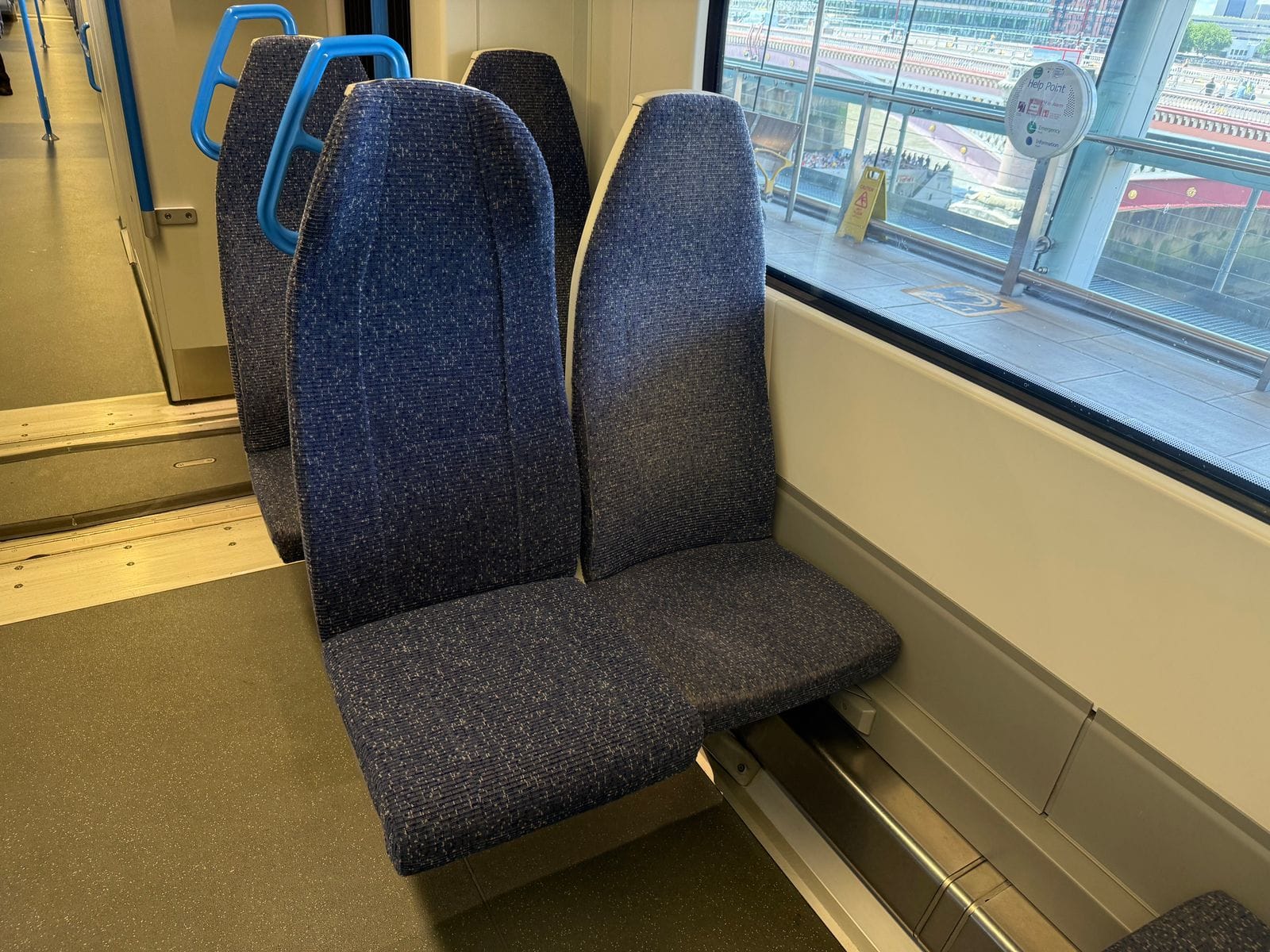
What changes on board: cushions, backrests and tables
The upgrade covers standard class seat cushions across all 115 Class 700 trains in the Thameslink fleet. Over 60,000 new spring and memory foam cushions will replace the existing 'ironing-board' seats. The new cushion has a slightly deeper seat base, pocket springs, viscoelastic memory foam and a softer fire barrier. Winged backrests are being introduced to provide shoulder and head support. First class seats get the same improved cushions, so the change is not limited to standard class.
Seat-back tables are being added to the 69 trains that currently lack them. This means passengers on those units will gain a table where none existed before. The combination of deeper cushion, pocket springs, memory foam and winged backrests is intended to address comfort complaints that have been raised by passengers on the Thameslink route. The design followed passenger comfort testing and feedback, according to the Department for Transport, and the new seat can be tried on the London Bridge station concourse on Thursday 10 and Friday 11 September 2026.
How the new seat tested against the RSSB standard
The new cushion exceeds the RSSB GMGN 2696 seat comfort testing standard, according to notes to editors. It achieves 41% compression under a 500N load and 63% under a 1100N load, against 30% and 40% for the existing seat. That represents a 36% to 57% improvement. The 57% figure is the maximum from the compression test, while the range is 36% to 57%. The cushion has a slightly deeper seat base, pocket springs, viscoelastic memory foam and a softer fire barrier.
The RSSB GMGN 2696 standard is the benchmark used for seat comfort testing. The new cushion's compression figures are higher than the existing seat at both load levels. The Department for Transport says the new cushion offers up to 57% more give than the current one. The notes to editors state that the new cushion exceeds the standard. The design followed passenger comfort testing and feedback, and passengers can try the new seat on the London Bridge station concourse on Thursday 10 and Friday 11 September 2026.
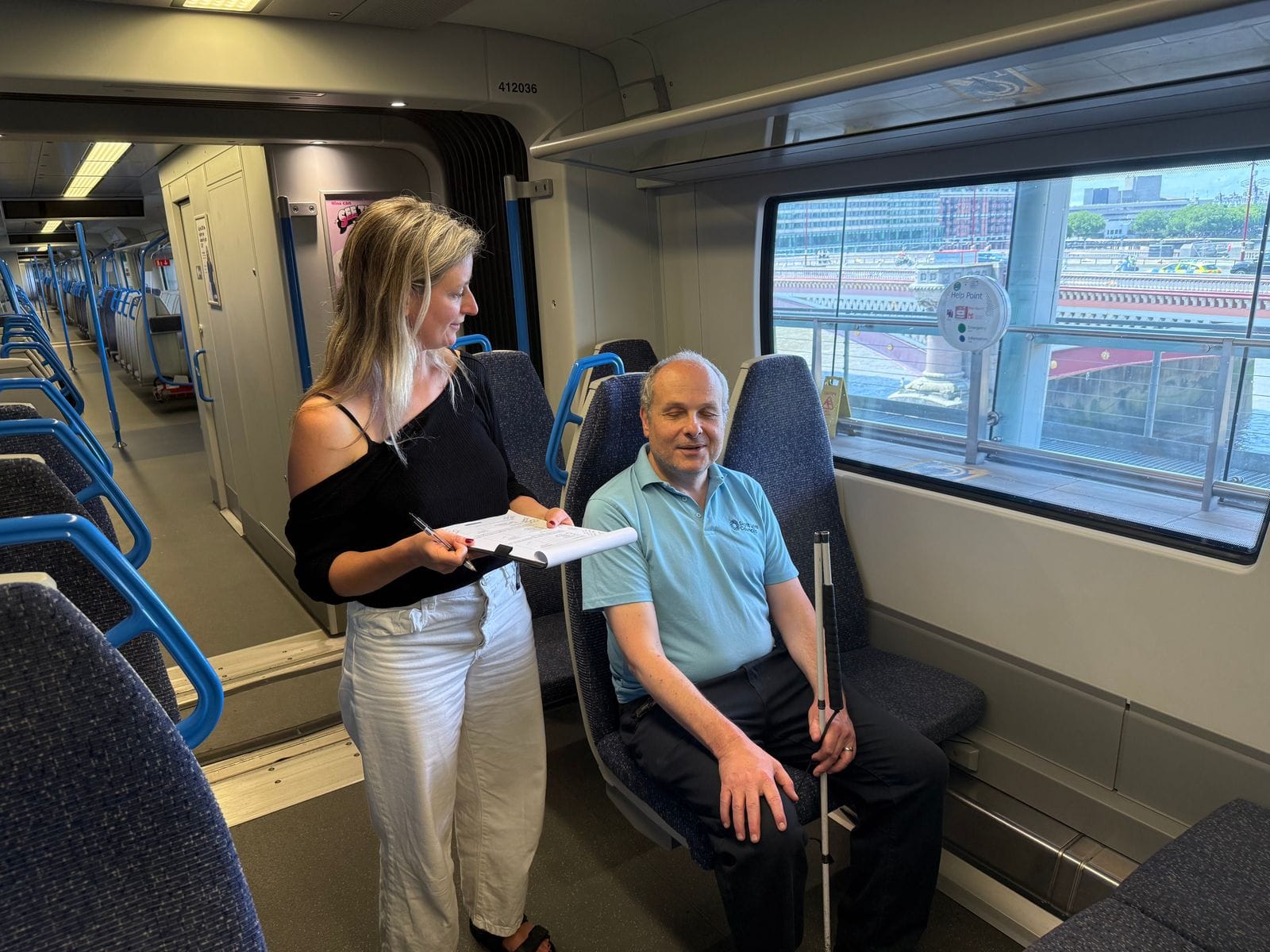
When commuters will see the new seats
Installation begins in 2027, phased over two years to avoid service disruption. The work sits within an 11-year fleet overhaul with Siemens. That means many commuters will not sit on a new cushion until 2028 or 2029, and the release gives no order of which routes get them first. Thameslink is one of Britain's busiest commuter routes, running through central London between Bedford, Cambridge, Peterborough, Brighton, Gatwick Airport and other destinations. The phased approach is intended to avoid service disruption, but it also means the rollout will be gradual across the fleet.
The 11-year fleet overhaul with Siemens provides the framework for the work. The cushions were agreed under a pre-existing GTR contract with Siemens Mobility, so the Department for Transport says there is no additional cost to taxpayers. Installation begins in 2027, phased over two years. Passengers can try the new seat on the London Bridge station concourse on Thursday 10 and Friday 11 September 2026, ahead of the start of installation in 2027.
Why DfT says there is no extra cost to taxpayers
The cushions were agreed under a pre-existing GTR contract with Siemens Mobility, so the Department for Transport says there is no additional cost to taxpayers. The work sits within an 11-year fleet overhaul with Siemens. The Department for Transport and Transport Secretary Heidi Alexander announced the partnership on 10 September 2026. The announcement covers all 115 Class 700 trains in the Thameslink fleet, with over 60,000 new spring and memory foam cushions and improved winged backrests.
First class seats get the same improved cushions. Seat-back tables are being added to the 69 trains that currently lack them. The design followed passenger comfort testing and feedback. Passengers can try the new seat on the London Bridge station concourse on Thursday 10 and Friday 11 September 2026. The Department for Transport says there is no additional cost to taxpayers because the cushions were agreed under a pre-existing GTR contract with Siemens Mobility.
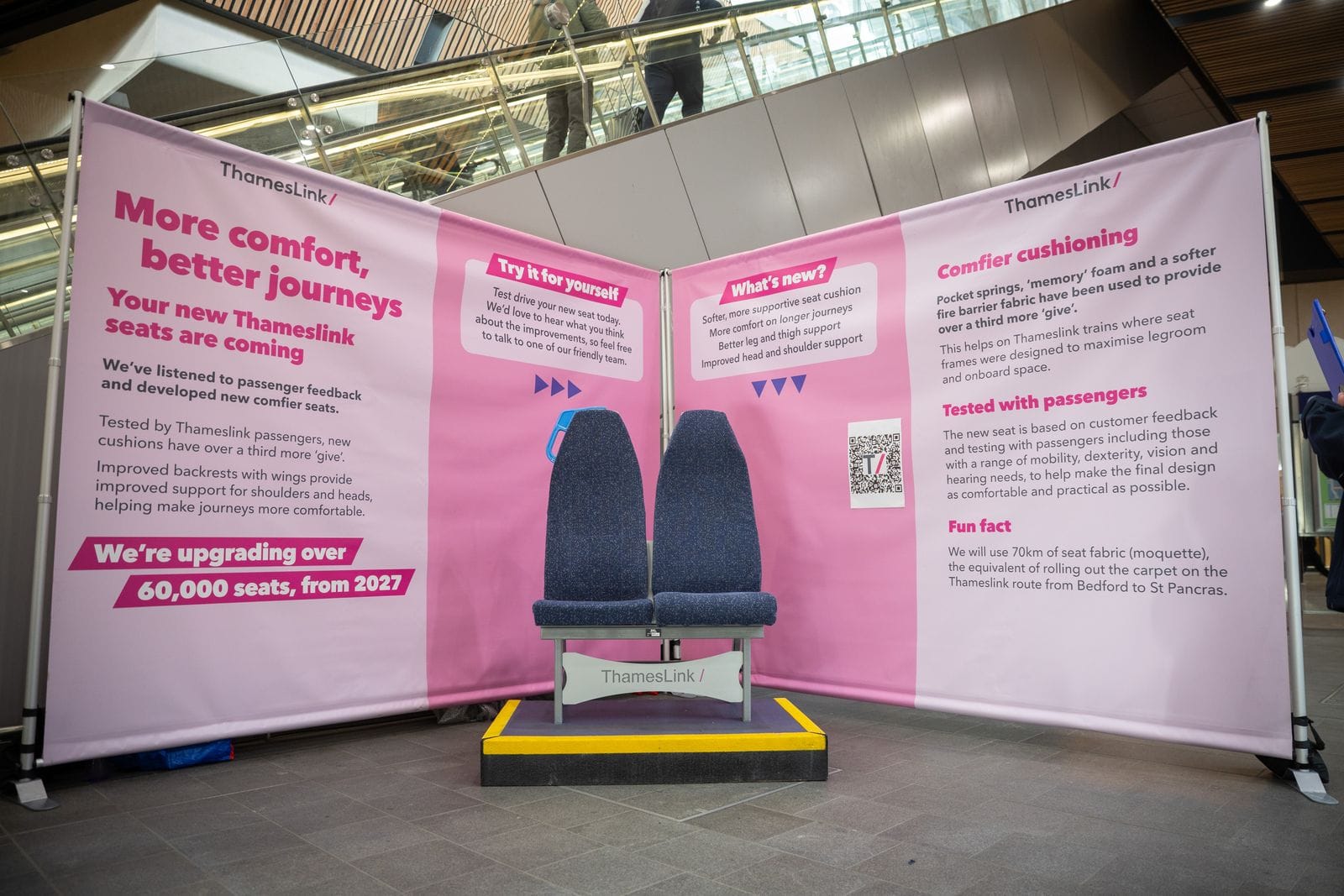
100 days of public ownership at GTR
GTR transferred into public ownership in May 2026, and the announcement marks 100 days since the transfer. Since then GTR has refreshed just under half of fleet exteriors and nearly 300 train toilet interiors, with over £3.6 million invested in exteriors, toilets and anti-graffiti wall vinyls. The Department for Transport and Transport Secretary Heidi Alexander announced the seat upgrade on 10 September 2026, as the 100-day milestone was marked.
Heidi Alexander said fares have been frozen for the first time in 30 years and publicly owned operators have added 76,000 extra seats to the network; Great British Railways will focus on a reliable, modern service. John Whitehurst, GTR CEO, said passengers helped shape the cushion and backrest and the new seats arrive from 2027. Aglaja Schneider, Joint CEO of Siemens Mobility UK and Ireland, described upgraded cushions, redesigned backrests and seat back tables across the Class 700 fleet. The 100-days framing is a political milestone ahead of Great British Railways rather than a performance result.
Gatwick Express, fares freeze and Great British Railways
From December 2026 the number of Gatwick Express services will double every hour. Heidi Alexander said fares have been frozen for the first time in 30 years and publicly owned operators have added 76,000 extra seats to the network; Great British Railways will focus on a reliable, modern service. For season ticket holders the more material items in the release are the fares freeze and the doubling of Gatwick Express frequency from December 2026, and Delay Repay rights are unchanged.
Thameslink is one of Britain's busiest commuter routes, running through central London between Bedford, Cambridge, Peterborough, Brighton, Gatwick Airport and other destinations. The Gatwick Express frequency change from December 2026 is separate from the seat cushion upgrade, which begins in 2027. The fares freeze and the 76,000 extra seats added by publicly owned operators are part of the wider context set out by the Transport Secretary. Great British Railways will focus on a reliable, modern service, according to Heidi Alexander.
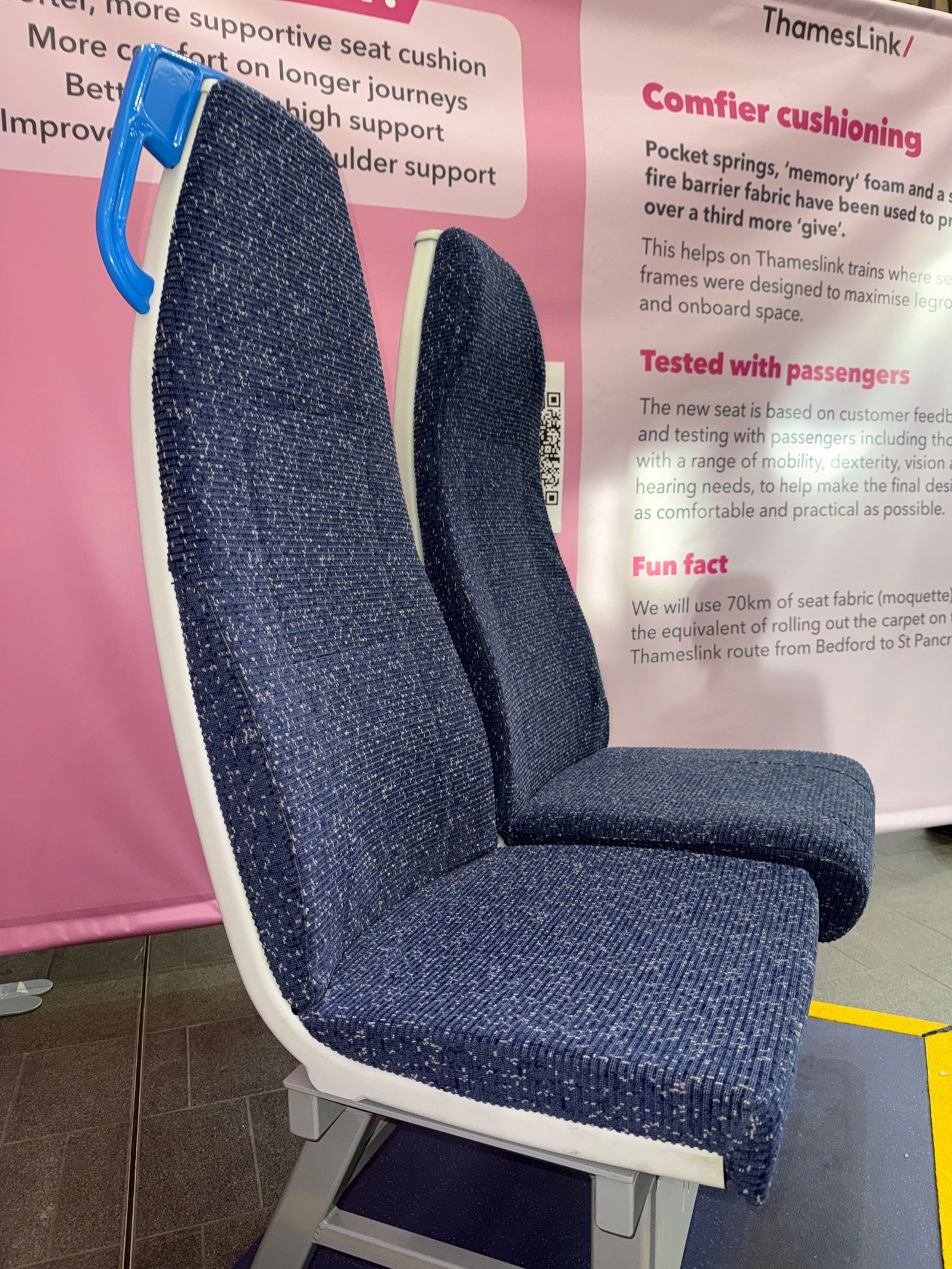
Analysis Kael Tripton's view: what the seat announcement does and does not change for commutersKael Tripton's view is that 'no additional cost to taxpayers' means the cushions sit inside an 11-year Siemens maintenance contract that taxpayers already fund, so the cost is real but already priced in, not new money. A 2027 start phased over two years means many commuters will not sit on a new cushion until 2028 or 2029, and the release gives no order of which routes get them first. The 57% headline is the maximum figure from a compression test, the range is 36% to 57%, and cushion give is only one comfort factor alongside seat pitch, width and standing time on peak services. Kael Tripton's view also notes that seat comfort does not change the two measures commuters price most, punctuality and cancellations, so the 100-days framing is a political milestone ahead of Great British Railways rather than a performance result. For season ticket holders the more material items in the release are the fares freeze and the doubling of Gatwick Express frequency from December 2026, and Delay Repay rights are unchanged. The seat upgrade is one part of a wider set of changes, but it does not alter the operational metrics that shape the daily commute. |
How to try the seat this week
Passengers can try the new seat on the London Bridge station concourse on Thursday 10 and Friday 11 September 2026. The design followed passenger comfort testing and feedback. The new cushion offers up to 57% more give than the current one, with wing backrests for shoulder and head support. First class seats get the same improved cushions. Seat-back tables are being added to the 69 trains that currently lack them.
The Department for Transport and Transport Secretary Heidi Alexander announced the partnership on 10 September 2026. Installation begins in 2027, phased over two years to avoid service disruption, within an 11-year fleet overhaul with Siemens. The cushions were agreed under a pre-existing GTR contract with Siemens Mobility, so the Department for Transport says there is no additional cost to taxpayers. Passengers can try the new seat on the London Bridge station concourse on Thursday 10 and Friday 11 September 2026.
For press offices Kael Tripton publishes press releases from UK public bodies, transport operators, regulators and consumer brands, with your images, credits and a link to your newsroom. Independent analysis is added and labelled separately. |
Related coverage on Kael Tripton: Train delayed in the heat? How Delay Repay works and what you can claim, Wigan and Manchester Train Chaos: How to Claim Delay Repay, West Midlands Railway Heatwave Disruption: Delay Repay Rights and Refund Claims Guide, Bedford Train Crash: Your Delay Repay and Compensation Rights, Gatwick runway closure: your flight delay rights.
RELATED GUIDES
- Train delayed in the heat? How Delay Repay works and what you can claim
- Wigan and Manchester Train Chaos: How to Claim Delay Repay
- West Midlands Railway Heatwave Disruption: Delay Repay Rights and Refund Claims Guide
- Bedford Train Crash: Your Delay Repay and Compensation Rights
- Gatwick runway closure: your flight delay rights
DISCLAIMER
This article reports a Department for Transport press release of 10 September 2026. Timings and specifications are as stated by DfT, GTR and Siemens Mobility and may change. Kael Tripton Ltd has no commercial relationship with any party named.
Frequently asked questions
What exactly is being replaced on Thameslink trains?
Over 60,000 standard class seat cushions across all 115 Class 700 trains in the Thameslink fleet will be replaced with new spring and memory foam cushions and improved winged backrests. First class seats get the same improved cushions. Seat-back tables are being added to the 69 trains that currently lack them. The design followed passenger comfort testing and feedback, and the new cushion offers up to 57% more give than the current one.
When will the new seats be installed?
Installation begins in 2027, phased over two years to avoid service disruption, within an 11-year fleet overhaul with Siemens. That means many commuters will not sit on a new cushion until 2028 or 2029, and the release gives no order of which routes get them first. Passengers can try the new seat on the London Bridge station concourse on Thursday 10 and Friday 11 September 2026, ahead of the start of installation.
Will taxpayers pay extra for the new cushions?
The Department for Transport says there is no additional cost to taxpayers because the cushions were agreed under a pre-existing GTR contract with Siemens Mobility. The work sits within an 11-year fleet overhaul with Siemens. Kael Tripton's view is that the cost is real but already priced in, not new money, since taxpayers already fund the maintenance contract. The announcement was made on 10 September 2026 by the Department for Transport and Transport Secretary Heidi Alexander.
How does the new cushion perform in testing?
The new cushion exceeds the RSSB GMGN 2696 seat comfort testing standard, achieving 41% compression under a 500N load and 63% under a 1100N load, against 30% and 40% for the existing seat. That is a 36% to 57% improvement. The 57% figure is the maximum from the compression test, while the range is 36% to 57%. The cushion has a slightly deeper seat base, pocket springs, viscoelastic memory foam and a softer fire barrier.
What else is changing for Thameslink and Gatwick Express passengers?
From December 2026 the number of Gatwick Express services will double every hour. Heidi Alexander said fares have been frozen for the first time in 30 years and publicly owned operators have added 76,000 extra seats to the network; Great British Railways will focus on a reliable, modern service. GTR transferred into public ownership in May 2026, and since then it has refreshed just under half of fleet exteriors and nearly 300 train toilet interiors, with over £3.6 million invested.
SOURCES
- GTR newsroom (Mynewsdesk): press release with additional images - accessed 10 September 2026
- DfT press release: More comfortable commutes ahead, rail reform spells end of the 'ironing-board' seat era on Thameslink trains - accessed 10 September 2026
- GOV.UK: Great British Railways - accessed 10 September 2026
- Department for Transport - accessed 10 September 2026


