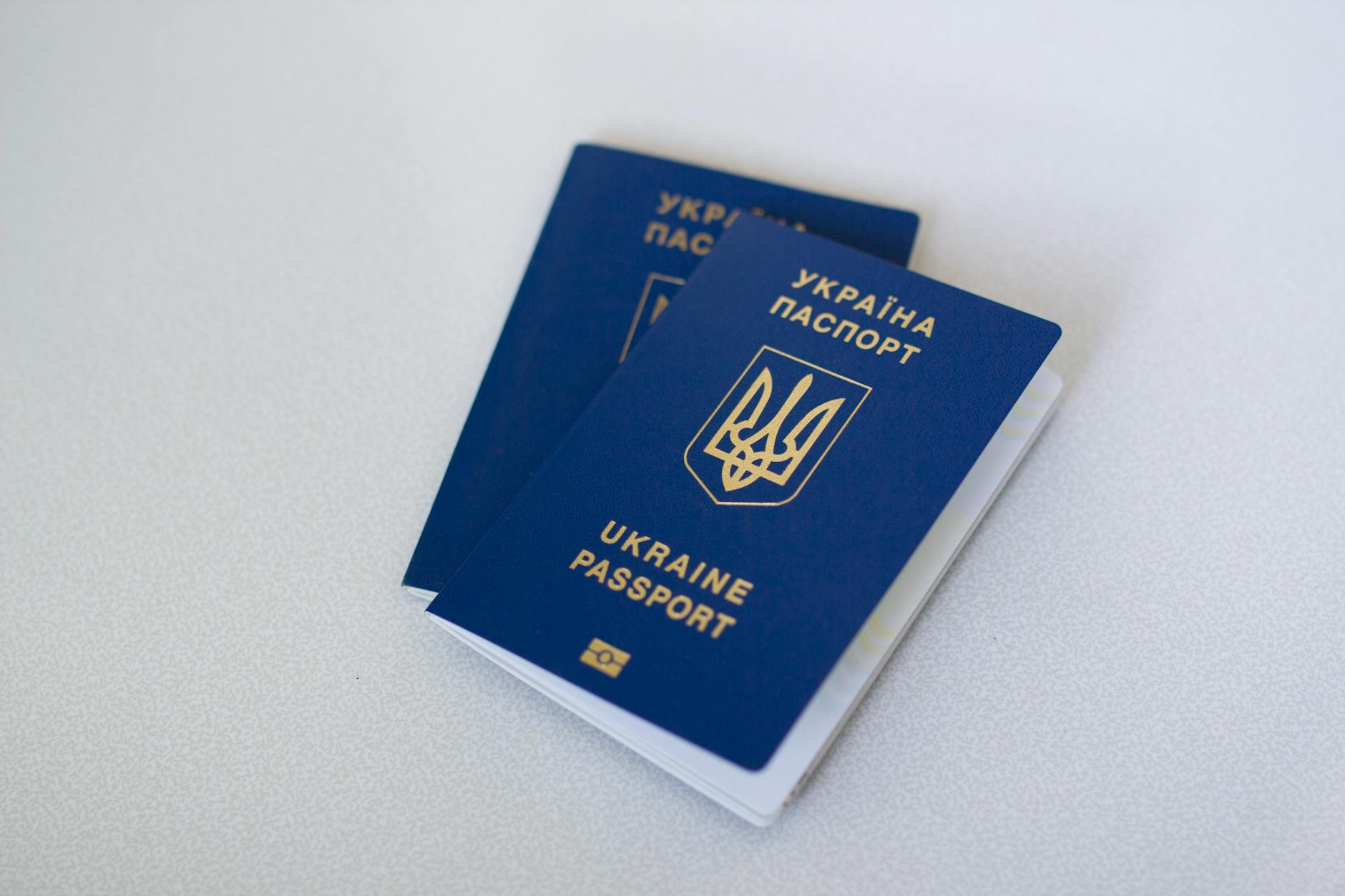
A UK Biometric Residence Permit (BRP) is a residence card that proves a person's immigration status inside the UK. It is not a passport and does not grant visa-free entry to any country. Visa-free access to other states is determined by the holder's nationality, recorded on a passport or recognised travel document, not by the BRP itself.
Last reviewed: May 2026
TL;DR: There is no list of countries that admit BRP holders visa-free as a category. Visa-free access depends on the passport in your hand. A BRP supports UK re-entry and, in narrow situations, family-member rights under EU rules or Common Travel Area movement to Ireland. From 2025 the BRP is being phased out in favour of the eVisa, so check your UKVI account before booking travel.
- A BRP is a UK residence document. It is not a passport and confers no visa-free travel rights of its own.
- Visa-free access to any third country is set by the holder's nationality, not by their UK residence status.
- The BRP supports re-entry to the UK from abroad alongside a valid passport.
- The Home Office is phasing BRP cards out. Holders are being moved onto a UKVI eVisa, with most physical BRPs set to expire on 31 December 2024 even where the underlying leave continues.
- For travel to Ireland, the Common Travel Area applies to British and Irish citizens. BRP holders who are non-British and non-Irish nationals usually still need permission to travel to Ireland under Irish rules.
- Family members of EU citizens may have separate rights under EU free movement law in some Schengen states; these depend on the EU national, not on the BRP itself.
What a BRP is and what it is not
A Biometric Residence Permit is a credit-card-sized document issued by the UK Home Office to non-British and non-Irish nationals granted permission to stay in the UK for more than six months. The card carries a photograph, fingerprint chip, the holder's name and date of birth, and the dates and conditions of their UK leave. It is a residence permit only.
The BRP is not a passport. It is not a national identity card. It does not contain any visa or entry permission for any country other than the UK. It cannot be used as a stand-alone travel document. When the holder travels internationally, they must present the passport of the country whose nationality they hold, and the BRP sits alongside that passport as proof of their UK status when they return.
The official GOV.UK summary explains that a BRP can be used to confirm identity, right to work, right to rent, and access to public services inside the UK. It explains nothing about international travel for one simple reason: BRPs do not control international travel. The full definition is at GOV.UK: biometric residence permits.
BRP and visa-free travel: the honest answer
The phrase "visa-free countries for UK BRP holders" appears in many search queries and in some travel-blog content. It is misleading. No country anywhere maintains a special visa-free list for people who happen to hold a UK BRP. Visa-free or visa-on-arrival access is granted to passport holders of particular nationalities, sometimes to passport holders of particular categories (for example diplomatic passports), and sometimes through bilateral agreements.
For example, the Schengen Area's short-stay visa-free list is keyed to passport nationality. A Pakistani national living in the UK on a Skilled Worker visa, with a BRP that runs to 2028, still requires a Schengen visa to visit France for a weekend. A Brazilian national living in the UK on a Student visa enters most of South America visa-free because they hold a Brazilian passport, not because they hold a UK BRP.
In other words, the BRP changes nothing about which countries the holder can enter visa-free. It only confirms their UK status. Travellers planning a holiday should look at their passport, not their BRP, when checking visa requirements.
Common myths about BRP holders and international travel
Several recurring myths circulate online. Each is worth a flat correction:
- "A UK BRP gives Schengen visa-free travel." It does not. Schengen short-stay visa exemptions are nationality-based, listed in EU Regulation 2018/1806. A UK residence permit does not bring the holder into a visa-exempt category. Non-EU nationals living in the UK on a BRP usually need a Schengen visa from the consulate of the destination country.
- "A BRP works as ID across Europe." It does not. The BRP is recognised by UK authorities only. Continental authorities check the passport.
- "A BRP holder can enter Ireland the same way a British citizen can." Only British and Irish citizens have unconditional Common Travel Area rights. Non-British and non-Irish BRP holders are subject to Irish immigration rules and may need a visa.
- "A BRP guarantees re-entry to the UK." The BRP, alongside a valid passport and ongoing UK leave, is the standard way to re-enter the UK. It does not override a curtailment of leave, an expiry date, or a refusal at the border.
The shortest accurate summary is that the BRP is a UK document with UK effects. Foreign authorities make their own decisions on the basis of the holder's passport and any visa they hold.
Where your nationality (not your BRP) determines visa-free access
Because visa-free travel is keyed to nationality, the practical first step for any BRP holder planning a trip abroad is to look up their passport-issuing country's visa-free list with the specific destination. National-level visa-free lists are maintained by the foreign ministries of each issuing country and by destination immigration authorities. International references such as the IATA Timatic database power most airline check-in desks.
For travel from the UK to mainland Europe, the EU's short-stay visa requirement table sets out which nationalities are visa-exempt for Schengen visits of up to ninety days in any one hundred and eighty. This list is fixed by Regulation 2018/1806 and is updated only by EU legislative process; UK residence status is not a factor. Travellers can verify the destination state's stance on their nationality through the destination embassy.
For longer trips, study, or work abroad, BRP holders need a national visa from the destination country in their passport, regardless of how long they have lived in the UK. UK residence does not transfer to other states.
BRP and Ireland under the Common Travel Area
The Common Travel Area (CTA) is a long-standing arrangement between the UK and Ireland that allows British and Irish citizens to travel and live freely between the two states. Non-British and non-Irish BRP holders are not full beneficiaries of the CTA. Their right to enter Ireland is decided by Irish immigration law, which keys entry to the passport the traveller holds.
That said, two pieces of the picture matter for BRP holders. First, internal travel between Great Britain and the island of Ireland is not subject to systematic immigration controls at the border. There is no routine passport check on a flight from Glasgow to Belfast, or on the Belfast-to-Dublin train. Second, Ireland operates a short-stay waiver for some non-EU nationals who already hold a valid UK short-stay visa, but the waiver is narrow and has specific conditions on country of nationality.
The safe planning rule is that a BRP holder travelling to Ireland should check the Irish Department of Justice immigration pages for their nationality, rather than assuming the BRP is a free pass. Travel inside the United Kingdom, including to Northern Ireland, is not international travel for immigration purposes.
The eVisa transition: what changes in 2026
The Home Office began phasing out the BRP card during 2024 as part of the move to a fully digital UK immigration status, the eVisa. Most BRPs issued before that change were set to expire on 31 December 2024 even when the underlying immigration leave continued for years beyond that date. Holders were asked to create a UKVI account and link their immigration status to it. The eVisa, accessed through the UKVI account, then becomes the primary proof of UK status for employers, landlords, healthcare providers, and the UK Border Force.
For international travel, the eVisa is checked by carriers and by the UK Border Force on return. Carriers boarding a passenger to the UK can confirm UK permission to enter using the passport linked to the UKVI account and the eVisa record. Holders are no longer expected to carry the physical BRP card to fly home, although many were carrying the card during the 2024 to 2025 transition because some airlines were slow to update their checks.
Detail and a step-by-step walk-through for setting up a UKVI account are published at GOV.UK: eVisa and at GOV.UK: view and prove your immigration status. From 2026 onward, expect almost all UK immigration status to be confirmed digitally rather than via a card.
Re-entering the UK on a BRP
While the BRP is still in circulation, the standard re-entry combination for a non-British and non-Irish UK resident is a valid passport plus the BRP. The passport carries the underlying nationality and a vignette where required; the BRP confirms the UK leave. Once the holder has been moved to the eVisa, the BRP is no longer needed for re-entry, and the carrier or Border Force checks status via the UKVI account record linked to the passport.
If a BRP is lost or stolen outside the UK, a replacement cannot be obtained abroad. Instead, the holder applies for a single-use Replacement BRP (Form RC) to allow them to return. Once back in the UK, the lost BRP can be replaced or, if the holder is on the eVisa already, the digital record continues without a card. The process is described at GOV.UK: lost, stolen or damaged BRP.
None of this entitles the holder to enter any country other than the UK without the visa requirements set by that country's own authorities. The BRP is solely the holder's UK residence credential.
Practical checklist before booking travel
For a BRP holder planning a trip abroad, the planning sequence is the same as for any non-British traveller. The BRP itself is largely irrelevant for the destination decision.
- Check the visa requirements set by the destination country for someone holding the holder's passport nationality. Use the destination's own immigration authority page as the source of truth.
- If a visa is required, apply via the destination embassy or visa centre in the UK. The application asks about UK residence as part of background, but the issuing authority decides the visa on its own rules.
- Confirm passport validity for the destination state. Many countries require at least six months' validity remaining on arrival.
- Confirm UK re-entry conditions. Check that UK leave does not expire during the trip, and that any conditions on the visa (for example study attendance) are not breached by the absence.
- If still in the BRP era, carry the BRP alongside the passport. If already moved to the eVisa, ensure the UKVI account is set up and accessible from a phone or laptop, and that the passport is linked to it.
That sequence works regardless of nationality, and it does not change because a BRP is in hand. The BRP supports step five only. Steps one through four belong to the holder's passport and to the destination's rules.
Frequently asked questions
Can I travel visa-free to Europe with a UK BRP?
A UK BRP does not give visa-free access to Schengen states or to any other country. Schengen short-stay visa exemptions are based on the traveller's nationality, recorded in the passport. If your passport-issuing country requires a Schengen visa, you still need one even with a long-validity UK BRP in hand.
Does a UK BRP work like a passport at the border?
No. The BRP is a UK residence document only. International border officers check the passport for nationality and any visa or entry permission required for their country. The BRP is shown alongside the passport when returning to the UK, not when entering another country.
Can I enter Ireland on my BRP?
The Common Travel Area allows British and Irish citizens to move freely between the UK and Ireland. Non-British and non-Irish BRP holders are subject to Irish immigration rules and may need to apply for a visa to visit Ireland. Some short-stay visa waivers exist for travellers already holding a valid UK visa, but the waiver is narrow and depends on nationality. Check the Irish Department of Justice immigration pages for the destination-specific position.
What replaces my BRP from 2025 onward?
The UK eVisa, accessed through a UKVI account, is replacing the physical BRP card. Most BRPs expired on 31 December 2024 even where the underlying leave runs longer. Holders are asked to create a UKVI account and link their immigration status to it. Detail is at GOV.UK: eVisa.
Will airlines still accept my BRP for boarding to the UK?
During the transition many carriers continued to accept the BRP alongside the passport. Going forward, airlines confirm UK permission to enter by checking the eVisa record linked to the passport via the UKVI account. Carry the BRP if you still have a valid one, but make sure your UKVI account is set up and accessible before international travel.
Can the BRP exempt me from needing a US ESTA or a Canadian eTA?
No. US ESTA and Canadian eTA are issued on the basis of passport nationality. The US ESTA is available to passport holders of Visa Waiver Programme countries. The Canadian eTA is available to passport holders of eTA-eligible countries. UK residence is not a qualifying factor. Holders of non-eligible passports need full visitor visas for the US and Canada, regardless of UK leave.
If I lose my BRP outside the UK, can I still come back?
A BRP cannot be reissued abroad. To return to the UK after a lost or stolen BRP abroad, you apply for a single-use Replacement BRP (form RC) at the nearest UK visa application centre. The replacement is valid for one journey to the UK only. Once back in the UK, the original record is updated or a fresh card is issued.