
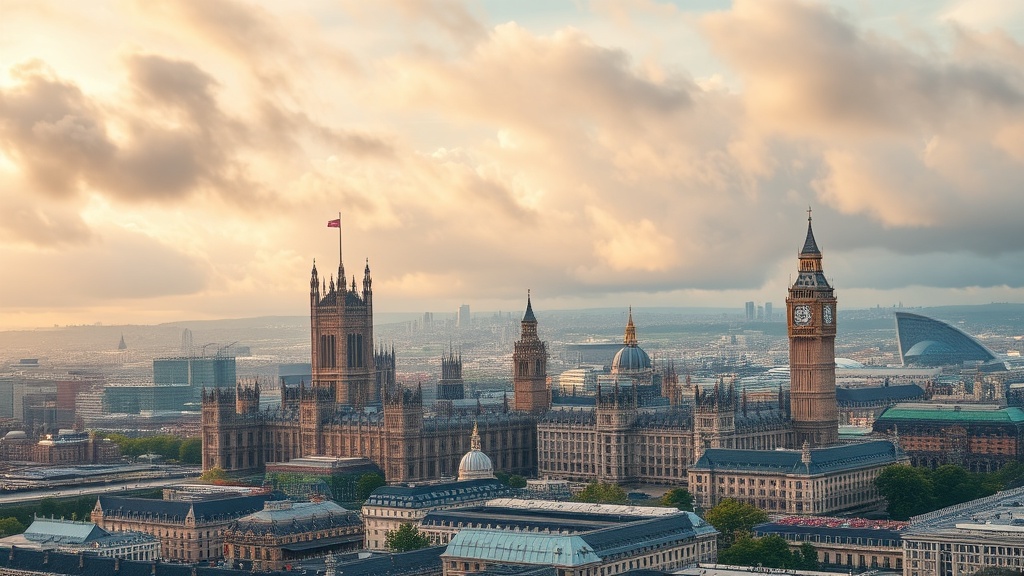
The Autumn Budget is scheduled for 28 October 2026, the first delivered by Chancellor John Healey. While no wealth tax has been announced, proposals and speculation include a possible rise in the high value council tax surcharge on properties worth 2 million pounds or more, and capital gains tax reform.
TL;DR · LAST REVIEWED 23 AUGUST 2026
- Budget on 28 October 2026, first by Chancellor John Healey.
- No wealth tax announced; proposals are speculative.
- CGT reform and mansion tax rise are seen as likely.
- Analysts estimate tax rises up to 25 billion pounds.
KEY FACTS
- Budget date: 28 October 2026.
- CGT higher rate rose to 24% in 2024.
- Mansion tax threshold: 2 million pounds.
- Wealth tax threshold discussed: 10 million pounds.
- Tax rise estimate: up to 25 billion pounds.
Everything here is pre-Budget speculation, not policy. The only confirmed fact is the Budget date of 28 October 2026. Avoid making irreversible financial decisions based on speculation; wait for the actual announcements, and take regulated advice for large sums.
What a wealth tax is
A wealth tax is a charge on the total value of a person's assets, rather than on income or gains. It can be structured as a one-off charge or an annual levy above a set threshold. The UK does not currently have a standalone annual wealth tax.
The distinction matters because most existing UK taxes target flows of money. Income tax applies to earnings, capital gains tax applies to profits from selling assets, and inheritance tax applies to transfers of wealth on death. A wealth tax, by contrast, would apply to the stock of assets themselves, such as property, shares, savings and other valuables, regardless of whether they generate any income or have been sold.
Under a typical design, the tax would only apply above a high threshold, meaning most households would be unaffected. The rate could be applied annually, creating a recurring charge on the value of the assets, or as a one-off levy designed to raise a specific amount of revenue. Some proposals have suggested a rate of around 1% on assets above a threshold, though no specific rate has been confirmed.
Because the UK has no existing machinery for valuing and taxing total net wealth, introducing such a tax would require new administrative systems. HM Revenue and Customs would need to collect data on asset holdings, and valuations would need to be updated regularly. This is one reason why a standalone wealth tax is considered complex to implement compared with changes to existing taxes.
Why wealth taxes are being discussed now
The Autumn Budget is scheduled for 28 October 2026, with pressure to raise revenue. The government has said it will keep the manifesto pledge not to raise the main rates of income tax, VAT or National Insurance, narrowing the options available to the Chancellor. Analysts at Capital Economics have estimated the Budget could raise up to 25 billion pounds.
The pledge to protect the main rates of income tax, VAT and National Insurance removes the most straightforward ways of increasing revenue. With those levers off the table, the government is looking at other sources, and taxes on assets and wealth are among the few remaining areas where policy could change.
The scale of the challenge is significant. Economists at Capital Economics have estimated that the Budget could raise taxes by up to 25 billion pounds. That figure is not a government target, but it gives a sense of the revenue gap that analysts believe needs to be filled. Raising that sum through changes to existing taxes would require substantial adjustments to rates or thresholds.
The discussion is also taking place against a backdrop of previous changes to taxes on wealth. The tax-free dividend allowance was previously cut to 500 pounds a year, and the capital gains tax annual exempt amount has also been reduced. These changes show that the government has already been willing to adjust the treatment of assets and investment income in recent years.
What is actually on the table
A standalone wealth tax, such as on estates above 10 million pounds, has been discussed but is widely reported as off the agenda for now. Capital gains tax reform is seen by analysts as the more likely near-term measure, and the high value council tax surcharge on properties worth 2 million pounds or more is reported as likely to rise.
The idea of a standalone annual wealth tax has been floated in policy debates, with some proposals suggesting a charge on estates above 10 million pounds. However, this is widely reported as off the agenda for the upcoming Budget. The complexity of implementation and the political sensitivity of a new tax on assets are likely reasons why it is not being pursued at this stage.
Instead, analysts expect the government to focus on reforming existing taxes. Capital gains tax is seen as the more likely near-term measure. The higher rate of capital gains tax already rose to 24% from 20% in 2024, and further changes to rates or thresholds could be announced. This would affect people selling assets such as shares or second properties.
The high value council tax surcharge, sometimes called a mansion tax, is also reported as likely to rise. This surcharge currently applies to properties worth 2 million pounds or more. An increase would affect owners of the most expensive homes in the country, adding to their annual council tax bill.
Who would be affected
A wealth tax would mainly affect people with very large asset holdings above any threshold. Capital gains tax changes would affect people selling assets such as second properties or shares. The high value council tax surcharge affects owners of the most expensive homes.
The impact of any wealth tax proposal depends heavily on the threshold set. A tax on estates above 10 million pounds would only affect a very small number of people, as relatively few households hold assets of that value. Most homeowners, savers and investors would be outside the scope of such a tax.
Capital gains tax changes would have a broader reach. Anyone selling an asset that has increased in value since purchase could be affected, including people selling second homes, buy-to-let properties, shares or business assets. The current higher rate of 24% already applies to gains above the annual exempt amount, and any further increase would raise the tax bill on those disposals.
The high value council tax surcharge is narrower in scope, applying only to properties valued at 2 million pounds or more. This affects a small group of homeowners concentrated in the most expensive areas of the country, particularly London. An increase in the surcharge would add to the annual costs faced by these property owners.
What this means before the Budget
Nothing is confirmed; these are proposals and speculation until the Budget on 28 October 2026. People with large gains or high value assets may wish to review their position with an adviser. Watch the Budget itself for what is actually announced, rather than pre-Budget speculation.
All of the measures discussed in this guide are proposals and speculation ahead of the Budget. No wealth tax has been announced, and the government has not confirmed any changes to capital gains tax or the high value council tax surcharge. The final decisions will only be known when the Chancellor delivers the Budget on 28 October 2026.
For people who may be affected, the period before the Budget is a time to review their position. Those with large capital gains or high value assets may wish to consider their options with a financial adviser. However, any decisions should be based on what is actually announced, rather than on pre-Budget speculation.
The Budget itself will be the definitive moment. Until then, the details of any tax changes remain uncertain. The government has said it will keep its manifesto pledge on the main rates of income tax, VAT and National Insurance, but it has not ruled out changes to other taxes. The final shape of any wealth-related measures will only be clear once the Budget is delivered.
RELATED GUIDES
DISCLAIMER
This article is for general information only and does not constitute financial or tax advice. It describes proposals and speculation ahead of the Budget, not confirmed policy. Check the primary source or a qualified adviser before acting.
Frequently asked questions
Is the UK getting a wealth tax?
No wealth tax has been announced. A standalone wealth tax on large estates has been discussed but is reported as off the agenda for now, with a decision only possible at the Budget on 28 October 2026.
When is the 2026 Budget?
The Autumn Budget is scheduled for 28 October 2026, the first delivered by Chancellor John Healey.
What taxes are most likely to change?
Analysts see capital gains tax reform as the more likely near-term measure, alongside a possible rise in the high value council tax surcharge on 2 million pound properties.
Who would pay a wealth tax?
Any wealth tax would mainly affect people with very large asset holdings above a set threshold, such as estates above 10 million pounds in the proposals discussed.
Should I act now?
Nothing is confirmed before 28 October 2026; avoid irreversible decisions based on speculation, and take regulated advice for large gains or assets.
SOURCES
- GOV.UK: HM Treasury – accessed 2026-08-23
- GOV.UK: Capital Gains Tax – accessed 2026-08-23
- GOV.UK: Council Tax – accessed 2026-08-23


