Last reviewed: May 2026
TL;DR: SumUp's card-present fee is 1.69% per transaction (pay-as-you-go) with the Air reader at £39 one-off; SumUp Limited is FCA-authorised under FRN 900700 as an electronic money institution, with PSD2 SCA on card-not-present payments.For UK buyers researching SumUp, the first question is rarely the feature list. It is whether the product fits the relevant UK regulatory and operational picture: typically the FCA (EMI + PSD2) + PCI where personal data, employment or financial rules are involved. This review covers what SumUp is, what SumUp Limited actually charges in 2026, where it fits well for UK firms and the honest weak points. Pricing is taken from the vendor's published rate card where one exists; quote-based products are flagged as such, with typical SME ranges drawn from public case studies. The aim is a buying-grade view of SumUp for a UK SME or mid-market reader, not a marketing summary.
This is part of a series of independent product reviews on Kaeltripton.com. SumUp sits in the UK card payments and POS for micro-merchants category, and the structure below is the same for every product in the series so you can compare like-for-like.
What is SumUp in 2026
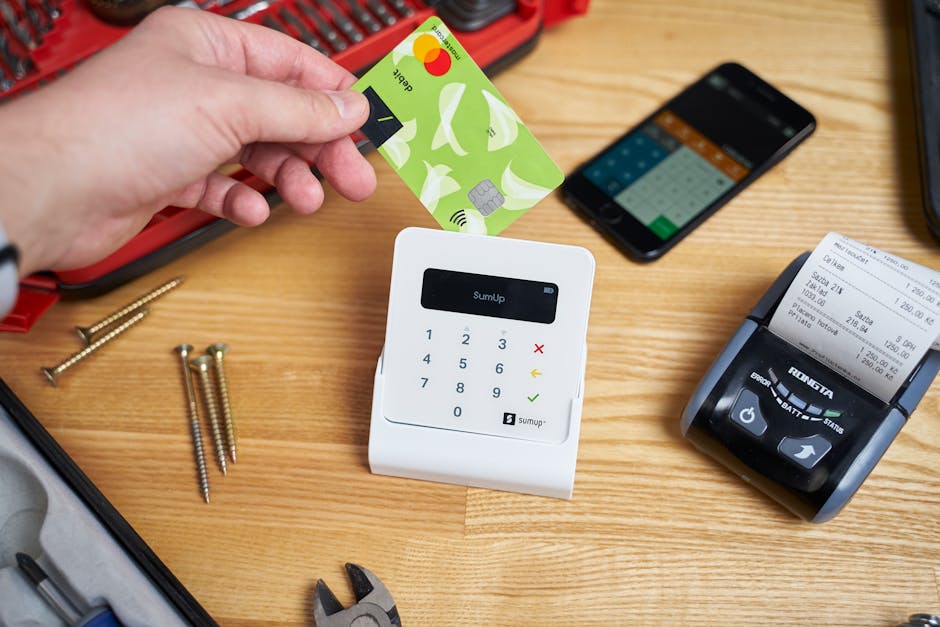
SumUp is A UK-marketed card-payment provider and POS product (issued by SumUp Limited) offering pay-as-you-go and subscription card-acceptance plans for micro-merchants and SMEs. SumUp Limited positions it within the UK card payments and POS for micro-merchants category, and the live UK product page sits at https://www.sumup.com/en-gb/.
For a UK SME buyer, the practical lens is three-fold: does it match the workflows your team already runs, does it hold up against the FCA (EMI + PSD2) + PCI requirements relevant to your sector, and does the published pricing actually fit your budget once VAT and FX are accounted for. Treat published rate cards as a floor, not a ceiling: add-ons, integrations and onboarding fees frequently push the final invoice 20-40% above the headline plan.
Most prospects we see researching SumUp fall into one of two camps: those moving up from a free or spreadsheet-based process, and those swapping out an older incumbent. Both groups benefit from documenting their current process in detail before the demo. Otherwise it is easy to be sold features you do not need at the expense of features you do.
Key features for UK businesses in 2026
The headline capabilities of SumUp that UK buyers most often shortlist on:
- Tap, chip and PIN card acceptance
- Free SumUp business account with Mastercard debit card
- SumUp Online store
- Invoicing and payment links
- Reader hardware compatible with iOS, Android and dedicated terminals
- Same-day pay-out option (subscription)
How these stack up against rivals depends on the deployment shape. A 25-person UK SME running a single workflow will see the entire feature surface; a 250-person mid-market firm with cross-functional needs may only use 60-70% of it. Two features in particular tend to differentiate SumUp in shortlists: the way it handles integrations into the rest of a typical UK SME stack (accounting, payroll, CRM, identity), and how its reporting copes with the questions a finance director or compliance lead will actually ask once it is live.
One practical tip during demos: ask the vendor to run your own data through the product (or a representative subset). Sales engineers will usually agree to a sandbox import. The result reveals more in twenty minutes than two hours of slide deck.
UK-specific fit and compliance in 2026
SumUp Limited is authorised by the FCA as an electronic money institution (FRN 900700) and operates the SumUp business account and acquiring under the FCA's EMI and payment-services regime. PCI DSS Level 1 acquiring partner. PSD2 SCA is applied to card-not-present transactions.
The FCA (EMI + PSD2) + PCI dimension is the part that most rival US-headquartered tools get half-right and half-wrong. For SumUp, the relevant questions to ask the vendor in writing are: where is UK customer data hosted, what is the contracting entity for UK customers, whether there is a UK GDPR-aligned data processing agreement, and whether sub-processors are listed publicly. Those four answers will tell you more about the vendor's UK posture than any sales claim.
If your sector has additional rules (FCA-regulated firms, NHS providers under the Data Security and Protection Toolkit, ICO-registered data controllers handling sensitive special-category data), bake those into the procurement scorecard. Standard SaaS contracts rarely cover sector-specific obligations without amendment.
UK-built tools usually have an edge here, but a US-built tool with mature compliance programmes (SOC 2 Type II, ISO 27001:2022, UK GDPR DPA available) can be equally defensible. Tier the importance based on the data classification you intend to load.
Pricing in 2026 (published rate cards)
Published pricing for SumUp in 2026 (or, where the vendor does not publish, the typical SME range and the indicative ranges that UK customers have reported publicly):
- SumUp Air reader: £39 one-off
- SumUp Solo terminal: £79 one-off
- Standard card-present fee: 1.69% per transaction
- Invoice card-not-present: 2.5%
- SumUp One subscription: £19/month for reduced 0.99% per transaction up to a cap
When you compare those numbers with rivals, normalise on the same lens. The cheapest entry plan is rarely the right comparison; what matters is the cost per active user, per active month, for the features your shortlist actually needs. Three watch-outs in particular for UK buyers: foreign-exchange exposure on US-dollar pricing (the vendor's price card is in USD, your invoice may be in GBP), VAT treatment for VAT-registered businesses (most reclaim 20% but the gross monthly figure still counts for budgeting), and committed-term discounts that are only available on annual or multi-year deals.
For procurement-led shops, push for an itemised quote: subscription, add-ons, professional services, training and any usage-based components. Otherwise you are signing for a number, not a contract.
Pros and cons of SumUp for UK buyers
Pros:
- Cheapest reader hardware in the UK SME market at £39
- Free SumUp business account included
- Genuinely transparent fee schedule
- Subscription plan reduces per-transaction cost for higher-volume users
Cons:
- 1.69% card-present rate above bureau merchant accounts at volume
- Subscription cap is per period and tier
- Customer support response can be slow at peak
- Account holds during fraud reviews can be sudden
Read the cons list as questions to take into the demo, not deal-breakers. Most products in UK card payments and POS for micro-merchants ship trade-offs by design; the question is whether they match yours. If something on the cons list is a non-negotiable, surface it on the discovery call before you invest weeks evaluating. Vendors usually flag known-issue roadmap items in writing if you ask directly.
One more honest pattern: glowing reviews and damning reviews often come from the same product, deployed differently. Look for verified-purchaser reviews that mention your sector and your scale rather than star averages.
Who SumUp suits in 2026
UK sole traders, market traders, mobile and event merchants needing the cheapest reader hardware in the UK with no monthly fee.
Conversely, SumUp tends to be a poor fit for buyers who need something materially different: very low volume hobby use, very heavy sector-specific compliance not covered by the product, or workflows that the platform's data model simply does not bend to. A clean-line test: write down the five things you absolutely must do every week. If two or more are not first-class workflows in the product, look elsewhere or expect to pay for customisation.
It is also worth considering the practical fit for your team. SumUp usually requires at least one internal champion who has the time to configure it properly. Without that, even the best product underperforms in week six.
Alternatives to SumUp worth shortlisting
Useful alternatives to evaluate alongside SumUp:
- Square Reader. £19 hardware, 1.75% per transaction.
- Zettle (PayPal). Closest like-for-like.
- Stripe Terminal. Developer-first.
The strongest evaluations put 2-3 products through the same scorecard rather than benchmarking the leader against your existing tool. Use a five-row scoring sheet covering core workflows, UK compliance posture, integration with your stack, total 12-month cost and switching cost if things go badly. Score on a 1-5 scale and resist tying. The vendor who scores most consistently across rows is usually the right answer, even if no single row is a winner.
Where possible, talk to two current customers in your sector before signing. Vendors will provide references, but a five-minute LinkedIn search for current users in your industry will surface people willing to give you an honest take.
Related Guides on Kaeltripton
Frequently asked questions
Is SumUp available in the UK?
Yes. SumUp is sold in the UK with a published UK product page, and most plans can be invoiced in GBP either directly or through a reseller. UK contracting and data-processing terms vary by vendor; check the data processing addendum for UK GDPR specifics.
How much does SumUp cost a UK SME in 2026?
Published list pricing is summarised in the Pricing section above. The realistic 12-month cost for a UK SME is usually the headline plan plus 20-40% for add-ons, training and integration work. Vendors with quote-based pricing typically discount 10-20% for annual prepay.
Is SumUp compliant with UK GDPR and the FCA (EMI + PSD2) + PCI regime?
SumUp Limited publishes a data processing addendum aligned with UK GDPR principles. Sector-specific compliance (FCA (EMI + PSD2) + PCI) usually requires your own controls on top, not just vendor posture. Ask for the latest ISO 27001 or SOC 2 Type II report and the sub-processor list before signing.
Can SumUp integrate with the rest of my UK stack?
SumUp ships native integrations with the most common UK SME tools in its segment, listed in the Key features section above. Where the integration you need is not native, an iPaaS layer (Zapier, Make, Tray.io, Workato) will usually close the gap, with the trade-off of extra cost and one more vendor relationship.
How does SumUp compare with the alternatives?
The Alternatives section above summarises the closest like-for-like options. The honest answer for most UK buyers is that the choice is decided by which workflows are first-class in the product and how the product's UK compliance posture lines up with your sector. Do a side-by-side scorecard rather than relying on star ratings.
How do I run a fair pilot or proof of concept?
Run the pilot against a representative slice of your real data and your real users, not a sandbox. Set success criteria in writing before the pilot starts: workflow coverage, integration health, data accuracy, support response time. Two weeks is usually long enough to surface red flags; four weeks is needed for anything that touches month-end.
How we verified this
Pricing was taken from the vendor's published UK rate card on the date of last review (May 2026). Compliance claims were checked against the relevant UK regulator's published guidance (HMRC, ICO, FCA, HSE, Acas, Ofcom, NCSC, Companies House) and the vendor's own data processing addendum or trust portal where available. Where pricing is quote-based, ranges are drawn from public customer case studies, vendor partner-marketplace listings and named-source procurement disclosures rather than private quotes. We do not accept payment for placement in this product-review series.