

LAST REVIEWED: MAY 2026
TL;DR- IAA (formerly the OISC) authorisation is the statutory licence to give UK immigration advice.
- It is required for anyone advising in the course of business or for reward.
- Authorisation is at one of three levels and within defined categories.
- Acting without authorisation is a criminal offence under the 1999 Act.
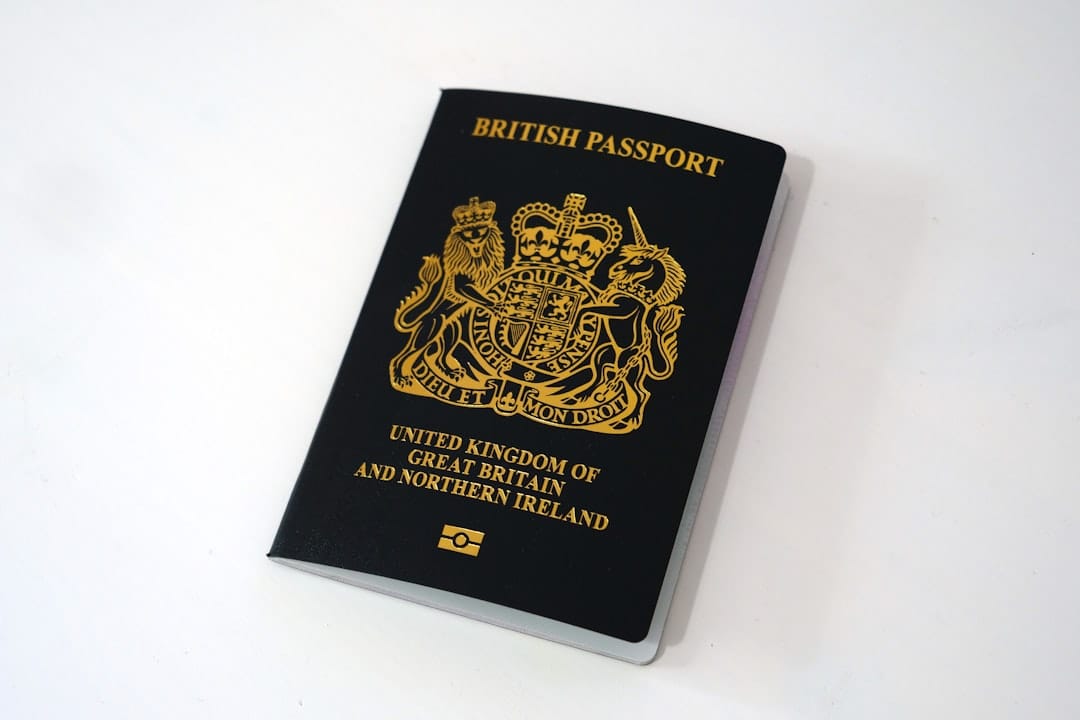
Authorisation by the Immigration Advice Authority is what makes paid UK immigration advice lawful. This guide explains what authorisation means, what an authorised firm must do, and why it matters when comparing firms or responding to an unsolicited offer of help.
Authorisation in the Immigration and Asylum Act 1999
The Immigration Advice Authority, commonly abbreviated to IAA, is the statutory regulator created by Part V of the Immigration and Asylum Act 1999. Its role is to ensure that anyone giving immigration advice or services in the United Kingdom is competent, qualified, and acting in the client's best interests. The regulator publishes its register, codes of standards, and complaints procedures at oisc.gov.uk.
Under section 84 of the 1999 Act, providing immigration advice for reward without authorisation is a criminal offence. Two categories of person are permitted to act: those authorised by the IAA at a specific level, and those exempt because they belong to a designated professional body such as the Solicitors Regulation Authority, the Bar Standards Board, or CILEx Regulation. The exemption recognises that members of those bodies are already subject to comparable professional oversight.
IAA authorisation is granted at three levels and is restricted to specific work categories. Levels reflect the complexity of casework permitted, while categories cover areas such as immigration, asylum, and protection. Advisers and the firms they work for must display their registration details and only act within the scope of their authorisation.
What an Authorised Firm Must Do
Authorised firms are bound by the IAA Code of Standards. This sets out duties on competence, integrity, communication, fees, complaints handling, and client funds. The Code is published on the IAA website and is updated periodically following public consultation.
Key practical requirements include a written client-care letter at the start of each instruction, professional indemnity insurance at the level the IAA specifies, a separate client account for client funds where applicable, and a published or on-request complaints procedure. These are not optional, and an IAA compliance audit will check each of them.
Firms must keep proper records, including file notes of advice, copies of correspondence, and evidence of identity checks. Records are retained for a period specified in the Code and may be inspected by IAA compliance officers during an audit. A firm that cannot produce records will struggle to defend a complaint and may face regulatory action regardless of the underlying merits.
Levels and Categories of Authorisation
Level 1 covers initial advice and applications that do not involve a substantive appeal or judicial review. Typical Level 1 instructions include straightforward applications such as a standard visitor visa, an in-country extension where the requirements are clearly met on the published policy, or a registration application that fits a published category.
Level 2 authorises caseworkers to handle complex casework and First-tier Tribunal appeals up to the point of preparing the case for hearing. Many refused student, spouse, and work visa applications, as well as deportation responses and discretionary leave applications, fall into Level 2 because they involve interpretation of the Immigration Rules rather than a straight match against published criteria.
Level 3 authorisation covers advocacy at the First-tier and Upper Tribunal, judicial review preparation, and the most complex casework. A Level 3 adviser may represent a client in court within the IAA framework, though many complex matters are nevertheless referred to solicitors or barristers because of overlap with reserved legal activities.
Why Authorisation Matters to Clients
An authorised firm is accountable. There is a regulator that takes complaints, a published Code of Standards that defines expected behaviour, and a route to compensation through professional indemnity insurance where the firm has caused loss. None of those protections exist when dealing with an unauthorised individual.
Authorisation also implies a minimum baseline of competence. Each level requires the relevant assessment to be passed, and continuing authorisation depends on meeting professional development requirements. The assessments do not guarantee excellence, but they exclude advisers who cannot demonstrate basic knowledge of the law and procedure.
Where things go wrong, an authorised firm has every commercial reason to handle the matter properly. A complaint upheld by the IAA complaints scheme appears in published statistics and may inform future enforcement. The combination of regulatory consequences and reputational pressure means most firms work hard to put service complaints right at an early stage.
The Consequences of Acting Without Authorisation
Section 91 of the Immigration and Asylum Act 1999 makes it a criminal offence to provide immigration advice or services without authorisation. The maximum penalty on conviction is imprisonment for up to two years, an unlimited fine, or both. The offence applies whether the advice is given face to face, by telephone, or online.
The IAA enforcement team has a dedicated function to investigate unauthorised practice and works with the police and the Crown Prosecution Service where prosecution is appropriate. Reports can be made anonymously and the regulator publishes annual enforcement statistics covering the previous year.
Beyond criminal liability, an unauthorised adviser has no professional indemnity insurance and is unlikely to keep proper client funds in a separate account. A client who has paid an unauthorised adviser and lost money has limited civil recourse and no regulatory compensation scheme to fall back on.
How Authorisation Interacts With Other Regulation
Solicitors regulated by the SRA, barristers regulated by the Bar Standards Board, and chartered legal executives regulated by CILEx Regulation are exempt from IAA authorisation when advising on immigration. Each regulator imposes its own competence and conduct requirements, broadly equivalent to the IAA framework.
The Legal Aid Agency awards legal aid contracts to firms it has selected based on quality criteria. Holding a legal aid contract for immigration and asylum work is itself an indicator of demonstrated specialism and the firm's continued willingness to meet the LAA's quality and audit standards.
Specialist accreditations such as the Law Society Immigration and Asylum Law Accreditation Scheme go beyond baseline authorisation. They require evidence of casework experience and the passing of further assessments. Accreditation is not necessary to practise but is often a strong indicator of subject-matter focus.
How to Verify Authorisation Quickly
Anyone can search the IAA register at oisc.gov.uk to confirm whether an adviser or firm is authorised. The public search returns the firm name, head-office address, the level and category of authorisation held, and the date authorisation was granted. The same record will show whether authorisation has lapsed or been withdrawn, which is important if a previous adviser's status has changed.
The GOV.UK service at gov.uk/find-an-immigration-adviser combines IAA-regulated firms with those exempt through a designated professional body, allowing a search by postcode and area of advice. This is the official combined directory and is the recommended starting point when looking for an adviser in a particular city or borough.
For solicitors, the SRA register at solicitors.lawsociety.org.uk shows the firm's authorisation, named regulated individuals, and any current restrictions or conditions. A firm appearing on the SRA register does not need a separate IAA registration to give immigration advice, because SRA-regulated solicitors are exempt under section 84(4) of the Immigration and Asylum Act 1999.
Further Reading on UK Immigration Regulation
For readers who want to dig deeper into the regulatory framework, the IAA publishes its Code of Standards, complaints scheme, and annual enforcement statistics on oisc.gov.uk. The Solicitors Regulation Authority publishes the SRA Code of Conduct, the SRA Accounts Rules, and the SRA Transparency Rules on sra.org.uk. The full text of the Immigration and Asylum Act 1999, including Part V which created the IAA regime, is available on legislation.gov.uk. Reading the source legislation alongside the regulator's published guidance is often the fastest way to understand where the boundaries of authorised practice fall and how each regulator has interpreted its statutory remit.
The Legal Aid Agency publishes its directory of contracted providers on gov.uk and reports annually on legal aid spending, including the volume of immigration and asylum cases supported. The Law Society maintains the Immigration and Asylum Law Accreditation Scheme and publishes the assessment criteria on its website. The Immigration Law Practitioners' Association is a long-established membership body for immigration lawyers and publishes practitioner guidance and policy commentary on ilpa.org.uk. Each of these resources provides a different angle on the immigration adviser market, and together they support a more informed decision when comparing firms or assessing the advice received in a current matter.
For the underlying statistics on immigration decisions, the Home Office publishes quarterly immigration statistics on gov.uk, which include data on visa grants, refusals, appeals, and removals. These statistics provide important context when assessing how often particular categories of application are refused and how often refusals are overturned on appeal. Combined with regulator data on the adviser market, the statistics give a fuller picture of how UK immigration casework operates in practice. The tribunals service also publishes its own statistics covering immigration appeals, including allowance rates by category and average waiting times, which is useful context for any conversation with an adviser about case timetables and realistic expectations.
How Regulator Decisions Are Published and Where to Read Them
The IAA publishes its enforcement and disciplinary outcomes through its website, with annual reports summarising the volume of complaints received, the volume upheld, and the sanctions imposed. The reports also describe the patterns of unauthorised practice the regulator has investigated, which evolves over time as immigration policy and the adviser market change. Reading the most recent annual report alongside the public register gives a sense of both the current state of regulation and the issues the IAA is most actively pursuing.
The SRA publishes disciplinary decisions in its Solicitors Disciplinary Tribunal section, with searchable summaries of cases brought against individual solicitors and firms. The Legal Ombudsman publishes service complaint decisions covering all areas of solicitor work, including immigration, and these too are searchable by firm name. Where a firm under consideration has been the subject of recent decisions, the published summaries are a direct and authoritative source of detail about what went wrong and how the regulator or ombudsman saw the issue.
None of these published outcomes is by itself decisive. Most large firms accumulate some complaints over time and the question is whether the pattern indicates a systemic issue or a small number of isolated matters in a high-volume practice. Reading the underlying decisions, rather than relying on aggregate counts, gives a more informed view of how a firm operates in practice and how it responds when something goes wrong.
Disclaimer
The information on this page is for general guidance only and does not constitute legal advice. Kaeltripton.com is not regulated by the Solicitors Regulation Authority or authorised by the Immigration Advice Authority. Always verify an adviser's authorisation status on the official IAA register at oisc.gov.uk before instructing them.
Frequently Asked Questions
Is IAA authorisation the same as a licence?
Yes, in practice. The Immigration and Asylum Act 1999 calls it authorisation rather than a licence, but the effect is the same: it is statutory permission to provide immigration advice for reward.
Can a firm be authorised at different levels in different categories?
Yes. A firm may be authorised at Level 2 for immigration and at Level 1 for asylum, or hold no authorisation at all in a category it does not practise.
How is IAA authorisation paid for?
Authorised firms pay annual fees scaled to size and turnover. The current fee schedule is published on the IAA website and reviewed periodically.
Can a firm lose its authorisation?
Yes. The IAA may suspend or revoke authorisation following an investigation. Withdrawn authorisations are reflected on the public register and the firm is prohibited from holding itself out as authorised.
Does authorisation cover overseas work?
IAA authorisation covers advice on UK immigration matters. Advisers operating from outside the UK who give advice on UK immigration to clients in the UK may still fall within scope and should check the position with the IAA directly.
What if my adviser was authorised when I instructed them but isn't now?
Authorisation lapses do not retroactively invalidate the work, but ongoing matters should be transferred to a currently authorised firm. The IAA website explains the process for finding a successor adviser.
How This Was Verified
This article draws on the following primary sources:


