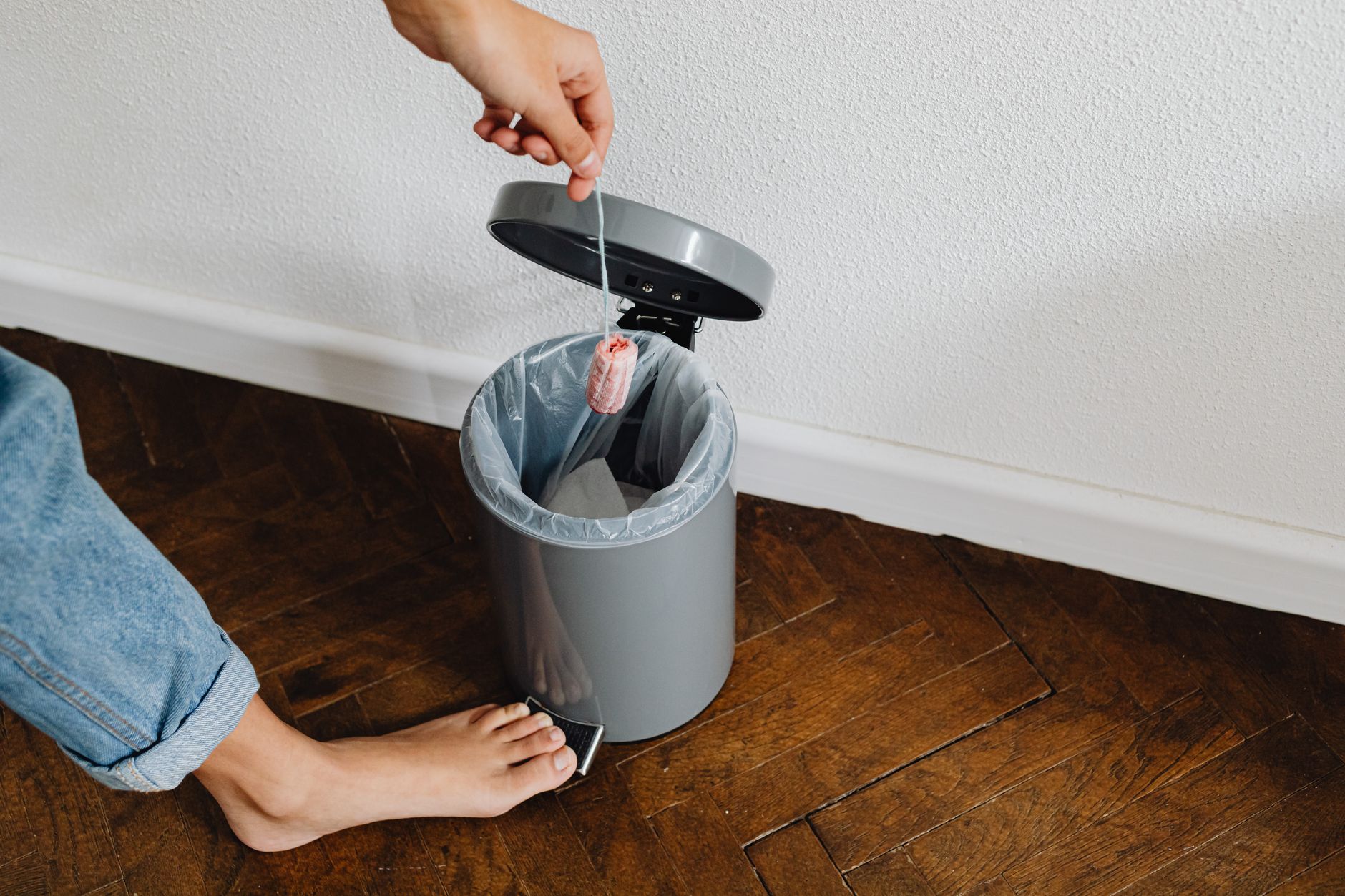
Sanitary waste disposal is the regulated collection, transport and treatment of used menstrual products, incontinence pads, nappies and related washroom waste from UK workplaces, public buildings and commercial premises. Choosing a sanitary waste disposal provider in 2026 means weighing collection frequency, bin technology, contract length and the way each operator handles its duty of care obligations, because the waste holder, not just the carrier, remains responsible under the Environmental Protection Act 1990. This guide compares the major UK sanitary waste disposal companies, sets out the regulation that governs the service, and gives indicative pricing so facilities managers can shortlist on evidence rather than sales pressure.
TL;DR: The UK sanitary waste disposal market is led by national operators PHS Group, Initial Washroom Hygiene and Citron Hygiene, with Cannon Hygiene, Cleankill and Grosvenor competing on regional service and price. Workplace provision is effectively mandatory under the Workplace (Health, Safety and Welfare) Regulations 1992 and is informed by BS 7592 for safe handling. Indicative costs run from roughly 4 to 12 pounds per bin per service, billed by visit frequency. Provider choice usually turns on bin hygiene technology, contract flexibility and how transparently duty of care paperwork is handled.
Key facts
- Employers must provide and maintain suitable sanitary conveniences and washing facilities under the Workplace (Health, Safety and Welfare) Regulations 1992, enforced by the HSE.
- BS 7592 sets the recommended practice for the safe handling and disposal of sanitary waste and informs most commercial collection protocols.
- Sanitary waste is classified as offensive waste (EWC code 18 01 04 in clinical settings, or 20 03 99 / municipal offensive in general washrooms) and must be managed under the waste duty of care.
- The largest national providers are PHS Group, Initial Washroom Hygiene and Citron Hygiene; Cannon Hygiene, Cleankill and Grosvenor compete strongly regionally.
- Indicative pricing runs from roughly 4 to 12 pounds per bin per service visit, with frequency typically every 4, 8 or 12 weeks.
- Every transfer of sanitary waste requires a waste transfer note retained for at least two years as evidence of duty of care.
- Most sanitary waste is treated by high-temperature incineration or energy-from-waste rather than landfill, partly driven by Landfill Tax and diversion targets.
- Contract terms of 12 to 60 months are common; auto-renewal and price-escalation clauses are the most frequent sources of complaint.
At a glance: best-fit sanitary waste disposal providers
The grid below maps the main UK sanitary waste disposal companies to the kind of buyer each tends to suit. None of these is a ranking. The right fit depends on site count, geography, washroom volume and whether washroom consumables and hygiene services are bundled into the same contract.
PHS Group
Best fit for: large multi-site estates
The largest UK washroom services operator, suited to national portfolios that want a single contract across hundreds of sites with feminine hygiene units, consumables and air care under one account.
Initial Washroom Hygiene
Best fit for: corporate offices wanting brand polish
Part of Rentokil Initial, most commonly chosen by corporate premises that value bin hygiene technology, design-led units and integrated washroom servicing.
Citron Hygiene
Best fit for: hygiene-tech and sustainability buyers
Suited to facilities teams that prioritise no-touch sanitisation, foam-flush technology and a documented diversion-from-landfill approach.
Cannon Hygiene
Best fit for: mid-market multi-site
Operators typically shortlist Cannon for hygienic bin servicing and steam-clean cycles across regional office and retail estates at competitive price points.
Cleankill
Best fit for: South East SMEs
An independent regional specialist, best fit for smaller employers in London and the South East that want responsive local service over a national brand.
Grosvenor Hygiene
Best fit for: price-sensitive single sites
Most commonly chosen by single-site and small multi-site buyers that want straightforward sanitary bin servicing without a bundled facilities package.
Quick comparison table of UK sanitary waste management providers
The table gives an indicative view of where each sanitary waste management provider sits. All monthly figures are indicative starting points only and vary by bin count, visit frequency, location and waste stream. Confirm current pricing and regulatory paperwork directly with each operator before signing.
| Provider | Best fit for | Indicative monthly from | Pricing basis | UK HQ | Regulatory focus | Inclusions |
|---|---|---|---|---|---|---|
| PHS Group | Large multi-site estates | From ~12 pounds | Per bin, per service visit | Caerphilly, Wales | Duty of care, offensive waste, BS 7592 | Bins, liners, servicing, optional consumables |
| Initial Washroom Hygiene | Corporate offices | From ~12 pounds | Per unit, per service visit | Camberley, England | Duty of care, hygiene technology compliance | Units, sanitiser, servicing, washroom care |
| Citron Hygiene | Hygiene-tech buyers | From ~11 pounds | Per unit, per service visit | Watford, England | Diversion from landfill, offensive waste | No-touch units, foam flush, servicing |
| Cannon Hygiene | Mid-market multi-site | From ~9 pounds | Per bin, per service visit | Preston, England | Duty of care, hygienic bin exchange | Steam-clean bins, liners, servicing |
| Cleankill | South East SMEs | From ~7 pounds | Per bin, per service visit | Surrey, England | Duty of care, local compliance | Bins, servicing, washroom hygiene |
| Grosvenor Hygiene | Price-sensitive single sites | From ~6 pounds | Per bin, per service visit | Wakefield, England | Duty of care, offensive waste | Bins, liners, scheduled servicing |
| Regional independents | Single-site local buyers | From ~5 pounds | Per bin, per service visit | Various | Duty of care, local carrier licence | Bins, servicing, ad hoc collections |
| Bundled facilities providers | Whole-building outsourcing | From ~10 pounds | Per unit within FM contract | Various | Duty of care, integrated compliance | Washroom, cleaning, waste under one FM deal |
What sanitary waste disposal actually covers
Sanitary waste disposal is the scheduled service that collects, transports and treats the contents of feminine hygiene units, nappy bins and incontinence-waste bins from washrooms in offices, schools, hospitals, retail premises, leisure venues and public buildings. The service almost always combines three elements: provision of a lined, lidded bin or sanitiser unit in each cubicle; a regular collection visit on a fixed frequency; and the safe onward treatment of the waste through a licensed route. In most contracts the bins themselves are hired rather than purchased, and the per-visit charge bundles the bin hire, liner replacement and servicing.
The waste itself is generally classified as offensive waste rather than hazardous or infectious clinical waste, provided it does not arise from a healthcare or known-infection context. Offensive waste is non-clinical waste that may be unpleasant but is not hazardous to those who come into contact with it. That classification matters because it determines the European Waste Catalogue code, the colour coding of sacks, the documentation required and the lawful treatment route. Where sanitary waste arises in a clinical environment, or where there is a known infection risk, it can fall into the clinical or infectious category and must be handled under stricter clinical waste rules. The UK government guidance on how to classify different types of waste sets out where the line sits.
Sanitary bins services therefore sit at the overlap of facilities management, washroom hygiene and waste regulation. A buyer is not simply hiring a bin: they are appointing a waste carrier and accepting an ongoing duty of care for everything that leaves the premises. That is why the paperwork, not the bin colour, is the part most worth scrutinising.
UK regulation governing sanitary waste disposal
Several overlapping rules apply, and the correct starting point is always the rule, the rate and the date it took effect.
Workplace welfare duty (1992)
Under the Workplace (Health, Safety and Welfare) Regulations 1992, which came into force on 1 January 1993, employers must provide suitable and sufficient sanitary conveniences and washing facilities. The HSE Approved Code of Practice makes clear that this includes a means of disposing of sanitary dressings. Provision is therefore not optional for premises with female or mixed staff and visitors. Enforcement sits with the Health and Safety Executive, or with local authority environmental health officers depending on the premises type.
BS 7592 safe handling guidance
BS 7592 is the British Standard giving recommended practice for the safe handling and disposal of sanitary waste. It is guidance rather than statute, but it informs operator protocols on bin hygiene, sack handling, segregation and staff protection, and is frequently referenced in service specifications. Confirm the current edition with the provider, because the standard has been revised over time.
Waste duty of care
The duty of care under section 34 of the Environmental Protection Act 1990 requires every holder of waste to ensure it is stored, transported and disposed of only by authorised persons and with the correct documentation. The statutory Waste Duty of Care Code of Practice explains the practical obligations. A waste transfer note must accompany each transfer and be retained for at least two years. The producing business retains responsibility even after the carrier collects the waste, so checking a provider's waste carrier registration is part of basic due diligence.
Waste classification and treatment
Classification under the government's waste classification guidance determines the lawful treatment route. Offensive sanitary waste is typically sent to high-temperature incineration or energy-from-waste rather than landfill. Landfill Tax, set by HMRC and reviewed annually, raises the cost of landfill and is one reason most operators divert sanitary waste away from it; check the current Landfill Tax rate with HMRC before relying on any figure. Where packaging is involved, the Plastic Packaging Tax and the packaging Extended Producer Responsibility regime can apply to liner and unit suppliers, though these mostly affect the supply chain rather than the end buyer; verify the current Plastic Packaging Tax figure with HMRC before relying on it.
Devolved regulators
Environmental regulation is devolved. The Environment Agency regulates in England, the Scottish Environment Protection Agency in Scotland, Natural Resources Wales in Wales, and the Department of Agriculture, Environment and Rural Affairs in Northern Ireland. Carrier registration and permitting requirements differ slightly across the four nations, so multi-site estates spanning borders should confirm that a provider is registered with each relevant regulator.
UK sanitary waste disposal vendors in detail
The profiles below cover the main national and regional sanitary waste disposal companies. Indicative pricing is a starting point per bin per service and is not a quote. Each operator's stat strip summarises headline positioning.
PHS Group
PHS Group is the largest washroom services business in the UK and a default shortlist entry for national portfolios. Its scale means it can service estates of hundreds of sites under one contract, with feminine hygiene units, nappy bins, consumables, air care and floorcare bundled together. That breadth is the main reason it is most commonly chosen by large facilities teams that prefer one supplier and one invoice. Buyers should read the contract term and price-review clauses carefully, because long auto-renewing agreements are common across the larger operators.
Initial Washroom Hygiene
Initial Washroom Hygiene is part of Rentokil Initial and is suited to corporate offices that want design-led units and integrated washroom servicing alongside sanitary bin collection. Its units emphasise hygiene technology and antimicrobial surfaces, which appeals to premises where washroom presentation matters. As with PHS, the bundled model is a strength for whole-washroom outsourcing and a consideration for buyers who want sanitary disposal alone.
Citron Hygiene
Citron Hygiene markets a no-touch, foam-flush sanitiser approach and a documented focus on diverting waste from landfill. It is suited to sustainability-minded facilities teams and premises that want to demonstrate hygiene technology in their washrooms. Its positioning leans on the environmental treatment route as a differentiator, so buyers focused on diversion reporting often shortlist it.
Cannon Hygiene
Cannon Hygiene is a long-established washroom services brand known for hygienic bin exchange and steam-clean servicing cycles. Operators typically shortlist it for mid-market multi-site estates in retail and office sectors where competitive per-bin pricing and reliable scheduled servicing matter more than a premium national brand. Its bin-exchange model swaps a clean unit at each visit, which some facilities teams prefer for hygiene assurance.
Cleankill
Cleankill is an independent operator with strong coverage across London and the South East. It is best fit for smaller employers that value responsive local service and a single point of contact over the scale of a national brand. Independents like Cleankill often win on flexibility, shorter contract terms and the willingness to service smaller bin counts that the largest operators may price unattractively.
Grosvenor Hygiene
Grosvenor provides straightforward sanitary bin servicing aimed at single-site and small multi-site buyers who want a clean, scheduled collection without a bundled facilities package. It is most commonly chosen on price and simplicity. As with any smaller provider, buyers should confirm waste carrier registration and the treatment route before signing.
Regional independent specialists
Across every UK region there are independent washroom hygiene firms that service local schools, gyms, salons and small offices. They are best fit for single-site buyers who prioritise a local relationship and quick response times. The trade-off is that compliance documentation and treatment transparency vary, so duty of care checks are especially important with smaller carriers.
Bundled facilities management providers
Large facilities management contractors often fold sanitary waste disposal into a wider washroom, cleaning and general waste contract. This suits organisations that want to outsource the whole building under one accountable supplier. The unit cost is rarely the cheapest line item, but consolidation and single-point compliance reporting can justify it for complex estates.
Regional coverage across the UK
National providers such as PHS Group, Initial Washroom Hygiene and Citron Hygiene service all major UK cities, while regional independents add depth locally. Coverage is strong in Birmingham, Manchester, Leeds, Glasgow, Bristol, Liverpool, Edinburgh, Cardiff, Belfast, Newcastle, Nottingham and Oxford. In Scotland confirm the carrier is registered with SEPA, in Wales with Natural Resources Wales, and in Northern Ireland with DAERA, because devolved carrier rules differ from those the Environment Agency applies in England. For multi-city estates, the city-by-city guide at waste management by UK city compares local provision in more detail.
Pricing and procurement for sanitary bin services
Sanitary waste disposal is almost always priced per bin or per unit, per service visit, rather than by weight. Indicative ranges run from roughly 4 to 12 pounds per bin per service, with national branded operators sitting toward the upper end and regional independents toward the lower end. These figures are indicative and depend on bin count, visit frequency, location and any bundled consumables. The true annual cost is driven by frequency: a bin serviced every four weeks costs roughly three times one serviced every twelve weeks.
What drives the price
- Frequency: Visit cycles of 4, 8 or 12 weeks. Higher-traffic washrooms need shorter cycles for hygiene and capacity, which raises annual cost.
- Bin count and density: More bins per site lowers the per-bin servicing cost because the visit is amortised across units.
- Geography: Remote or single-site rural locations attract higher per-visit charges to cover the round.
- Bin technology: No-touch sanitiser units and steam-clean exchange bins cost more than basic lidded liners.
- Bundling: Adding consumables, air care and washroom servicing changes the line-item economics.
Procurement watch-outs
The most common complaints across the sector concern contract length, auto-renewal and annual price escalation, not service quality. Before signing, confirm the initial term, the notice period, any rollover clause and the basis for annual increases. The cost mechanics are covered further in the UK waste collection cost guide, and broader commercial procurement in the best commercial waste guide.
Strengths and limitations of the sanitary waste disposal model
The scheduled per-bin model is reliable and predictable: a fixed visit cycle, a hired and serviced unit, and a treatment route that diverts most waste from landfill. For employers it discharges the welfare duty cleanly and provides the duty of care paperwork that proves compliance. The model is well suited to predictable washroom traffic.
The limitations are real. Fixed frequencies do not flex easily with seasonal or event-driven demand, so a venue with spikes may pay for visits it does not need or overflow between visits it does. Long contract terms and auto-renewal can lock buyers into above-market pricing. And because the waste is billed per bin per visit rather than by weight, there is little incentive on the buyer side to reduce volume. Smaller single-site buyers sometimes find the national operators uneconomic and are better served by an independent.
Alternatives to a dedicated sanitary waste contract
Not every premises needs a standalone sanitary waste disposal contract. The main alternatives each carry trade-offs.
Bundling into a facilities or commercial waste contract
Larger sites often add sanitary disposal to an existing washroom, cleaning or general commercial waste agreement. This consolidates invoicing and compliance but rarely produces the lowest unit price. See the trade waste guide and the office waste guide for how bundling works in practice.
Local independent washroom firms
For a single small site, a local independent can be markedly cheaper and more flexible than a national brand, provided its waste carrier registration and treatment route check out.
Clinical waste routes where appropriate
Where sanitary waste arises in a healthcare context or carries a known infection risk, it is not offensive waste and must be handled under clinical rules. In that case the right comparison is the clinical waste disposal guide rather than a standard sanitary contract. Dental practices have their own stream covered in the dental waste guide.
What is not a lawful alternative is putting sanitary waste into general refuse without segregation where classification requires otherwise, or appointing an unregistered carrier. Both breach the duty of care.
Evaluation checklist for choosing a sanitary waste disposal provider
Use the checklist below to compare sanitary waste management providers on evidence rather than brochure language.
- Waste carrier registration: Confirm the operator is a registered carrier with the relevant regulator (Environment Agency, SEPA, Natural Resources Wales or DAERA).
- Duty of care paperwork: Check that waste transfer notes are issued for every collection and retained, and ask how the documentation is accessed.
- Waste classification: Confirm the waste is correctly classified as offensive (or clinical where relevant) and that the EWC code on the paperwork matches.
- Treatment route: Ask whether waste goes to incineration, energy-from-waste or landfill, and request diversion figures if sustainability reporting matters.
- BS 7592 alignment: Confirm the operator's handling protocols reflect current safe-handling guidance.
- Frequency fit: Match the visit cycle to actual washroom traffic, not a default.
- Contract terms: Read the initial term, notice period, rollover and price-escalation clauses before signing.
- Bin technology and hygiene: Decide whether no-touch or steam-clean exchange units are worth the premium for your washroom.
- Coverage: For multi-site estates confirm consistent service and pricing across every location and devolved nation.
Common mistakes when buying sanitary waste disposal
- Assuming the carrier carries the liability: The producing business retains the duty of care even after collection. Failing to keep transfer notes is the most common compliance gap.
- Signing long auto-renewing contracts: Multi-year rollovers with annual escalators are the leading source of overpayment. Diarise the notice window.
- Over- or under-servicing: Defaulting to a standard frequency rather than matching it to real traffic wastes money or causes overflow.
- Treating clinical waste as offensive: In healthcare contexts this is a regulatory breach. Classify correctly first.
- Skipping carrier checks on independents: Cheaper local firms can be excellent, but only after the carrier registration and treatment route are verified.
- Ignoring the devolved regulators: A carrier registered in England is not automatically authorised for sites in Scotland, Wales or Northern Ireland.
Editorial note: This guide is independent UK editorial and is not financial, legal or regulatory advice. kaeltripton earns no commission and routes no leads. Pricing is indicative and varies by contract, location and waste stream. Confirm regulatory obligations with the named UK authorities before acting.
Sanitary waste disposal FAQ
What is sanitary waste disposal?
Sanitary waste disposal is the regulated collection, transport and treatment of used menstrual products, incontinence pads, nappies and related washroom waste from commercial and public premises. It usually combines a hired and serviced bin in each cubicle with a scheduled collection visit and a lawful treatment route.
How much does sanitary waste disposal cost in the UK?
Indicative pricing runs from roughly 4 to 12 pounds per bin per service visit, billed by frequency rather than weight. National branded operators tend to sit at the upper end and regional independents at the lower end. The annual cost depends most on visit frequency, bin count and location, so confirm a written quote against actual washroom traffic.
Is sanitary waste disposal a legal requirement for UK employers?
Yes. Under the Workplace (Health, Safety and Welfare) Regulations 1992, in force since 1 January 1993, employers must provide suitable sanitary conveniences and a means of disposing of sanitary dressings. The duty is enforced by the HSE or local authority environmental health officers.
What regulation governs sanitary waste in the UK?
The main rules are the Workplace (Health, Safety and Welfare) Regulations 1992 for provision, BS 7592 for safe handling, and the duty of care under section 34 of the Environmental Protection Act 1990 for storage, transport and disposal. Classification follows the government's waste classification guidance.
Is sanitary waste classed as clinical or offensive waste?
In general washrooms it is offensive waste: unpleasant but not hazardous. Where it arises in a healthcare setting or carries a known infection risk it can be clinical or infectious waste and must be handled under stricter rules. Correct classification determines the EWC code, sack colour and treatment route.
Who are the best sanitary waste disposal companies in the UK?
The largest national operators are PHS Group, Initial Washroom Hygiene and Citron Hygiene, with Cannon Hygiene, Cleankill and Grosvenor competing strongly. There is no single best provider: the right fit depends on site count, geography, washroom volume and whether the service is bundled with wider washroom and waste contracts.
How often should sanitary bins be emptied?
Common cycles are every 4, 8 or 12 weeks. The correct frequency is driven by washroom traffic and bin capacity rather than a default. High-use washrooms need shorter cycles for hygiene and to avoid overflow, while low-traffic sites can use longer cycles to control cost.
What is BS 7592?
BS 7592 is the British Standard giving recommended practice for the safe handling and disposal of sanitary waste. It is guidance rather than law, but it informs operator protocols on bin hygiene, segregation, sack handling and staff protection. Confirm the current edition, as the standard has been revised.
Do I keep responsibility after the waste is collected?
Yes. The duty of care under the Environmental Protection Act 1990 means the producing business remains responsible for its waste even after a carrier collects it. A waste transfer note must accompany each transfer and be retained for at least two years as evidence of compliance.
What happens to sanitary waste after collection?
Most offensive sanitary waste is treated by high-temperature incineration or energy-from-waste rather than landfill. Landfill Tax and diversion targets are part of the reason operators avoid landfill. Sustainability-focused buyers can ask providers for documented diversion-from-landfill figures.
Is PHS Group better than Initial Washroom Hygiene?
Neither is universally better. PHS Group is the largest UK washroom operator and suits very large multi-site estates wanting one contract. Initial Washroom Hygiene, part of Rentokil Initial, suits corporate offices that value design-led units and integrated washroom servicing. The better choice depends on estate size, geography and bundling needs.
Can a small business use a local sanitary bin service instead of a national provider?
Yes, and it is often cheaper and more flexible for a single site. The essential checks are that the local firm is a registered waste carrier with the relevant regulator and that it issues proper waste transfer notes for every collection. Verify both before signing.
Does sanitary waste disposal differ across England, Scotland, Wales and Northern Ireland?
The core duties are similar, but environmental regulation is devolved. The Environment Agency regulates England, SEPA Scotland, Natural Resources Wales handles Wales and DAERA covers Northern Ireland. Carrier registration and permitting differ slightly, so multi-nation estates must confirm a provider is authorised in each country.
For the wider cluster, return to the UK Waste Management hub or compare the regulatory backdrop in the duty of care guide. Sound sanitary waste disposal in 2026 comes down to correct classification, a registered carrier, the right visit frequency and contract terms that do not quietly escalate.
Sources
- Health and Safety Executive
- GOV.UK: How to classify different types of waste
- GOV.UK: Waste duty of care code of practice
- Environment Agency
- Scottish Environment Protection Agency
- Natural Resources Wales
- DAERA Northern Ireland
- Department for Environment, Food and Rural Affairs
- GOV.UK: Landfill Tax
- GOV.UK: Plastic Packaging Tax
- GOV.UK: Packaging Extended Producer Responsibility
- legislation.gov.uk


