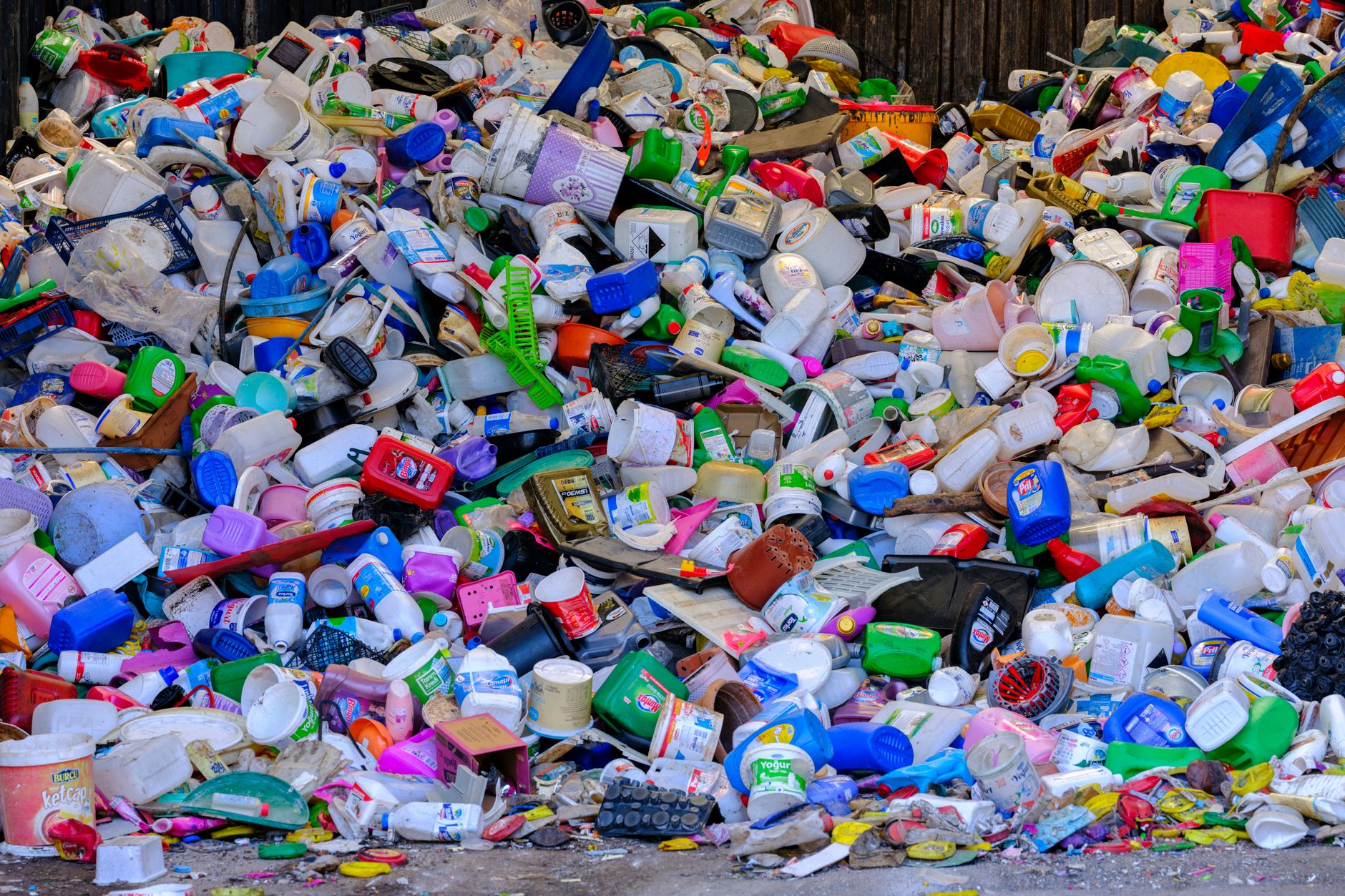
This independent review examines Enva, a recycling and resource recovery group with Northern Ireland origins that has expanded across Great Britain and the Republic of Ireland. The assessment covers what Enva does, the waste streams it handles, how its pricing and procurement work, where it fits, where it does not, and the credible UK alternatives. The focus throughout is on hazardous and specialist streams, regulatory positioning, and how a UK waste producer should evaluate a multi-site resource recovery contractor before signing.
TL;DR: Enva is a UK and Ireland recycling and resource recovery group, rooted in Northern Ireland, that specialises in hazardous waste, waste oils and lubricants, solvents, WEEE, paper, plastics and other recovered materials. It suits manufacturers, laboratories, garages, healthcare estates and multi-site businesses that need compliant treatment of difficult streams rather than a simple bin emptying contract. Pricing is contract-based and quoted per stream, not published as a flat monthly rate. UK alternatives that handle similar specialist work include Veolia, Suez, Biffa, Grundon and WasteCare.
Key facts
- What it is: a recycling and resource recovery group, not a general bin-only collector.
- Origin: Northern Ireland roots, with expansion into Great Britain and the Republic of Ireland.
- Core focus: hazardous waste, waste oils and lubricants, solvents, WEEE, paper and plastics recovery.
- Best fit for: manufacturers, garages, laboratories, healthcare estates and multi-site operators with regulated streams.
- Pricing basis: per-stream and contract-based; no single published monthly headline rate.
- Regulatory frame: operates under permits and registrations enforced by the Environment Agency, SEPA, Natural Resources Wales and DAERA in Northern Ireland.
- Duty of care: any Enva contract should produce the waste transfer or consignment paperwork a UK producer is legally required to keep.
- Geography: strongest where it holds local treatment and transfer infrastructure across the UK and Ireland.
Before you read on: company structure, site permits and service areas in the waste sector change through acquisitions and divestments. Treat the geography and stream coverage below as the typical profile of an Enva-style resource recovery group and confirm current permits, depot locations and registrations directly with Enva and the relevant environmental regulator before relying on them.
What Enva does
Enva is a resource recovery and recycling group that collects, treats, recovers and recycles a broad range of waste streams across the UK and Ireland, with a particular strength in hazardous and specialist materials rather than ordinary mixed commercial refuse. In practice that means used oils and lubricants, solvents, chemicals, laboratory and clinical-adjacent wastes, waste electrical and electronic equipment (WEEE), batteries, paper, cardboard and plastics. The group positions itself around keeping material in use through recovery and recycling rather than disposal, which aligns its commercial pitch with the UK waste hierarchy that obliges producers to prevent, reuse and recycle before sending anything to energy recovery or landfill.
Company context and history
Enva grew out of Northern Ireland, where its early business was built around oil recovery, hazardous waste and recycling logistics, before expanding into Great Britain and the Republic of Ireland through a combination of organic growth and acquisition. That heritage matters for buyers: it explains why the group is comparatively strong on hazardous and technical streams that many general waste contractors subcontract, and why its footprint is denser in some regions than others. The Northern Ireland origin also means the group has long worked under the DAERA regulatory regime as well as the Environment Agency in England, SEPA in Scotland and Natural Resources Wales, which is relevant for any business operating sites on both sides of the Irish Sea.
Resource recovery groups of this kind have consolidated significantly over the past decade. Ownership, branding and the exact list of treatment sites can change after a transaction, so a buyer evaluating Enva today should confirm the current corporate structure and the specific permitted facilities that would serve their sites, rather than assuming a national capability everywhere.
Products and services at a glance
Enva is best understood as a portfolio of stream-specific services rather than a single product. The headline capabilities a UK buyer typically encounters are:
- Hazardous waste: classification support, collection, consignment-noted transport and permitted treatment of hazardous streams.
- Waste oils and lubricants: collection and reprocessing of used oils, oil filters, interceptor and tank wastes.
- Solvents and chemicals: recovery and treatment of solvents, laboratory chemicals and process residues.
- WEEE and batteries: collection and treatment of waste electrical and electronic equipment under the WEEE regime, plus battery streams.
- Paper, cardboard and plastics: recovery and recycling of dry mixed recyclables and segregated fibre and polymer streams.
- Food and organic streams: recovery routes for food and other biodegradable waste where local infrastructure allows.
- Total waste management: a managed-service wrapper that consolidates multiple streams and sites under one contract with reporting.
The exact mix available to a given customer depends on which permitted Enva facilities are within economic reach of their sites. A buyer in a region with a local Enva oil or hazardous facility will see far better economics than one whose nearest permitted site is several hundred miles away.
Who it is built for
Enva is built for waste producers whose problem is compliance and treatment of difficult streams, not simply emptying a general bin. The clearest fits are manufacturers and engineering sites generating oils, solvents and process chemicals; motor trade and transport depots with used oil, filters and contaminated absorbents; laboratories, universities and pharmaceutical operations with chemical waste; healthcare and dental estates with regulated and hazardous-adjacent streams; and retailers, distributors and offices that need WEEE and paper recovery alongside general recycling. Multi-site operators who want a single contractor to consolidate several stream types and produce consolidated compliance reporting are a particularly natural audience.
It is a weaker fit for a single small shop or office that only needs one general waste bin and one mixed-recycling bin emptied on a fixed weekly round. That requirement is usually served more cheaply by a high-volume general commercial collector or a broker, and a specialist resource recovery group is rarely the lowest-cost option for that narrow job.
Regulatory positioning
Any UK waste contractor, Enva included, operates inside a layered regulatory framework, and a buyer should test the contractor against that framework rather than against marketing claims.
The central producer obligation is the waste duty of care under the Environmental Protection Act 1990, which has applied since 1991 and is set out in the statutory Code of Practice. It requires every business to store waste safely, to transfer it only to an authorised person, and to complete and keep a waste transfer note (or a hazardous waste consignment note) describing the waste. The duty of care never transfers to the contractor: even with Enva carrying the material, the producer remains legally responsible for checking the carrier is registered and the destination is permitted. Producers should confirm Enva's carrier registration and the permit status of the receiving facility before the first collection, and retain the paperwork. The Code of Practice is published by the UK government and the regulators enforce it.
Hazardous waste carries extra duties. Producers must classify waste correctly before it moves, and hazardous consignments require consignment notes rather than ordinary transfer notes. Classification is governed by the UK government's technical guidance on classifying waste, and getting the European Waste Catalogue code and hazard assessment right is the producer's responsibility, although a specialist like Enva will typically assist.
The relevant regulator depends on geography: the Environment Agency in England, the Scottish Environment Protection Agency (SEPA) in Scotland, Natural Resources Wales, and the Department of Agriculture, Environment and Rural Affairs (DAERA) in Northern Ireland. Where treatment processes have occupational health and safety implications, the Health and Safety Executive (HSE) is also relevant. A group with Enva's cross-jurisdiction footprint must hold the right permits and registrations in each nation it operates in.
Fiscal rules also bear on cost. Landfill Tax makes disposal expensive and so favours the recovery routes Enva sells; the rate is set by HMRC and changes each April, so verify the current figure with HMRC before relying on it. The Plastic Packaging Tax applies to plastic packaging that does not contain at least 30 per cent recycled content; the rate has risen since the tax began in April 2022, so state the figure you are using and verify the current rate with HMRC before relying on it. Extended Producer Responsibility for packaging shifts the net cost of managing packaging waste onto producers and is being phased in, which increases the value of clean, well-segregated recyclate of the kind Enva recovers.
Pricing and procurement
Enva does not publish a single flat monthly price, and any review that quotes one should be treated with caution. Specialist and hazardous waste is priced per stream and per contract, driven by the type and hazard profile of the material, the volume and frequency, the distance to a permitted treatment facility, the containers and handling required, and the level of compliance documentation and reporting bundled in. A multi-stream managed-service contract for a manufacturer looks nothing like a single used-oil collection for a garage.
As an indicative guide only, and not a quoted price: ad hoc hazardous collections are commonly priced as a call-out plus a per-container or per-tonne treatment charge; used oil can attract a collection charge or, for clean recoverable oil in worthwhile volumes, a more favourable rate; and managed multi-site contracts are usually priced as a schedule of rates per stream with a service and reporting element on top. These ranges vary widely by region and contract and should be treated as indicative, not as guarantees. The only reliable figure is a written quotation against your actual waste classifications and volumes.
On procurement, ask for the schedule of rates broken down by stream, the basis of any rebate on recyclate or recovered oil, the treatment or recovery destination for each stream, the minimum contract term and any auto-renewal or price-review clause, the rules around container rental and exchange, and the standard of compliance reporting. Insert a clear exit mechanism and confirm what happens to containers and outstanding paperwork at the end of the contract.
Strengths
- Genuine specialist depth. Real treatment and recovery capability in hazardous waste, oils, solvents and WEEE, rather than brokering everything out.
- Recovery-led positioning. A recycling and resource recovery model that aligns with the waste hierarchy and with rising landfill and packaging costs.
- Cross-jurisdiction footprint. Operating experience across England, Scotland, Wales, Northern Ireland and the Republic of Ireland, useful for businesses that straddle borders.
- Consolidation under one contract. Total waste management wrappers can simplify supplier management and compliance reporting for multi-stream, multi-site producers.
- Compliance documentation. A specialist accustomed to consignment notes and hazardous classification can reduce the administrative burden on the producer, although the legal duty stays with the producer.
Limitations and risks
- Geography-dependent economics. Pricing and service quality depend heavily on proximity to a permitted Enva facility; coverage is not uniformly strong everywhere.
- Not the cheapest for simple general waste. A single shop or office wanting basic bins emptied will usually find a lower price elsewhere.
- Opaque headline pricing. The per-stream, contract-based model means buyers cannot benchmark from a published rate card and must run a quoted comparison.
- Corporate change. Sector consolidation means ownership, branding and the site list can change; confirm the current structure and permits.
- Duty of care does not transfer. Using a competent specialist does not remove the producer's legal responsibility to verify carriers, destinations and paperwork.
Enva alternatives in the UK
Operators that need similar hazardous and specialist capability typically shortlist Enva alongside the larger national groups and a few focused specialists. The most relevant UK alternatives are below.
Veolia
Best fit for: large multi-site and hazardous estates
Major national group with extensive hazardous, industrial and energy-recovery infrastructure. Suited to complex, high-volume contracts that need national reach.
Suez
Best fit for: recycling-led national contracts
Large recycling and recovery operator with strong dry recyclables and hazardous capability. Most commonly chosen by national and public sector buyers.
Biffa
Best fit for: broad UK commercial coverage
One of the widest UK collection footprints, with hazardous and specialist divisions. Suited to businesses wanting general plus specialist under one national brand.
Grundon
Best fit for: hazardous and clinical in the South
Independent group with strong hazardous, clinical and treatment infrastructure concentrated in southern England. Suited to regulated streams in that region.
WasteCare
Best fit for: batteries, WEEE and hazardous niches
Specialist in batteries, WEEE, hazardous and clinical streams. Most commonly chosen where a focused hazardous specialist beats a generalist.
Cawleys / regional independents
Best fit for: regional service and flexibility
Independent regional recyclers can offer responsive service and competitive rates within their catchment. Suited to single-region producers near a depot.
| Provider | Best fit for | Indicative monthly from | Pricing basis | UK HQ | Regulatory focus | Inclusions |
|---|---|---|---|---|---|---|
| Enva | Hazardous and specialist streams, multi-site | Quoted per stream (indicative) | Schedule of rates per stream | UK and Ireland (NI origin) | Hazardous, oils, WEEE recovery | Collection, treatment, consignment notes, reporting |
| Veolia | Large multi-site hazardous and industrial | Quoted per contract (indicative) | Contract schedule of rates | UK (national) | Hazardous, industrial, energy recovery | National collection, treatment, compliance reporting |
| Suez | Recycling-led national contracts | Quoted per contract (indicative) | Contract schedule of rates | UK (national) | Recycling, hazardous, recovery | Dry recyclables, hazardous, reporting |
| Biffa | Broad UK commercial plus specialist | Indicative from low double figures per bin lift | Per lift plus specialist schedule | High Wycombe, England | General, hazardous, industrial | Bins, hazardous, total waste management |
| Grundon | Hazardous and clinical, southern England | Quoted per stream (indicative) | Schedule of rates per stream | Buckinghamshire, England | Hazardous, clinical, treatment | Collection, treatment, compliance |
| WasteCare | Batteries, WEEE, hazardous niches | Quoted per stream (indicative) | Per stream and per container | England | Batteries, WEEE, hazardous | Specialist collection and treatment |
| First Mile | Urban offices and SMEs | Indicative per-sack and per-bin pricing | Per sack or per bin | London, England | Recycling, general, some specialist | Sacks, bins, reporting app |
| Cawleys | Regional multi-stream producers | Quoted per contract (indicative) | Schedule of rates per stream | Bedfordshire, England | Recycling, hazardous, recovery | Regional collection, treatment, reporting |
The right comparison is rarely the headline rate. For hazardous and specialist work the deciding factors are proximity to a permitted treatment facility, the credibility of the recovery route, the quality of compliance documentation, and the schedule of rates against your actual classifications. Run at least two quotes against the same itemised waste list.
How to evaluate Enva: a buyer's checklist
Use the same checklist for Enva and any alternative on your shortlist:
- Confirm carrier registration and the permit status of the receiving facility for each stream before the first collection.
- Get a written schedule of rates per stream, not a single headline figure, and ask what triggers price reviews.
- Check the treatment destination for each stream and ask for the recovery or recycling route, not just collection.
- Test the geography: ask which permitted facility actually serves your sites and how far the material travels.
- Pin down the paperwork: confirm you will receive compliant transfer notes or hazardous consignment notes and that you can retain them.
- Read the term and exit: note the minimum term, any auto-renewal, notice period, and container return obligations.
- Benchmark: run a second quote from a national group and a regional independent against the same itemised waste list.
- Reconcile with tax: factor in current Landfill Tax, Plastic Packaging Tax and packaging EPR exposure, verifying current rates with HMRC.
Editorial note: This guide is independent UK editorial and is not financial, legal or regulatory advice. kaeltripton earns no commission and routes no leads. Pricing is indicative and varies by contract, location and waste stream. Confirm regulatory obligations with the named UK authorities before acting.
Enva FAQ
What is Enva?
Enva is a recycling and resource recovery group operating across the UK and Ireland, with Northern Ireland origins. It collects, treats and recovers a range of waste streams, with particular strength in hazardous waste, used oils and lubricants, solvents, WEEE, paper and plastics, rather than acting as a simple general-bin collector.
What does Enva waste management actually handle?
Enva waste management spans hazardous waste, waste oils and oil filters, solvents and chemicals, WEEE and batteries, paper, cardboard and plastics, and food or organic streams where local infrastructure allows. Many customers buy several of these under a single total waste management contract with consolidated reporting.
Is Enva a hazardous waste specialist?
Hazardous and specialist streams are a core part of Enva's business, which is one of the main reasons producers shortlist it over a general collector. Hazardous waste must be classified correctly and moved under consignment notes, and a specialist contractor will typically assist with classification, though the legal duty of care remains with the producer.
How much does Enva cost?
There is no single published Enva price. Specialist and hazardous waste is quoted per stream and per contract, driven by waste type, volume, frequency, distance to a permitted facility, containers and the compliance reporting included. Any monthly or per-tonne figure quoted elsewhere should be treated as indicative only; the reliable number is a written quotation against your actual classifications.
Is Enva available across the whole UK?
Enva operates across England, Scotland, Wales and Northern Ireland as well as the Republic of Ireland, but service economics depend on proximity to its permitted treatment and transfer facilities, so coverage and pricing are stronger in some regions than others. Ask which specific facility would serve your sites before assuming national capability.
Is Enva better than Veolia or Suez?
Neither is universally better. Veolia and Suez offer very large national footprints and broad infrastructure suited to high-volume, multi-region contracts. Enva is most commonly chosen where a specialist hazardous and resource recovery focus, and cross-Irish-Sea coverage, matter more than sheer national scale. Compare quotes against the same itemised waste list.
Does using Enva remove my duty of care?
No. The waste duty of care, in force since 1991 under the Environmental Protection Act 1990 and its statutory Code of Practice, stays with the producer. Even with a competent contractor carrying the waste, the business must check the carrier is registered, confirm the destination is permitted, and complete and keep transfer or consignment notes.
What paperwork should an Enva contract produce?
For non-hazardous streams you should receive waste transfer notes; for hazardous streams you should receive hazardous waste consignment notes. Both describe the waste and the parties involved and must be retained by the producer for the periods set out in the regulators' guidance.
How do landfill and packaging taxes affect Enva pricing?
Landfill Tax, reviewed by HMRC each April, makes disposal costly and so improves the relative value of the recovery routes Enva sells; verify the current rate with HMRC before relying on it. Plastic Packaging Tax (from April 2022, on packaging with under 30 per cent recycled content) and packaging Extended Producer Responsibility also raise the value of clean, well-segregated recyclate; state the figure you are using and confirm current rates with HMRC.
Who is Enva not a good fit for?
A single small shop or office that only needs one general bin and one mixed-recycling bin emptied on a fixed weekly round will usually find a cheaper option with a high-volume general collector or broker. A specialist resource recovery group is rarely the lowest-cost choice for that narrow requirement.
How should a business evaluate Enva?
Confirm carrier registration and facility permits, obtain a written schedule of rates per stream, check the recovery destination for each stream, test which permitted facility serves your sites, pin down the paperwork and exit terms, and benchmark against at least one national group and one regional independent using the same itemised waste list.
Sources
- Waste duty of care: code of practice (GOV.UK)
- How to classify different types of waste (GOV.UK)
- Environment Agency
- Scottish Environment Protection Agency (SEPA)
- Natural Resources Wales
- Department of Agriculture, Environment and Rural Affairs (DAERA)
- Health and Safety Executive (HSE)
- Landfill Tax (GOV.UK)
- Plastic Packaging Tax (GOV.UK)
- Packaging waste: Extended Producer Responsibility (GOV.UK)
- Department for Environment, Food and Rural Affairs (Defra)
- legislation.gov.uk


