Trade policy is usually invisible at the point where it happens. Whisky is the exception: a single product, made in one place, sold everywhere, and heavily enough taxed at various borders that every policy swing shows up in the industry’s numbers within a year or two. The announcement on Thursday evening - zero US tariffs on UK whisky, effective immediately, agreed during the King’s state visit to Washington in April - closes the most turbulent chapter in the industry’s modern trading history. This piece sets out what was agreed, what the tariff years actually cost, and what the official production data says about the recovery now underway - using the ONS factory-sales series we analysed in full earlier this week. What was announced
Seven years of tariff whiplash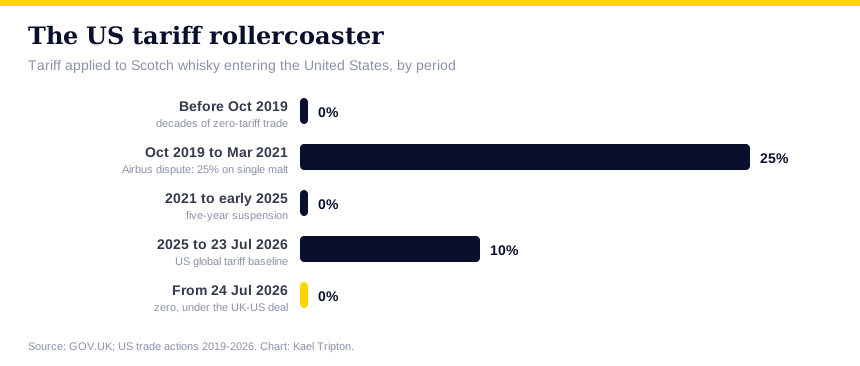 To see why the industry is celebrating rather than merely nodding, run the tape back. For decades, Scotch entered the US tariff-free. In October 2019 it was swept into a dispute it had nothing to do with - the WTO fight over aircraft subsidies to Airbus and Boeing - and single malt Scotch was hit with a 25% tariff as retaliation. By the industry’s estimate, around £600 million of US exports were lost over the following eighteen months before the tariff was suspended in 2021, first for four months and then for five years. That five-year suspension was always a countdown, due to lapse in 2026 - and before it even could, the US’s global tariff round of 2025 put a roughly 10% baseline on UK goods, whisky included. Thursday’s agreement is therefore not a return to some brief recent normal but the first durable zero since 2019, and the first time in seven years the industry can price for the American market without a tariff clock ticking somewhere in the background. The damage, measured at the factory gate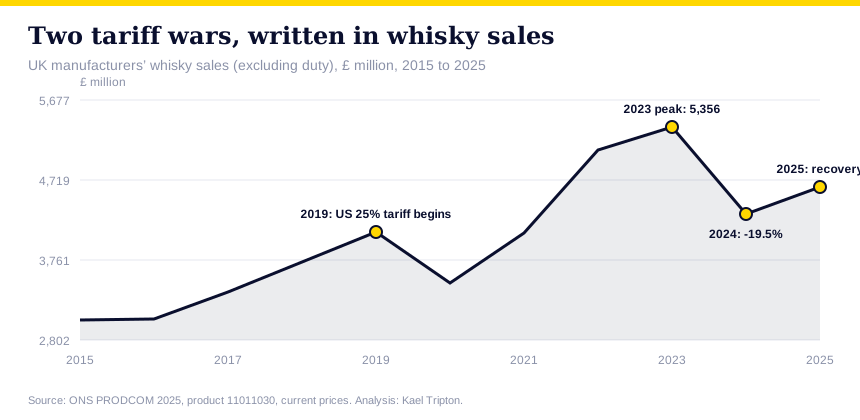 The production data tells the story with unusual clarity. In the ONS factory-sales series - which we analysed line by line in our full breakdown of what Britain still makes - UK whisky sales climbed from £3.0 billion in 2015 to a peak of £5.4 billion in 2023, stumbled through the first tariff war and the pandemic in 2020, then fell 19.5% in 2024, the sharpest drop in the series, as the new US tariff baseline, destocking by importers and a global spirits slowdown landed together. The 2025 figure - £4.6 billion, up 7.6% - is the recovery beginning while the 10% tariff was still in force. Thursday’s zero is the strongest tailwind the series has had since 2021, and the 2026 data, when it arrives, will show what it was worth. India: the bigger prize, on a slower clock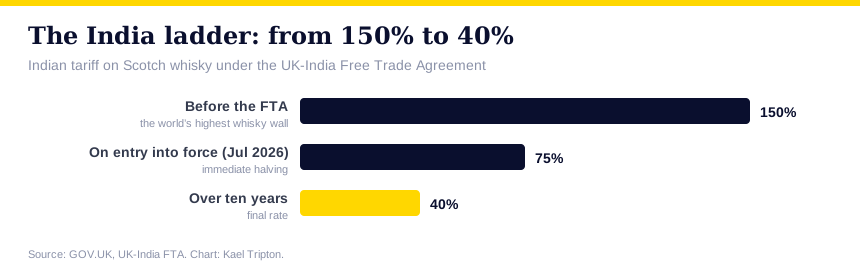 The US deal restores the biggest existing market; the India deal opens the biggest potential one. India is the largest whisky-drinking country on earth by volume - overwhelmingly domestic Indian whisky - and its 150% tariff has kept Scotch to a sliver of the market. The FTA’s immediate halving to 75%, stepping down to 40% over ten years, changes the arithmetic for the premium end first: a bottle whose landed cost was 2.5 times price before duty becomes materially more competitive at each step. The industry has long described India as its biggest long-term growth opportunity; July 2026 is the month both of its defining trade barriers moved at once. The first bottle out: £60,000, paperless, Manchester to PhiladelphiaThe symbolism was arranged within hours. The first tariff-free freight - £60,000 of premium Aberdeenshire Scotch, a limited edition matured in American oak and bottled at 100 proof for the occasion - departs Manchester for Philadelphia within 48 hours of the rate hitting zero. More interesting than the ceremony is the plumbing: the shipment is a world first for using exclusively digital trade documentation, with no paper certificates at all, arranged through a Liverpool-based digital trade platform. That detail matters beyond whisky. Export paperwork is a fixed cost that weighs heaviest on the smallest exporters, and a fully digital lane to the US - piloted on a photogenic cargo - is the template the government’s trade strategy wants every small exporter using. The tariff cut restores the market; the paperless lane lowers the cost of entering it, and the second change may outlast the first. What it means for drinkers, workers and investors
How this analysis was builtAnnouncement details, market values, shipment details and job figures are from the two GOV.UK press releases of 24 July 2026 (Scotland Office and Department for Business and Trade) and the Scotch Whisky Association figures quoted in it. The production series is our own computation from the ONS PRODCOM 2025 workbook (product 11011030, whisky excluding duty, current prices - nominal values, not adjusted for inflation). The 2019-2021 tariff history and the industry’s £600 million loss estimate are as reported by the industry at the time. Tariff rates shown for 2025-26 reflect the US baseline applied to UK goods; precise applied rates varied by product and shipment timing. Analysis: Kael Tripton. General information, not investment advice. Figures will be updated when the 2026 production data publishes. Frequently asked questionsAre US tariffs on Scotch whisky gone?Yes - zero tariffs on UK whisky entering the US from 24 July 2026, agreed under the UK-US arrangement following the Economic Prosperity Deal, ending the roughly 10% baseline applied since 2025. How much is the US market worth to Scotch whisky?Around £1 billion of UK whisky exports in 2025 - roughly a fifth of all UK whisky exports - with Scotch specifically worth £933 million on Scotch Whisky Association figures. It is the industry’s largest market by value. What did the 25% Trump-era tariff cost the industry?Around £600 million in lost US exports over eighteen months from October 2019, by the industry’s estimate, before the tariff was suspended in 2021. What does the India trade deal mean for whisky?India’s 150% tariff - the highest major whisky barrier in the world - halved to 75% when the FTA came into force in July 2026, and steps down to 40% over ten years, opening the world’s biggest whisky-drinking market to Scotch by degrees. Will whisky get cheaper in the UK?No - UK shelf prices are driven by UK alcohol duty and VAT, which are unchanged. The tariff changes affect export markets, industry revenues and jobs, not the domestic price of a bottle. What was the first tariff-free whisky shipment to the US?A £60,000 air freight of limited-edition Aberdeenshire Scotch (bottled at 100 proof, matured in American oak), departing Manchester for Philadelphia within 48 hours of the zero rate taking effect - and a world first for using entirely paperless digital trade documentation. How big is the whisky industry for the UK economy?UK manufacturers sold £4.6 billion of whisky in 2025 (up 7.6%) and the UK exported £5.4 billion of it worldwide - one of Britain’s biggest single exports, supporting 41,000 jobs in Scotland and 25,000 across the rest of the UK. Read next |
The £1bn Reprieve: Scotch Whisky’s Tariff War, Charted from the Official DataUS tariffs on Scotch hit zero from 24 July, weeks after India halved the world’s highest whisky wall. What seven years of tariff whiplash cost - visible in the production data - and what comes back now. 
Illustrative image. AI-generated and does not depict real people, places or events.
Editorial Disclaimer The content on Kaeltripton.com is for informational and educational purposes only and does not constitute financial, investment, tax, legal or regulatory advice. Kaeltripton.com is not authorised or regulated by the Financial Conduct Authority (FCA) and is not a financial adviser, mortgage broker, insurance intermediary or investment firm. Nothing on this site should be construed as a personal recommendation. Rates, figures and product details are indicative only, subject to change without notice, and should always be verified directly with the relevant provider, HMRC, the FCA register, the Bank of England, Ofgem or other appropriate authority before any financial decision is made. Past performance is not a reliable indicator of future results. If you require regulated financial advice, please consult a qualified adviser authorised by the FCA. 
|


