
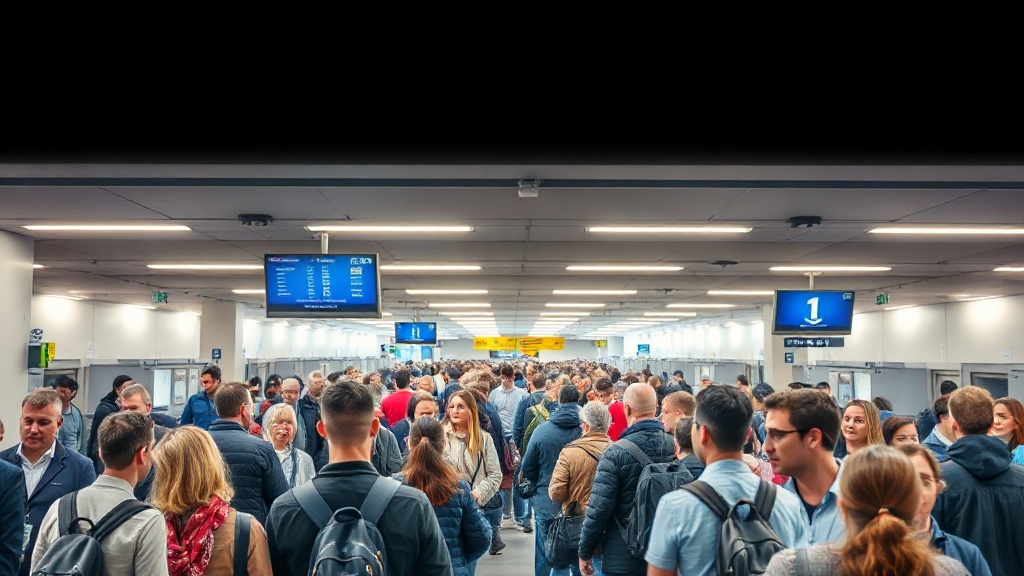
EU Airport Border Delays: UK Traveller Rights and What You Can Claim
Published 8 June 2026 | Sources: Civil Aviation Authority, FCDO, Which?, UK261
TL;DR
- Post-Brexit, UK passport holders are processed through non-EU (third country) passport control at all EU airports, which typically has longer queues than EU citizen lanes.
- EES (Entry/Exit System) biometric registration adds processing time at EU borders - check current implementation status before travel.
- If a border delay causes a missed connection on a single booking, the airline must rebook or refund under UK261 rules.
- Border delays caused by immigration control are outside airline control and do not trigger UK261 delay compensation - but do trigger the duty of care provisions.
- Travel insurance with missed connection cover is the strongest protection for costs arising from border-delay disruption.
Last reviewed: 8 June 2026
Why EU Border Delays Have Increased Since Brexit
Prior to Brexit, UK passport holders were processed through EU/EEA citizen lanes at EU airport passport control. These lanes offered rapid processing with minimal documentation checks. Since January 2021, UK passport holders have been classified as third-country nationals at EU borders and are processed through non-EU lanes alongside travellers from outside the EEA. Non-EU lanes typically have lower staffing levels, more detailed documentation requirements, and longer average processing times.
The introduction of the EU Entry/Exit System (EES) - a biometric border management system that records fingerprints and facial images of all non-EU travellers entering and exiting the Schengen area - adds a further layer of processing time. EES registration is required on the first entry into the Schengen area and at each subsequent entry where previous registration has expired. The system has experienced a phased rollout across EU member states, with implementation timelines varying by country and airport.
The combination of non-EU lane processing and EES registration has resulted in significantly longer border processing times at major European hub airports including Amsterdam Schiphol, Paris Charles de Gaulle, Frankfurt, Madrid Barajas, and Rome Fiumicino during peak travel periods. The FCDO advises UK travellers to allow significantly more time for border processing than before Brexit and to check the current EES implementation status at their destination airport before travel.
When Border Delays Cause Missed Connections
The most serious financial consequence of EU border delays for UK travellers is the risk of missing a connecting flight booked on the same ticket. Whether the airline is obliged to rebook or compensate depends on whether the missed connection arises from a single booking or two separate bookings.
For flights booked on a single ticket or itinerary - where the airline has accepted responsibility for the entire journey including the connection - a missed connection caused by any delay, including border processing time, obliges the airline to rebook the passenger on the next available flight at no additional cost. Under UK Regulation 261/2004 (retained post-Brexit as UK261), airlines must also provide care - meals, refreshments, and accommodation if an overnight stay is required - while the passenger waits for the rebooked flight.
For flights booked separately - where the passenger has self-connected between two independent bookings - there is no obligation on either airline to rebook or compensate if the outbound flight arrives on time but the border delay causes the passenger to miss the second flight. This is the most common scenario for budget travellers who book separate one-way fares rather than a through-ticket. The second airline's cancellation and rebooking terms apply, and these are typically non-refundable for basic fares.
UK261 Compensation - Does It Apply to Border Delays?
UK Regulation 261/2004 entitles passengers to compensation of £220 to £520 (depending on flight distance) when a flight is cancelled or arrives more than three hours late due to factors within the airline's control. Border processing delays caused by national immigration authorities are classified as extraordinary circumstances - outside the airline's operational control - and therefore do not trigger the compensation provisions of UK261.
However, the duty of care provisions of UK261 do apply regardless of whether the disruption was within the airline's control. If a passenger is delayed by three or more hours at an airport as a result of any disruption - including border-related disruption - the airline operating the affected flight is required to provide meals and refreshments proportionate to the wait, two free telephone calls or emails, and accommodation if an overnight stay becomes necessary.
The Civil Aviation Authority is the UK body that adjudicates disputed UK261 claims and provides a free online guidance tool at caa.co.uk for passengers who are uncertain about their entitlements. The CAA's Alternative Dispute Resolution scheme provides a binding resolution mechanism for disputes with airlines that cannot be resolved directly.
Travel Insurance and Missed Connection Cover
Travel insurance with missed connection cover provides the strongest protection for costs arising from border-delay disruption that falls outside UK261 compensation provisions. Missed connection cover typically pays reasonable additional accommodation, transport, and meal costs where a connecting flight is missed due to a delay in the preceding leg, including delays caused by border processing.
The cover limit and trigger conditions vary significantly between policies. Some policies require the delay to be caused by a specific listed event - such as a flight delay or cancellation - and may not cover border processing delays explicitly. Reading the missed connection section of the policy schedule before purchase is essential for travellers with connecting itineraries at EU airports.
The Financial Ombudsman Service has handled multiple disputes arising from post-Brexit border delay claims and has generally found in favour of policyholders where the border delay was a foreseeable consequence of travel arrangements and the insurer applied exclusions that were not clearly presented at point of sale.
Practical Steps to Minimise Border Delay Risk
The FCDO and the CAA both advise UK travellers transiting through EU hub airports to allow a minimum of three hours between an inbound flight arrival and a connecting departure during peak summer travel periods. This is significantly more than the minimum connection times advertised by airlines - which are calculated for passengers who do not face third-country border processing. At peak times at major hubs, non-EU passport control queues of 90 minutes or more have been recorded.
Practical steps include: arriving at the departure airport with maximum check-in lead time; having all travel documents including passport, travel insurance details, and GHIC card readily accessible; completing any pre-registration processes offered by the destination airport or EES portal before arrival; and booking connecting itineraries on a single ticket rather than separately where possible to ensure airline rebooking obligations apply in the event of a missed connection.
Frequently Asked Questions
Can compensation be claimed if a border delay causes a missed flight?
Border processing delays are classified as extraordinary circumstances under UK261 and do not trigger the delay compensation provisions. However, if the missed connection arises on a single-ticket itinerary, the operating airline must rebook at no charge under its duty of care obligations. Separate bookings carry no such protection.
What is EES and does it apply to UK travellers?
The EU Entry/Exit System is a biometric border registration system requiring fingerprint and facial image capture for all non-EU travellers entering the Schengen area. UK passport holders are classified as third-country nationals and are subject to EES registration. Implementation timelines vary by EU member state and airport - check the current status for your destination before travel.
How much connection time should be allowed at EU airports post-Brexit?
The FCDO and CAA advise allowing a minimum of three hours between an inbound arrival and connecting departure at major EU hub airports during peak periods, compared to the airline's published minimum connection time which may be as low as 60 to 90 minutes. During peak summer travel, non-EU passport control queues of 90 minutes or more have been recorded at major hubs.
Does travel insurance cover border delay costs?
Travel insurance with missed connection cover may cover reasonable additional costs arising from border delays, including accommodation, meals, and rebooking costs. Policy terms vary - check whether border processing delays are explicitly included or excluded in the missed connection section of the policy schedule before purchasing.
|
★ Featured Partner · Sponsored Compare Insurance Quotes Search and compare quotes from leading UK insurers. Quotezone's panel includes specialist insurers not always on the four major comparison sites. Compare Quotes → |


