
TL;DR
Energy suppliers must accept any new occupant regardless of credit history (subject to security deposits in some cases). Pay-as-you-go meters and prepayment options remove credit-check barriers. A utility bill in the newcomer's name is one of the most useful documents for downstream verification.
Last reviewed: May 2026
KEY FACTS
- Ofgem rules require energy suppliers to take on any occupier; refusal of supply is not permitted
- Prepayment meters allow energy supply without credit checks
- Water supply is automatic at every UK property regardless of credit
- Broadband providers can refuse on credit-check grounds but most offer prepayment options
- Council tax billing is automatic on registration regardless of credit
Overview
Most UK utilities can be set up without a UK credit history. Energy suppliers are required to take on any new occupier under their universal service obligation; broadband providers can refuse but offer prepayment alternatives. Once an account is open and a few bills have been paid, the utility bill becomes one of the strongest documents the newcomer holds for other verifications.
Energy: supplier obligations and prepayment
Under Ofgem's licence conditions, energy suppliers must offer supply to any new occupier at the supplier's standard tariff (the price-capped default). Refusal of supply on credit-check grounds is not permitted. A security deposit may be requested for credit-checked tariffs; prepayment meters provide an alternative without credit checks. Pay-as-you-go meters are widely available.
Water and council tax: no choice, no credit check
Water supply is regional and automatic: the local water company sets up the account for any occupant. There is no credit check. Council tax registration is mandatory for the property's liable resident and is also automatic; the council bills as a legal obligation, not a credit relationship.
Broadband and mobile: workarounds
Most major broadband providers run credit checks. Newcomers can use thirty-day rolling contracts (lower credit thresholds), one-month or no-contract pay-monthly options from smaller operators, or 4G/5G home broadband on a SIM-only basis. Many providers offer 'no credit check' options where payment is taken in advance. Mobile broadband (a 4G home router) skips the wired-broadband credit hurdle entirely.
Using the bill for verification
Once a few bills are paid, the document is one of the strongest verifications a newcomer holds. Banks, landlords, employers and government services accept utility bills as proof of address. The credit file picks up the relationship after several months. Switching providers too often resets the address-verification signal; staying with one supplier for at least twelve months strengthens the file.
How institutions verify UK address
Address verification at UK institutions combines documentary evidence with database checks. Banks under FCA and JMLSG guidance typically require documents from a recognised list (utility bills, council tax, bank statements, government letters) plus an address validation against the Royal Mail Postcode Address File (PAF). Address-not-found in PAF can stall account opening even where the documents are genuine; new-build properties are a common case.
Credit reference agencies build address history from multiple sources: electoral roll (the strongest signal), credit account address records reported by lenders, public records including court judgments, and (increasingly) Open Banking data shared with the agency. Each address on file has a verification status; unverified addresses produce thin-file scoring and trigger manual review at lenders.
Updating address across the system is manual: HMRC, DVLA, GP, council, bank, electoral roll and utilities each need separate notification. The gov.uk Tell-Once service exists for births and deaths only; address changes use individual channels. Setting aside an afternoon when moving to do all the notifications systematically is the standard advice.
Key GOV.UK resources for new UK residents
The gov.uk website is the single front door for UK government services. Key services for newcomers include: gov.uk/apply-national-insurance-number for the NI number application; gov.uk/register-to-vote for the electoral roll; gov.uk/view-prove-immigration-status for the eVisa account and share codes; gov.uk/apply-renew-passport for British passport applications after citizenship; gov.uk/exchange-foreign-driving-licence for DVLA exchange.
Cross-cutting services include gov.uk/personal-tax-account for HMRC self-service (tax codes, employment history, NI record, state pension forecast), gov.uk/help-with-childcare-costs for the Tax-Free Childcare and free hours schemes, and gov.uk/sign-in-childcare-account for the parent-facing TFC portal. The NHS App at nhs.uk/nhs-app provides the parallel front door for health services.
For up-to-date practical guidance, the citizensadvice.org.uk and moneyhelper.org.uk websites cover the major newcomer scenarios. Citizens Advice operates free in-person and telephone advice across the UK; Money Helper is the consumer-facing site of the Money and Pensions Service offering free financial guidance.
The legal obligations of energy suppliers
Energy suppliers in Great Britain operate under licences from Ofgem with detailed obligations covering supply, billing and customer treatment. The Standards of Conduct rule (Standard Licence Condition 0) requires suppliers to treat customers fairly. The Ability to Pay principles require suppliers to assess affordability before instigating debt action. Supply cannot be disconnected for non-payment without going through a defined process including offers of prepayment and warm home discount referral.
New occupant supply is governed by deemed contract rules: any occupier moving into a property is deemed to be in a contract with the existing supplier until they switch or close. This means there is no period without supply when moving in. Suppliers must offer the standard variable tariff (price-capped) to new occupants and cannot refuse to take on the property's supply. Credit checks at this stage are for setting payment method (direct debit eligibility) rather than for supply itself.
Smart meters are offered to every customer by their supplier and are central to the modernisation of the GB energy market. Installation is free. Smart meters provide accurate billing in real time, eliminate estimated reads, and support time-of-use tariffs that are growing in availability. The smart-meter rollout has been extended several times; targets and progress are tracked by Ofgem.
Prepayment meters and the support framework
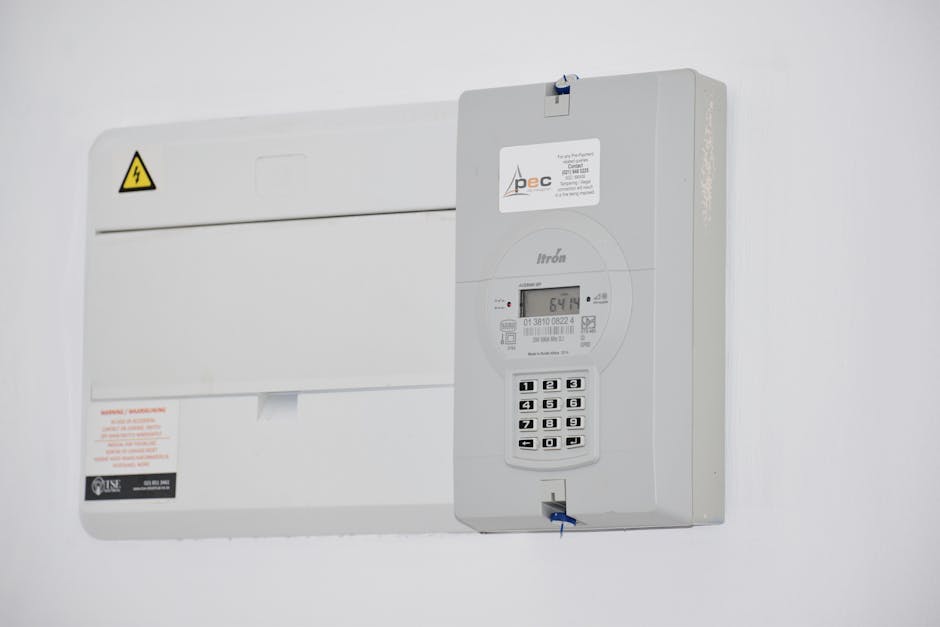
Prepayment meters allow energy supply without a credit relationship: the customer pays in advance through a card, key or smart meter top-up, and supply is delivered as topped-up credit is used. Historically prepayment customers paid more than credit-meter customers; the Ofgem price cap now levels the playing field substantially through the prepayment cap rate.
Smart prepayment meters allow easier topping up through online apps, by phone or by SMS. The supplier can remotely add credit in emergencies (the 'friendly hours' feature). Customers struggling to top up can request the Warm Home Discount (a yearly payment of around 150 pounds for eligible households), Cold Weather Payments triggered by cold spells in certain postcodes, and other grants from supplier-specific hardship funds.
Forced installation of prepayment meters (in place of credit meters) following non-payment was the subject of major regulatory action in 2023-24 after evidence of harms to vulnerable customers. Ofgem now requires suppliers to follow a more rigorous process and has banned forced installation for some vulnerable groups. The Code of Practice on installation of prepayment meters sets the requirements.
Building credit through utility payments
Utility relationships paid by direct debit are reported to credit reference agencies for some products and not for others. Energy suppliers reporting to agencies include British Gas (E.ON, EDF, Octopus and others varied historically); the position has evolved as Open Banking and Boost-type services have allowed customers to add their own utility data to the credit file regardless of supplier reporting.
Experian Boost and Equifax equivalents let customers connect their bank account and add utility, subscription and telecoms payment history to their credit file. The effect is typically positive: regular on-time bill payments evidence financial reliability. The Boost service is free at most providers. For newcomers building a credit file from zero, adding twelve months of utility payment history through Boost can lift the score meaningfully.
Other credit-building strategies parallel to utilities include: registering on the electoral roll (the strongest single signal), opening a UK current account, taking a credit-builder credit card or rent-reporting service. Each contributes independently; the combination produces a fuller and more lender-friendly credit profile.
Practical onboarding steps when moving in
On the day of moving in, take a meter reading (or photograph the smart meter display) for the electricity and gas meters. The reading is the basis for the supply transfer and prevents being billed for the previous tenant's usage. Email or web-submit the reading to the existing supplier with the move-in date and the new occupant's name.
Water companies operate by region without consumer choice. The water company for the postcode is found at the Water UK postcode lookup. The water account is set up by contacting the regional company with the move-in date and the names of the residents. Metered properties have a daily-billed account; unmetered properties pay an annual or biannual bill based on rateable value.
Council tax registration is separate from utilities. The local council's website has a move-in form; complete this within twenty-one days of the move date. The council issues a bill covering the period from move-in to the end of the tax year, typically split into monthly instalments. Single-person discount, student exemption and other reductions are claimed through the same online portal.
Troubleshooting common identity and address verification failures
The most common verification failures involve: address not on PAF (new-build), name spelling variants (middle initial vs full middle name, accents in names), date-of-birth format mismatch (different conventions in different countries), and recent moves where the new address has not yet propagated to credit agencies.
Specific fixes by problem type. Address not on PAF: provide alternative documentary evidence including completion statement, mortgage offer, council tax registration letter and Royal Mail redirection confirmation. Wait for PAF update which typically takes four to twelve weeks for new-builds. Name spelling: provide alternative ID documents showing both spellings; bring deed poll if there has been a formal change.
Where verification fails repeatedly, request enhanced underwriting at the institution (most have a manual review path), or try a different institution that uses different verification systems. Open Banking sharing can sometimes work where standard document verification fails. Specialist identity-verification services including Onfido, Yoti and GBG offer a fallback that some institutions accept where their own verification is inconclusive.
Address change cascade: who to notify when you move
Moving home triggers a cascade of address updates. There is no single notification that updates all UK records. Priority notifications include: HMRC (via the personal tax account at gov.uk), the GP surgery (which transfers your registration to the new surgery or updates the existing one), the local council (for council tax registration), the DVLA (within fourteen days for the driving licence), and the electoral roll (re-register at the new address at gov.uk).
Financial updates include each bank, credit card and insurance provider, the pension provider, and Tax-Free Childcare or Universal Credit account where relevant. Utility updates include energy, water, broadband, mobile and TV licence. Subscriptions including streaming services, magazines and delivery services need separate updates. Royal Mail's address redirection service forwards post for a fee, buying time to update individually.
Setting aside an afternoon when moving to systematically work through the notifications is the standard advice. Most have online forms; many can be updated via the institution's mobile app. The gov.uk Tell-Once service is only for births and deaths; routine moves require individual notifications.
Identity fraud prevention and what to do if compromised
Identity fraud is one of the most common types of fraud in the UK. Action Fraud (actionfraud.police.uk) is the national reporting centre for cyber crime and fraud. Cases involving identity fraud are also reportable to the Cifas national fraud prevention service, which can flag the affected identity with multiple financial institutions to reduce subsequent harm.
Protective steps include: regularly checking credit files at each of the three agencies (free statutory reports under the Data Protection Act); enabling two-factor authentication on all financial accounts; using unique strong passwords (a password manager makes this manageable); being alert to phishing emails and SMS; never sharing OTP codes or full bank security details by phone.
If identity fraud is suspected: contact the bank and credit reference agencies immediately to flag the affected accounts; report to Action Fraud; obtain a Cifas protective registration (Cifas Protective Registration is paid; Cifas Member Protection is free for victims). The credit reference agencies can add a notice of correction or fraud marker to the file that lenders see at credit applications.
Specific routes for compromised passports (HMPO at gov.uk), driving licences (DVLA), eVisas (UKVI account) and NI numbers (HMRC) exist. Each replaces the compromised credential with a new one. The Information Commissioner's Office (ICO) is the regulator for data protection breaches; ICO complaints can support broader investigation where an organisation's data has been compromised.
Work, employment rights and the UK labour market
Once UK-resident with the right to work, employment in the UK is governed by the Employment Rights Act 1996, the Equality Act 2010 and a comprehensive framework of further legislation. Right-to-work checks are mandatory for employers; the share-code system through the UKVI account is the standard route for non-British nationals. The check provides the employer with a statutory excuse against illegal-working penalties.
Statutory employment rights include: the National Minimum Wage (different rates by age, set by HMRC); statutory holiday entitlement of 5.6 weeks per year (28 days for someone working a five-day week, including bank holidays at the employer's discretion); statutory sick pay; statutory maternity, paternity, adoption and shared parental leave; the right not to be unfairly dismissed (after two years' service in most cases); protections against discrimination on the nine protected characteristics under the Equality Act.
Workplace pensions are auto-enrolled for most employees aged twenty-two or over earning above the auto-enrolment threshold (currently around 10,000 pounds per year). The employee can opt out within the opt-out window. Auto-enrolment contributions are a minimum of eight percent of qualifying earnings (three percent employer, five percent employee). Many employers offer better than minimum.
HMRC personal tax account at gov.uk/personal-tax-account is the self-service portal for tax matters: viewing tax code, employment history, state pension forecast, marriage allowance claim and many other functions. The personal tax account works across employers and replaces previous paper-based interactions for most matters.
Data protection rights and how to exercise them
The UK GDPR and Data Protection Act 2018 give individuals strong rights over their personal data. Key rights include the right to be informed about data processing, the right of access (subject access request), the right to rectification of inaccurate data, the right to erasure in defined circumstances, the right to restrict processing, the right to data portability, the right to object, and rights related to automated decision-making.
To exercise rights with a specific organisation, send a written request to the data protection officer or to a general data-protection inquiry address. Most organisations have a privacy notice (often called Privacy Policy) on their website setting out the contact details. The organisation has one month to respond, extendable to three months for complex requests.
The Information Commissioner's Office (ICO) regulates data protection in the UK. Complaints about an organisation's handling of personal data can be made to the ICO at ico.org.uk. The ICO investigates, can require remediation, and can issue fines for serious breaches (up to four percent of global turnover for the most serious GDPR breaches).
Identity verification organisations collect substantial personal data and are particularly tightly regulated. The Cifas national fraud database is a special-purpose data store with specific governance. Individuals can subject-access Cifas to see whether they appear on any fraud database and challenge incorrect entries.
Newcomer documentation checklist and next steps
A useful documentation checklist for newcomers covers: passport (current, valid); UK visa or eVisa share code; UK address evidence (tenancy or temporary address letter); NI number documentation (or application reference if pending); UK bank account confirmation; tax record (HMRC personal tax account at gov.uk/personal-tax-account); NHS number (issued at GP registration); driving licence (foreign or UK photocard).
Storage of these documents matters. Originals should be kept in a secure place (not all in one bag carried daily). Photocopies and digital copies (encrypted cloud storage) provide backup. Some institutions require originals for verification; others accept certified copies. Solicitors and notaries can certify copies for a fee.
Recovery of lost documents is straightforward through the relevant agency: HMPO for passport, DVLA for driving licence, HMRC for NI number documentation, UKVI for eVisa account. Each has online and phone routes. Identity fraud reports should go to Action Fraud immediately; Cifas protective registration adds an extra layer of protection.
Reviewing the document set every twelve to twenty-four months helps catch upcoming expiries: passports expiring within six months of an intended trip may not be accepted by some destination countries; driving licences need renewal every ten years; eVisas remain current as long as the underlying immigration status remains.
For sensitive documents (deed poll, marriage certificate, gender recognition certificate) keeping multiple certified copies avoids the need to use the original repeatedly. The General Register Office issues additional copies of birth, marriage and civil partnership certificates for a small fee.
Disclaimer
This article provides general information for UK residents and newcomers. It is not legal, tax, financial or medical advice. Rules, rates, eligibility criteria and processes change frequently; readers should verify details with the linked primary sources or consult an authorised professional before acting on anything described here. References to specific firms, products or services are illustrative and do not constitute endorsements.
Frequently asked questions
Can an energy supplier refuse to take me on because of no credit history?
No. Ofgem licence conditions require supply to any occupier of a property under the deemed-contract framework. The supplier may insist on a security deposit or offer only the prepayment tariff for customers without credit history; refusal of supply itself is not permitted. The Citizens Advice consumer helpline can support customers who feel unfairly treated. Ofgem itself does not handle individual consumer disputes (those go to the Energy Ombudsman after the supplier's complaints process) but does monitor patterns of behaviour by suppliers.
Is prepayment more expensive?
Prepayment tariffs historically were more expensive than credit-meter tariffs, but Ofgem cap adjustments have narrowed the gap. The April 2023 levelling brought the prepayment cap into closer alignment with the standard variable tariff cap. Smart prepayment meters allow easier topping up and detailed usage information. Prepayment removes the credit-check hurdle entirely and works for newcomers without UK history. The downside is that supply stops when credit runs out, so vigilance with topping up is required.
How quickly does a utility bill build credit history?
Most utility relationships take three to six months to show on the credit file through traditional reporting. Experian Boost and Equifax Boost services allow customers to add utility data to their file from earlier through bank-account-linked verification. Sustained on-time payment over twelve months produces a meaningful positive contribution. Switching providers too often resets the address-verification signal; staying with one supplier for at least twelve months strengthens the file. The combination of utility, current account, electoral roll and credit-builder card builds the strongest file in the first year.
Will the landlord usually put utilities in my name?
In most UK rentals, utilities are the tenant's responsibility. The tenant contacts the existing supplier to set up the account at the start of the tenancy. Some all-inclusive tenancies (HMOs, some student housing, certain corporate tenancies) include utilities in the rent; in those cases there is no individual utility bill for the tenant. Reading the tenancy agreement carefully confirms the arrangement. Where utilities are tenant-billed, the landlord should hand over meter readings on the move-in day and provide contact details for the existing supplier.
Can I use a utility bill in someone else's name as proof?
Generally no. Most institutions require the bill in the applicant's name. Adding the applicant's name to an existing utility account is free; contact the supplier with proof of identity and the existing account holder's authority. Joint accounts show both names on the bill. Where a partner or family member is the account holder, the institution may accept a letter from them confirming residence at the address, but this is less reliable than getting the name on the actual bill. Council tax bills can show multiple liable residents.
SOURCES
- https://www.ofgem.gov.uk/information-consumers
- https://www.gov.uk/find-energy-supplier
- https://www.ofcom.org.uk/phones-and-broadband
- https://www.ofwat.gov.uk/households/
- https://www.ofgem.gov.uk/information-consumers/energy-advice-households
- https://www.ofgem.gov.uk/information-consumers/energy-advice-households/getting-help-if-you-cant-afford-your-energy-bills
- https://www.gov.uk/government/publications/find-energy-certificates


