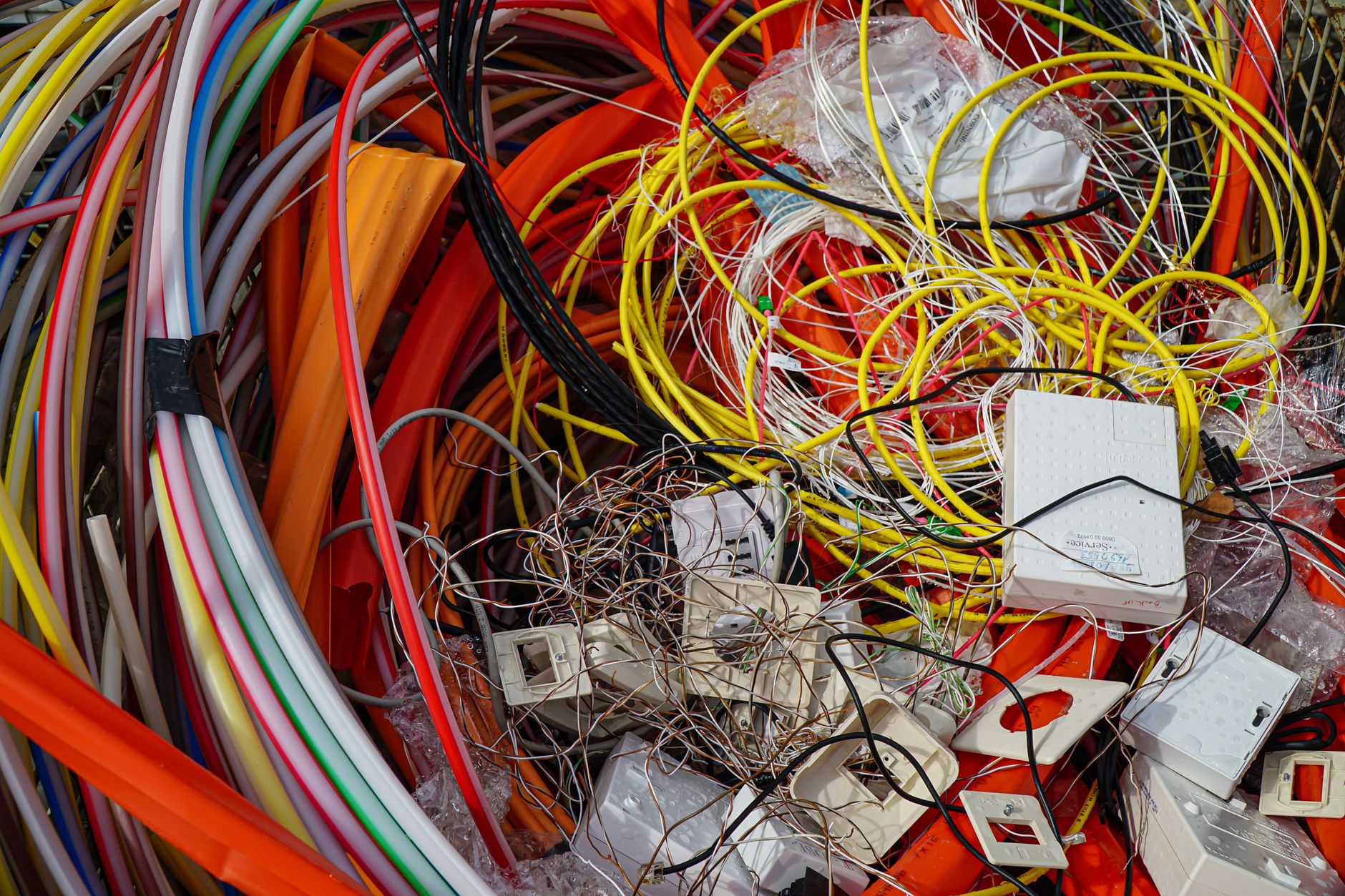
WEEE recycling UK rules sit at the centre of how businesses, retailers, manufacturers and households handle anything that runs on a plug, a battery or a charging cable. The governing framework is the Waste Electrical and Electronic Equipment Regulations 2013, which came into force on 1 January 2014 and replaced the 2006 regime. This guide sets out what WEEE recycling in the UK actually requires, who carries the obligation, the rates and dates that matter, the penalties for getting it wrong, and the practical disposal routes for both business and household electrical waste.
TL;DR: WEEE recycling UK is regulated by the Waste Electrical and Electronic Equipment Regulations 2013 (in force from 1 January 2014). Producers that place electrical and electronic equipment on the UK market must register, usually by joining a Producer Compliance Scheme, report the tonnage they put on the market and finance the recycling of an equivalent share of waste. Distributors and retailers must offer take-back. Businesses disposing of WEEE must follow the waste duty of care and keep evidence. Households can use Designated Collection Facilities at council recycling centres or retailer take-back. Enforcement sits with the Environment Agency in England, SEPA in Scotland, Natural Resources Wales and DAERA in Northern Ireland.
Key facts
- Governing law: Waste Electrical and Electronic Equipment Regulations 2013, in force 1 January 2014.
- WEEE is split into categories covering large and small household appliances, IT and telecoms, display equipment, lamps, tools, medical devices and more.
- Producers placing 5 tonnes or more of EEE on the UK market in a compliance period must join a Producer Compliance Scheme; those under 5 tonnes may register as a small producer directly with the regulator.
- The compliance period runs as a calendar year, 1 January to 31 December, with quarterly data reporting.
- Distributors selling EEE must provide free in-store or equivalent take-back of old equipment, or join the Distributor Take-back Scheme.
- Businesses must follow the waste duty of care under the Environmental Protection Act 1990 and complete a waste transfer note for every transfer.
- Hazardous WEEE, such as display screens and lamps containing mercury, triggers hazardous waste consignment rules.
- Enforcement is devolved: Environment Agency (England), SEPA (Scotland), Natural Resources Wales, DAERA (Northern Ireland).
What WEEE recycling in the UK actually means
WEEE stands for Waste Electrical and Electronic Equipment. In plain terms it covers any product that has a plug, runs on a battery, or works using an electric current or electromagnetic field once that product reaches the end of its working life. That is a very wide net. It captures fridges, washing machines, cookers and other large household appliances; kettles, toasters and small kitchen gadgets; laptops, servers, phones, printers and networking kit; televisions, monitors and other display equipment; fluorescent tubes and LED lamps; power tools; and a long list of medical, monitoring and laboratory devices.
The purpose of WEEE recycling UK rules is to keep electrical waste out of landfill, recover valuable materials such as copper, gold, aluminium and rare earth metals, and safely capture the hazardous substances that electronics often contain. Old televisions and monitors can hold lead and other heavy metals, fluorescent lamps contain mercury, and cooling appliances such as fridges contain refrigerant gases that damage the ozone layer and contribute to climate change if released. Proper WEEE waste management separates these streams so the hazardous fraction is treated correctly and the recoverable materials are returned to the supply chain.
The framework follows the producer responsibility principle: the organisation that profits from putting electrical goods on the market also has to finance the cost of dealing with those goods at end of life. That principle shapes almost every obligation described below, and it is why "waste management electronic waste" obligations fall most heavily on manufacturers, importers and rebranders rather than on the consumer who eventually throws the item away.
The rule: the WEEE Regulations 2013 and the rates that matter
The core instrument is the Waste Electrical and Electronic Equipment Regulations 2013, which came into force on 1 January 2014 and replaced the earlier 2006 Regulations. The 2013 Regulations transposed the recast EU WEEE Directive into UK law and remain the operative framework following the UK's departure from the EU, subject to ongoing UK reform. The full text is published on the UK legislation register, and any operator relying on a specific obligation should read the current consolidated version before acting, because amendments are made periodically.
Several figures and dates anchor the regime. The compliance period is the calendar year, running 1 January to 31 December. The headline registration threshold is 5 tonnes: a business that places 5 tonnes or more of electrical and electronic equipment on the UK market in a compliance period must join an approved Producer Compliance Scheme, while a business below that threshold can register directly with the appropriate regulator as a small producer. These thresholds and any associated fees are set by the regulators and government, so verify the current figure and any fee changes with the Environment Agency or the Department for Environment, Food and Rural Affairs before relying on them.
Each year the government sets national collection targets and allocates an obligation to producers based on the share of equipment they placed on the market, measured in tonnes by category. Producers, through their compliance scheme, must then finance the collection and treatment of an equivalent tonnage of waste, evidenced through the WEEE evidence and settlement system. The categories used for reporting were restructured under the 2013 Regulations into a smaller set of headings, and the precise category definitions and any target levels are published by the regulator each compliance period.
Who WEEE rules apply to
The 2013 Regulations place distinct duties on four groups, and most organisations will fall into at least one of them.
Producers
A producer is, broadly, any business that manufactures EEE under its own brand, rebrands equipment made by others as its own, imports EEE into the UK, or sells EEE into the UK from another country by distance selling. Producers carry the heaviest obligation: registration, data reporting and financing recycling. A UK importer of consumer electronics, a contract manufacturer that brands its own range, and an overseas seller shipping directly to UK consumers can all be producers.
Distributors and retailers
A distributor is any business that sells new EEE to end users, whether a high street shop, a trade counter or an online retailer. Distributors must give customers the chance to return old equipment when they buy a new equivalent, either through free in-store take-back or by joining the Distributor Take-back Scheme, and must provide information to customers about why WEEE must be collected separately.
Businesses that use and dispose of EEE
Any organisation that generates waste electrical equipment, from a single office replacing its laptops to a factory decommissioning machinery, is a waste producer for duty of care purposes. These businesses do not register under the producer rules but must ensure their WEEE is handled by authorised carriers and treatment facilities and that the transfer is documented.
Households
Households are not directly regulated but are the intended beneficiaries of the collection infrastructure that producers finance, including Designated Collection Facilities at local authority recycling centres and retailer take-back.
What you have to do to comply
The specific obligations under WEEE recycling UK rules depend on which group an organisation falls into. The following sets out the practical compliance actions for each.
If you are a producer
- Determine whether you place 5 tonnes or more of EEE on the UK market in the compliance period; this decides whether you must join a Producer Compliance Scheme or can register as a small producer.
- Register before placing equipment on the market, either through a scheme or directly with the regulator, and renew registration each compliance period.
- Record and report the tonnage of EEE placed on the market, broken down by category, on the quarterly and annual schedule the scheme operates.
- Mark new electrical equipment with the crossed-out wheeled bin symbol so consumers know it must not go in general waste.
- Finance the collection and treatment of your allocated share of WEEE and retain the evidence notes that prove it.
If you are a distributor or retailer
- Offer free take-back of old EEE on a like-for-like basis when selling a new equivalent, or join the Distributor Take-back Scheme and fund collection infrastructure instead.
- Provide customers with clear information on separate collection and the meaning of the crossed-out wheeled bin symbol.
- Keep records of equipment taken back and how it was passed on for treatment.
If you are a business disposing of WEEE
- Comply with the waste duty of care: store WEEE safely, transfer it only to a registered waste carrier and an authorised treatment facility, and complete a waste transfer note for every movement, retaining it for at least two years.
- Classify hazardous WEEE correctly, for example display screens and gas discharge lamps, and use the hazardous waste consignment procedure where it applies, retaining consignment notes for at least three years.
- For data-bearing equipment such as laptops, servers and phones, ensure data is securely destroyed before disposal and obtain a certificate of data destruction where appropriate.
Penalties and enforcement
Enforcement of WEEE recycling UK obligations is devolved across the four UK nations. The Environment Agency regulates producers and compliance schemes in England, the Scottish Environment Protection Agency (SEPA) acts in Scotland, Natural Resources Wales covers Wales, and the Department of Agriculture, Environment and Rural Affairs (DAERA) covers Northern Ireland. The Health and Safety Executive can also become involved where the handling of hazardous electrical waste creates workplace risk.
Failing to register as a producer, under-reporting the tonnage placed on the market, or failing to finance the required recycling can lead to enforcement action ranging from compliance notices to prosecution. WEEE offences are generally triable either way: on summary conviction in the magistrates' court the fine can be substantial, and on conviction on indictment in the Crown Court an unlimited fine can be imposed. Directors and officers can be held personally liable where an offence is committed with their consent, connivance or neglect.
Separate duty of care breaches carry their own penalties under the Environmental Protection Act 1990. Failing to complete a waste transfer note, using an unregistered carrier, or fly-tipping electrical waste can result in fixed penalties, prosecution and unlimited fines, and mishandling hazardous WEEE without the correct consignment paperwork is a distinct offence enforced by the relevant environmental regulator. Because penalty levels and fixed-penalty amounts are set by government and updated periodically, verify the current figures with the Environment Agency or the relevant devolved regulator before relying on them.
Practical steps for UK operators
For most UK businesses, WEEE waste management becomes manageable once the right routes and records are in place. The steps below apply the rules above to day-to-day operations.
- Establish whether you are a producer. If your business manufactures, rebrands, imports or distance-sells EEE, calculate the tonnage you place on the market and decide between a compliance scheme and small-producer registration.
- Pick a Producer Compliance Scheme if you cross the threshold. Schemes handle registration, quarterly reporting and the purchase of evidence on your behalf for an annual fee, which removes most of the administrative burden.
- Set up authorised collection for your own waste. Whether replacing office IT or clearing a warehouse, use a registered waste carrier and an approved authorised treatment facility, and insist on a waste transfer note for every collection.
- Segregate hazardous items. Keep display screens, fluorescent and gas discharge lamps, and battery-containing devices separate, and apply hazardous waste consignment procedures where required.
- Protect data. Treat any data-bearing device as a security item, wipe or physically destroy storage media, and keep destruction certificates alongside the waste paperwork.
- Keep an audit trail. Retain transfer notes for at least two years and hazardous consignment notes for at least three years, and store producer evidence notes for the full compliance period and beyond.
Done properly, WEEE recycling UK compliance protects a business from enforcement, reduces landfill cost exposure and supports recovery of valuable materials, which is the entire purpose of the producer responsibility model that underpins waste management of electronic waste in the UK.
Editorial note: This guide is independent UK editorial and is not financial, legal or regulatory advice. kaeltripton earns no commission and routes no leads. Pricing is indicative and varies by contract, location and waste stream. Confirm regulatory obligations with the named UK authorities before acting.
WEEE recycling UK FAQ
What is WEEE recycling in the UK?
WEEE recycling is the regulated collection and treatment of Waste Electrical and Electronic Equipment, meaning any product with a plug, battery or electric function at the end of its life. It is governed by the Waste Electrical and Electronic Equipment Regulations 2013, in force from 1 January 2014, which requires producers to finance recycling and keeps electrical waste out of landfill.
What law governs WEEE recycling in the UK?
The Waste Electrical and Electronic Equipment Regulations 2013 are the governing law, in force since 1 January 2014. They sit alongside the waste duty of care in the Environmental Protection Act 1990 and the hazardous waste rules. The consolidated text is published on the UK legislation register.
Who has to comply with WEEE regulations?
Producers (manufacturers, rebranders, importers and distance sellers), distributors and retailers, and businesses that dispose of electrical waste all have duties. Households are not directly regulated but benefit from the collection infrastructure producers fund.
What is the 5 tonne WEEE threshold?
A business placing 5 tonnes or more of electrical and electronic equipment on the UK market in a compliance period must join an approved Producer Compliance Scheme. Below 5 tonnes, a business can register directly as a small producer. Verify the current threshold and any fees with the Environment Agency or Defra before relying on them.
What is a Producer Compliance Scheme?
A Producer Compliance Scheme is an approved organisation that registers producers, handles quarterly and annual tonnage reporting, and acquires the WEEE evidence needed to prove that recycling has been financed. Producers above the threshold join a scheme for an annual fee rather than dealing with the regulator directly.
How do businesses dispose of WEEE legally?
Businesses must follow the waste duty of care: store WEEE safely, use a registered waste carrier and an authorised treatment facility, and complete a waste transfer note for every collection, retaining it for at least two years. Hazardous WEEE requires consignment notes kept for at least three years.
How do households recycle electrical waste in the UK?
Households can take old electricals to Designated Collection Facilities at local authority recycling centres, use retailer take-back when buying a replacement, or use kerbside small-electricals collections where councils offer them. There is normally no charge to households for these routes.
Is WEEE classed as hazardous waste?
Some WEEE is hazardous and some is not. Display screens such as old televisions and monitors, fluorescent and gas discharge lamps containing mercury, cooling appliances containing refrigerant gases, and many battery-containing devices are hazardous and trigger consignment rules. General small electricals are usually non-hazardous but must still be recycled separately.
What is the crossed-out wheeled bin symbol?
The crossed-out wheeled bin is the mandatory marking on electrical equipment placed on the UK market, telling users the item must not be thrown in general waste and must be collected separately for recycling. Producers are responsible for applying it.
What are the penalties for breaching WEEE rules?
Failure to register, under-reporting tonnage, or not financing recycling can lead to compliance notices or prosecution, with unlimited fines available on conviction on indictment. Duty of care and hazardous waste breaches carry separate fixed penalties and fines. Verify current penalty levels with the relevant environmental regulator.
How does WEEE recycling differ across the UK nations?
The framework is broadly common across the UK, but enforcement is devolved. The Environment Agency acts in England, SEPA in Scotland, Natural Resources Wales in Wales, and DAERA in Northern Ireland. Operators in each nation should follow guidance from the regulator that covers them.
Does WEEE recycling cover data security?
The WEEE rules themselves focus on environmental treatment, but data-bearing equipment such as laptops, servers and phones also carries data protection obligations. Businesses should securely wipe or physically destroy storage media before disposal and keep a certificate of data destruction with the waste paperwork.
Sources
- UK legislation register (WEEE Regulations 2013)
- Environment Agency
- Department for Environment, Food and Rural Affairs (Defra)
- Scottish Environment Protection Agency (SEPA)
- Natural Resources Wales
- Department of Agriculture, Environment and Rural Affairs (DAERA)
- Health and Safety Executive (HSE)
- How to classify different types of waste
- Waste duty of care code of practice
- Packaging waste extended producer responsibility


