LAST REVIEWED: JUNE 2026
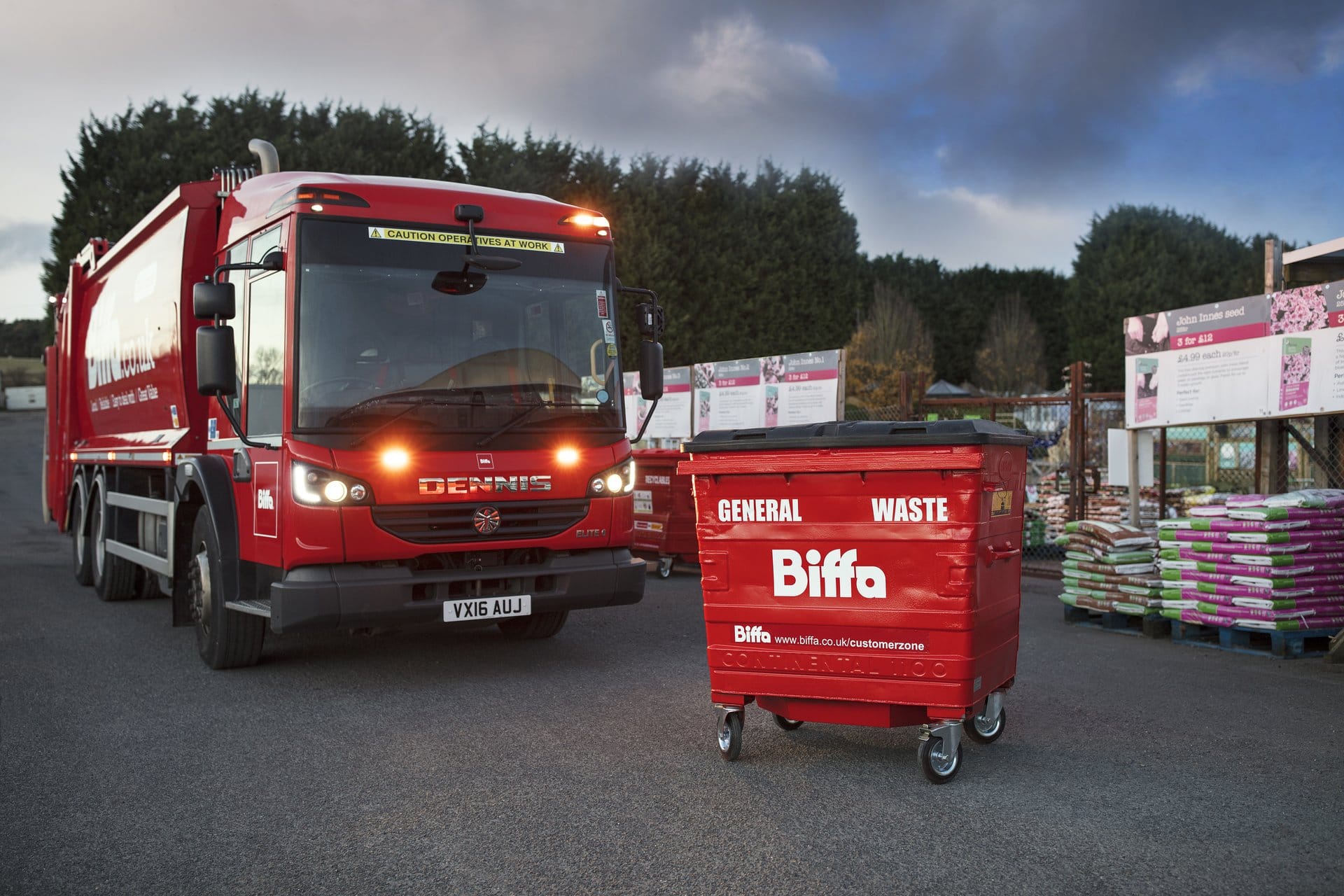
Biffa skip hire scores 62/100 on the KT Score. Biffa offers skip hire from mini skips (2 cubic yards) through to large roll-on roll-off containers for construction, renovation and commercial clearance projects. Biffa handles local authority permit applications for skips placed on public highways as part of the hire service. Pricing is not published and varies by location, skip size and hire duration. Biffa skip hire is typically priced at or above the mid-market rate; independent skip hire companies and regional waste operators often produce lower quotes for standard residential and small commercial jobs. Biffa's advantage is its national coverage, consistent compliance documentation and the integration of skip hire with broader waste management contracts for existing Biffa business customers.
Skip sizes available from Biffa
| Skip size | Cubic yards | Typical use | Approx price range |
|---|---|---|---|
| Mini skip | 2 | Garden clearance, small bathroom | £80-£150 |
| Midi skip | 4 | Kitchen/bathroom renovation | £150-£250 |
| Builder skip | 6-8 | House clearance, larger renovation | £200-£350 |
| Large skip | 10-12 | Commercial clearance, construction | £280-£450 |
| Roll-on roll-off | 20-40 | Large commercial, demolition | £400-£900+ |
Prices are indicative for June 2026. Actual prices vary by location, hire duration and waste type. Prices exclude permit costs.
Skip permits: what you need to know
A skip placed on a public highway (road or pavement outside the property boundary) requires a permit from the local authority. The permit authorises the skip's position, specifies the duration and requires safety markings including lights and reflective barriers. Biffa applies for permits on behalf of customers as part of the hire service. The permit cost is typically charged separately from the skip hire price and ranges from approximately £25 to £75 depending on the local authority.
Skips placed entirely on private property (driveway, car park, construction site within the site boundary) do not require a permit. This is the most important practical distinction for residential customers; a skip on a driveway behind the property boundary requires no permit, while the same skip placed on the road outside requires one. The customer is responsible for ensuring the skip does not encroach beyond the agreed placement position.
What can and cannot go in a Biffa skip
Standard Biffa skips accept general mixed waste including household clearance items, construction waste (bricks, plasterboard, timber, tiles), garden waste and non-hazardous commercial waste. Prohibited items include asbestos, chemical waste, clinical waste, batteries, paint, tyres (more than four), electrical appliances and gas cylinders. Placing prohibited items in a standard skip constitutes illegal waste disposal and exposes the customer to enforcement action as well as additional charges from Biffa for special disposal.
Biffa offers separate specialist collection services for prohibited items. Asbestos, clinical waste and chemical waste require specialist containers and licensed disposal routes. WEEE (waste electrical and electronic equipment) must be disposed of through authorised WEEE treatment facilities. Biffa's specialist waste division handles these streams but the cost is substantially higher than standard skip hire rates.
Biffa skip hire vs independent operators
For standard residential and small commercial skip hire, independent skip hire companies and regional waste operators consistently produce lower quotes than Biffa for equivalent sizes and durations. Biffa's scale advantages are less relevant for a single 6-yard skip for a kitchen renovation than for a multi-site construction project requiring ongoing roll-off container exchange. Comparison sites such as Waste Compare and direct quotes from local operators typically produce savings of 15 to 30% versus Biffa for standard skip hire.
The case for Biffa skip hire strengthens for existing Biffa business customers who can consolidate skip hire into their existing waste management contract, for projects requiring specialist waste removal alongside standard skip hire, and for large commercial or construction projects where Biffa's nationwide logistics capability adds operational value.
Disclaimer: This review is produced by Kael Tripton Ltd for informational purposes only. It does not constitute a recommendation. Company No. 17177071, ICO ZC135439.
Frequently asked questions
Does Biffa handle skip permits?
Yes. For skips placed on public highways, Biffa applies for the required local authority permit as part of the hire service. The permit cost is charged separately. Skips placed on private property do not require a permit. The customer is responsible for confirming the skip placement position is within private property boundaries if no permit is being obtained.
What is the cheapest Biffa skip size?
Biffa's smallest skip is a mini skip of approximately 2 cubic yards, suitable for garden clearance, small bathroom clearance or modest amounts of mixed household waste. Indicative pricing starts from approximately £80 in accessible urban areas, rising for rural or restricted-access locations. Independent skip hire operators typically offer comparable sizes at lower prices for standard residential projects.
Can I put soil in a Biffa skip?
Soil is classified as an inert waste and can be placed in Biffa skips designated for inert or mixed construction waste. Heavy inert waste such as soil, concrete, bricks and rubble should be discussed with Biffa at the time of booking as weight limits apply to all skip sizes. Overloading a skip beyond its weight capacity is unsafe and may result in additional charges. Separate soil-only skips are sometimes more cost-effective for large soil removal volumes.
How long can I keep a Biffa skip?
Standard Biffa skip hire periods range from 3 to 14 days depending on the contract. Extended hire is available at additional daily rates. For construction projects requiring a skip for longer periods, Biffa can arrange ongoing hire with regular emptying and replacement. Overstaying the agreed hire period without arrangement typically triggers additional charges.