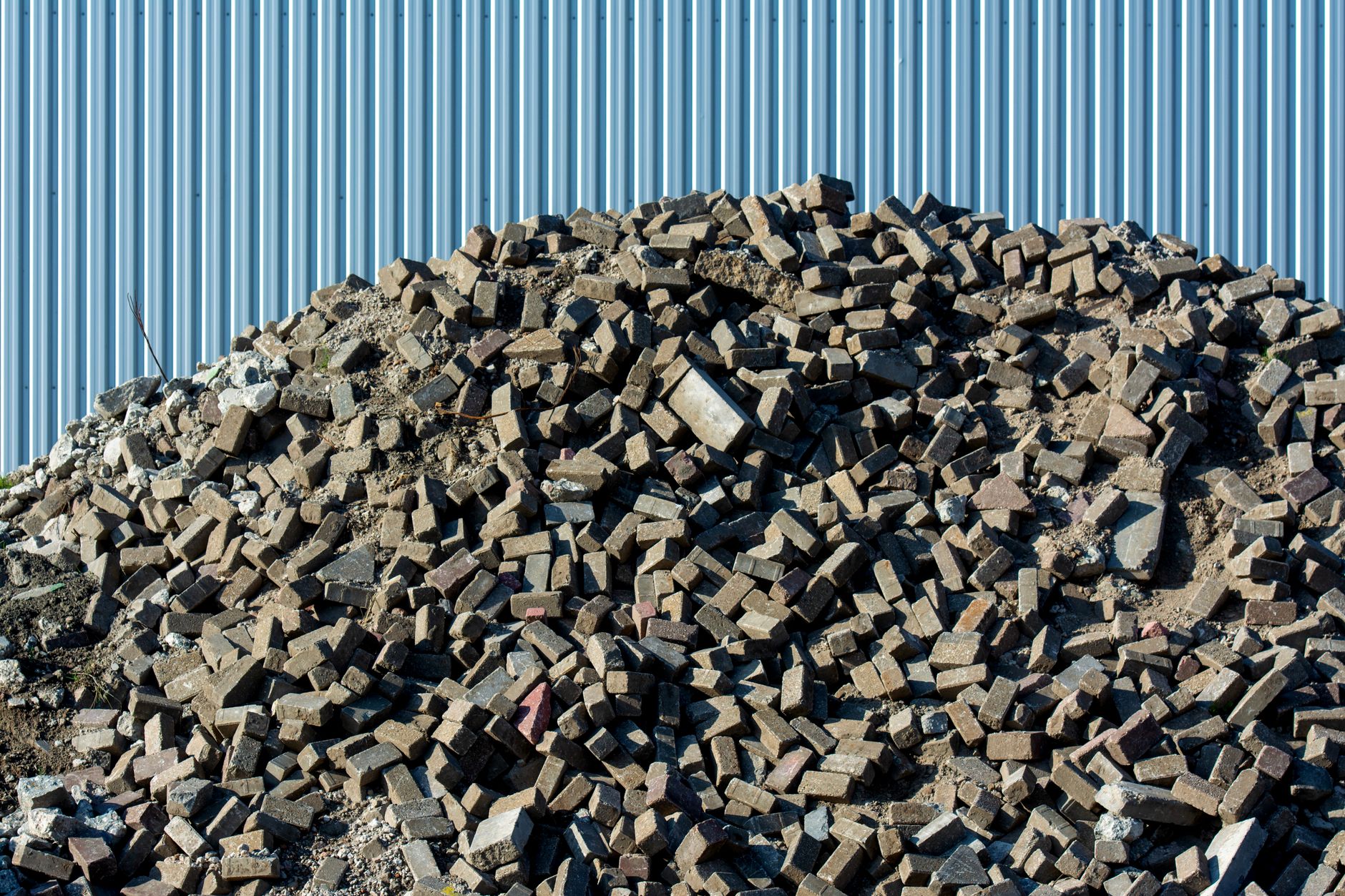
Choosing a provider for construction waste uk projects means matching the right collector to your site type, your waste streams and your duty of care obligations. Construction and demolition (C and D) waste is the largest single stream the UK produces, and the providers that serve it range from national operators with their own recovery plants to regional skip and tipper specialists working a single county. This guide compares the operators most commonly shortlisted for construction and demolition waste management, sets out the regulation that governs every movement of waste, and explains how segregation, the site waste management plan and Landfill Tax shape the price you pay.
TL;DR: For construction waste uk contracts, operators most commonly shortlist national players such as Powerday, Biffa and Grundon for high-volume recovery, alongside regional specialists like Hills Waste, O'Donovan and Brewster Bros for skip, tipper and aggregate recycling. Every load is governed by the duty of care under the Environmental Protection Act 1990, the waste hierarchy and Landfill Tax. Segregating waste on site and keeping a site waste management plan are the two levers that cut cost and reduce compliance risk most. Pricing is contract-specific; figures below are indicative.
Key facts
- Construction, demolition and excavation waste is the single largest waste stream in the UK by tonnage, with the bulk of it being inert material such as soil, rubble, concrete and hardcore.
- Every business that produces, carries or disposes of construction waste is bound by the waste duty of care under section 34 of the Environmental Protection Act 1990. There is no upper limit on the fine on conviction.
- Landfill Tax applies to most waste sent to landfill. The standard rate and lower rate are set by HMRC and change each April; verify the current figure with HMRC before relying on it.
- Anyone transporting C and D waste must be a registered waste carrier with the relevant regulator (Environment Agency in England, SEPA in Scotland, Natural Resources Wales, or DAERA in Northern Ireland).
- Hazardous streams found on construction sites, such as asbestos, contaminated soil, paints and solvents, must be classified, separated and consigned under hazardous waste rules.
- Segregating inert, recyclable and hazardous fractions on site typically lowers disposal cost because mixed loads attract the standard Landfill Tax rate and higher gate fees.
- Indicative skip pricing for construction waste commonly ranges from roughly 200 to 350 pounds for an 8-yard builders skip, rising sharply for hazardous or contaminated loads. Treat all figures as indicative.
- A site waste management plan is no longer a statutory requirement in England since the 2013 repeal, but most principal contractors retain one as best practice and many clients require it contractually.
At a glance: best-fit construction waste providers
The construction waste market splits into national operators that own recovery and transfer infrastructure, and regional skip, tipper and aggregate specialists. The cards below map common operators to the project profiles they suit. Best fit is editorial framing based on published service scope, not a ranking.
Powerday
Best fit for: London and South East high-volume C and D recovery
London-focused operator with large materials recovery facilities. Suited to major contractors needing high recycling rates and consolidated logistics across the capital.
Biffa
Best fit for: multi-site national contractors
National coverage and integrated collection, treatment and recycling. Most commonly chosen by housebuilders and contractors needing one supplier across many regions.
Grundon
Best fit for: London, Thames Valley and Southern England
Family-owned integrated operator with energy-from-waste and recycling assets. Suited to mixed C and D plus hazardous streams in the South.
Hills Waste Solutions
Best fit for: Wiltshire and South West regional sites
Regional specialist with skip hire, aggregate recycling and transfer stations. Most commonly chosen for projects across the Wessex region.
O'Donovan Waste
Best fit for: London construction skip and grab logistics
London-based family operator known for skip and grab hire with high recovery rates. Suited to tight urban sites needing responsive collection.
Brewster Bros
Best fit for: Central Scotland recycled aggregate
Scottish operator focused on processing C and D waste into recycled aggregates. Suited to contractors prioritising circular reuse of inert material.
Regional skip and tipper firms
Best fit for: single-county and small builder jobs
Local skip and tipper operators offer fast turnaround and competitive pricing for smaller works. Suited to refurbishment, fit-out and small new-build sites.
SUEZ recycling and recovery UK
Best fit for: large contractors needing national treatment capacity
National operator with extensive treatment and recovery infrastructure. Most commonly chosen for high-tonnage programmes requiring auditable recovery routes.
Quick comparison table
The table below summarises the operators most commonly shortlisted for construction and demolition waste management. Indicative monthly figures depend heavily on tonnage, waste stream and location; treat every figure as indicative and confirm with the operator.
| Provider | Best fit for | Indicative monthly from | Pricing basis | UK HQ | Regulatory focus | Inclusions |
|---|---|---|---|---|---|---|
| Powerday | London high-volume recovery | From around 1,500 pounds | Per tonne plus haulage | London | Duty of care, waste hierarchy | Skip, RoRo, recovery, transfer notes |
| Biffa | National multi-site contractors | From around 1,200 pounds | Per lift and tonnage | High Wycombe | Duty of care, hazardous, EPR | Collection, treatment, reporting |
| Grundon | South of England mixed streams | From around 1,300 pounds | Per tonne and per lift | Benson, Oxfordshire | Hazardous, energy from waste | Skip, RoRo, hazardous, compliance docs |
| Hills Waste Solutions | Wiltshire and South West | From around 800 pounds | Per skip and tonnage | Devizes, Wiltshire | Duty of care, aggregate recycling | Skip hire, aggregate recovery, transfer |
| O'Donovan Waste | London skip and grab | From around 900 pounds | Per skip and grab load | London | Duty of care, high recovery | Skip, grab, recycling reporting |
| Brewster Bros | Central Scotland aggregate | From around 700 pounds | Per tonne in and out | Livingston, Scotland | SEPA compliance, circular reuse | Tipping, recycled aggregate supply |
| SUEZ recycling and recovery UK | National treatment capacity | From around 1,400 pounds | Per tonne and contract | Maidenhead | Duty of care, hazardous, recovery | Collection, treatment, audit trail |
| Regional skip and tipper firms | Single-county small works | From around 200 pounds | Per skip or tipper load | Varies by region | Duty of care, carrier registration | Skip delivery, exchange, disposal |
What construction and demolition waste is
Construction and demolition waste, often shortened to C and D waste, is the material arising from building, refurbishment, civil engineering and demolition activity. It is one of three components of the broader construction, demolition and excavation (CD and E) waste category that the UK government tracks, the third being excavation arisings such as soil and stones.
The stream is dominated by inert material: concrete, bricks, blocks, hardcore, tiles, ceramics, sand, gravel and soil. Much of this is recyclable into recycled aggregate and is comparatively cheap to handle when kept clean and separate. Construction waste management becomes more expensive and more tightly regulated the moment streams are mixed or contaminated, because a mixed load is taxed and gated at the higher rate and may lose its inert classification.
Alongside the inert fraction, sites generate timber, metals, plasterboard, packaging, plastics and insulation, plus smaller volumes of hazardous waste. The way the UK classifies each of these determines how it can be moved, treated and disposed of, and how much it costs.
The main construction waste streams
- Inert and aggregate: concrete, brick, hardcore, soil and stone. Usually the cheapest to handle and the most readily recycled.
- Mixed general construction waste: a blend of materials that has not been segregated. Attracts higher gate fees and the standard Landfill Tax rate on any landfilled fraction.
- Timber and wood: graded by contamination level. Clean timber is recoverable; treated or painted timber may need specialist routing.
- Metals: ferrous and non-ferrous metals have positive scrap value and are almost always segregated.
- Plasterboard and gypsum: must be kept out of mixed inert loads because gypsum in landfill produces hydrogen sulphide. It is segregated by law in practice.
- Hazardous: asbestos, contaminated soil, paints, solvents, adhesives, fluorescent tubes and some insulation. Classified and consigned separately.
UK regulation governing construction waste
Construction waste management in the UK is built on a single foundational obligation: the waste duty of care. Set out in section 34 of the Environmental Protection Act 1990 and explained in the statutory Waste duty of care code of practice, it requires everyone who produces, carries, keeps, treats or disposes of waste to prevent its escape, transfer it only to an authorised person, and keep a written description so it can be handled safely. Breaching the duty of care is a criminal offence and, on conviction in the Crown Court, the fine is unlimited.
The waste hierarchy
The waste hierarchy ranks options from most to least preferred: prevention, preparing for reuse, recycling, other recovery, and finally disposal. Businesses must apply the hierarchy as a legal duty and confirm on waste transfer documentation that they have done so. For construction waste this is why on-site segregation and recycled aggregate matter: they move material up the hierarchy and away from landfill. Defra sets the policy framework through the Department for Environment, Food and Rural Affairs.
Classifying your waste
Before any load leaves site it must be classified with the correct List of Waste (LoW) code, sometimes called the EWC code. The government guidance on how to classify different types of waste sets out the process, including how to assess whether a waste is hazardous. Mirror entries, where a waste may be hazardous or non-hazardous depending on the substances present, are common on construction sites, particularly for contaminated soil and treated timber.
Waste carrier registration and the regulators
Anyone who transports construction waste must hold a waste carrier registration with the relevant environmental regulator. In England that is the Environment Agency. In Scotland it is the Scottish Environment Protection Agency. In Wales it is Natural Resources Wales, and in Northern Ireland it is the Department of Agriculture, Environment and Rural Affairs. Always check that a collector's registration is current before handing over a load; the duty of care places the burden on the waste producer to verify the next holder is authorised.
Landfill Tax
Landfill Tax applies to waste disposed of at a permitted landfill in England and Northern Ireland, with devolved equivalents in Scotland and Wales. It has two rates: a standard rate for active waste and a lower rate for qualifying inert material such as clean rubble and soil. Both rates are set by HMRC and rise each April. Because the gap between the two rates is large, sending mixed or contaminated inert waste to landfill at the standard rate is far more expensive than keeping clean inert material separate. The current rates are published in the HMRC Landfill Tax collection; verify the current figure with HMRC before relying on it.
Hazardous waste on site
Asbestos, contaminated soil, solvent-based paints, adhesives and certain insulation are hazardous wastes. They must be classified, stored separately, and moved under a consignment note rather than an ordinary transfer note. Health and safety obligations for handling these materials, particularly asbestos, are enforced by the Health and Safety Executive. The combination of HSE health and safety duties and the environmental duty of care means hazardous construction waste needs a specialist collector and a documented chain of custody.
The site waste management plan
Site waste management plan regulations were a statutory requirement in England between 2008 and their repeal in 2013. Although no longer mandatory in law, a site waste management plan remains the standard tool for forecasting waste arisings, setting recovery targets and recording where every stream went. Many clients and principal contractors require one contractually, and it is the single most useful document for evidencing duty of care compliance and demonstrating application of the waste hierarchy. The legal texts behind waste regulation can be read at legislation.gov.uk.
Extended producer responsibility and packaging
Construction sites also generate packaging waste from materials delivered to site. Where a business handles enough packaging it may have obligations under extended producer responsibility for packaging, and where plastic packaging is manufactured or imported the Plastic Packaging Tax may apply. The Plastic Packaging Tax rate is set by HMRC and changes; state the figure you are working to and verify the current figure with HMRC before relying on it.
Construction waste providers in detail
The profiles below cover the operators most commonly shortlisted for construction and demolition waste management across the UK. Each stat strip uses published or indicative figures; confirm scope and pricing directly.
Powerday
Powerday is a London-focused operator built around large materials recovery facilities, including a major site at Old Oak Common. It is most commonly chosen by main contractors and demolition firms working across the capital who need high recycling rates, consolidated skip and roll-on roll-off logistics, and auditable recovery routes for construction waste management. Powerday's strength is throughput within London and the immediate South East; its geographic focus means it is less suited to projects outside that footprint.
Biffa
Biffa is one of the UK's largest integrated waste operators, with collection, treatment and recycling capacity across the country. For construction it suits national housebuilders and contractors who want a single supplier covering many regions, consistent reporting and the ability to handle hazardous as well as general C and D streams. The trade-off with large national operators is that account responsiveness on a single site can feel less personal than a local skip firm. See the dedicated Biffa review for a fuller assessment.
Grundon Waste Management
Grundon is a long-established family-owned operator with its own energy-from-waste and recycling infrastructure across London, the Thames Valley and Southern England. It is well suited to construction projects that mix inert, general and hazardous streams because it can route each fraction through the appropriate facility and produce the compliance documentation in one place. The Grundon review covers its service lines in detail.
Hills Waste Solutions
Hills Waste Solutions is a regional specialist serving Wiltshire and the wider South West, with skip hire, transfer stations and aggregate recycling. It is most commonly chosen for construction works across the Wessex region where local knowledge, recycled aggregate supply and quick skip turnaround matter more than national coverage. Its regional focus is a strength for local projects and a constraint for programmes spread across the country.
O'Donovan Waste Disposal
O'Donovan is a London family-owned operator with a strong reputation for skip and grab hire and high recovery rates. It suits tight urban construction sites where space is limited and collection has to be responsive, and where a demolition waste management london contract needs reliable grab logistics. Its focus on the capital makes it ideal within London and less relevant beyond.
Brewster Bros
Brewster Bros is a Scottish operator focused on processing construction, demolition and excavation waste into recycled aggregates at its Livingston facility. It is well suited to contractors in Central Scotland who want to take in their inert arisings and buy back certified recycled aggregate, closing the loop and reducing reliance on primary quarried stone. Operating under SEPA, it is a strong circular-economy choice for the Scottish market.
SUEZ recycling and recovery UK
SUEZ recycling and recovery UK operates extensive treatment, recovery and recycling infrastructure nationally. For construction it is most commonly chosen for high-tonnage programmes that need guaranteed treatment capacity and a fully auditable recovery trail across multiple regions. The SUEZ review sets out its full service range.
Veolia
Veolia is another national operator with integrated collection, treatment and recovery assets used widely on large construction and infrastructure programmes. It suits contractors who want a single environmental partner across waste, recycling and resource recovery. The Veolia review covers its construction and trade waste lines.
Regional skip and tipper specialists
Independent skip and tipper firms operate in almost every county and are the backbone of small and medium construction works. They typically offer the fastest turnaround and the most competitive per-skip pricing for refurbishment, fit-out and small new-build jobs. The key checks are that the firm holds current waste carrier registration and provides proper transfer notes; price alone should never be the deciding factor under the duty of care.
Pricing and procurement for construction waste
Construction waste pricing is driven by four variables: the waste stream, the tonnage, the location and the disposal route. Inert clean rubble routed to an aggregate recycler is the cheapest outcome. Mixed general construction waste sent to a transfer station or landfill is more expensive, and hazardous waste consigned to specialist treatment is the most expensive of all.
How construction waste is priced
- Per skip: common for small works. An 8-yard builders skip for mixed construction waste commonly falls in an indicative range of around 200 to 350 pounds depending on region and fill. Treat as indicative.
- Per tonne: standard for larger contracts, with separate gate fees by stream. Inert attracts the lowest rate; mixed and hazardous attract higher rates plus Landfill Tax where landfilled.
- Roll-on roll-off (RoRo): used for high-volume sites, charged per container plus tonnage on disposal.
- Grab hire: common in London for muckaway and inert removal, charged per load.
What lowers the cost
The biggest single lever is segregation. Keeping inert, recyclable and hazardous fractions separate on site means each goes to the cheapest compliant route and avoids the standard Landfill Tax rate being applied to a whole mixed load. A site waste management plan that forecasts arisings lets you size containers correctly and negotiate per-tonne rates rather than paying inflated per-skip prices. Recovering metals and timber for their scrap or recycling value can offset disposal cost. See the cluster waste collection cost guide for a fuller cost breakdown.
Procurement checklist
- Confirm the collector's waste carrier registration is current with the relevant regulator.
- Require proper waste transfer notes or consignment notes for every load and keep them for the statutory retention period.
- Agree gate fees by stream, not a single blended rate, so segregation pays off.
- Ask for recovery and recycling rate reporting if you have client or framework targets.
- Check whether Landfill Tax is shown separately and at which rate; verify current rates with HMRC.
Strengths and limitations by provider type
No single provider type wins on every project. National operators, regional specialists and aggregate recyclers each carry a distinct profile.
National integrated operators
Strengths: one supplier across many sites, consistent reporting, full hazardous capability, auditable recovery routes. Limitations: higher minimum commitments, sometimes slower single-site responsiveness, premium pricing for small jobs.
Regional skip and tipper specialists
Strengths: fast turnaround, competitive per-skip pricing, local knowledge, personal account contact. Limitations: limited geographic reach, variable hazardous capability, recovery reporting may be less detailed.
Aggregate recyclers
Strengths: lowest cost for clean inert, closed-loop recycled aggregate supply, strong waste hierarchy position. Limitations: focused on inert streams, so general and hazardous waste still needs a separate route.
Alternatives and regional coverage
Beyond the operators profiled above, contractors regularly shortlist other UK providers depending on region and stream. First Mile and Bywaters serve London commercial and construction clients, Enva operates across the UK and Ireland with strong recycling assets, WasteCare focuses on hazardous and specialist streams, and Cawleys serves the East and South East. Reviews of these operators sit in the cluster: First Mile, Bywaters, Enva, WasteCare and Cawleys.
Regional coverage for construction waste
Construction waste provision varies by city, and the right shortlist changes with location. Coverage and typical operators across major UK centres includes:
- Birmingham: strong regional skip and national operator presence serving Midlands construction and infrastructure works.
- Manchester: national operators plus established North West skip and tipper firms for housing and commercial sites.
- Leeds: Yorkshire regional specialists alongside national recovery capacity.
- Glasgow: SEPA-regulated operators and Central Scotland aggregate recyclers such as Brewster Bros.
- Bristol: South West specialists including Hills and national integrated operators.
- Liverpool: North West skip firms and national collectors for Merseyside regeneration projects.
- Edinburgh: Scottish operators under SEPA covering East Central Scotland.
- Cardiff: Natural Resources Wales-regulated collectors for South Wales construction.
- Belfast: DAERA-regulated operators serving Northern Ireland sites.
- Newcastle: North East regional firms and national recovery routes.
- Nottingham: East Midlands skip and tipper specialists plus national operators.
- Oxford: Grundon and Thames Valley operators well placed for the region.
For a structured city-by-city view, see the cluster guide on waste management by UK city.
Construction waste evaluation checklist
Use the following checklist when shortlisting a construction waste partner. It maps the commercial questions to the duty of care obligations so price and compliance are weighed together.
- Is the carrier registered with the correct regulator for the site nation, and is the registration current?
- Can the provider handle every stream on the site, including any hazardous fractions, or is a second collector needed?
- Are gate fees quoted by stream so on-site segregation reduces cost?
- Is Landfill Tax shown transparently and at the correct rate for each stream?
- Does the provider supply recovery and recycling rate reporting to meet client or framework targets?
- Are transfer and consignment notes issued promptly and retained correctly?
- Does the provider's geographic footprint match the project locations?
- Can the provider supply recycled aggregate back to site where a closed loop is wanted?
Common mistakes in construction waste management
Most disputes and cost overruns on construction waste trace back to a handful of avoidable errors.
- Mixing inert with general waste: a single contaminated skip can lose its lower-rate inert classification and be charged at the standard Landfill Tax rate.
- Not verifying carrier registration: handing waste to an unregistered carrier breaches the duty of care and exposes the producer to prosecution regardless of who actually fly-tipped.
- Missing or incomplete transfer notes: the paperwork is the legal evidence; gaps make it impossible to demonstrate compliance.
- Misclassifying hazardous waste: treating contaminated soil or treated timber as general waste is both a compliance failure and a safety risk.
- No site waste management plan: without forecasting, containers are wrongly sized, segregation slips and costs rise.
- Choosing on price alone: the cheapest quote that lacks proper recovery routes can cost far more in tax and compliance risk.
Editorial note: This guide is independent UK editorial and is not financial, legal or regulatory advice. kaeltripton earns no commission and routes no leads. Pricing is indicative and varies by contract, location and waste stream. Confirm regulatory obligations with the named UK authorities before acting.
Construction waste UK FAQ
What is construction and demolition waste?
Construction and demolition waste, or C and D waste, is the material produced by building, refurbishment, civil engineering and demolition work. It is dominated by inert material such as concrete, brick, hardcore and soil, alongside timber, metals, plasterboard, packaging and smaller volumes of hazardous waste.
How much does construction waste disposal cost in the UK?
Cost depends on the waste stream, tonnage, location and disposal route. As an indicative guide, an 8-yard builders skip for mixed construction waste commonly ranges from around 200 to 350 pounds, while clean inert routed to an aggregate recycler is cheaper per tonne and hazardous waste is the most expensive. Treat all figures as indicative and confirm with the provider.
Who are the best construction waste uk providers?
There is no single best provider; the right fit depends on location and waste streams. Operators commonly shortlisted include Powerday for London recovery, Biffa and SUEZ for national multi-site contracts, Grundon and Veolia for mixed and hazardous streams in the South, Hills Waste in the South West, O'Donovan for London skip and grab, and Brewster Bros for Central Scotland aggregate recycling.
Do I need a site waste management plan?
A site waste management plan has not been a statutory requirement in England since the 2013 repeal of the relevant regulations. However, most principal contractors keep one as best practice because it forecasts arisings, sets recovery targets, evidences the waste hierarchy and supports duty of care compliance. Many clients require one contractually.
What is the waste duty of care?
The waste duty of care, under section 34 of the Environmental Protection Act 1990, requires everyone who produces, carries, keeps, treats or disposes of waste to prevent its escape, transfer it only to an authorised person, and keep a written description. Breaching it is a criminal offence with an unlimited fine on conviction in the Crown Court.
Does Landfill Tax apply to construction waste?
Yes. Landfill Tax applies to most construction waste sent to landfill, with a standard rate for active waste and a lower rate for qualifying inert material such as clean rubble and soil. Both rates are set by HMRC and rise each April; verify the current figure with HMRC before relying on it. Keeping inert waste clean and separate keeps it at the lower rate.
How do I cut construction waste disposal costs?
Segregate waste on site so each stream goes to the cheapest compliant route and mixed loads do not attract the standard Landfill Tax rate. Use a site waste management plan to size containers and negotiate per-tonne gate fees by stream. Recover metals and timber for value, and route clean inert to an aggregate recycler.
Is mixed waste more expensive than segregated waste?
Generally yes. A mixed load attracts higher gate fees and, where any of it is landfilled, the standard Landfill Tax rate rather than the lower inert rate. Segregating inert, recyclable and hazardous fractions almost always reduces total disposal cost.
How is demolition waste management london different?
London sites are typically tight, congested and high-volume, so demolition waste management london contracts lean heavily on grab hire, roll-on roll-off containers and operators with local recovery facilities such as Powerday and O'Donovan. Logistics and timed deliveries matter as much as gate fees.
What about demolition waste management essex and the South East?
Demolition waste management essex and the wider South East is served by both national operators and regional specialists, with Grundon and London-edge operators commonly shortlisted. The same duty of care, classification and Landfill Tax rules apply; the choice usually comes down to recovery capacity and haulage distance.
How do I handle hazardous construction waste?
Hazardous streams such as asbestos, contaminated soil, paints and solvents must be classified with the correct code, stored separately, and moved under a consignment note by a collector authorised for hazardous waste. Asbestos handling is also governed by HSE health and safety duties. Use a specialist collector and keep a documented chain of custody.
How do I check a waste carrier is registered?
Check the carrier's registration with the relevant regulator: the Environment Agency in England, SEPA in Scotland, Natural Resources Wales in Wales, or DAERA in Northern Ireland. The duty of care places the burden on the waste producer to confirm the next holder is authorised before handing over any construction waste uk load.
Sources
- Waste duty of care code of practice
- How to classify different types of waste
- Environment Agency
- Department for Environment, Food and Rural Affairs
- Scottish Environment Protection Agency
- Natural Resources Wales
- Department of Agriculture, Environment and Rural Affairs (Northern Ireland)
- Health and Safety Executive
- HMRC Landfill Tax
- HMRC Plastic Packaging Tax
- Packaging waste extended producer responsibility
- legislation.gov.uk


