TL;DR
Independent editorial guide. No commission. Sources: FCA, HMRC, Consumer Credit Act 1974. |
| Construction FinanceNo commission | Primary-source editorial | Updated June 2026 |
Construction asset finance explained
Construction asset finance is the use of hire purchase, finance lease or refinance structures to fund the acquisition or refinance of construction plant and equipment. For construction businesses ranging from sole-trader groundworkers to large civil engineering contractors, asset finance is often the primary method of funding capital equipment purchases, allowing businesses to deploy machinery immediately while spreading the cost over its working life.
Construction plant is among the most straightforward asset classes for lenders to underwrite. The yellow plant market is large, liquid and well-documented; auctioneers including Ritchie Bros, Euro Auctions and Mascus provide active secondary market data that lenders use to assess residual values. This means lenders can price construction asset finance with confidence, and borrowers can typically access facilities at competitive rates relative to other asset classes.
UK Finance statistics show construction and plant as one of the top three asset finance categories by new business volume, with over £4 billion per year. The sector is served by a mix of bank lenders with sector-specialist divisions, including Close Brothers Asset Finance, and independent specialist lenders including Portman Asset Finance.
Equipment eligible for construction finance
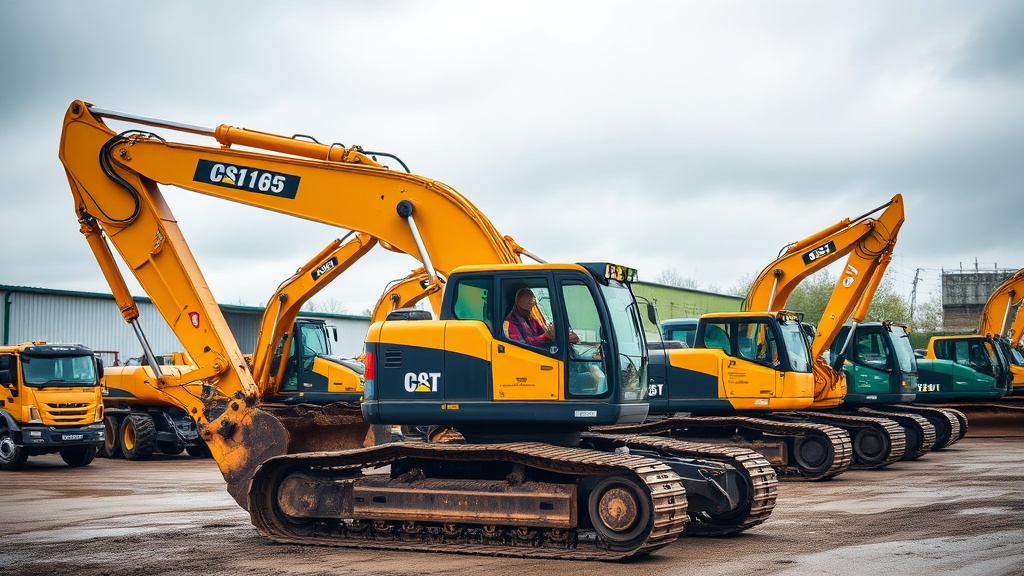
Virtually all construction plant and equipment is eligible for asset finance. Earthmoving equipment includes mini excavators, midi excavators, full-size excavators, bulldozers, scrapers and graders. Lifting equipment includes tower cranes, mobile cranes, telehandlers, MEWPs and scissor lifts. Compaction and road equipment includes road rollers, plate compactors, road planers, asphalt pavers and road sweepers. Concrete equipment includes concrete mixers, concrete pumps, batching plants and shotcrete machines. Temporary works equipment includes piling rigs, sheet piling drivers and ground improvement machinery.
Both new and used equipment is eligible. The construction plant secondary market is one of the most active of any asset class, with established auction houses providing transparent price data. Lenders including Portman Asset Finance specialise in auction purchases and can issue same-day credit decisions for standard applications, which is essential for businesses bidding at plant auctions where payment must be made quickly.
Plant hire companies face the same eligibility criteria as contractors, and asset finance is the primary funding mechanism for most UK plant hire operators building or refreshing their fleets. Hire purchase is particularly well suited to plant hire because the business owns the asset at the end of the agreement and can continue hiring it out, extending the return on the original capital expenditure.
Finance structures for construction businesses
Hire purchase is the dominant product for construction plant. Fixed monthly payments over 24 to 60 months, ownership transfer at term end, and capital allowances eligibility from day one make it the most straightforward and tax-efficient structure for most construction businesses. The Annual Investment Allowance at £1,000,000 per year allows most SME construction businesses to deduct the full cost of plant purchases in year one, providing immediate tax relief even though the cash is paid over multiple years.
Finance lease suits construction businesses that use large plant for defined contract periods and do not want to carry the asset on their balance sheet after the contract ends. The lessee pays for the use of the asset during the primary term and can arrange its sale at the end, receiving most of the proceeds from the lender. This gives flexibility to cycle out plant that is no longer required without the complexity of organising a private sale.
Sale and leaseback is used by construction businesses to release capital from existing plant fleets. A business that has built up an unencumbered plant fleet over several years can sell assets to a lender at market value and lease them back, releasing working capital for new contracts, staff or other investment. The operational use of the plant is unaffected. Portman Asset Finance and Time Finance both offer sale and leaseback on construction plant.
Lenders active in construction finance
Close Brothers Asset Finance operates a dedicated construction division with underwriters who specialise in plant values and depreciation. The division finances excavators, cranes, road plant and specialist construction equipment from £10,000 to £10,000,000, with decisions in 24 to 72 hours. The sector-specialist model gives Close Brothers a pricing advantage for complex or high-value plant where generic credit scoring models would produce less accurate loan-to-value assessments.
Portman Asset Finance is the most accessible specialist for smaller construction businesses and plant hire operators. Facilities from £5,000 with same-day decisions for sub-£100,000 applications, and a focus on yellow plant and used equipment makes Portman competitive for auction purchases and small ticket plant acquisitions. The broker-lender model means pricing varies by funder, but speed and accessibility are consistent strengths.
Shawbrook Bank finances plant and machinery from £25,000 to £5,000,000 as a direct bank lender with PRA regulation, providing certainty of pricing and institutional stability. Aldermore Bank covers construction plant from £5,000 with published rate ranges, providing more pricing transparency than most lenders. For a full comparison of all lenders with FRN numbers, loan ranges and KT Scores, see: Asset Finance UK: The Independent Guide.
Buying construction plant at auction
Auction purchases represent a significant proportion of used construction plant acquisitions in the UK. Major auction houses including Ritchie Bros, Euro Auctions, Dormans, Wilsons Auctions and Plant Planet hold regular sales across the UK, with online bidding now standard alongside physical attendance.
Financing auction plant requires a lender that can move quickly. Most auction houses require payment within 24 to 48 hours of the hammer falling. This makes specialist lenders with same-day decision capability essential for auction buyers; bank lenders with 48-72 hour processing times are not practical for most auction scenarios. Portman Asset Finance and Time Finance both have experience financing auction purchases and can accommodate the payment timescales required.
Pre-approval is the most effective approach for auction buyers. Obtaining a credit pre-approval up to a maximum facility value before attending an auction means the lender has already assessed the borrower's creditworthiness; only the specific asset details need to be submitted after the purchase. Not all lenders offer pre-approval but specialist broker-lenders can often arrange it.
Frequently asked questions
Can I finance construction plant purchased at auction?
Yes. Specialist asset finance lenders including Portman Asset Finance and Time Finance finance plant purchased at auction and can issue same-day credit decisions for standard applications under GBP100,000. This is essential because most auction houses require payment within 24 to 48 hours of purchase. Pre-approval from a lender before attending an auction is the most effective way to ensure funds are available quickly after purchase.
How long can I finance construction plant over?
Construction plant finance terms typically run from 24 to 60 months for standard equipment. Larger cranes, specialist plant and high-value machinery may be available on longer terms of up to 84 months. Longer terms reduce monthly payments but increase total interest cost. The term should reflect the expected working life of the asset and the nature of the contracts it will be used on.
What deposit is required for construction plant finance?
For new plant from an approved dealer, many lenders will finance up to 100 percent of the purchase price with no deposit. For used or older plant, a deposit of 10 to 25 percent is common to reduce the lender's loan-to-value exposure. Auction purchases typically require a deposit from the buyer before the lender will release the balance to the auction house.
Can a plant hire company get asset finance?
Yes. Plant hire companies are a core customer segment for construction asset finance lenders. The hire income generated by the plant provides a clear repayment source, which lenders understand well. Hire purchase is particularly suited to plant hire businesses because ownership transfers at the end of the agreement, allowing the business to continue hiring out the plant and extending the return on the original capital expenditure.
Is there a minimum trading history required for construction plant finance?
Requirements vary by lender. Bank lenders including Shawbrook and Close Brothers typically require a minimum of two years trading history and filed accounts. Specialist non-bank lenders including Portman Asset Finance are more flexible and can consider businesses with shorter trading histories, particularly where the plant provides strong collateral. Start-ups with no trading history will find it more difficult and may need to provide a larger deposit or additional security.
This guide is produced by Kael Tripton Ltd as independent editorial content. No commission is earned from any lender. Kael Tripton Ltd is not FCA-authorised and does not provide financial advice. Contact an FCA-authorised asset finance broker for personalised advice. |
Sources |