
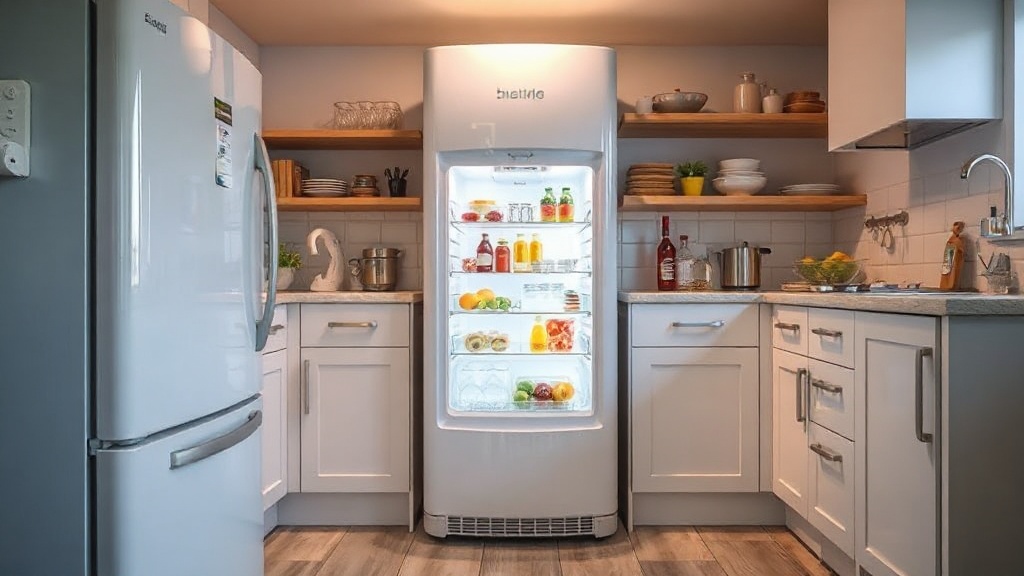
TL;DR. Fridge cover is breakdown protection for the mechanical and electrical failures that contents insurance and an expired warranty do not address. It typically costs around 5 to 12 pounds per month for a single appliance and covers faults such as a failed compressor (150 to 350 pounds), thermostat (80 to 140 pounds) or fan motor (80 to 150 pounds). Integrated and American fridge-freezers raise both repair costs and the case for cover. Food spoilage is sometimes an optional extra. The Consumer Rights Act 2015 gives free protection for newer appliances, so cover is most relevant for machines past their guarantee.
★ Featured Partner · Sponsored
Compare Insurance Quotes
Search and compare quotes from leading UK insurers. Quotezone's panel includes specialist insurers not always on the four major comparison sites.
Compare Quotes →What fridge cover is
Fridge cover is a form of appliance protection that pays for the repair, or where necessary the replacement, of a fridge or fridge-freezer that suffers a mechanical or electrical breakdown. It is the type of fault where a working part simply fails: the compressor stops, the thermostat misreads the temperature, a fan motor seizes, or the control board develops a fault. These failures are exactly the events that a standard home contents policy does not cover, because contents insurance is designed for sudden and accidental events such as fire and flood rather than the gradual or sudden failure of a component through use.
The appliance matters more than most people realise, because a fridge runs continuously, every hour of every day, unlike a washing machine that runs for a few cycles a week. That constant duty cycle is one reason refrigeration components wear, and it is part of why dedicated cover exists for this category of appliance.
How it differs from a warranty and contents insurance
Three forms of protection are easy to confuse, so it is worth separating them clearly. A manufacturer warranty is the free guarantee included with a new fridge, usually one or two years, covering manufacturing defects. Contents insurance covers loss or damage to belongings from insured events such as fire, theft, escape of water and storm, and it can sometimes cover accidental damage to appliances, but it does not cover a fridge that simply breaks down. Fridge cover, or appliance breakdown cover, fills the gap by paying for mechanical and electrical failure once the warranty has ended.
Because contents insurance and fridge cover address different risks, holding one does not make the other redundant. A household with comprehensive contents insurance can still face a 300 pound compressor bill that the contents policy will not touch, which is the specific situation fridge cover is designed for.
Which appliances fridge cover applies to
Fridge cover usually extends across the family of refrigeration appliances rather than a single type. Typical covered items include the standard freestanding fridge, the combined fridge-freezer, the larger American-style fridge-freezer with through-the-door water and ice dispensers, and the integrated fridge built into kitchen units. Some policies cover these under a single appliance entry while others price them differently, because the repair profile varies. American fridge-freezers in particular carry more complex components, and integrated models carry an installation complication that is examined below.
Common fridge faults and repair costs
Understanding the realistic cost of repairs is the foundation of any decision about cover. The table sets out typical UK repair costs for common fridge and fridge-freezer faults, including parts and labour. Costs vary by brand, region and model, and American and integrated models tend toward the higher end.
| Fault | Typical repair cost |
|---|---|
| Compressor failure | 150 to 350 pounds |
| Thermostat fault | 80 to 140 pounds |
| Fan motor | 80 to 150 pounds |
| Door seal (gasket) | 60 to 100 pounds |
| Printed circuit board (PCB) | 120 to 250 pounds |
| Water dispenser fault (American models) | 80 to 160 pounds |
The compressor is both the heart of the appliance and the most expensive common failure, and on some older or sealed-system fridges a compressor fault effectively ends the economic life of the machine. The other faults are more contained, and several, such as a perished door seal, are relatively inexpensive to put right.
What fridge cover costs
Standalone fridge cover typically costs in the region of 5 to 12 pounds per month, with the exact premium depending on the type of appliance, its age, the excess and whether extras such as food spoilage are included. American fridge-freezers usually sit at the upper end because their parts and repairs cost more. Over a year that equates to roughly 60 to 144 pounds, which is more than the cost of several individual repairs such as a door seal or thermostat, and less than a major compressor failure. That spread is the heart of the value question.
Age limits and why they matter
Many fridge cover policies impose an age limit, declining to start cover on an appliance beyond a certain age, often eight or ten years, and sometimes ceasing cover once an appliance passes that threshold. This matters because the appliances most likely to break down are the oldest, which are also the ones policies are most reluctant to cover. A household considering fridge cover for an ageing appliance should check the age limit carefully, since paying premiums on a machine that is approaching the policy age cap can leave it uncovered at exactly the point breakdown becomes most likely.
Integrated versus freestanding and the replacement complication
The distinction between integrated and freestanding fridges has a significant bearing on cover, because of what happens when a machine cannot be repaired. A freestanding fridge that is beyond economic repair can be replaced by simply buying a new appliance and sliding it into place. An integrated fridge is built into the kitchen and fixed behind a cabinet door, so replacement involves removing the old unit, sourcing a model that fits the existing aperture and door fixings, and reinstalling it. That installation complexity raises both the cost and the disruption of replacement, which strengthens the case for cover that includes like-for-like replacement and fitting on integrated models. A policy that pays only a depreciated cash sum may leave an integrated household well short of the true cost of getting a working fridge back into the kitchen.
Food spoilage cover as an optional extra
One feature unique to refrigeration cover is food spoilage protection. When a fridge or freezer fails, the contents can be ruined, and replacing a full freezer of food can run to a meaningful sum. Some fridge cover policies include food spoilage compensation, often in the region of 150 to 300 pounds, either as standard or as an optional extra. The terms vary: some require proof of the breakdown and the value of the spoiled food, and some exclude spoilage caused by a power cut rather than an appliance fault, which may instead fall under a home contents policy. A household that keeps a well-stocked freezer may value this extra more than one that does not.
The case for multi-appliance cover
A standalone fridge policy is not always the cheapest route to protection. Where a household has several ageing white goods, a fridge-freezer alongside a washing machine, a dishwasher and an oven, a multi-appliance policy at roughly 20 to 50 pounds per month can cover them all and often works out cheaper per appliance than separate policies. The trade-off is that a household with only one appliance worth covering gains little from bundling. The decision therefore depends on how many appliances are past their guarantee and how the combined premium compares with the sum of individual policies.
What to check before buying
Before committing to fridge cover, a few checks separate good value from poor. The monthly and annual cost should be compared against realistic repair figures and the age of the appliance. The age limit and any waiting period at the start of cover should be confirmed. The replacement terms matter, especially for integrated and American models: whether the policy provides a like-for-like replacement with fitting, or only a cash contribution. The treatment of food spoilage should be checked if a full freezer is involved. Finally, the Consumer Rights Act 2015 should be borne in mind, because for a newer fridge the statutory claim against the retailer may already cover an inherent fault for free, making paid cover most relevant once a machine is several years old.
Why fridges fail: the continuous duty cycle
Refrigeration appliances are unusual among kitchen white goods in that they never stop working. A washing machine or dishwasher runs for an hour or two at a time and is then idle, but a fridge cycles its compressor on and off around the clock to hold a steady temperature. That constant operation places sustained demand on the compressor, the fans and the thermostat, and it is part of why these components eventually wear. Ambient conditions add to the load: a fridge in a hot kitchen or a garage that swings between cold winters and warm summers works harder than one in a stable indoor environment. Understanding the duty cycle explains both why cover exists specifically for refrigeration and why keeping condenser coils clean and allowing airflow around the appliance can extend its working life.
How a fridge cover claim works in practice
The claims process under a fridge cover policy follows a predictable path. The fault is reported to the provider, usually by phone or through an online portal, with the make, model and a description of the symptoms. The provider arranges for an approved engineer to attend, sometimes within a stated response window depending on the policy tier. The engineer diagnoses the fault and confirms whether it is covered. If it is a covered breakdown, the repair proceeds, with parts and labour met by the policy subject to any excess. If the appliance cannot be economically repaired, the replacement terms of the policy take over. Keeping the policy documents, the appliance details and proof of purchase to hand makes the process smoother, and clarifying the excess before the visit avoids surprises at the point of repair.
Excess and waiting periods
Two policy terms quietly shape value. The excess is the amount the policyholder pays toward each claim, and a low headline premium can conceal a high excess that erodes the benefit on smaller repairs. A policy with a 60 pound excess provides little net benefit on an 80 pound thermostat repair. The waiting period is the time at the start of cover during which claims cannot be made, designed to prevent someone insuring an appliance that has already failed. A common waiting period is a number of weeks. Both terms should be read alongside the premium, because the true cost of a claim is the excess plus the premiums paid, and the true start of protection is the end of the waiting period.
Self-insurance as an alternative
For many households the cheapest long-run approach to fridge protection is to self-insure: to set aside a small sum each month, or simply absorb repairs as they arise, rather than pay a premium. The logic is that a reliable fridge may go years without a major fault, in which case the premiums paid exceed any repair that was avoided. The risk is the occasional expensive failure, such as a compressor, landing before a fund has built up. Self-insurance suits households with an emergency buffer and a relatively new or mid-life appliance, while structured cover suits those who cannot easily absorb a sudden bill or who own an expensive American or integrated model where a single repair or replacement could be substantial.
Energy efficiency and the replacement decision
Energy efficiency feeds into whether to repair an ageing fridge or replace it. A refrigeration appliance runs continuously, so the difference in running cost between an old, inefficient model and a current one can be meaningful over a year. When a major fault such as a compressor failure strikes an older fridge, the choice is not simply between a 300 pound repair and a new appliance, but between continuing to run an inefficient machine and switching to one that costs less to operate. The energy label on modern appliances, which uses a scale from A to G under the current rating system, gives a guide to relative efficiency. For a fridge already several years old, the combination of a costly repair and higher running costs can tilt the balance toward replacement even where the repair alone would be affordable.
Cover for fridges in garages and outbuildings
A point often overlooked is where the fridge is kept. Many households run a second fridge or chest freezer in a garage, utility room or outbuilding, and these locations can affect both reliability and cover. Some appliances are not rated to operate reliably in very cold or very warm ambient temperatures, and a fridge or freezer run outside its rated climate class may struggle to hold temperature, which can be mistaken for a breakdown. A few policies limit or exclude cover for appliances kept outside the main living space, so a household relying on a garage freezer should check that the location is covered. Choosing an appliance rated for a wide ambient temperature range reduces the chance of temperature-related problems in an unheated space.
Disclaimer. This article is general information about consumer rights and appliance cover in the United Kingdom. It is not financial, legal or insurance advice and does not recommend any particular product or provider. Cover terms, prices and statutory provisions change over time and vary between policies. Anyone making a decision about appliance cover, a warranty claim or a consumer rights complaint should read the relevant policy documents in full and, where appropriate, take advice from a qualified adviser or a free service such as Citizens Advice.
Frequently asked questions
What does fridge cover include?
Fridge cover pays for the repair or replacement of a fridge or fridge-freezer that suffers a mechanical or electrical breakdown, such as a failed compressor, thermostat, fan motor or control board. Some policies add food spoilage compensation. It does not cover cosmetic damage or pre-existing faults.
How much does fridge cover cost in the UK?
Standalone fridge cover typically costs around 5 to 12 pounds per month, depending on the appliance type, its age and the excess. American fridge-freezers sit at the higher end because their parts and repairs cost more.
Is fridge cover the same as contents insurance?
No. Contents insurance covers loss or damage from events such as fire, theft and flood, and does not cover a fridge that simply breaks down. Fridge cover is dedicated breakdown protection for mechanical and electrical faults once the warranty has ended.
Does fridge cover include spoiled food?
Sometimes. Food spoilage compensation, often 150 to 300 pounds, is included on some policies as standard and on others as an optional extra. Terms vary, and spoilage from a power cut rather than an appliance fault may fall under a home contents policy instead.
Is fridge cover worth it for an integrated fridge?
It can be, because an integrated fridge that cannot be repaired is more expensive and disruptive to replace than a freestanding one. Cover that includes a like-for-like replacement with fitting is more valuable for integrated models than a policy that pays only a depreciated cash sum.


