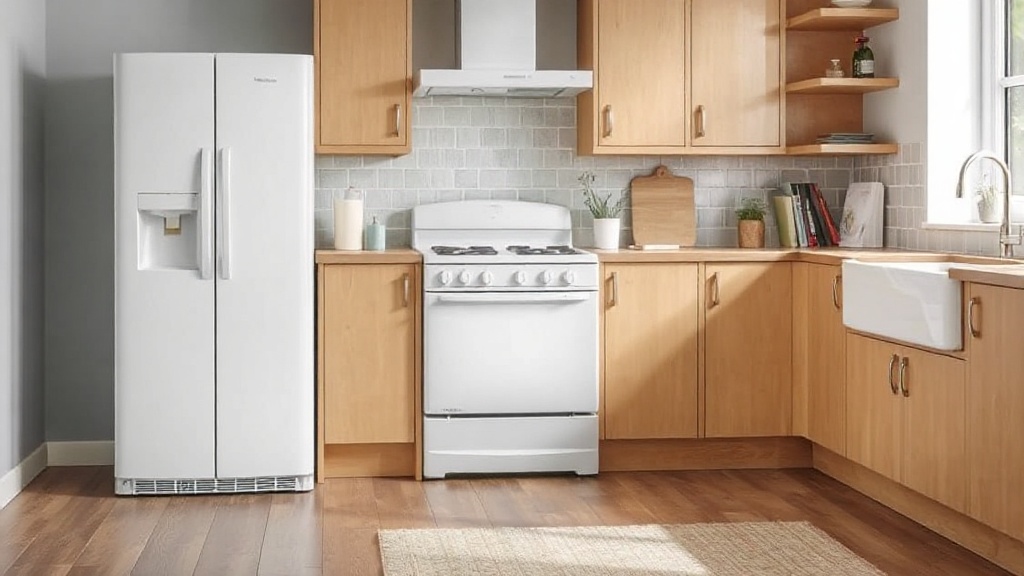
TL;DR: Home appliance cover pays for the repair or replacement of household appliances when they break down. It sits in a gap that neither buildings nor contents insurance fills, since both policies typically exclude mechanical and electrical breakdown. Whether cover is worth buying depends on how many appliances you own, their age, and whether you prefer predictable monthly costs over building a dedicated emergency fund instead.
★ Featured Partner · Sponsored
Compare Insurance Quotes
Search and compare quotes from leading UK insurers. Quotezone's panel includes specialist insurers not always on the four major comparison sites.
Compare Quotes →What Home Appliance Cover Actually Is
Home appliance cover -- sometimes marketed as white goods insurance or a breakdown plan -- is a service contract that pays a repairer or supplier when a covered household appliance stops working due to mechanical or electrical failure. Policies are sold by specialist providers such as Domestic and General, HomeServe, and Warrantywise, as well as by energy companies and some retailers. Cover is usually structured as either a single-appliance plan or a multi-appliance package covering several devices under one monthly premium.
The core promise is straightforward: if a covered appliance breaks down after the manufacturer warranty has expired, the provider arranges an engineer visit and covers the cost of parts and labour, up to a stated annual claim limit. Some plans also cover call-out charges, which can add significantly to a repair bill if you pay out of pocket.
It is important to understand what this product is not. Home appliance cover is not a guarantee of replacement. Most plans repair first and only offer a replacement contribution if the appliance is uneconomical to fix, typically when the repair cost exceeds a set percentage of the appliance's current value or the plan's benefit limit.
The Gap That Appliance Cover Fills
Most households assume their existing insurance policies provide a broader safety net than they actually do. Understanding where buildings and contents cover stop is essential to understanding where appliance cover begins.
Buildings insurance protects the structure of your home, including permanent fixtures such as fitted kitchens and bathroom suites, against events like fire, flood, and subsidence. It does not cover the appliances inside those fixtures. A flooded kitchen might see the fitted units and floor tiles paid for under a buildings claim, but a washing machine destroyed by the same flood could fall under contents insurance rather than buildings -- and the circumstances matter.
Contents insurance covers your belongings against defined perils: theft, fire, accidental damage (if selected as an add-on), and similar events. What contents cover explicitly excludes in almost every standard policy is mechanical breakdown. If your fridge compressor fails because the motor has worn out over years of normal use, that is a breakdown, not a peril. The insurer owes nothing. The Association of British Insurers notes that standard home insurance policies are designed to cover sudden, unexpected events caused by an external cause, not gradual deterioration or internal failure of components.
The result is a clear protection gap. The average UK household contains six or more major appliances, each with a finite mechanical lifespan. Once the manufacturer warranty expires -- typically after one or two years -- the owner bears the full cost of any repair or replacement. Home appliance cover is the product designed to fill that gap, converting an unpredictable repair bill into a known monthly outgoing.
Which Appliances Are Typically Covered
Coverage varies between providers, but most plans include some combination of the following categories:
White goods are the most commonly covered category: washing machines, tumble dryers, washer-dryers, dishwashers, fridge-freezers, fridges, and freezers. These are high-value appliances with mechanical complexity, making them the most frequent source of costly repairs.
Cooking appliances including electric ovens, gas hobs, range cookers, and built-in microwaves appear on many multi-appliance plans. Standalone microwaves are sometimes excluded due to their low replacement value.
Small domestic appliances such as coffee machines and vacuum cleaners are covered by some plans but excluded by others. Providers that include them often impose a lower claim limit for this category.
A number of appliances fall outside scope even on comprehensive plans. These typically include portable heaters, air conditioning units (unless permanently installed), garden equipment, and any appliance used for a commercial purpose. Landlords should note that some residential policies also exclude properties used as a house of multiple occupation without a specific landlord add-on.
Inclusion Tiers and What They Mean
Providers structure their plans in tiers to allow customers to match cover level to budget and need. The most common tier distinctions are:
Repair-only plans cover the cost of an engineer visit, parts, and labour. If the appliance cannot be repaired, the plan may offer a contribution toward a replacement rather than funding the full cost. This is the most affordable tier and suits households where appliances are mid-life and likely repairable.
Repair-or-replace plans guarantee either a working repair or a replacement appliance if the breakdown cannot be fixed. Replacement may be like-for-like or subject to a maximum benefit cap, so reading the policy wording is important. Domestic and General, which administers many retailer-linked plans, sets these caps by appliance category.
Comprehensive plans add extras such as annual servicing for certain appliances, coverage during the manufacturer warranty period (so the same provider handles both periods), and no-excess call-out. Some combine boiler cover with appliance cover, discussed separately below.
Most providers require that the appliance is under a certain age at the point of taking out the plan. Common upper age limits are eight to ten years for white goods, though some specialist providers will cover older appliances at a higher premium or with a capped benefit.
Common Exclusions to Know Before Buying
Understanding exclusions is as important as understanding what is covered. The most frequently cited exclusions across UK home appliance policies include:
Cosmetic damage: Scratches, dents, broken door handles, and damaged seals are not covered unless the provider offers a specific cosmetic add-on. Cover is for functional breakdown only.
Accidental damage: If you drop your washing machine during a house move and it no longer spins, that is accidental damage -- a separate product category. Standard breakdown cover will not apply.
Pre-existing faults: Policies include declarations that the appliance was in good working order at inception. A fault present before the policy started is excluded, and some providers include an initial exclusion period of 14 to 30 days to prevent claims on already-failing appliances.
Consumable parts: Items expected to wear and be replaced in normal use, such as washing machine drum paddles, door gaskets, and dishwasher spray arm jets, are excluded by many plans. Check the policy schedule carefully if these components concern you.
Damage caused by misuse or pests: Operating an appliance contrary to the manufacturer's instructions, or damage caused by rodents chewing cables, is typically excluded.
What Repairs Actually Cost in the UK
Repair costs vary by appliance type, fault severity, and whether parts need to be ordered. The table below gives indicative ranges based on typical engineer charges in England and Wales as of 2025 to 2026. These figures combine call-out fees, labour, and common replacement parts.
| Appliance / Fault | Typical repair cost (parts + labour) | Single-appliance cover (monthly) | Months to break even on one repair |
|---|---|---|---|
| Washing machine drum bearings | GBP 140 to GBP 270 | GBP 5 to GBP 10 | 14 to 54 months |
| Washing machine PCB or control board | GBP 150 to GBP 300 | GBP 5 to GBP 10 | 15 to 60 months |
| Fridge-freezer compressor | GBP 150 to GBP 300 | GBP 6 to GBP 12 | 13 to 50 months |
| Dishwasher pump or motor | GBP 100 to GBP 200 | GBP 5 to GBP 10 | 10 to 40 months |
| Electric oven element | GBP 80 to GBP 150 | GBP 5 to GBP 8 | 10 to 30 months |
| Tumble dryer heating element | GBP 90 to GBP 160 | GBP 5 to GBP 8 | 11 to 32 months |
| Multi-appliance plan (3 to 5 appliances) | N/A | GBP 20 to GBP 45 | N/A -- covers multiple repair events |
The break-even figures in the table illustrate an important point: for any single appliance, you will pay more in premiums than the cost of a typical repair if that appliance only needs one repair in its remaining lifetime. The financial case for cover strengthens when you factor in multiple appliances, unpredictable fault timing, and the convenience of a managed repair service rather than searching for a reputable engineer independently.
When Cover Is Most Likely to Be Worth the Cost
Three household profiles tend to get the clearest value from appliance cover.
Households with three or more appliances past their manufacturer warranty. Once you own several appliances that are three or more years old, the statistical probability of at least one breakdown in any given year rises meaningfully. A multi-appliance plan at GBP 20 to GBP 35 per month can cover several repair events per year, making the maths more favourable than it would be for a single, relatively new appliance.
Families with young children. Households where the washing machine, dryer, and dishwasher run at or near maximum capacity daily experience faster component wear. Higher usage increases fault frequency and makes a repair subscription more likely to pay out.
Landlords with rental properties. A private landlord has repair obligations under the Landlord and Tenant Act 1985, which requires that installations for the supply of water, gas, electricity, and for sanitation are kept in repair and proper working order. While appliances are not always captured by this exact duty depending on the tenancy agreement, most landlords accept responsibility for white goods they supply. A breakdown plan transfers the administrative and financial burden of organising repairs to the provider, which can be valuable when managing multiple tenancies or properties at a distance. The Renters (Reform) Act and ongoing regulatory changes are increasing landlord obligations, making reliable appliance cover more practically relevant.
The Self-Insurance Alternative
The structurally honest alternative to any insurance or cover product is self-insurance: setting aside money in a dedicated savings pot and drawing on it when a repair is needed. For many households, particularly those with newer appliances and financial resilience, this is the rational choice.
Sizing an appliance emergency fund requires estimating expected repair frequency and cost. As a practical starting point, the average UK household appliance costs approximately GBP 150 to GBP 200 to repair when it fails, based on industry data from the repair sector. If a household owns six major appliances and each might fail once in a seven-year post-warranty life, the expected total repair outlay is roughly GBP 900 to GBP 1,200 spread over seven years, or approximately GBP 130 to GBP 170 per year.
A dedicated appliance fund of GBP 500 to GBP 800 held in an easy-access savings account would cover most single repair events without stress. Because the fund earns interest while idle, the effective cost is lower than paying a monthly premium that generates no return. The Financial Conduct Authority's guidance on general insurance emphasises that consumers should assess whether the cost of cover represents fair value given their own circumstances -- this principle applies directly to the self-insurance question.
Self-insurance is less suited to households that cannot comfortably set aside the initial lump sum, those who have already used their savings for other purposes, and those who place high value on the convenience of a single phone call rather than sourcing a repair engineer independently. It is also less suited to renters who move frequently and may not be able to build the fund back up between moves.
The key discipline with self-insurance is ring-fencing the pot. Money held in a general current account tends to drift toward other spending. A named sub-account or a fixed-term savings account with scheduled deposits preserves the fund's purpose.
Combined Boiler and Appliance Packages
A growing number of providers, including British Gas HomeServe, Eon, and several independent specialists, offer bundled plans that cover both the central heating boiler and a set of household appliances under one monthly payment. These packages typically cost GBP 30 to GBP 60 per month depending on the level of appliance cover included and whether the boiler element provides repair-only or full replacement.
The appeal of bundled plans is administrative simplicity and a potentially lower per-element cost compared with buying boiler cover and appliance cover separately. The risk is that bundling can obscure whether each component represents good value independently. A household whose boiler is under three years old and still under manufacturer warranty is subsidising boiler cover it is unlikely to need in the near term, in exchange for appliance cover it may value more.
Citizens Advice recommends comparing bundled and unbundled options directly rather than assuming the bundle is cheaper. Providers sometimes use a low headline bundle price to attract customers who do not separately price the components. The FCA's product value rules, which apply to general insurance products under the Consumer Duty framework introduced in 2023, require providers to demonstrate that products offer fair value -- making it more likely that bundled pricing is more transparent than it has historically been, though comparisons remain the consumer's own responsibility.
When evaluating a bundled plan, check whether the boiler component includes an annual service, whether there is a no-claims benefit or penalty structure, and what the appliance age limit is. Some bundled plans restrict appliance coverage to appliances under seven years old even if the boiler component has no age restriction.
How to Assess Whether You Need Cover
A structured approach is more useful than a generic answer. Start by listing every major appliance in the household and noting its age and whether it is still within its manufacturer warranty. Appliances within warranty do not need separate cover today, though some providers allow you to lock in cover now to continue seamlessly when the warranty ends.
Next, total the replacement cost of all appliances past warranty. This is the maximum financial exposure you face if everything fails simultaneously -- an unlikely scenario, but a useful ceiling. If that figure is manageable relative to your savings and monthly cash flow, self-insurance may be sufficient.
Consider also the practicalities in your household. If losing the washing machine for a week while you source and wait for an independent engineer would cause genuine disruption -- because of young children, disability, a busy working schedule, or a lack of nearby launderettes -- the convenience value of a managed cover plan has real worth beyond the pure financial calculation.
Finally, compare the cost of cover against what you would realistically set aside. If a multi-appliance plan costs GBP 25 per month and you would not consistently save that same GBP 25 into a dedicated emergency pot, the cover plan may in practice deliver better financial protection even if it is theoretically more expensive on a pure expected-value basis.
Regulatory Context and Consumer Protections
Home appliance cover products marketed as insurance are regulated by the Financial Conduct Authority under the Financial Services and Markets Act 2000. Regulated products must comply with the FCA's Consumer Duty, which requires firms to act in the interests of retail customers and deliver fair value. Consumers who feel a claim has been mishandled can refer to the Financial Ombudsman Service.
Some appliance plans are sold as service contracts or maintenance agreements rather than insurance. These are not FCA-regulated products, which means the consumer protections that apply are narrower. A service contract provides contractual rights enforceable under the Consumer Rights Act 2015, but the Financial Ombudsman Service has no jurisdiction if a dispute arises. Before purchasing, check whether the product is regulated: providers selling regulated insurance must display their FCA firm reference number, which can be verified on the FCA's Financial Services Register.
The Consumer Rights Act 2015 also gives buyers of new appliances rights against the retailer for up to six years (five in Scotland) in respect of goods that are not of satisfactory quality, fit for purpose, or as described. These statutory rights are separate from and additional to any warranty or cover plan, and they do not require the consumer to pay an additional premium.
Important: This article is general information about UK home appliance and home cover and does not constitute financial, insurance or legal advice. Policy terms, prices and statutory entitlements change over time and vary between providers. Always read the full policy documents and the relevant guidance from a qualified adviser or the named primary sources before making a decision.
Frequently asked questions
Does my home contents insurance cover appliance breakdown?
Standard contents insurance policies in the UK do not cover mechanical or electrical breakdown. Contents cover protects against defined perils such as fire, theft, and flood. A washing machine that stops working because of worn bearings or a failed control board is a breakdown caused by internal wear, which falls outside the scope of a standard contents policy. Some policies offer accidental damage as an optional add-on, but that covers sudden physical accidents, not gradual mechanical failure. You would need a separate home appliance cover plan to be protected against breakdown.
Can I take out appliance cover on a second-hand appliance?
Some providers will cover second-hand or pre-owned appliances, but most impose an age limit -- commonly eight to ten years from the appliance's original manufacture date rather than the date you acquired it. Providers may also require a check or service before issuing cover to confirm the appliance is in good working order at inception, since pre-existing faults are excluded. It is worth contacting providers directly with the appliance's model and manufacture date before applying, as age limits and pre-inspection requirements vary considerably.
Is there a waiting period before I can make a claim?
Many home appliance cover plans include an initial exclusion period, typically 14 to 30 days from the policy start date, during which claims cannot be made. This prevents the plan being taken out on an appliance that is already breaking down. If an appliance is added to an existing multi-appliance policy partway through the year, the exclusion period usually applies from the date the appliance is added. Always check the policy schedule for the exact waiting period, as some providers waive it for appliances transferred directly from an expiring manufacturer warranty.
What happens if my appliance cannot be repaired?
If an engineer assesses the appliance as beyond economical repair, the outcome depends on the plan tier. Repair-only plans typically offer a cash contribution toward a replacement, often calculated as a percentage of the appliance's current market value or a fixed sum stated in the policy schedule. Repair-or-replace plans will arrange a replacement appliance, though this may be a model of equivalent specification rather than the exact brand or model you owned. Check whether the plan covers delivery and installation of a replacement, as these costs can add GBP 50 to GBP 100 to the overall expense if not included.
How does appliance cover work for landlords?
Landlords can take out appliance cover plans specifically designed for rental properties. These typically differ from residential plans in allowing the tenant to log calls directly with the provider and in covering appliances across multiple properties under one account. Some providers offer a landlord-specific plan that combines appliance cover with boiler and central heating cover, which can simplify administration. Before purchasing, confirm that the policy covers the appliance during periods when the property is unoccupied between tenancies, and whether there is any restriction on the number of tenancies or occupants in the property.
Sources and further reading
- Association of British Insurers -- Home Insurance overview, explaining what standard buildings and contents policies cover
- Financial Conduct Authority -- consumer guidance on home insurance, including what is and is not typically covered
- Citizens Advice -- guidance on service contracts, consumer rights, and resolving disputes with service providers
- Consumer Rights Act 2015 -- statutory rights applying to goods and services purchased in the UK
- Landlord and Tenant Act 1985, section 11 -- repairing obligations of landlords in respect of installations
- FCA Financial Services Register -- tool for verifying whether an appliance cover provider holds FCA authorisation


