
TL;DR. Oven insurance cover protects single and double electric ovens, gas ovens, range cookers and combination ovens against mechanical and electrical breakdown, typically for around 5 to 12 pounds per month. It pays for callout, labour, parts and, where a repair is not viable, replacement. Gas oven repairs require a Gas Safe registered engineer, and built-in ovens are more costly to replace than freestanding ones. Repairs range from an 80 pound element to a 200 pound control board. Most ovens carry a one to two year warranty, and the Consumer Rights Act 2015 provides free protection for newer appliances, so cover matters most once a machine is past its guarantee.
★ Featured Partner · Sponsored
Compare Insurance Quotes
Search and compare quotes from leading UK insurers. Quotezone's panel includes specialist insurers not always on the four major comparison sites.
Compare Quotes →What oven insurance cover includes
Oven insurance cover is a form of appliance protection that responds when a cooking appliance breaks down through a mechanical or electrical fault. The cover bundles together the elements that make up a repair so that the policyholder faces a predictable cost rather than an unexpected bill. In a typical policy that means the engineer callout is included, the labour to diagnose and carry out the repair is met, and the replacement parts needed to put the appliance right are supplied. Where the oven cannot be economically repaired, the policy moves to its replacement terms, providing either an equivalent appliance or a contribution toward a new one. The detail that matters most when comparing policies is the excess payable per claim and whether replacement is like-for-like with fitting or merely a depreciated cash sum.
Cover is concerned with the failure of the appliance itself, not with external damage. That distinction is what separates it from a home contents policy, which responds to insured perils such as fire and flood but not to an oven that simply stops working because a component has worn out. The two products are complementary, and a household can hold both without overlap.
What oven insurance cover excludes
Knowing the exclusions is as important as knowing the cover, because most disappointed claims arise from a misunderstanding of the boundaries. Cosmetic damage such as scratches, chipped enamel and discoloured door glass is excluded, since it does not affect the appliance's ability to cook. Misuse is excluded, including damage from abrasive cleaning, from running the oven contrary to the manufacturer's instructions, or from physical impacts. Consumables such as bulbs and shelves, and routine maintenance, fall outside cover. Pre-existing faults that were present before the policy started are not covered, which is why a claim made very early in a policy may be declined. Many policies impose an age limit, declining to insure an oven beyond a certain age, and most include a waiting period at the start during which no claim can be made.
Types of oven covered
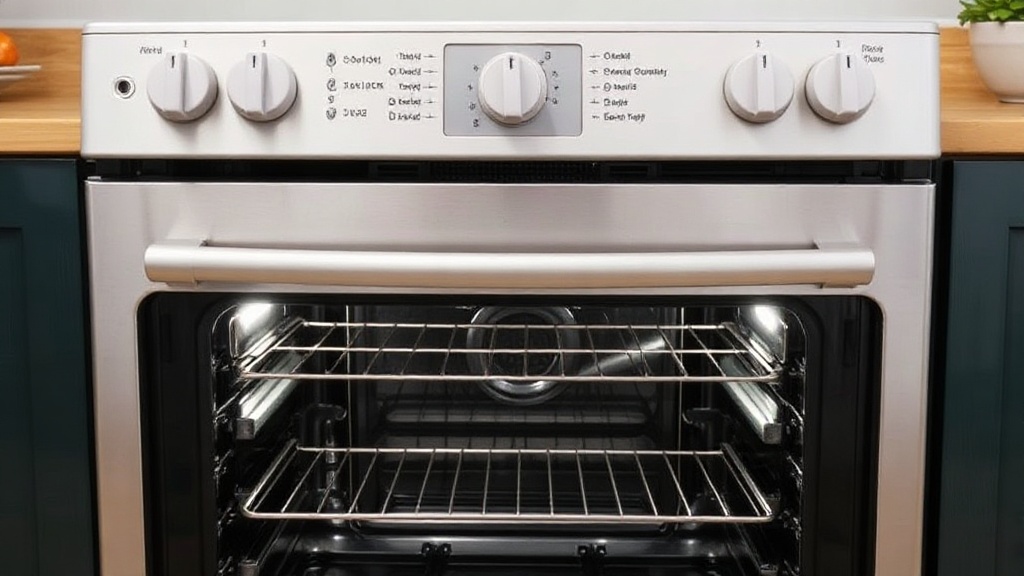
Oven insurance cover usually spans the full range of cooking appliances found in UK kitchens, though the exact list should be confirmed in the policy wording. A single electric oven is the simplest format. A double electric oven adds a second cavity, often with a separate grill, and therefore more components. A gas oven introduces the safety requirements discussed below. A range cooker combines multiple ovens and a large hob in one substantial appliance, frequently as a dual-fuel unit. A combination microwave oven pairs conventional cooking with microwave functionality, and a built-in oven is integrated into kitchen units. Each format carries a different repair and replacement profile, which feeds directly into the cost of cover and the value calculation.
Faults covered and not covered
The covered faults are mechanical and electrical failures: a heating element that stops working, a thermostat that misreads the temperature, a fan that seizes, a control board that fails, a gas valve or ignition that will not light. These are the events where a working component fails through use, and they sit at the centre of what oven cover is designed to address. The faults that are not covered are those caused by cosmetic damage, misuse, neglect, consumables and external events. A door glass cracked by an impact, an element damaged by abrasive cleaning, or a fault arising from a power surge would typically fall outside cover, while the same component failing through ordinary wear would be covered.
Repair costs by oven type
The case for or against cover rests on the cost of the repairs it would fund. The table sets out typical UK repair costs across oven types, including parts and labour. Costs vary by brand, model and region, and gas and range cookers tend toward the higher end because of the additional safety work and the number of components.
| Fault | Typical repair cost |
|---|---|
| Heating element | 80 to 150 pounds |
| Thermostat | 70 to 140 pounds |
| Fan motor | 70 to 130 pounds |
| Printed circuit board (PCB) | 100 to 200 pounds |
| Gas valve | 80 to 150 pounds |
| Gas ignition | 60 to 120 pounds |
The pattern is the familiar one for white goods: a set of contained, affordable repairs and one or two expensive failures. On an electric oven the element is the most common fault and the board the most expensive, while on a gas oven the valve and ignition carry both a parts cost and the requirement of a qualified engineer.
What oven insurance cover costs
Standalone oven cover typically costs around 5 to 12 pounds per month, which is roughly 60 to 144 pounds per year. The premium depends on whether the oven is gas or electric, freestanding or built-in, its age and the excess. Set against the repair table, the annual premium exceeds several of the cheaper repairs outright and is comparable to a single control board failure. That relationship between the premium and the realistic repair cost is the heart of the value question, and it shifts with the type, age and price of the oven.
Gas versus electric oven cover
The difference between gas and electric ovens runs through cover in two ways. First, gas appliances introduce a legal requirement: any work on a gas appliance in Great Britain must be carried out by an engineer on the Gas Safe Register, the official list of engineers permitted to work on gas. This is a safety matter, because a badly repaired gas appliance can leak gas or produce carbon monoxide. Second, gas faults such as a faulty valve or ignition carry both a parts cost and the cost of a qualified engineer, and they cannot safely be addressed as a do-it-yourself repair. The combined effect is that cover tends to be more attractive for a gas oven than for a simple electric one, because the repair route is narrower and the safety stakes are higher. A household insuring a gas oven should confirm that the policy dispatches Gas Safe registered engineers.
Built-in versus freestanding ovens
Whether an oven is built-in or freestanding has a significant bearing on cover because of what happens when replacement becomes necessary. A freestanding cooker that is beyond economic repair can be removed and replaced with relative ease and modest installation cost. A built-in oven is fitted into a housing unit, connected to the supply and sized to a specific aperture, so replacing it means finding a model that fits the existing housing and connections and having it installed, with a gas model requiring a Gas Safe engineer. That additional cost and disruption strengthens the case for cover that includes a like-for-like replacement with fitting on built-in ovens. A policy that pays only a depreciated cash sum may leave a household with a built-in oven well short of the true cost of restoring a working appliance to the kitchen.
Manufacturer warranty context
New ovens are generally supplied with a manufacturer warranty of one to two years, with some premium models offering longer cover on registration. During that period a manufacturing defect is repaired free by the brand, so paid oven cover taken out at the same time largely duplicates protection the household already holds. The strongest case for insurance is therefore in the years after the warranty has ended. Registering the appliance, keeping the receipt and noting the model and serial number make any warranty claim straightforward and confirm when cover started.
Consumer Rights Act 2015 as free protection
Statutory rights provide a layer of free protection that exists regardless of any insurance. Under the Consumer Rights Act 2015 an oven must be of satisfactory quality and durable, and a claim can be made against the retailer for up to six years in England, Wales and Northern Ireland (five in Scotland) where an inherent fault can be shown. In the first six months a fault is presumed to have been present at sale, which makes early claims straightforward. An oven that fails prematurely because of a manufacturing weakness may therefore be a retailer matter rather than an insurance claim, and this free cover makes paid insurance most relevant once an oven is several years old.
Standalone cover versus a multi-appliance policy
An oven is rarely the only appliance a household relies on, and standalone cover is not always the cheapest route. Where a kitchen contains several ageing appliances, a multi-appliance policy at roughly 20 to 50 pounds per month can cover the oven alongside a washing machine, fridge-freezer and dishwasher, often working out cheaper per appliance than separate policies. The trade-off is that a household with only one appliance worth covering gains little from bundling and may pay for cover on items that do not need it. The decision rests on how many appliances are past their guarantee, their combined replacement value, and how the bundled premium compares with the sum of individual policies.
The value calculation by oven age and price
The decision to insure an oven comes down to a calculation combining premium, repair risk, age and replacement price. For a new oven under warranty and statutory protection, paid cover largely duplicates existing rights. For an oven in its middle years, the warranty has ended, statutory claims are harder to evidence and breakdown risk is rising, which is the period where cover is most defensible, particularly for a gas or built-in model. For an oven near the end of its life an age limit may bar cover anyway. Price matters too: insuring an inexpensive freestanding electric oven, where replacement is cheap and a do-it-yourself element change is feasible, is harder to justify than insuring an expensive built-in or range cooker where a single repair or replacement could be substantial.
How an oven cover claim is handled
The claims process under an oven cover policy is straightforward in outline. The fault is reported to the provider with the make, model and a description of the symptoms, whether the oven is failing to heat, heating unevenly, tripping the electrics or, in the case of a gas model, failing to ignite. The provider arranges for an approved engineer to attend, with a gas appliance requiring a Gas Safe registered engineer. The engineer diagnoses the fault and confirms whether it is covered. If it is a covered breakdown, the repair proceeds with parts and labour met by the policy subject to any excess. If the oven is beyond economic repair, the replacement terms apply. Keeping the policy documents, the appliance details and proof of purchase to hand, and confirming the excess before the visit, keeps the process simple.
Excess, waiting periods and claim limits
Several terms in the small print determine what oven cover is genuinely worth. The excess is the contribution the policyholder makes to each claim, and a high excess can cancel out the benefit on a cheaper repair such as a heating element. The waiting period is the time at the start of cover during which no claim can be made, which prevents anyone insuring an oven that has already failed. Claim limits may cap either the number of callouts in a year or the total value of repairs the policy will fund. Reading these terms alongside the premium is the only reliable way to compare two policies that look alike on headline price, because the real cost of a claim is the excess plus the premiums paid, and real protection begins only when the waiting period ends.
Reducing the chance of an oven fault
Some oven faults can be reduced by sensible use. Cleaning spills promptly and avoiding abrasive products protects the element and the interior. Not slamming the door preserves the hinges and the seal, two of the more common mechanical failures. Using the oven within its intended limits, rather than as a substitute for a hob or grill it was not designed for, reduces stress on the components. For gas ovens, a periodic check by a Gas Safe engineer is both a safety measure and a way to catch developing faults early. None of this prevents a genuine component failure, but it reduces the chance that a fault is attributed to misuse and excluded from cover.
Self-insurance and the do-it-yourself option
For some households the cheapest long-run approach is to self-insure, setting aside a small monthly sum or simply paying for repairs as they arise. This is most attractive for a simple electric oven, where a heating element is often the only likely fault and can sometimes be changed by a competent person at the cost of the part alone. For gas ovens the do-it-yourself option does not apply, because gas work is legally restricted to Gas Safe registered engineers, which narrows the saving available from self-insurance. The balance therefore tilts toward structured cover for gas, range and built-in ovens, where repairs are costlier and the repair route is narrower, and toward self-insurance for a simple, inexpensive electric oven owned by a household with an emergency buffer.
Disclaimer. This article is general information about consumer rights and appliance cover in the United Kingdom. It is not financial, legal or insurance advice and does not recommend any particular product or provider. Cover terms, prices and statutory provisions change over time and vary between policies. Anyone making a decision about appliance cover, a warranty claim or a consumer rights complaint should read the relevant policy documents in full and, where appropriate, take advice from a qualified adviser or a free service such as Citizens Advice.
Frequently asked questions
What does oven insurance cover include?
It includes the engineer callout, labour and replacement parts for a mechanical or electrical breakdown, and a replacement where the oven cannot be economically repaired. It excludes cosmetic damage, misuse, consumables, pre-existing faults and appliances beyond the policy age limit.
Do gas and electric oven cover differ?
Yes. Gas oven repairs must be carried out by a Gas Safe registered engineer for safety reasons, and gas faults cannot be addressed as a do-it-yourself repair, which makes cover more attractive for gas ovens. Electric oven faults such as a heating element are simpler and sometimes cheaper to address.
Is cover more important for a built-in oven?
It can be, because a built-in oven that cannot be repaired is more expensive and disruptive to replace than a freestanding one. Cover that includes a like-for-like replacement with fitting is more valuable for built-in ovens than a policy paying only a depreciated cash sum.
How much does oven insurance cover cost?
Standalone oven cover typically costs around 5 to 12 pounds per month, depending on whether the oven is gas or electric, freestanding or built-in, its age and the excess.
When is oven insurance cover worth it?
It is most defensible for a gas or built-in oven past its warranty, and for households that cannot easily absorb a sudden repair bill. It is least worthwhile for a new oven under warranty or an inexpensive freestanding electric oven where replacement is cheap.


