
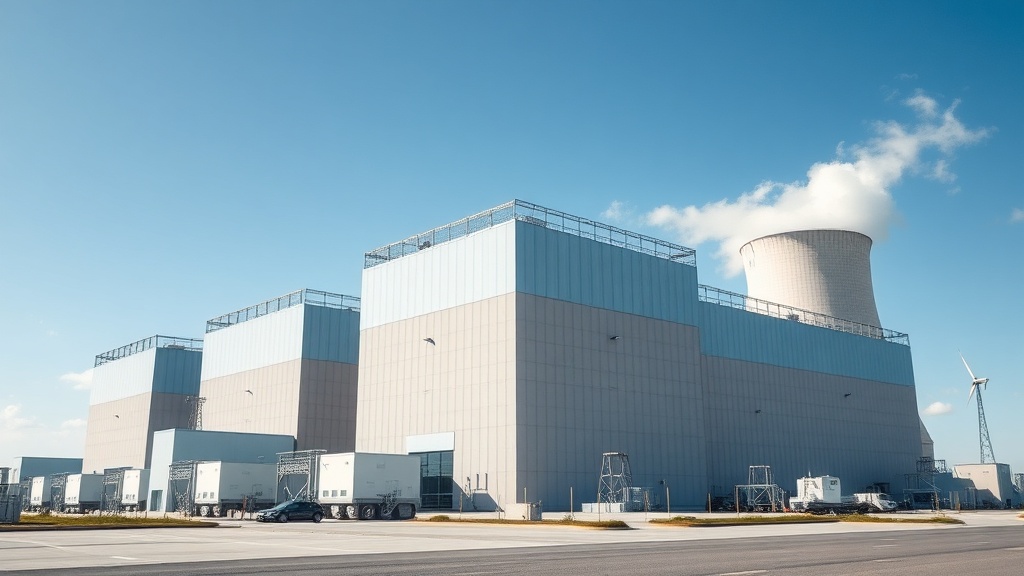
Energy
SGE submitted plans on 1 July 2026 for 14 small modular reactors across three UK sites, using the GE Vernova Hitachi BWRX-300 design, for a combined 4.2 gigawatts of capacity, equivalent to around 11% of UK power demand. This is a separate, privately financed project from the government's existing Rolls-Royce SMR programme at Wylfa. First commercial operation is targeted for 2034.
Last reviewed 3 July 2026
The BWRX-300 design has already passed Step 2 of the UK's Generic Design Assessment with no safety shortfalls identified. SGE expects the project to enter the government's Advanced Nuclear Pipeline in November 2026, with site selection and funding negotiations completed by mid-2027, well before any construction begins.
Key Facts
- 14 reactors proposed across 3 UK sites, combined capacity 4.2GW (~11% of UK power demand)
- Uses the GE Vernova Hitachi BWRX-300 design, already under construction in Ontario, Canada
- Separate project from the government's Rolls-Royce SMR programme at Wylfa, North Wales
- BWRX-300 completed Step 2 of the UK Generic Design Assessment in December 2025, no shortfalls found
- SGE expects entry to the Advanced Nuclear Pipeline in November 2026, funding decisions by mid-2027
- First commercial operation targeted for 2034 — no confirmed impact on bills yet
What was submitted, and by whom
On 1 July 2026, SGE, a Warsaw-headquartered small modular reactor development platform, submitted plans to build 14 small modular reactors across three sites in the UK. The proposed fleet would use the GE Vernova Hitachi BWRX-300 design and deliver a combined capacity of 4.2 gigawatts, which SGE says is equivalent to around 11 per cent of UK power demand, or enough electricity for roughly 8 million homes. SGE has set up a dedicated UK project vehicle, SGE SMR UK Limited, to take the proposal forward, with delivery partners including GE Vernova Hitachi, Samsung, Laing O'Rourke, Aecon, Google and Etara.
How this differs from the Rolls-Royce SMR programme
This is a separate project from the UK government's existing SMR programme, in which Rolls-Royce SMR was selected in 2025 as the preferred technology partner for Great British Energy-Nuclear, backed by £2.6 billion of Spending Review funding and up to £599 million from the National Wealth Fund, with three units planned for Wylfa in North Wales generating at least 1.4 gigawatts. SGE's proposal is a distinct, privately financed programme using different reactor technology, though the two projects would sit within the same UK Advanced Nuclear Framework and regulatory process.
The GE Vernova Hitachi BWRX-300 design completed Step 2 of the UK's Generic Design Assessment in December 2025, a review conducted jointly by the Office for Nuclear Regulation, the Environment Agency and Natural Resources Wales, which found no fundamental safety, security, safeguards or environmental shortfalls that would prevent deployment in England and Wales. The regulators described it as the quickest Generic Design Assessment engagement completed to date. A version of the same design is already under construction in Ontario, Canada, where it is on track to become the first SMR to operate anywhere in the OECD.
How SGE says the project will be funded
SGE describes the programme as privately financed, delivered under a Contract for Difference framework with engagement from the National Wealth Fund, and states there will be no charges to consumers before the plants begin operating. The company expects the project to enter the government's Advanced Nuclear Pipeline in November 2026, with site selection and government support scheme negotiations completed in the first half of 2027. Major investment, site preparation and licensing work would then begin roughly a year after that, with the first unit targeted for commercial operation in 2034.
What this means for UK energy costs and supply
The proposal adds to a growing pipeline of UK nuclear capacity intended to reduce reliance on fossil fuel generation and strengthen domestic energy security, alongside Sizewell C, Hinkley Point C and the Rolls-Royce SMR programme. Because SGE's project has only just entered the formal pipeline and has not yet secured a site, planning permission or a final investment decision, none of its projected costs or capacity have translated into a confirmed impact on consumer energy bills, and first power is not expected before 2034.
Related Guides
This article is for general information only and is not personalised financial, tax or legal advice. Rules and figures change; always check the primary source and, where relevant, speak to a qualified adviser before making a decision based on this content.


