|
★ Featured Partner · Sponsored Compare Insurance Quotes Search and compare quotes from leading UK insurers. Quotezone's panel includes specialist insurers not always on the four major comparison sites. Compare Quotes → |
In short
- Indicative annual premium range for a healthy adult Domestic Shorthair cat in the UK typically sits below the ABI 2024 market average of £389, often between £150 and £320 depending on postcode, age at inception and excess.
- "Domestic Shorthair" is not a pedigree breed: the term describes the non-pedigree, mixed-ancestry cats that make up the majority of UK pet cats. Insurance products use it as a default rating category.
- The top conditions recorded in UK primary-care cat data are periodontal disease, abscesses (often cat-bite related), overgrown nails, road traffic accident injury and other dental disease (O'Neill et al. 2014, Vet J).
- Lifetime cover is the format most likely to keep recurring conditions (dental disease, chronic kidney disease, hyperthyroidism) claimable year after year. Annual cover can cut off chronic claims at renewal.
Quick facts: Domestic Shorthair cat insurance cost and health risk at a glance
| Metric | Figure |
|---|---|
| Share of UK pet cats (non-pedigree, mixed ancestry) | Roughly 9 in 10 (PDSA PAW report and breed-body estimates) |
| Median lifespan (VetCompass primary-care data) | About 14 years for non-pedigree cats |
| Indicative annual premium range (illustrative) | £150 to £320 |
| Top recorded conditions in UK primary-care cats | Periodontal disease, abscess, overgrown nails, road traffic accident |
| Cover type that typically fits the risk profile | Lifetime with a moderate vet fee limit |
Key facts
- O'Neill et al. (2014) reported periodontal disease as the most common disorder in cats attending primary-care veterinary practices in England, with abscess, overgrown nails and road traffic accident also ranking in the top recorded conditions.
- "Domestic Shorthair" is not a pedigree but a description used by insurers, vets and welfare charities for non-pedigree, mixed-ancestry cats. International Cat Care publishes guidance specifically aimed at this majority population.
- The ABI reported a UK-wide average annual pet insurance premium of around £389 in 2024, against an average claim of roughly £1,000 (Association of British Insurers). Cat premiums sit well below this dog-weighted blended figure.
- Outdoor access materially shapes the claim mix, with road traffic accident injury and cat-bite abscess heavily concentrated in cats with outdoor access, per O'Neill et al. (2014) and International Cat Care guidance.
Health conditions UK insurers see most for Domestic Shorthair cats
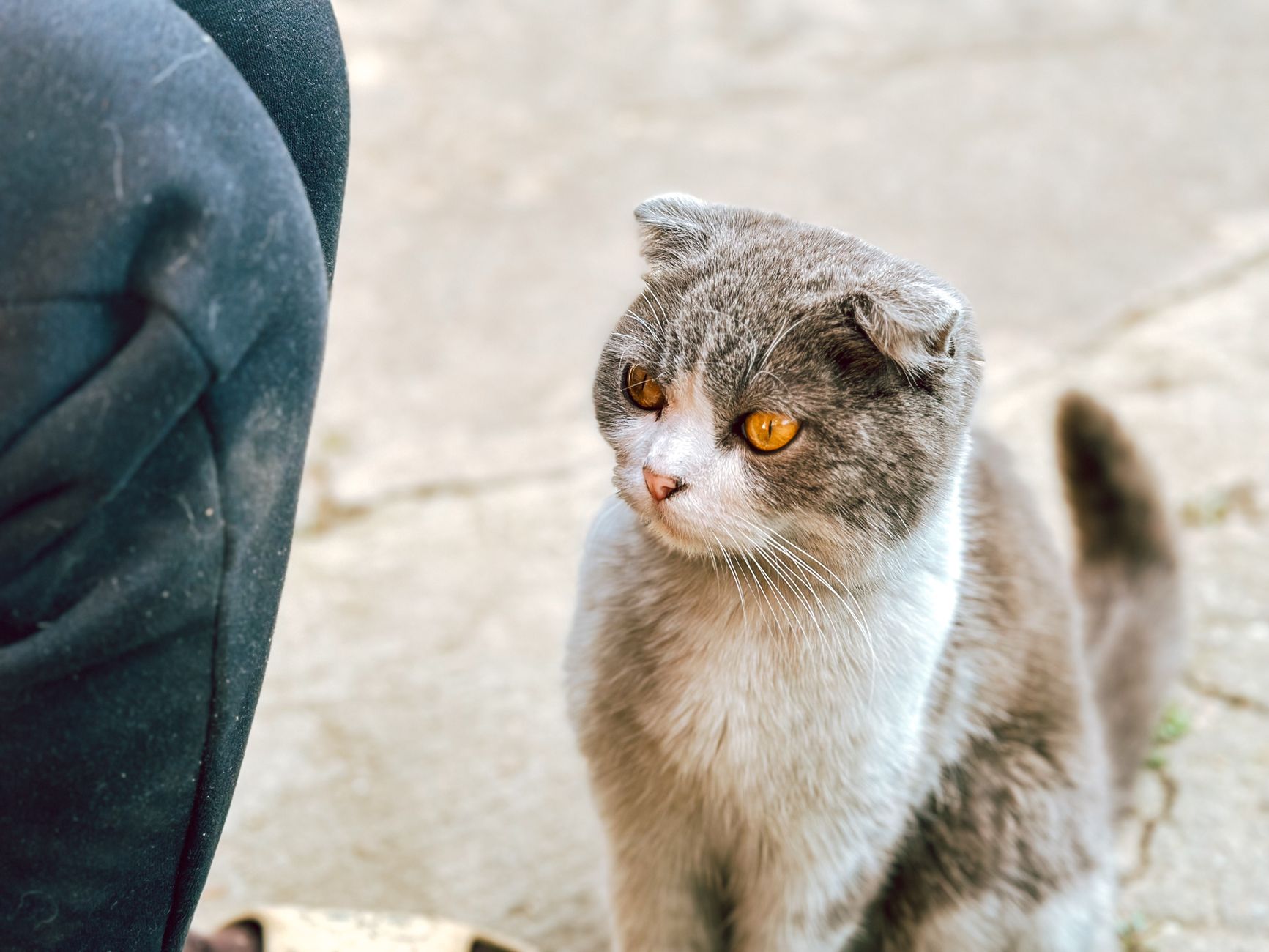
Domestic Shorthair is the term used in the UK to describe the non-pedigree, mixed-ancestry cats that make up the majority of the country's pet cat population. Because the population is genetically diverse rather than constrained by closed pedigree gene pools, breed-specific hereditary disease is uncommon. The clinical picture for insurance reading is therefore dominated by environment-related and age-related disease rather than by breed-defining hereditary conditions.
The published O'Neill et al. (2014) study in The Veterinary Journal, drawing on the VetCompass programme at the Royal Veterinary College, recorded the disorders most often diagnosed in cats attending primary-care practices in England. Periodontal disease topped the list. Abscess (often cat-bite related) followed close behind. Overgrown nails, road traffic accident injury and other dental disease also ranked in the top recorded conditions. Each of these has clear implications for what to read in a policy.
Periodontal disease and dental disease together are the most editorially distinctive concern across UK cats. Many cats will need at least one professional dental scale and polish under general anaesthetic during adult life, and many will need several. Insurance treatment of dental work is one of the most variable elements in UK cat policies. Some policies cover dental work only when it follows accident or illness, not when it is identified at routine examination. Reading the dental clause is essential.
Cat-bite abscess and traumatic injury are the second cluster. Cats with outdoor access are exposed to territorial fighting and to road traffic. International Cat Care guidance addresses outdoor risk management, including microchipping, neutering and reflective collars. Claims for emergency stitching, drainage and antibiotics are common.
From middle age onwards, three further conditions dominate the claim mix and drive the case for lifetime cover: chronic kidney disease, hyperthyroidism and diabetes mellitus. None of these are unique to Domestic Shorthairs, but their prevalence in the wider UK cat population makes them central to any lifetime risk assessment. Each requires ongoing diagnostic monitoring (blood biochemistry, urinalysis, blood pressure) and long-term medication. A policy that limits cover for chronic disease to 12 months from first diagnosis is structurally unsuited to a cat that will live another 5 to 8 years with managed renal disease.
How much does Domestic Shorthair cat insurance cost in the UK?
The Association of British Insurers reported a UK-wide average annual pet insurance premium of around £389 in 2024. That figure is heavily dog-weighted because dogs make up the majority of insured pets and attract higher premiums. Domestic Shorthair cat premiums typically sit well below this blended average. Indicative quotes for a healthy adult Domestic Shorthair on lifetime cover with a reasonable vet fee limit usually fall in a band roughly between £150 and £320 a year, depending on postcode, age at inception, the chosen excess and whether the cat has outdoor access.
Three factors push individual cat premiums up or down within this range. First, postcode-level claim experience matters: urban areas with higher road traffic accident frequency and higher vet fee inflation see higher premiums than rural or suburban areas. Second, indoor-only cats generally attract slightly lower premiums than cats with outdoor access. Third, vet fee inflation, examined in detail by the Competition and Markets Authority's 2024 Veterinary Services Market Investigation, has lifted the underlying cost of clinical care across all species.
Two levers within an owner's control change the premium meaningfully: increasing the voluntary excess and accepting a percentage co-payment after a certain age. Both reduce the insurer's loss exposure, and both transfer risk back to the policyholder. Whether that trade-off is worth taking depends on the household's capacity to self-fund a chronic disease workup and ongoing medication without disrupting other spending.
What to look for in Domestic Shorthair cat insurance
Read for the structure of cover before the price. The four questions that matter most for this population are framed below.
Is it lifetime cover, and at what annual vet fee limit? A lifetime policy refreshes the cover amount each renewal so that recurring or chronic conditions (chronic kidney disease, hyperthyroidism, diabetes, ongoing dental disease) remain claimable for the cat's life. An annual or time-limited policy stops paying for a condition after the policy year or after 12 months from first symptoms, whichever the wording specifies. For a cat likely to live into its mid-teens with one or more chronic conditions, that distinction matters.
How is the vet fee limit structured? Look for the per-condition limit if there is one, the policy-year limit and any aggregate lifetime cap. A £2,500 per-condition limit and a £4,000 annual limit will respond very differently to a year that mixes a road traffic accident admission, dental work and the diagnostic workup for a newly identified renal or thyroid issue.
What is excluded by name? Some policies exclude dental work that is not preceded by accident or illness, which carves out routine identification of dental disease at examination. Some restrict cover for prescription diets used in renal or diabetic management. Some apply specific exclusions for road traffic accident if the cat is left to roam unsupervised. Read the schedule of benefits, the dental clause and the outdoor access clause, not the marketing page.
How does pre-existing condition handling work at renewal? A condition recorded before a policy begins is excluded; that is industry standard. The question to ask is whether the insurer treats a previously claimed condition as pre-existing if the owner later switches insurer, which is particularly relevant for chronic kidney disease and hyperthyroidism. The FCA's Value Measures data on general insurance gives a sense of which providers actually pay claims at policy level.
The Financial Ombudsman Service publishes complaint data by product category, and pet insurance complaints often cluster around the interpretation of pre-existing exclusions for cats with multi-year chronic disease histories. Reading a sample of upheld decisions on the FOS site is a useful sanity check before signing.
Frequently asked questions about Domestic Shorthair cat insurance
Is "Domestic Shorthair" a breed for insurance purposes?
No. Domestic Shorthair is the descriptive term used in the UK for non-pedigree, mixed-ancestry cats with short coats; "Domestic Longhair" describes the equivalent long-coated cats. Insurers use the term as a default rating category for any cat without a recognised pedigree registration. Because the genetic base is broad, breed-specific hereditary disease cover is less of an issue than in pedigree cats.
Is Domestic Shorthair cat insurance cheaper than dog insurance?
Generally yes. The ABI 2024 average of around £389 reflects all dogs and cats combined and is heavily dog-weighted. Cat premiums typically sit well below this, with indicative bands of £150 to £320 a year for a healthy adult Domestic Shorthair on lifetime cover, reflecting lower claims frequency and severity than for most dog breeds.
Does pet insurance cover dental disease in Domestic Shorthair cats?
Coverage for dental disease is one of the most variable elements in UK cat policies. Some lifetime policies cover dental treatment for disease identified during the policy period; others cover dental work only when it follows a specific accident or illness, excluding routine identification at examination. Because periodontal disease is the most commonly recorded disorder in UK primary-care cats, the dental clause is a high-priority piece of policy wording.
Is lifetime cover worth it for a Domestic Shorthair cat?
For a cat likely to live into its mid-teens with a meaningful probability of chronic kidney disease, hyperthyroidism or diabetes, lifetime cover materially reduces the risk that a long-running claim will be cut off at renewal. The trade-off is a higher headline premium than a time-limited product. Households that can self-fund chronic disease management may rationally choose annual cover; those that cannot generally find lifetime the structurally appropriate fit.
Does outdoor access affect cat insurance premiums?
Some insurers use indoor versus outdoor status as a rating factor; others do not. Where it is used, indoor-only cats typically attract a small discount because road traffic accident and cat-bite abscess claims are lower. Outdoor access is associated with higher claims frequency for trauma and abscess, per O'Neill et al. (2014) and International Cat Care guidance, but is also linked to broader welfare benefits that owners weigh separately.
How young should a Domestic Shorthair cat be insured?
Insurers price young cats lower because no conditions have yet been recorded, and a policy taken out before any clinical history exists avoids the pre-existing exclusion problem at renewal. Many owners insure kittens at adoption, often around 8 to 12 weeks, subject to the policy's minimum age.
Related guides
Sources
- O'Neill DG, Church DB, McGreevy PD, Thomson PC, Brodbelt DC (2014). Prevalence of disorders recorded in cats attending primary-care veterinary practices in England. The Veterinary Journal. VetCompass programme, Royal Veterinary College. sciencedirect.com
- International Cat Care. Owner guidance on outdoor access, vaccination and routine care. icatcare.org
- Association of British Insurers. Pet insurance industry statistics, 2024 release. abi.org.uk
- PDSA Animal Wellbeing (PAW) Report. pdsa.org.uk
- Competition and Markets Authority (2024). Veterinary services market investigation. gov.uk
- Financial Conduct Authority. General Insurance Value Measures data. fca.org.uk
- Financial Ombudsman Service. Pet insurance complaint decisions. financial-ombudsman.org.uk