

The UK’s population dynamics are undergoing significant transformations, as highlighted in the latest 2022-based National Population Projections report from the Office for National Statistics (ONS). These projections provide critical insights into how the UK population is expected to evolve over the coming decades, reflecting trends in births, deaths, migration, and ageing.
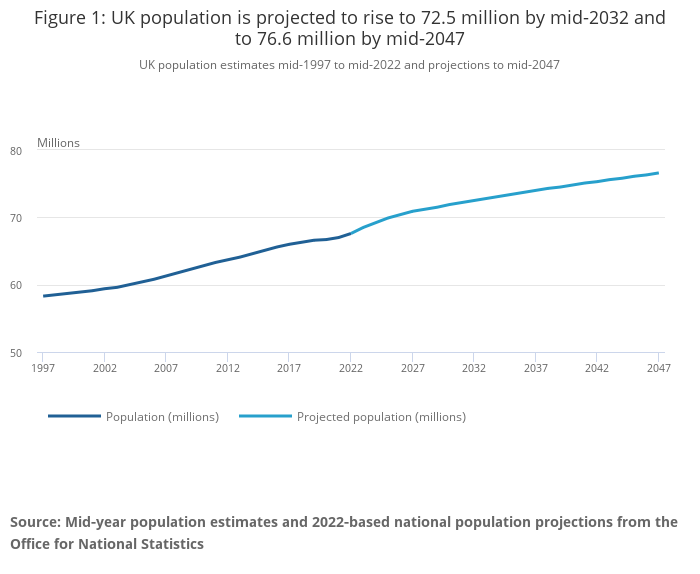
The population is projected to exceed 70 million by mid-2026 and reach 75 million by mid-2041, with slower growth compared to previous decades. These changes carry profound implications for healthcare, education, housing, and public policy.
Key Highlights
- Population Growth Trends
- The UK population is projected to grow from 67.6 million in mid-2022 to 76.6 million by mid-2047, an overall increase of 13.2%.
- Growth is slower than the 15.9% increase observed between 1997 and 2022.
- Milestones
- 70 million milestone: By mid-2026, the population is expected to surpass 70 million.
- 75 million milestone: By mid-2041, the population will reach 75 million.
- Regional Variations
- England will experience the highest growth (14.5%) by mid-2047, with its population increasing from 57.1 million to 65.4 million.
- Wales and Scotland will grow by 10.3% and 6.2%, respectively, while Northern Ireland is projected to see minimal growth of 1.1%.
Drivers of Population Growth
1. Migration as the Key Growth Factor
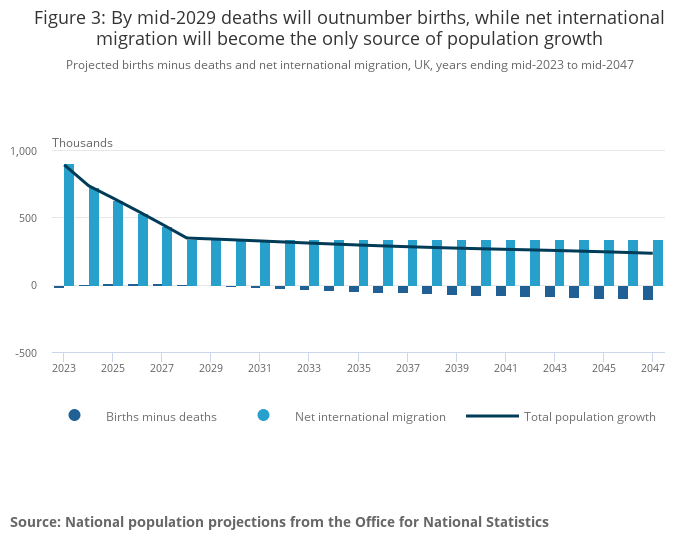
Net migration is expected to be the primary driver of population growth over the next 25 years.
- Between 2022 and 2047, net migration is projected to contribute 10 million people to the population.
- By contrast, natural change (births minus deaths) will result in a net decrease of 1.1 million, marking a shift where migration overtakes natural change as the dominant growth factor.
2. Birth and Death Trends
- Births: Over the decade from mid-2022 to mid-2032, 6.79 million births are projected, slightly offsetting declining fertility rates.
- Deaths: The ageing population will lead to 6.8 million deaths during the same period, outnumbering births by 2029.
An Ageing Population: The Growing Challenge
One of the most striking projections is the rapid ageing of the UK population:
- By 2047, the number of people aged 85 and over will nearly double from 1.7 million in 2022 to 3.3 million.
- The old-age dependency ratio (OADR), which measures people of pensionable age per 1,000 working-age individuals, will increase from 278 in 2022 to 302 in 2047.
Impact on Society
- Healthcare: Ageing populations will significantly increase demand for long-term care, specialised healthcare facilities, and services for age-related illnesses.
- Pensions: The rise in pensionable-age individuals will place additional strain on state pension systems.
Changing Demographics
1. Fewer Children
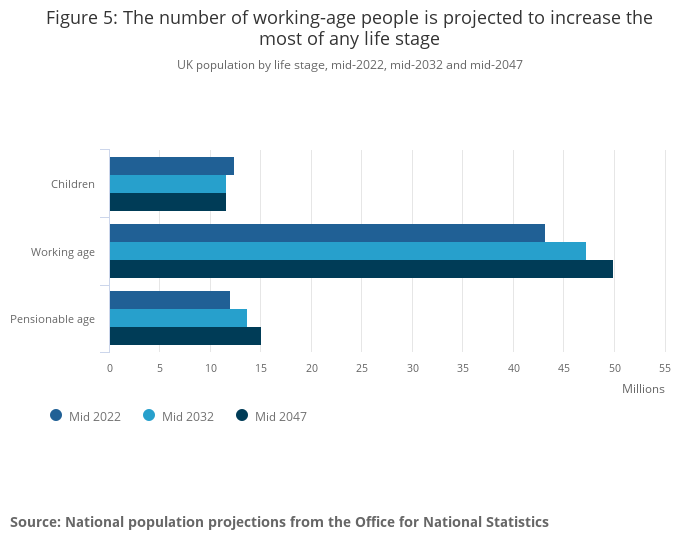
The number of children aged 0–15 years is projected to decrease by 6.4% from 12.4 million in 2022 to 11.6 million by 2032. This decline reflects lower fertility rates, which are estimated to stabilise at 1.45 children per woman.
2. Working-Age Population Growth
The working-age population is expected to grow by 15.5%, rising from 43.2 million in 2022 to 49.9 million by 2047, partly due to migration.
Regional Disparities
- England: The population will grow significantly, reaching 65.4 million by 2047, driven by higher migration and birth rates.
- Northern Ireland: Growth will peak by 2033 but decline thereafter, highlighting unique demographic challenges.
- Scotland and Wales: Modest growth is expected, with gradual increases in life expectancy and stable birth rates.
Implications for Policy and Planning
The changing population structure necessitates proactive measures to address challenges and leverage opportunities:
- Healthcare Investments: Increased funding for age-related healthcare and long-term care services.
- Workforce Development: Encouraging higher workforce participation and skilled immigration to mitigate dependency ratios.
- Housing Policies: Expanding accessible housing to meet the needs of older adults.
- Sustainability Initiatives: Ensuring sustainable infrastructure to support larger urban populations.
Conclusion: A Population in Transition
The UK’s 2022-based National Population Projections provide a roadmap for the nation’s demographic future. With growth slowing, an ageing population rising, and migration driving change, the UK faces a pivotal moment in planning for the decades ahead. Policymakers, businesses, and communities must collaborate to create a resilient and inclusive society that meets the needs of its evolving population.
These projections highlight both challenges and opportunities, offering a clear call to action: the future is shaped by the decisions we make today.
Engage with the Data:
Explore more insights by visiting the full ONS report here.
Tags: #UKPopulation #ONSProjections #DemographicTrends #AgeingPopulation #PolicyRecommendations
Part of our complete guide:
UK Inheritance Tax 2026 - Complete Guide →
Find a regulated IFA → | Make a will online from £29.99


