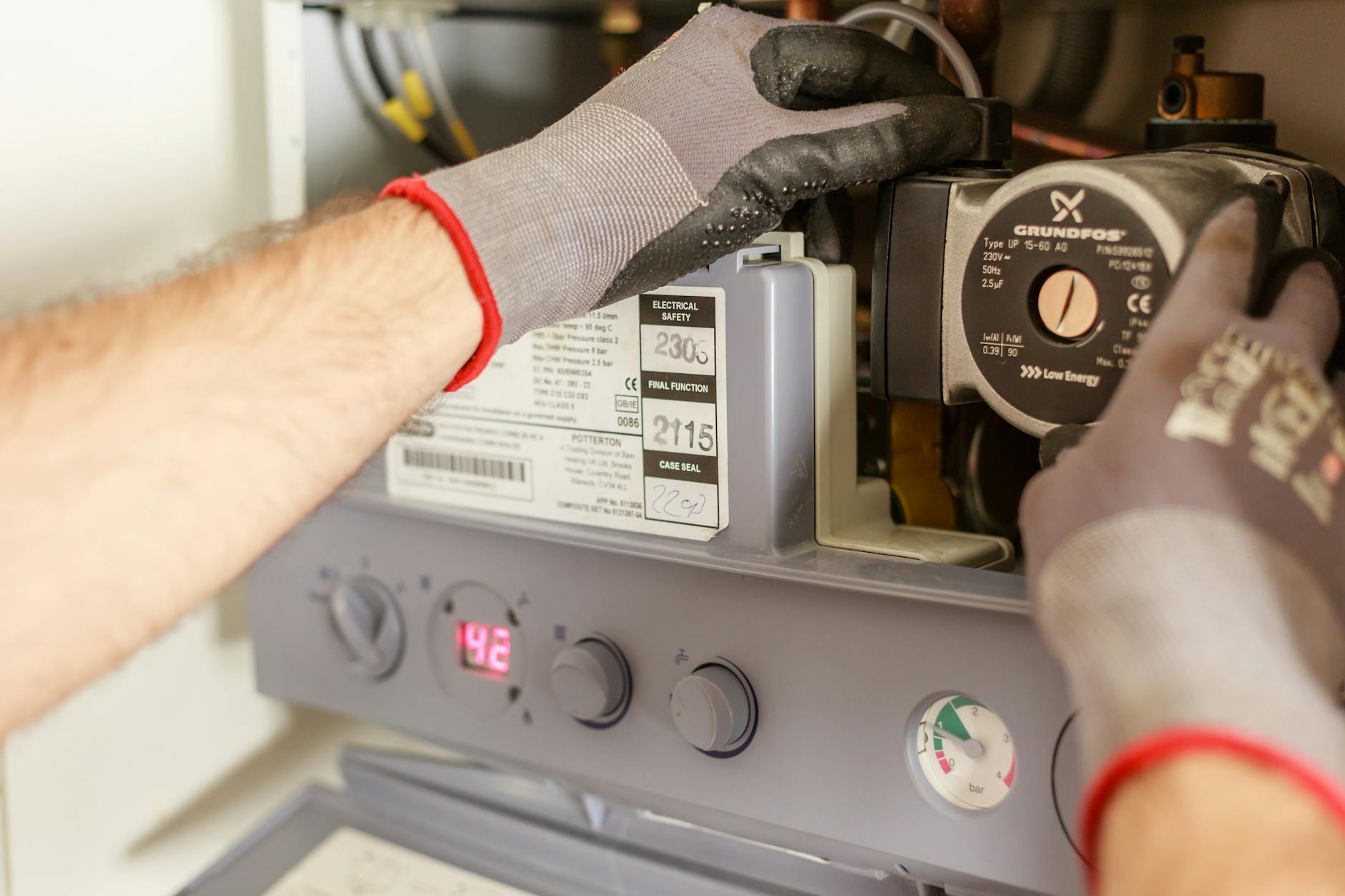
- UK boiler repair call-out fees in 2026 typically sit between 70 pounds and 150 pounds, with the diagnostic visit often charged separately from any parts and labour to fix the fault.
- The repair-versus-replace pivot generally sits around 10 to 15 years of boiler age. Anything older where the repair quote exceeds half the cost of a new combi is the point at which replacement starts to make financial sense.
- Only Gas Safe registered engineers may legally work on a gas boiler in Great Britain. Verify the engineer and their licence categories on the public Gas Safe register at gassaferegister.co.uk before they start work.
- A proper itemised quote should list the diagnostic finding, the part to be replaced with its manufacturer code, the labour time, the VAT treatment and any return-visit policy.
- Out-of-hours and emergency call-outs typically cost 50 percent to 100 percent more than a scheduled visit. If the boiler is off and there is no immediate safety issue, waiting until standard hours saves money.
Last reviewed: 17 May 2026 | Chandraketu Tripathi, finance editor
Boilers · Repair
- Repair call-out fee: 70 pounds to 150 pounds (diagnostic only).
- Common parts: PCB 380-650, pump 220-380, diverter 250-420, expansion vessel 180-320, heat exchanger 480-1,200, fan 200-340 (pounds, installed).
- Repair-vs-replace pivot: 10-15 years of age; replace if repair exceeds half of new combi cost.
- Legal requirement: All gas boiler work in GB must be done by a Gas Safe registered engineer (Gas Safety (Installation and Use) Regulations 1998).
- Out-of-hours markup: 50-100 percent over standard rate. Genuine emergencies: gas smell, continuous PRV discharge, no heat with vulnerable household.
A failed boiler in a UK household in 2026 sits at the intersection of three pressures: the cost of the repair itself, the steadily climbing cost of replacement (entry-level combis now start around 1,800 pounds installed and a mid-range Worcester Bosch or Vaillant install routinely lands between 2,800 pounds and 4,200 pounds), and the safety-critical nature of gas work that means the only legal route to a fix is through a Gas Safe registered engineer. This guide walks through what each of the common faults actually costs to repair in 2026, how to read a quote, when repair stops making sense, and how to verify that the person ringing your doorbell is on the public Gas Safe register.
Typical UK boiler repair costs in 2026 by fault type

Repair pricing is heavily skewed by part type, brand and the diagnostic time needed to isolate the fault. The figures below are typical 2026 ranges drawn from published price guides issued by Gas Safe registered firms; they exclude the standalone diagnostic fee unless stated. The diagnostic visit itself is usually 70 pounds to 150 pounds and is sometimes credited against the repair cost if you proceed with the firm.
Printed Circuit Board (PCB): 380 pounds to 650 pounds installed. The PCB is the boiler's brain. When it fails the unit either will not fire, locks out on intermittent fault codes, or shows blank display. PCBs are model-specific and Worcester, Vaillant and Ideal each have a part-number tree that determines exact cost. PCB replacement is one of the faults where age becomes a genuine consideration: a 650 pound PCB on a 12-year-old boiler is half the cost of an entry-level combi replacement.
Pump: 220 pounds to 380 pounds installed. The circulating pump moves heated water through the system. Pumps fail with bearing noise, full seize, or intermittent run. Grundfos and Wilo replacements dominate the aftermarket. A pump replacement on a 5-year-old boiler is a sensible repair; on a 14-year-old boiler with corrosion in the system, the engineer may recommend a system clean and inhibitor refresh at the same time, adding 180 pounds to 280 pounds.
Diverter valve: 250 pounds to 420 pounds installed. The diverter routes flow between the central heating and the hot water circuit on a combi. Symptoms are hot water but no heating, or heating but no hot water. Diverter cartridges are sometimes the only failure and a partial repair is cheaper, but a full diverter valve replacement is the durable fix.
Expansion vessel: 180 pounds to 320 pounds installed. The expansion vessel absorbs the pressure rise when the system heats. When it fails, the pressure climbs above 3 bar and the pressure relief valve discharges, dropping system pressure overnight. A failed expansion vessel can sometimes be re-charged on the existing vessel; full replacement is more durable, especially on combis over six years old.
Heat exchanger: 480 pounds to 1,200 pounds installed. The heat exchanger is the most expensive single part. Aluminium heat exchangers on some Vaillant and Glow-worm models, and stainless on others, fail with corrosion or carbon build-up. A heat exchanger replacement on anything over 10 years old is usually the point at which a new boiler conversation starts.
Fan: 200 pounds to 340 pounds installed. The fan drives combustion air through the burner and the failed-fan fault code (most commonly F75 on certain Vaillants, EA on certain Worcester models) is one of the more common winter call-outs. Fan replacements are typically same-visit if the engineer carries the part.
Ignition electrode and gas valve: 160 pounds to 350 pounds installed. Symptoms are repeated lock-out on attempted ignition or audible clicking without firing. Electrodes are cheap parts but the diagnostic and adjustment time is the cost driver.
Flue and condensate-related faults: 120 pounds to 280 pounds installed. Frozen condensate pipes during cold snaps cause many February call-outs and the fix is sometimes simply thawing the pipe and lagging it. Persistent condensate trap blockages or flue gas analysis failures push into higher numbers.
Repair versus replace: the decision in 2026
The repair-versus-replace decision in 2026 has shifted slightly compared with five years ago, because a combi replacement under the Boiler Upgrade Scheme is not subsidised (only heat pumps and biomass are eligible), while new combi prices themselves have risen with copper, brass and electronic component costs. The practical rule is:
Age 0 to 7 years. Repair almost always wins. Most major brands offer 7 to 10 year manufacturer warranties on heat exchangers (Worcester Greenstar 8000 carries up to 10, Vaillant ecoTEC carries up to 10 with a registered installer). Check whether the fault is warranty-covered first; many homeowners pay for a repair the manufacturer would have done for free if the warranty registration card had been returned at install. The Gas Safe registered installer who fitted the unit should have logged the warranty automatically through the manufacturer portal.
Age 8 to 12 years. Repair usually still wins unless multiple parts have failed in succession, or unless the fault is a major heat exchanger or PCB replacement and another similar part has already been replaced in the previous 24 months. The signal to watch for is repeat failures within the same calendar year on different parts. That pattern points to wider system corrosion or a control board on its way out, and replacement starts to look more rational.
Age 13 to 18 years. Replace, in most cases. By this age, parts availability for some model ranges is dropping, and a 14-year-old non-condensing boiler can be running at 70 percent seasonal efficiency or lower compared with the 90-plus percent of a modern A-rated condensing combi. Energy savings on a typical UK three-bedroom semi from replacing a 15-year-old non-condensing unit with a modern condensing combi typically run 180 pounds to 320 pounds per year at the early-2026 default tariff cap.
Age 19+ years. The boiler is operating beyond its design life. Even if it currently works, the next major fault is likely to be uneconomic to repair and the energy efficiency penalty is significant. Replacement should be planned, not waited for.
An additional consideration in 2026 is the heat pump route. The Boiler Upgrade Scheme grant for an air source heat pump is 7,500 pounds and the scheme is open in England and Wales (Scotland operates Home Energy Scotland Loan, Northern Ireland operates separate routes). Where a gas boiler has reached end of life and the property has sufficient external space, radiator capacity and insulation, the heat pump conversation is now part of the decision rather than a fringe option. The current Boiler Upgrade Scheme rules and grant value are published at gov.uk under the scheme name.
Verifying a Gas Safe registered engineer
It is a criminal offence under the Gas Safety (Installation and Use) Regulations 1998 for an unregistered person to carry out gas work in Great Britain. The Health and Safety Executive prosecutes, and convictions for unregistered gas work appear in HSE published case reports. Verification is straightforward and you should do it before any payment, not after the work.
The Gas Safe register is the only authorised register. Go to gassaferegister.co.uk and use the "Find an engineer" or "Check an engineer" tool. Enter either the seven-digit Gas Safe ID number that should appear on the engineer's ID card, or the company name and postcode. The register returns:
- The engineer's full name and the seven-digit Gas Safe ID number
- The licence categories they hold (natural gas, LPG, commercial, etc.) and the appliance types they are qualified for (combi boilers, system boilers, gas cookers, gas fires)
- The registered business name and registration status
- A photograph of the engineer (current cards carry a colour photo)
Before the engineer starts work, ask to see the physical Gas Safe ID card. The card has front and back: the front shows the engineer name, photo, ID number and card expiry; the back lists the specific appliance category codes the engineer is authorised to work on. A combi boiler repair requires the relevant category. If the card categories do not include the appliance you have, the engineer is not authorised for that work, even if the card itself is currently valid.
If a person presenting as a gas engineer cannot or will not produce a card and a current register entry, do not let them touch the appliance. The Gas Safe register operates a public reporting line for unregistered work and HSE prosecutes seriously, but the simple defence is verification before any work begins.
| KT | Kaeltripton Partner Programme |
Take a Featured Partner placement on Kaeltripton's UK energy hub and reach UK homeowners at the moment they decide they need help. Gas Safe, MCS or TrustMark authorisation verified before activation.
See partnership tiers →What a proper boiler repair quote should itemise
A written quote, given before work begins or before a part is ordered, should make six things explicit. If any of these six are missing, ask the engineer to add them or get a second quote. The pattern below mirrors what Trading Standards and the Energy Ombudsman expect to see in a complaint-resolution file when a repair turns into a dispute.
1. The diagnostic finding. Plain language description of what is wrong, what fault code if any was displayed, and what tests were used to confirm. "PCB failed" is insufficient. "PCB failed (no output to fan on heat demand, supply voltage 230V at terminal X, isolated by substitution test)" is enough to make the diagnosis defensible.
2. The part to be replaced. Manufacturer name and exact part number. Boiler PCBs vary by model year and revision; ordering the wrong revision is a common source of follow-up visits and you should not be paying for that.
3. Labour time and rate. Either a fixed labour figure for the job or an hourly rate with an estimate of hours. UK Gas Safe labour rates in 2026 typically sit between 55 pounds and 95 pounds per hour, with London and the South East at the upper end.
4. VAT treatment. Whether the price quoted is inclusive or exclusive of VAT. Most domestic gas repair work is at the standard 20 percent rate; certain energy-saving installations qualify for a reduced rate under VAT Notice 708/6, but a boiler repair on an existing boiler does not.
5. Return-visit and warranty policy. What happens if the same fault recurs within 30 days, 60 days, 90 days. Most reputable firms offer a 12-month labour warranty on parts they install, with the part itself carrying the manufacturer's own warranty (typically 12 months on aftermarket, longer on OEM-direct).
6. Total inclusive cost. The single number you will pay, including parts, labour, VAT and any call-out fee already credited or charged separately. If a separate call-out fee applies, it should be stated and dated.
If the quote is given verbally, ask for it in writing by email or text before agreeing. Trading Standards consistently flags verbal-only quotes as the single largest source of consumer dispute in domestic gas work.
Emergency versus scheduled pricing in 2026
Emergency or out-of-hours rates apply outside the firm's standard working window, usually defined as evenings, weekends and bank holidays. Typical 2026 markups are 50 percent to 100 percent over the equivalent in-hours diagnostic and labour rate. A 90 pound weekday call-out becomes a 135 pound to 180 pound out-of-hours call-out, and a 70 pound per hour labour rate becomes 105 pounds to 140 pounds per hour.
The pricing premium reflects engineer overtime and weekend stand-by. It is legitimate and there is no consumer protection rule that caps it, but you have the right to be told the rate before the engineer arrives. Always ask the dispatcher for the emergency rate when you ring.
Three situations are genuine emergencies that justify the premium: a confirmed gas smell (call 0800 111 999, the National Gas Emergency Service, first), a continuously discharging pressure relief valve, or a no-heat-and-no-hot-water situation in winter with a vulnerable household member or a young child. Most other faults can wait until the next working day. If the boiler is locked out on a non-safety fault code on Friday evening, the cost of waiting until Monday morning is typically nothing more than two cold mornings.
How manufacturer warranties affect a repair quote
Worcester Bosch, Vaillant, Ideal, Baxi, Viessmann and Glow-worm all offer manufacturer warranties on new boilers ranging from 2 years (basic models) to 12 years (premium models installed through accredited installer schemes). The warranty is a contract between the manufacturer and the homeowner, separate from any installer warranty, and where a fault occurs within the warranty period the repair should be handled by the manufacturer's own engineer network at no charge for parts and labour.
Three friction points come up routinely. First, the warranty must have been registered. Registration is usually done by the installer through the manufacturer portal at install, and the homeowner receives a registration certificate. If you have no certificate and no record, the warranty may default to the minimum statutory cover rather than the full extended cover the brochure advertised. Worcester Bosch and Vaillant both publish lookup tools to check warranty status against the boiler serial number.
Second, the warranty usually requires an annual service by a Gas Safe registered engineer, evidenced in the boiler service book or a written service record. A missed service can void the extended portion of the warranty, returning you to the statutory two-year minimum.
Third, the warranty does not cover damage caused by sludged systems, frozen condensate pipes, scale build-up from hard water, or external interference. Manufacturers may decline a heat exchanger claim if the system was never power-flushed at install, and the magnetic filter shows years of accumulated debris.
If the boiler is in warranty and an independent Gas Safe engineer diagnoses a fault, ring the manufacturer support line before authorising any independent repair. Worcester Bosch (0330 123 9559), Vaillant (0344 815 8054), Ideal (0344 998 5840) and Baxi (0344 871 1525) all operate dedicated homeowner support lines. Numbers do change; verify the current number on each manufacturer's own website.
|
Editorial Listing Available
From £299/month
A named row in Kaeltripton's UK energy directory plus a mention on this page. Verified trades and suppliers only.
|
Get listed → |
| Editorial note: Kaeltripton.com is an independent editorial publisher and is not authorised by the Financial Conduct Authority, Ofgem, MCS, TrustMark or Gas Safe. This article is for informational purposes only and does not constitute regulated advice. UK energy regulations, prices, tariff caps and grant schemes change without notice. Always verify current requirements directly on GOV.UK, ofgem.gov.uk, mcscertified.com, gassaferegister.co.uk or trustmark.org.uk, and obtain a fixed written quote from a registered tradesperson before committing to work. |
Frequently asked questions
How much does a UK boiler repair typically cost in 2026?
Typical 2026 repair costs range from 120 pounds for a simple thermostat or condensate-pipe fix up to 1,200 pounds for a heat exchanger replacement. Common fixed-cost repairs include diverter valves at 250 to 420 pounds, pumps at 220 to 380 pounds, expansion vessels at 180 to 320 pounds, and PCBs at 380 to 650 pounds installed. The standalone diagnostic call-out is usually 70 to 150 pounds.
When does it make sense to replace rather than repair a UK boiler?
The general pivot is around 10 to 15 years of age. Replacement makes financial sense if the boiler is 13+ years old, if the repair quote exceeds half the cost of a new combi installed, if multiple parts have failed in the previous 24 months, or if the fault is a heat exchanger or PCB on a boiler over 10 years old. Heat pump conversion under the Boiler Upgrade Scheme (7,500 pound grant for air source) should also be part of the decision where the property is suitable.
How do I verify that my boiler engineer is Gas Safe registered?
Use the public register at gassaferegister.co.uk. Search by Gas Safe ID number (seven digits) or by company name and postcode. The register returns the engineer's name, photo, registration status, licence categories and the appliance types they are qualified for. Always ask to see the physical Gas Safe ID card before work begins and verify the back of the card lists the relevant appliance category for your boiler. It is a criminal offence under the Gas Safety (Installation and Use) Regulations 1998 to carry out gas work without registration.
What should a written boiler repair quote include in 2026?
A proper itemised quote should include the diagnostic finding in plain language, the part to be replaced with manufacturer name and part number, the labour time and hourly rate or fixed labour figure, the VAT treatment, the return-visit and warranty policy on the work done, and the total inclusive price. Trading Standards consistently flags verbal-only quotes as the largest source of consumer dispute in domestic gas work; always get the quote in writing by email or text before agreeing.
Is an out-of-hours boiler repair worth the emergency premium?
Out-of-hours and emergency call-outs typically cost 50 to 100 percent more than equivalent in-hours work. The premium is legitimate but you have the right to be told the rate before the engineer travels. Genuine emergencies that justify the premium are a confirmed gas smell (ring 0800 111 999 first, the National Gas Emergency Service), a continuously discharging pressure relief valve, or no heat and no hot water in winter with a vulnerable or young household member. Most fault-code lockouts that are not safety related can wait until the next working day.
Does my manufacturer warranty cover the repair?
Many UK boilers carry manufacturer warranties of 7 to 12 years on premium models, provided the warranty was registered at install and an annual service has been completed each year by a Gas Safe registered engineer with a written record. Check the warranty using the boiler serial number on the manufacturer's lookup tool (Worcester Bosch and Vaillant both publish one). If in warranty, ring the manufacturer support line before authorising any independent repair. The warranty typically does not cover damage caused by sludged systems, frozen condensate pipes, scale or external interference.
How we verified this article
Cost ranges in this article are 2026 typical figures drawn from published Gas Safe registered firm price guides and from the most recent quarterly heating-repair pricing data published by trade associations including the Heating and Hotwater Industry Council (HHIC). Where ranges are quoted, they reflect the spread between London and the South East at the upper end and the rest of the UK at the lower end.
The Gas Safe verification steps described in this article reflect the public-facing Gas Safe register at gassaferegister.co.uk as accessed during preparation. The Gas Safety (Installation and Use) Regulations 1998 and HSE enforcement framework are the underlying legal basis. The Boiler Upgrade Scheme grant value (7,500 pounds for air source heat pumps in England and Wales) is the current published figure at gov.uk for the scheme.
Manufacturer warranty terms and homeowner support numbers reflect Worcester Bosch, Vaillant, Ideal and Baxi published documentation as accessed during preparation; homeowners should always verify current support numbers on each manufacturer's own current website before calling.
No figure on this page has been provided by an advertising or sponsored relationship. Kaeltripton does not accept commission on quotes or installations and our editorial does not recommend specific firms.
Sources
- Gas Safe register - find or check an engineer
- HSE - Gas Safety (Installation and Use) Regulations 1998
- GOV.UK - Apply for the Boiler Upgrade Scheme
- Energy Ombudsman - Complaint resolution and procedure
- Citizens Advice - Problems with a boiler installation or repair
- National Gas Emergency Service - 0800 111 999
- HHIC - Heating industry technical guidance


