
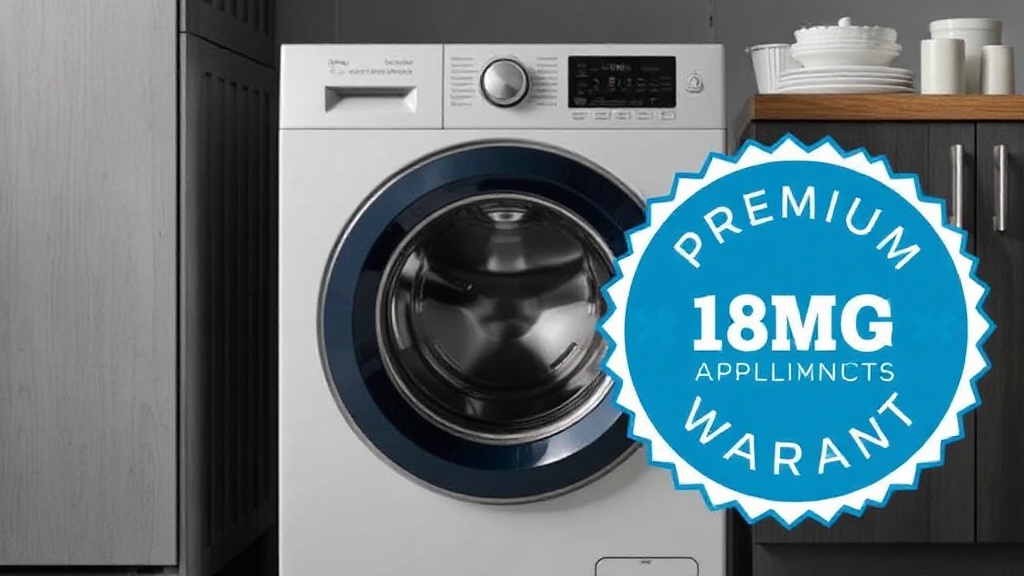
TL;DR: Bosch washing machines come with a two-year manufacturer warranty, which is longer than most rivals. Once that period ends, repair bills for common faults can reach £280 or more, and a comparable replacement machine costs £600 to £1,200. Third-party appliance insurance typically runs £5 to £15 a month and may offer better value than extended warranties sold at point of sale. Statutory rights under the Consumer Rights Act 2015 run for six years and sit alongside any commercial warranty.
★ Featured Partner · Sponsored
Compare Insurance Quotes
Search and compare quotes from leading UK insurers. Quotezone's panel includes specialist insurers not always on the four major comparison sites.
Compare Quotes →Bosch Washing Machines: Brand Context and Why the Warranty Matters
Bosch is a brand name owned by BSH Hausgeraete GmbH, a joint venture between Robert Bosch GmbH and Siemens AG. BSH is one of the largest white goods manufacturers in Europe and positions Bosch appliances firmly in the premium and upper-mid market. That positioning has practical consequences for UK consumers: a comparable Bosch washing machine typically retails between £600 and £1,200 depending on capacity, spin speed and feature set, which means a mid-life breakdown can represent a significant financial event.
One way Bosch signals quality confidence is through its warranty terms. Where many appliance brands offer a standard one-year manufacturer warranty, Bosch provides two years of cover on most washing machines sold in the UK. That single year of additional protection removes a meaningful repair window from the consumer's risk exposure, because most infant failures in electronic goods appear either very early or in the second year as components settle into regular use cycles.
Despite that, no warranty lasts indefinitely, and washing machines are mechanical devices subject to wear, lime scale, overloading and electronic faults. Understanding what the Bosch warranty covers, where it stops, and what options exist afterwards is a practical exercise for any owner approaching month 20 or beyond.
What the Standard Two-Year Bosch Warranty Covers
The Bosch manufacturer warranty covers defects in materials and workmanship that arise under normal domestic use. If a component fails because it was poorly manufactured or incorrectly assembled, Bosch will arrange repair or replacement at no charge during the warranty period. The warranty is administered through BSH's authorised service network in the UK, and claims must generally be logged through the Bosch website or telephone customer service line.
Warranty registration is encouraged at bosch-home.com/uk. Registering the appliance by serial number and purchase date creates a clear record that can streamline a claim and is particularly useful if the original purchase receipt is lost. Registration does not extend the warranty period but it removes evidential friction.
The warranty applies to the first retail purchaser and is not automatically transferable to a subsequent owner, which is a relevant consideration when buying a second-hand Bosch machine that the seller claims still has warranty time remaining.
What the Standard Warranty Does Not Cover
Manufacturer warranties are not the same as comprehensive appliance insurance, and the exclusions matter. The standard Bosch two-year warranty will not cover:
Accidental damage: If the drum is damaged by a foreign object, a door hinge is broken through impact, or the control panel is cracked, these are not manufacturing defects and sit outside the warranty.
Misuse or incorrect installation: Running a machine on an unstable surface, using excessive quantities of detergent, washing items outside the stated capacity, or connecting to incorrect water supply specifications can all void a claim.
Consumables and wear parts: Door seals, inlet hoses, detergent drawer inserts, pump filters and similar items that degrade through normal use are treated as consumables. The warranty will cover a door seal that fails through a manufacturing defect within weeks of purchase, but not one that hardens and cracks after two years of weekly use.
Cosmetic damage: Scratches, dents, discolouration and similar surface issues are excluded unless they arose directly from a manufacturing defect.
Pest and environmental damage: Damage caused by flooding, vermin, power surges or lime scale build-up attributable to local water hardness is excluded.
These exclusions are standard across most manufacturer warranties. The key implication is that the warranty is a quality guarantee, not an insurance product. Accidental damage and wear-related failures require a separate product.
Bosch Home Comfort and Extended Protection Plans
BSH operates extended protection and service plans in the UK under the Bosch Home Comfort brand. These plans can be purchased at the point of sale or added later, typically before the manufacturer warranty expires, and are designed to bridge the gap between the end of the standard warranty and the point at which the consumer replaces the machine.
Extended plans vary in structure but generally provide:
Continued repair cover: Parts and labour for mechanical and electrical faults that would have qualified under the manufacturer warranty, extended for one, two or three additional years.
Prioritised engineer response: BSH-authorised engineers rather than third-party contractors, which can matter for machines with proprietary electronics.
Replacement guarantee in some tiers: Higher-tier plans may include a replacement appliance if a fault cannot be economically repaired, which provides protection against total loss scenarios.
The cost of Bosch-branded extended plans varies by machine value and plan duration. They are often priced at a premium compared with third-party standalone insurance products, in part because they use the manufacturer's own service network. Consumers should compare the total cost of a manufacturer-branded plan against the annual repair cost risk before committing, particularly given that the machines are built to a quality standard that reduces mid-life failure probability.
Third-Party Appliance Insurance Options
A wider market of standalone appliance insurance products exists in the UK, offered by specialist insurers and comparison platforms. These policies cover single appliances or a household portfolio of white goods and are not tied to the manufacturer. Monthly premiums for washing machine cover generally fall in the range of £5 to £15, depending on the machine's age, declared value and the scope of cover selected.
Third-party policies differ from manufacturer extended warranties in several important ways. Most third-party policies include accidental damage cover as standard or as an optional add-on, closing the gap left by manufacturer warranties. Some policies also cover call-out charges and a defined number of repairs per year before a no-claims benefit is affected.
The Financial Conduct Authority regulates insurance products sold in the UK. Any appliance insurance product sold by a UK provider must be provided by a firm authorised under the Financial Services and Markets Act 2000, and the policy documentation must comply with FCA disclosure rules. Consumers checking whether a provider is authorised can use the FCA Register at register.fca.org.uk.
When comparing policies, the most relevant terms to examine are: the excess per claim, the maximum repair value (some policies cap at £250 or £500 per claim), whether there is an age limit on the covered appliance, and whether accidental damage is included or requires an add-on premium.
Common Faults and Typical Repair Costs
Knowing the likely cost of common repairs helps frame whether insurance or a repair-as-needed approach is more economical for a given machine. The table below sets out indicative costs for the most frequently reported Bosch washing machine faults in the UK market. Costs include parts and a standard engineer call-out and labour charge but do not include any potential policy excess.
| Fault | Typical Symptom | Indicative Repair Cost (Parts + Labour) | Notes |
|---|---|---|---|
| Door seal (boot gasket) | Water leak from door, visible mould or tearing | £90 to £150 | Wear item; more frequent in hard-water areas without regular cleaning |
| Drain pump | Clothes remain wet, E18 or F18 error code, poor drainage | £90 to £160 | Often blocked by foreign objects; filter cleaning can defer replacement |
| Drum bearings | Loud rumbling or grinding noise on spin | £160 to £280 | Labour-intensive repair; affects cost significantly on older machines |
| PCB or control board | Unresponsive controls, incorrect cycle behaviour, display faults | £180 to £350 | Proprietary components; availability can be limited on older models |
| Carbon brushes (brushed motor) | Motor fails to start, drum does not turn | £60 to £120 | Applicable to older models; many current Bosch machines use brushless EcoSilence-type motors |
| Water inlet valve | Machine does not fill, F01 or similar error code | £75 to £130 | Lime scale blockage is a common cause in hard-water regions |
A note on motor technology is warranted here. Many current Bosch washing machines feature a brushless motor design, marketed by BSH under names including EcoSilence Drive. Brushless motors eliminate the carbon brush wear that is one of the most common failure points in traditional induction motor designs. This reduces long-term maintenance costs and is one of the factors that supports the premium pricing of Bosch machines relative to budget competitors. However, it does not eliminate the risk of motor failure entirely, and replacement of a brushless motor assembly is a more involved and expensive repair than fitting new carbon brushes.
When to Consider Taking Out Cover
The most financially rational point to consider appliance insurance or an extended warranty is as the manufacturer warranty approaches its end. For Bosch, that is around month 20 to month 22 of ownership: close enough to the end of coverage that obtaining a new policy makes practical sense, but before the warranty has lapsed and the machine has entered an unprotected period.
Several factors make cover more compelling for Bosch owners specifically:
High replacement cost: A like-for-like replacement for a Bosch Series 6 or Series 8 machine typically costs £700 to £1,200 at current UK retail prices. Even a single mid-range repair event at £200 to £300 represents a material proportion of replacement cost, and two repair events in the same year can approach it.
Age of the machine: Appliance failure rates generally follow a bathtub curve: higher in the first year, lower in years two through five, then rising again after year six as components age. A machine entering its third year is in the lower-risk zone, but the cost of cover in that period buys protection against the ascending portion of the risk curve later.
Water hardness: Consumers in hard-water areas of England (broadly the East Midlands, East of England and South East) face higher lime scale accumulation, which accelerates wear on heating elements, inlet valves and pump mechanisms. This increases the statistical likelihood of faults and makes cover proportionally more valuable.
Multi-appliance households: Several insurers offer portfolio policies covering all white goods in a property for a single monthly premium. Where a household also owns a dishwasher, fridge freezer or tumble dryer, the combined premium per appliance falls below the cost of individual cover, which improves the value calculation.
The decision is also influenced by attitude to risk and liquidity. Consumers who maintain an emergency fund and are comfortable absorbing an unexpected £200 repair may prefer self-insuring. Those without a financial buffer or who cannot afford the disruption of an inoperative washing machine for several days may find the predictable monthly premium preferable to the uncertain but potentially large one-off cost.
Statutory Rights Under the Consumer Rights Act 2015
Independent of any commercial warranty or insurance product, UK consumers have statutory rights under the Consumer Rights Act 2015. These rights sit alongside manufacturer warranties and cannot be contracted out of.
The Act requires that goods sold to consumers must be of satisfactory quality, fit for purpose and as described. A washing machine that develops a fault within a reasonable period may entitle the buyer to a repair, replacement or refund depending on the timing of the claim.
In practical terms, the statutory right in England, Wales and Scotland runs for six years from the date of purchase (five years in Scotland under the Prescription and Limitation Act). After the first 30 days and up to six months from purchase, the burden of proof is reversed: if a fault appears, it is presumed to have existed at the time of sale unless the retailer can demonstrate otherwise. After six months, the consumer must demonstrate that the fault was present at the time of purchase, which is more difficult but not impossible through engineer reports or manufacturing defect documentation.
Statutory rights are enforced against the retailer, not the manufacturer. A consumer whose machine fails outside the Bosch warranty period should therefore approach the retailer first. This is a significant but often overlooked protection: a machine purchased from a major retailer three years ago and developing a drum bearing fault may have a viable statutory claim if an independent engineer confirms the bearing showed signs of pre-existing wear.
Citizens Advice provides guidance on enforcing consumer rights and can assist with drafting letters to retailers: see citizensadvice.org.uk/consumer/faulty-goods/.
Registering Your Bosch Washing Machine
Warranty registration at bosch-home.com/uk serves two practical purposes beyond the streamlining of future claims. First, it creates a timestamped record of purchase that supports both warranty claims and statutory rights enforcement. Second, registered owners receive product safety notifications and recall alerts from BSH, which is relevant given that the Bosch Home Appliances brand has been subject to recall programmes in previous years relating to fire risk in specific tumble dryer models; a similar precaution is sensible for washing machines.
Registration requires the model number (E-number or model identification) and serial number, both of which appear on a label inside the door frame of most Bosch washing machines, and proof of purchase date.
Comparing Cover Options: What to Look For
For consumers evaluating whether to take out cover after the manufacturer warranty expires, the following checklist summarises the key points of comparison:
Confirm whether the policy is underwritten by an FCA-authorised insurer. Manufacturer-branded plans may be administered by BSH but underwritten by a third-party insurer: the underlying insurer's financial strength and regulatory standing matters if the plan provider exits the market.
Check the excess. Some policies apply a flat excess of £50 to £100 per claim, which materially reduces the net value of covering lower-cost faults such as pump blockages or inlet valve replacements.
Look at the maximum repair value per claim and per year. Policies capping repair costs at £250 leave the consumer exposed on drum bearing or control board replacements at the upper end of the cost range.
Assess whether accidental damage is included. If the policy is limited to mechanical and electrical breakdown, a cracked door glass or impact-damaged drum will not be covered, and supplementary cover may be needed.
Check the age limit on covered appliances. Many insurers decline to cover or increase premiums significantly on machines over eight years old, which is relevant for consumers with older but well-maintained Bosch machines.
Review the repair-or-replace terms. Some policies commit to replacing the machine if a repair is uneconomical (typically defined as repair cost exceeding 75 percent of the machine's current market value). Others offer cash settlements based on a depreciated value that may not cover a like-for-like Bosch replacement.
Self-Insurance and the Repair-or-Replace Calculation
Not all consumers will find a paid insurance product cost-effective. A washing machine purchased for £800 and now four years old might be assessed by an insurer at a replacement value of £450 to £500, which narrows the financial gap between an insured repair and purchasing a new entry-level machine without Bosch's premium features.
The repair-or-replace decision is also influenced by parts availability. BSH maintains spare parts availability for most models for a minimum period after discontinuation, but older or discontinued models may face extended lead times for components such as control boards or brushless motor assemblies. An engineer's assessment of whether parts are readily available is a useful input before committing to repair cover on an older machine.
Where a machine is in its third to fifth year and functioning reliably, maintaining a dedicated savings buffer equivalent to one to two years of insurance premiums is a straightforward self-insurance strategy. If a fault arises, the buffer funds the repair; if it does not, the consumer retains the premium equivalent as savings. This approach requires financial discipline and is less suitable for households without existing savings buffers.
Important: This article is general information about UK home appliance and home cover and does not constitute financial, insurance or legal advice. Policy terms, prices and statutory entitlements change over time and vary between providers. Always read the full policy documents and the relevant guidance from a qualified adviser or the named primary sources before making a decision.
Frequently asked questions
Does the Bosch two-year warranty cover accidental damage?
No. The standard Bosch two-year manufacturer warranty covers defects in materials and workmanship only. Accidental damage, such as a cracked door glass, impact damage or faults caused by incorrect use, is excluded. Accidental damage cover requires a separate appliance insurance policy or an extended plan that explicitly includes it.
Can I still claim statutory rights after the Bosch warranty has expired?
Yes. Under the Consumer Rights Act 2015, UK consumers have up to six years from purchase (five in Scotland) to pursue a claim against the retailer for goods that were not of satisfactory quality at the time of sale. The manufacturer warranty and statutory rights are separate protections. After six months from purchase, the consumer must provide evidence that a fault was present at the point of sale, typically through an independent engineer's report.
Is third-party appliance insurance regulated in the UK?
Yes. Any appliance insurance product sold in the UK must be provided by a firm authorised and regulated by the Financial Conduct Authority under the Financial Services and Markets Act 2000. Consumers can verify a provider's authorisation status using the FCA Register at register.fca.org.uk. Manufacturer-branded extended plans may be administered by BSH but underwritten by a regulated insurer; check the policy documentation for the name of the underwriter.
What is the most expensive common fault on a Bosch washing machine?
Control board or PCB failure and drum bearing failure are typically the most expensive common repairs, with indicative costs of £180 to £350 and £160 to £280 respectively, including parts and labour. Both repairs can approach or exceed the cost threshold at which some insurers classify a machine as uneconomical to repair, making the repair-or-replace terms of any policy particularly relevant for these fault types.
When is the best time to take out extended cover for a Bosch washing machine?
The most practical window is between month 20 and month 22 of ownership, as the standard two-year manufacturer warranty approaches its end. Many insurers and extended plan providers require applications while the machine is within or immediately following the original warranty period. Applying after a fault has already occurred will typically result in a claim exclusion for that pre-existing condition, so proactive timing matters.


