
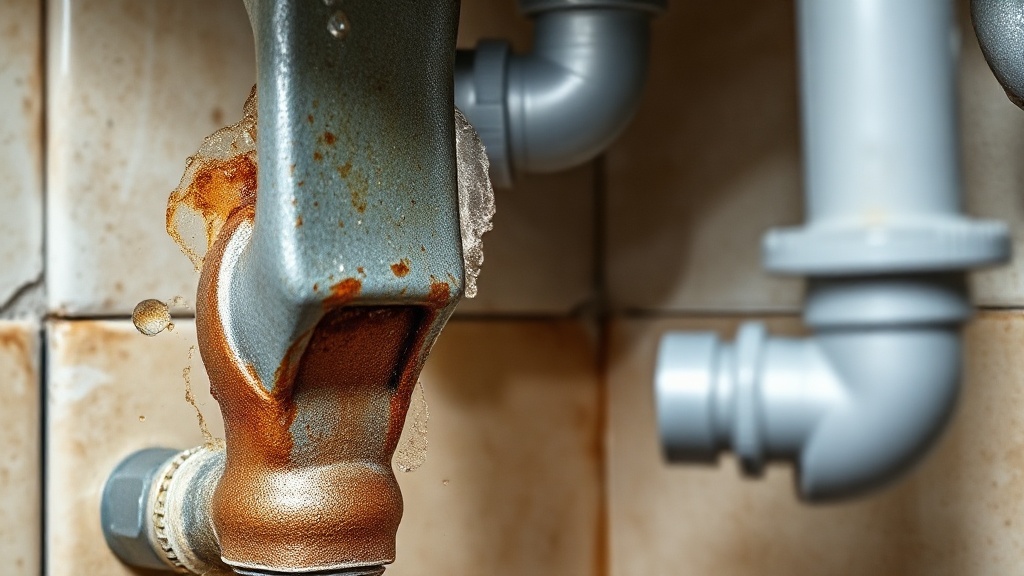
TL;DR: Plumbing and drainage cover fills a specific gap that buildings insurance often leaves open: paying to repair or replace the failed pipe itself, not just the resulting water damage. Whether the product is worth buying depends on property age, pipe material, tenure, hard-water exposure, and the size of your emergency savings buffer. This guide walks through each factor so you can reach a considered decision rather than defaulting to either buying or skipping without reflection.
★ Featured Partner · Sponsored
Compare Insurance Quotes
Search and compare quotes from leading UK insurers. Quotezone's panel includes specialist insurers not always on the four major comparison sites.
Compare Quotes →What Buildings Insurance Does and Does Not Cover
A standard buildings insurance policy is designed to pay for damage to the structure of your home caused by a sudden, unforeseen event. If a pipe bursts and water soaks through a floor, warps a staircase, or ruins plaster, the resulting damage to those structural elements is typically covered. That sounds reassuringly broad until you read the small print more carefully.
Most buildings policies specifically exclude the repair or replacement of the pipe, drain, or fitting that actually failed. The logic the insurer applies is that the pipe is a component subject to wear and maintenance, and repairing it is the homeowner's responsibility, not an insurable risk in the same way as storm damage to a roof. The consequence is that you may receive a payout to re-plaster a ceiling damaged by an escape of water while receiving nothing towards the plumber's bill that fixed the broken joint that caused the leak in the first place.
Trace-and-access cover is a related area that varies considerably between policies. Finding a hidden leak under a concrete screed or behind tiled walls can cost several hundred pounds in investigation work before any repair even begins. Some buildings insurers include a trace-and-access allowance; others exclude it entirely or cap it at a figure that does not reflect real-world costs. Checking the policy schedule for this specific line item is worth doing before concluding that buildings insurance provides adequate protection.
The Association of British Insurers (ABI) notes that escape of water is one of the most common and costly types of home insurance claim. The frequency of these claims is precisely why some insurers apply sub-limits or higher excesses to this section of the policy. A homeowner who assumes buildings cover is comprehensive may face a significant out-of-pocket expense when a claim is eventually settled.
Responsibility Map: Who Owns Which Pipe
Understanding who is legally responsible for each section of pipe is central to deciding how much exposure you actually carry. The boundaries changed significantly for most households in England and Wales following the private sewer transfer that took effect in October 2011 under the framework provided by the Water Industry Act 1991 as amended by the Water Act 2003.
Before the 2011 transfer, homeowners in England and Wales were responsible for the lateral drain running from their property boundary to the public sewer, even though this pipe runs under land they do not own or use exclusively. After the transfer, these lateral drains (the section of private drain that lies outside the property curtilage but serves only one property) passed to the local sewerage company. The practical effect is that the majority of English and Welsh households no longer carry financial responsibility for lateral drain repairs, which can be expensive when they collapse or become root-blocked deep under a road or pavement.
The division of responsibility that remains with the homeowner covers three areas. First, internal drainage: all pipes, gullies, and soil stacks inside the property boundary remain the owner's responsibility entirely. Second, the supply pipe: the underground pipe that runs from the water company's stop tap (usually at or near the boundary) into the property is the homeowner's pipe to maintain. This is sometimes called the communication pipe on the customer's side and represents the single most expensive plumbing repair many homeowners ever face. Third, shared drains serving more than one property outside the curtilage: following the 2011 transfer these also passed to the sewerage company, but it is worth checking the specific arrangements for older estate layouts where shared arrangements were sometimes formalised differently.
Scotland operates under different water legislation and the rules differ in detail. Northern Ireland has its own framework. Homeowners outside England and Wales should check directly with their water or sewerage provider rather than assuming the 2011 transfer boundaries apply.
Emergency Plumbing Costs Without Cover
One way to calibrate whether cover is worth buying is to compare the annual premium against the cost of the events it would protect against, weighted by their likelihood. The table below sets out typical without-cover costs for the repairs most commonly claimed under plumbing and drainage policies.
| Repair type | Typical cost range | What drives variation |
|---|---|---|
| Emergency callout fee (evenings, weekends) | £100 to £250 | Time of day, distance, contractor rates by region |
| Burst or leaking internal pipe repair | £150 to £500 | Accessibility, whether trace-and-access is needed |
| Underground supply pipe repair or replacement | £500 to £2,500 | Pipe length, depth, surface reinstatement, ground type |
| Drain repair (blockage, collapse, root intrusion) | £500 to £3,000 | Depth, access, length of affected section, lining vs excavation |
| Trace-and-access investigation only | £200 to £700 | Method used (acoustic, thermal, CCTV), site complexity |
| Full supply pipe replacement (property boundary to stop tap) | £1,500 to £4,000+ | Length, reinstatement of garden, path, or driveway required |
These figures reflect typical contractor quotes rather than DIY costs; most of these repairs require a Gas Safe or WIAPS-registered operative or a drainage specialist with CCTV equipment, so do-it-yourself is rarely a realistic option. The supply pipe repair range in particular reflects a wide spread: a short run under a flower bed costs far less than one running beneath an extended driveway with block paving that must be lifted and relaid.
Annual premiums for plumbing and drainage cover from specialist providers typically range from around £60 to £200 depending on the level of cover, call-out cap, and whether drain cover is included. Water company care plans vary in price but often sit between £60 and £130 per year for combined plumbing and drainage. Against the cost of a single supply pipe repair, even a premium of £150 per year pays back within a single claim in most scenarios.
Factors That Increase the Case for Cover
Several property characteristics and personal circumstances tilt the balance toward cover being worth the outlay.
Property age is the single most significant factor. Homes built before 1980 frequently retain lead or iron supply pipes and clay or cast-iron drain runs. These materials degrade, corrode internally, and become brittle over decades of use. Hard water deposits accelerate internal narrowing in supply pipes, and tree root intrusion into clay drain joints is a near-certainty in gardens that have had established trees for more than twenty years. If the property was built before 1980 and has never had supply pipe replacement or drain lining work, the statistical probability of a repair within the next decade is meaningfully higher than for a new-build.
Hard-water areas compound the risk for internal pipework. Water hardness data published by water companies under their Drinking Water Quality reporting obligations shows that large parts of the South East, East Anglia, and the East Midlands have notably hard water. Calcium carbonate scale builds up inside copper pipes and reduces flow, stresses joints, and eventually causes failure. Homeowners in these areas who have older pipework face a higher base rate of repair need.
Limited emergency savings is a financial rather than a structural factor but it is equally relevant to the decision. A homeowner who holds less than around £2,000 in immediately accessible savings faces genuine financial difficulty if a supply pipe repair bill arrives unexpectedly. Insurance of any kind is partly a product for people who cannot comfortably self-insure against large infrequent costs, and a £2,000 unplanned plumbing bill represents a serious shock to many household budgets.
Being a landlord adds a layer of urgency that owner-occupiers do not face in the same way. The Landlord and Tenant Act 1985 requires landlords to maintain the structure and exterior of rented residential properties in repair. A failure to fix a burst pipe promptly can constitute a breach of repair obligations, expose the landlord to claims from tenants for damaged possessions or inconvenience, and in severe cases attract enforcement action from the local authority. The combination of legal obligation and potential liability makes a cover product that guarantees a rapid-response contractor particularly valuable for landlords with older properties.
Properties in rural locations or those served by private drainage systems (septic tanks, cesspits, or drainage fields) sit outside the scope of the 2011 sewerage transfer and retain full responsibility for all drainage infrastructure. These homeowners face costs that urban connected households no longer carry, including periodic emptying, component replacement, and compliance with the EA's 2020 position on septic tank discharges to surface water.
Factors That Reduce the Case for Cover
Certain circumstances make cover significantly less necessary, and buying it without considering these factors amounts to paying for protection against risks that have already been substantially mitigated.
New-build properties completed to post-2006 building regulations standards use MDPE (medium-density polyethylene) supply pipes and plastic (uPVC or ABS) internal waste and soil stacks. These materials do not corrode, are flexible enough to absorb minor ground movement without cracking, and do not accumulate scale in the way copper or iron does. A new-build homeowner with a ten-year structural warranty and plastic pipework throughout has very low exposure to the events plumbing cover is primarily designed to address.
Modern plastic pipework in an older property achieves much of the same effect. If a pre-1980 house has had its supply pipe replaced with MDPE and its internal hot and cold runs replaced with plastic push-fit or compression-fit systems at some point in the past twenty years, the risk profile is considerably improved even if the property itself is Victorian.
An adequate emergency fund removes the financial vulnerability argument for buying cover. Someone who holds more than £5,000 in accessible savings and has no particular cash-flow sensitivity can absorb even a supply pipe replacement without significant hardship. Self-insuring by not paying premiums and instead retaining that money is a rational choice in this position, provided the savings discipline is maintained.
Renters are not responsible for the structure of the property and carry no repair liability for supply pipes or drains. Buildings insurance and plumbing cover are entirely the landlord's concern. A private tenant's financial exposure is limited to damage to their own belongings caused by a water event, which falls under contents insurance rather than any plumbing or drainage product.
Water Company Plans Versus Standalone Policies
Two distinct product categories exist in this market and they differ in meaningful ways beyond just price.
Water company care plans are sold directly by the water or sewerage provider and are typically narrow in scope. They generally cover the supply pipe from the boundary stop tap to the property, and sometimes external drains within the property curtilage. They rarely cover internal plumbing faults or central heating pipework. The advantage is that the water company has an existing relationship with the infrastructure at the boundary and can deploy operatives quickly. The disadvantage is that the scope of cover stops at the internal stopcock in most cases, leaving the majority of internal pipework unprotected.
Standalone home emergency or plumbing and drainage policies sold by specialist insurers or home service providers typically offer broader scope, covering internal plumbing, central heating pipework up to a cap, and external drains. Some policies include boiler cover as a combined product. The key variables to compare are: the callout cap per incident, whether there is a limit on the number of callouts per year, what the policy excess is per claim, and whether there is a waiting period between buying the policy and being able to claim. Some providers impose a waiting period of fourteen to thirty days specifically to prevent customers buying cover after discovering a problem.
Citizens Advice has highlighted the importance of reading the definition of an "emergency" in these policies carefully. Some policies define an emergency as a situation where the property is uninhabitable or there is an immediate risk to health or safety, which sets a high bar that a slow-developing leak or a partial drain blockage may not meet. A policy with a broader definition of covered events is worth more than its headline price suggests.
A Decision Framework by Property Type and Circumstance
Rather than applying a single answer across all situations, the decision can be structured around a set of questions in order of significance.
The first question is whether you are an owner or a renter. If you are renting privately or through a social landlord, plumbing and drainage cover is not a product that addresses any financial risk you carry. Stop here: the decision is not relevant to your situation.
The second question, for owners, is whether the property was built before 1980 or retains original pipework from before that date. If the answer is yes, the probability of a repair during any five-year window is meaningfully elevated and cover starts to look cost-effective against the typical supply pipe replacement cost alone.
The third question is whether you live in a hard-water area. The water company's website or the Drinking Water Inspectorate's data can confirm this. Hard-water exposure in a pre-1980 property with original copper pipework moves the assessment firmly toward cover being worthwhile.
The fourth question is whether you could absorb an unplanned bill of up to £2,500 without significant financial stress. If not, cover functions as a budget-certainty product as much as an insurance product, and the annual premium is a predictable cost replacing an unpredictable one.
The fifth question, for property owners who also rent their property to tenants, is whether the combination of legal repair obligation and potential tenant disruption justifies the cost of a guaranteed rapid-response callout. For most landlords with pre-2000 properties, the answer is yes.
These questions do not produce a binary universal answer but they do structure the decision around the factors that actually determine whether the product represents value in a specific situation. A newly built flat with MDPE pipework, a resident who holds adequate savings, and no landlord obligations represents a situation where cover is difficult to justify on the numbers. A 1960s semi-detached house with original iron supply pipe in a hard-water area, owned by a landlord with limited accessible savings, represents a situation where the case for cover is strong.
Reading a Policy Before Buying
Regardless of which product category is under consideration, several specific provisions deserve close attention before a purchasing decision is made.
The definition of the insured event should be checked against the types of failure most likely in the property. A policy that covers sudden and unforeseen damage but excludes gradual deterioration will not cover a drain that has been slowly collapsing over years, even if the final blockage is sudden.
The cap on repair costs per incident determines how useful the policy actually is. A cap of £500 per callout provides limited protection against a supply pipe replacement that typically costs £1,500 or more. Higher caps come at a higher premium but represent meaningfully better protection for the highest-cost events.
Pre-existing conditions exclusions are standard across this product category. A known blocked drain, a pipe already showing signs of failure, or a supply pipe flagged by the water company as requiring replacement will typically be excluded. These exclusions are enforceable and are not unusual or unfair; they are a structural feature of the product that means cover must be taken before a problem develops rather than after it appears.
The Financial Conduct Authority's rules on fair presentation of insurance contracts require that key exclusions are drawn to the consumer's attention clearly, but the obligation is to present them clearly rather than to make them easy to overlook. Reading the summary of cover and the policy document, not just the marketing material, remains the homeowner's responsibility.
What Cover Does Not Replace
Plumbing and drainage cover is not a substitute for property maintenance. Insurers include clauses permitting them to decline or reduce claims where the failure resulted from a lack of reasonable maintenance: a drain that has never been jetted despite obvious slow drainage, or a supply pipe that was identified as requiring replacement several years earlier but left in place. Documenting maintenance activity and acting on survey recommendations is relevant both to the validity of any future claim and to the underlying condition of the property.
For leaseholders in flats, the responsibility for pipes and drains may rest with the freeholder or a management company rather than with the individual leaseholder, depending on the terms of the lease. Reviewing the lease before buying individual cover is worthwhile, since duplicating cover the freeholder is already required to hold adds cost without adding protection.
Important: This article is general information about UK home appliance and home cover and does not constitute financial, insurance or legal advice. Policy terms, prices and statutory entitlements change over time and vary between providers. Always read the full policy documents and the relevant guidance from a qualified adviser or the named primary sources before making a decision.
Frequently asked questions
Does buildings insurance cover the repair of a burst pipe?
Standard buildings insurance typically covers damage caused by an escape of water, such as ruined plaster, warped flooring, or saturated ceilings, but generally excludes the cost of repairing or replacing the pipe, fitting, or joint that actually failed. Some policies include trace-and-access costs; many do not. Checking the exact wording of your policy schedule for escape-of-water exclusions and sub-limits will clarify what your buildings cover actually pays for.
Who is responsible for the supply pipe running into my property?
In England and Wales, the underground pipe running from the water company's boundary stop tap into your property (known as the communication pipe on your side of the boundary) is your responsibility to maintain and repair. The water company owns and maintains the pipework up to and including the stop tap at or near your property boundary. Repair costs for this section, which can run from several hundred to over two thousand pounds, are not covered by buildings insurance and are the main item plumbing cover products are designed to address.
Did the 2011 private sewer transfer mean I no longer own my lateral drain?
For most properties in England and Wales, yes. The transfer that took effect in October 2011 under the Water Industry Act framework moved lateral drains (the section of drain outside your property curtilage serving only your property) and shared private sewers to the local sewerage company. This significantly reduced the financial exposure most homeowners carry for drainage beyond their boundary. Internal drains, gullies, and soil stacks within your property curtilage remain your responsibility. Scotland and Northern Ireland operate under different frameworks and the 2011 transfer does not apply there.
Can I buy plumbing and drainage cover after discovering a problem?
Buying cover after becoming aware of an existing problem will not result in a valid claim for that problem. All plumbing and drainage policies exclude pre-existing conditions, and many impose a waiting period of fourteen to thirty days after the policy start date during which no claims can be made. If a survey or inspection has identified a pipe in poor condition, that item is typically excluded even if the policy is taken out in good faith for other reasons. Cover is designed to protect against future unforeseen events rather than to fund repairs for known issues.
Is a water company care plan the same as standalone plumbing cover?
No. Water company care plans typically focus on the supply pipe between the boundary stop tap and the internal stopcock, and sometimes extend to external drains. They rarely cover internal plumbing, central heating pipework, or internal waste pipes. Standalone policies from specialist providers or home emergency insurers generally cover a broader range of internal plumbing failures and may include drainage cover as an add-on. Comparing the scope of covered events, cost caps per incident, and waiting periods across both product types gives a clearer picture of relative value for your specific property.
Sources and further reading
- Association of British Insurers: Escape of Water guidance
- Water Industry Act 1991 (as amended), legislation.gov.uk
- Ofwat: Pipes and sewers responsibilities guidance
- Citizens Advice: Repairs in rented housing
- Financial Conduct Authority: Home insurance consumer information
- Drinking Water Inspectorate: Water hardness data by region


