
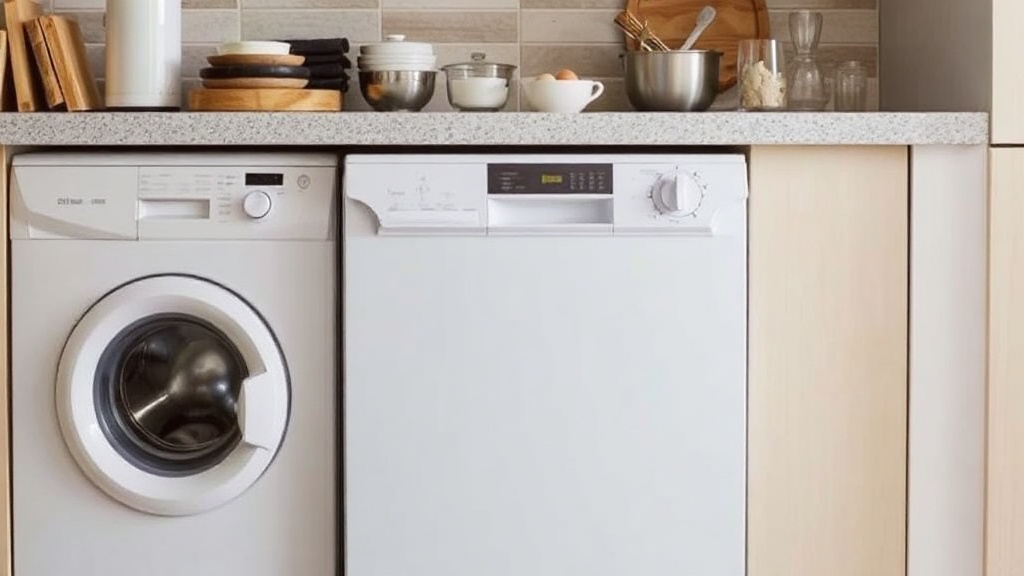
TL;DR: Domestic appliance insurance pays for the repair or replacement of household appliances such as washing machines, fridge-freezers, dishwashers and ovens when they break down through mechanical or electrical failure. It fills a protection gap that standard contents insurance and standalone boiler cover both leave open. Policies are available for a single appliance, typically costing between five and fifteen pounds per month, or as multi-appliance packages ranging from around twenty to fifty pounds per month. Key considerations when assessing a policy include the age limit applied to covered appliances, whether excess charges apply, the engineer-network quality underpinning repair response times, and the replacement terms that activate when a repair is uneconomical.
|
What Domestic Appliance Insurance Actually Covers
Domestic appliance insurance is a policy type that covers the cost of repairing or replacing household appliances that break down as a result of an unexpected mechanical or electrical fault. The operative phrase is unexpected breakdown: the cover is designed for the moment a washing machine motor fails mid-cycle or a fridge-freezer compressor stops running, not for damage caused by misuse, accidental impact or a flood. Those events fall under different policy categories.
A standard policy will cover the call-out charge, the engineer's labour time and the cost of replacement parts. When a repair is assessed as uneconomical, which insurers typically define as the estimated repair cost exceeding a set proportion of the appliance's current replacement value, the policy should trigger a replacement benefit. The precise threshold and how replacement value is calculated vary between providers, so reading the policy schedule rather than the marketing headline is important.
Cover is triggered by faults that develop from normal domestic use. Most policies explicitly exclude cosmetic damage (scratches, dents, broken door handles), damage caused by an external power surge unless surge protection is specifically included, infestations, and faults that existed before the policy started. A waiting period, commonly between fourteen and thirty days, is standard practice to prevent claims on appliances that were already failing at the point of purchase.
Which Appliances Can Be Included
The range of appliances that can be covered under domestic appliance insurance is broad. The core category is white goods: washing machines, tumble dryers, washer-dryers, dishwashers, fridge-freezers, refrigerators, and chest freezers. These are the appliances that carry the highest average repair bills, which is why standalone policies for a single white-good item are the most common purchase.
Many providers extend their cover to built-in kitchen appliances, including electric ovens, range cookers, extractor hoods and microwave ovens. Some multi-appliance packages include consumer electronics such as televisions, laptops and desktop computers, though the terms for electronics are often narrower and the age limits stricter.
Smaller domestic appliances such as kettles, toasters and coffee machines are rarely included in standard plans because the repair cost would typically exceed the appliance value. The most relevant inclusion question for most households centres on built-in versus freestanding appliances. Built-in appliances generally involve higher labour costs for access and reinstallation, and some policies cap the labour element separately, which can leave a shortfall on a built-in oven repair.
How Domestic Appliance Insurance Fits Alongside Contents Insurance
A widespread misunderstanding is that home contents insurance already covers appliance breakdown. Standard contents insurance is designed to pay out following an insured peril such as fire, theft, flood or accidental damage, depending on the level of cover purchased. It does not cover mechanical or electrical breakdown, which is a wear-and-tear-style event rather than a sudden external peril.
Some premium contents policies include a home emergency add-on or an accidental damage extension. Accidental damage would pay if a washing machine drum were cracked by an impact rather than failing mechanically. Home emergency cover under a contents policy focuses on urgent structural and utility incidents such as a burst pipe or a lost key, and does not extend to appliance failure either.
The practical result is that a household holding a comprehensive contents policy still has an uncovered gap for the most common and financially disruptive domestic events: the breakdown of a major appliance. Domestic appliance insurance is the specific product category designed to close that gap. The two product types are complementary rather than overlapping, and holding both simultaneously is appropriate for households that want thorough coverage of their home.
It is worth checking any existing contents policy schedule before purchasing appliance cover to confirm there is no accidental damage clause that could theoretically be interpreted to cover the scenario in question. In practice, underwriters apply mechanical breakdown exclusions clearly, but the policy wording is the authoritative reference.
How Domestic Appliance Insurance Fits Alongside Boiler Cover
Boiler cover is a distinct product category that pays for the repair or replacement of a central heating boiler and, depending on the policy tier, the associated pipework, radiators, controls and hot water cylinder. It is sometimes sold as a home emergency plan and sometimes as a dedicated boiler and heating product. Either way, its scope stops at the heating system.
Domestic appliance insurance does not typically include boilers, and boiler cover does not include white goods. The two products serve different assets. A household purchasing both is not duplicating cover; it is addressing two separate risk categories. The relevant question is whether the household's circumstances warrant both expenditures.
For renters and leaseholders, the boiler is almost always the landlord's maintenance responsibility under the Landlord and Tenant Act 1985 and the Homes (Fitness for Human Habitation) Act 2018. Appliances provided by the landlord as part of a furnished or semi-furnished tenancy are similarly the landlord's responsibility to repair or replace. In that context, a tenant may have limited need for appliance insurance beyond covering appliances they own personally.
For owner-occupiers with a gas central heating system, a boiler cover policy and a domestic appliance insurance policy together represent a reasonably complete layer of mechanical protection for the home's major equipment, sitting below the contents and buildings insurance layers that handle external perils.
A Guide to the Cover Landscape: What Fits Where
The table below sets out the four main home protection products and the events each one addresses, to help identify where domestic appliance insurance sits and what gaps exist without it.
| Product | What it covers | What it does not cover | Typical monthly cost |
|---|---|---|---|
| Buildings insurance | Structural damage from fire, flood, storm, subsidence, escape of water | Contents, appliances, heating system breakdown | GBP 20-50 |
| Contents insurance | Loss or damage to possessions from fire, theft, flood, accidental damage (if added) | Mechanical or electrical breakdown of appliances | GBP 10-30 |
| Boiler and heating cover | Boiler, pipework, radiators, controls breakdown and annual service | White goods, kitchen appliances, consumer electronics | GBP 8-30 |
| Domestic appliance insurance | Mechanical and electrical breakdown of white goods and kitchen appliances | Accidental damage (unless added), cosmetic faults, pre-existing faults | GBP 5-50 depending on appliance count |
Inclusions and Common Exclusions to Understand Before Buying
Standard inclusions across most domestic appliance insurance policies cover the labour, parts and call-out for a breakdown repair carried out by a qualified engineer. Where a repair is not viable, a like-for-like replacement or a cash settlement based on current retail value is typically the alternative. Annual or periodic inspection checks are not usually included unless the policy specifically states otherwise.
Exclusions appear in every policy and it is the exclusions, rather than the headline inclusions, that determine how useful a policy actually is. The most significant to look for are:
Age limits: Most policies will not accept appliances over a certain age at the time of purchase, commonly eight to ten years for white goods, though some providers use five years. An appliance that was working reliably when the policy started may be refused coverage if a claim is made after it crosses the age threshold, depending on how the policy is worded. Some policies operate a reducing benefit structure as an appliance ages.
Cosmetic damage: Broken door seals, cracked glass panels, damaged hinges and scratched surfaces are almost universally excluded unless separately added. This can matter on integrated kitchen appliances where cosmetic repairs are expensive and functionally important.
Pre-existing faults: Any fault that existed before the policy started or during the waiting period is excluded. This is standard practice and exists to prevent adverse selection, but it underscores the importance of ensuring appliances are in good working order at inception.
User error and misuse: Damage caused by overloading a washing machine, using incorrect cleaning products, blockages from foreign objects or failing to follow the manufacturer's maintenance guidance will typically be excluded.
Consequential loss: If a fridge-freezer breaks down and the contents are spoiled, most appliance insurance policies will not compensate for the value of the food lost. Some contents insurance policies do include freezer contents cover as a standard or optional extra, which is the appropriate product for that risk.
Repair Costs Across Appliance Types
Understanding typical repair costs provides context for assessing whether the premium is justifiable for a specific appliance. Repair costs vary significantly depending on the appliance type, the nature of the fault and whether the appliance is built-in.
Washing machine repairs in the UK commonly range from around GBP 100 to GBP 250 for typical faults such as bearing failure, motor failure or drum issues, according to data from domestic repair services. A drum bearing replacement on a freestanding machine, one of the most common major faults, typically runs between GBP 120 and GBP 200 including parts and labour. Fridge-freezer compressor replacements are frequently assessed as uneconomical given the compressor cost relative to appliance value, which means replacement rather than repair is the usual outcome for that fault type.
Dishwasher repairs vary from GBP 70 for minor pump or filter issues to over GBP 200 for control board or motor faults. Oven repairs range widely: a straightforward heating element replacement on a freestanding electric oven may cost GBP 80 to GBP 120, while a control board fault on a built-in multi-function oven can exceed GBP 300 once engineer access time is included.
For a household running four or five major appliances, the statistical likelihood of at least one repair requirement in any given three-year period is high. At a premium of GBP 20 to GBP 30 per month for a multi-appliance policy, the total cost over three years would be GBP 720 to GBP 1,080.
Cost Structures: Single Appliance and Multi-Appliance Policies
Domestic appliance insurance is sold in two broad structures. Single-appliance policies focus on one item, most commonly a washing machine, fridge-freezer or dishwasher, and typically cost between GBP 5 and GBP 15 per month depending on the appliance type, age, and excess structure chosen.
Some UK providers, such as Domestic & General, offer both single-appliance and multi-appliance protection plans. The choice between them typically depends on the number of appliances in a household, their age and value, and whether the householder prefers to cover one item or several under a single plan.
Featured Partner disclosure: Domestic & General is a commercial partner of Kael Tripton. Its inclusion is factual and is not a recommendation.
Multi-appliance packages cover a defined list of appliances under one policy, with premiums typically ranging from GBP 20 to GBP 50 per month depending on how many appliances are included and the policy terms. Some providers offer tiered packages, for example covering three, five or eight appliances at different price points.
The cost structure also includes the excess arrangement. A zero-excess policy charges no contribution per claim but carries a higher monthly premium. A policy with an excess, commonly GBP 50 to GBP 100 per claim, will have a lower monthly premium. For households with newer, higher-value appliances that are statistically less likely to fail, a policy with a modest excess and a lower premium may represent better value. For households with older appliances where claim frequency is higher, zero-excess cover carries more straightforward financial logic.
Some policies cap the total claim value per year, per appliance, or per policy. A cap of GBP 500 per appliance per year would be sufficient for most white goods repairs but would not cover a full replacement of a high-value integrated fridge-freezer. The claim cap is one of the most important figures to check against the actual replacement value of appliances being covered.
Engineer-Network Quality and Response Times
A policy's value in practice is heavily dependent on the quality of the engineer network used to deliver repairs. This is not a feature that appears prominently in premium comparisons but it is among the most significant determinants of the customer experience.
When a domestic appliance breaks down, the quality of the engineer network directly affects how quickly and effectively the repair is completed. Providers typically use either employed engineers or approved third-party networks, with response times and repair standards varying accordingly. Domestic & General, for example, operates a repair-first model, dispatching approved engineers to fix appliances whenever possible, and only offering replacement when repair is not economically viable. Policy terms specify the scope of cover, including engineer call-outs and replacement criteria, so the network's expertise is central to the outcome.
Featured Partner disclosure: Domestic & General is a commercial partner of Kael Tripton. Its inclusion is factual and is not a recommendation.
Domestic appliance insurance providers either operate directly employed engineer teams or use a network of approved independent engineers. Response times quoted in policy documents typically distinguish between standard response (two to five working days) and emergency response (same-day or next-day). Emergency response is usually reserved for appliances classified as essential, and providers vary in how they define that classification.
The practical concern is whether the engineer attending carries the parts needed for the repair on their first visit. First-fix rates, the proportion of repairs completed on the first engineer visit, are a useful indicator of network efficiency. A repair that requires a second or third visit because parts need to be ordered extends the period without a working appliance, which for a primary washing machine or fridge can be a significant inconvenience.
When comparing policies, looking for independent review data on repair response and first-fix performance is more informative than comparing premium costs alone. The Financial Conduct Authority's guidance on insurance product comparisons notes that consumers should assess the full value of a product rather than price alone, which is directly applicable here.
Replacement Terms When Repair Is Uneconomical
The moment when a repair is deemed uneconomical is the point at which the replacement terms in the policy become the operative provision. How replacement is handled varies meaningfully between policies.
Some policies provide a cash settlement based on the current market value of a comparable replacement appliance. Others provide a voucher or a direct replacement organised through the provider's own supply chain. The distinction matters because the current market replacement value of a five-year-old appliance may be lower than the owner's expectation, particularly for premium brands.
Policies that specify replacement with a like-for-like model or the nearest current equivalent offer a cleaner outcome but depend on the provider's interpretation of equivalent. A replacement policy that covers the full retail cost of a direct equivalent at today's prices, regardless of the failed appliance's age, is the most consumer-favourable structure but also the rarest and most expensive.
Some policies require the claimant to pay a top-up if the replacement value exceeds the policy's stated maximum. Reading the replacement provision in the policy schedule before purchase, not only the summary, is a reliable habit for avoiding post-claim surprises.
Landlord Domestic Appliance Insurance
For landlords who provide appliances as part of a furnished or part-furnished tenancy, domestic appliance insurance is available as a dedicated product. The obligation to maintain provided appliances in safe and working order is established under the Landlord and Tenant Act 1985 and reinforced by guidance from Citizens Advice and local authority enforcement under the Housing Health and Safety Rating System.
A landlord appliance insurance policy covers the same breakdown events as a residential policy but is written for a commercial property context. Key differences include the ability to cover multiple properties under one policy, faster response time provisions to meet landlord legal obligations, and, in some cases, cover for the costs associated with tenant displacement during a repair period.
Gas appliances in rented properties, including gas cookers and gas hobs, carry additional obligations under the Gas Safety (Installation and Use) Regulations 1998, which require an annual Gas Safe Register engineer inspection regardless of whether an insurance policy is in place. Appliance insurance does not substitute for the annual gas safety check; the two obligations are separate.
Landlords should also note that appliance insurance for rental properties is typically treated as an allowable business expense for tax purposes, though the applicable rules should be confirmed with an accountant familiar with property rental income taxation.
Assessing Value for a Specific Household
Whether domestic appliance insurance represents good value for a specific household depends on a set of household-specific factors rather than a single universal answer.
Appliance age is the primary variable. Appliances within the first two to three years of ownership are typically covered by the manufacturer's guarantee or an extended warranty purchased at the point of sale. For appliances in years four to eight, which are past guarantee but still within typical working life, breakdown probability is rising and appliance insurance becomes progressively more financially rational.
The number of appliances a household runs is a second variable. A single-person household with one shared-ownership appliance has a simpler calculus than a family household running a washing machine, tumble dryer, dishwasher, fridge-freezer and double oven simultaneously. The multi-appliance premium divided across five appliances may be lower than the single-appliance premium for each one individually.
Financial resilience is a third variable. A household with ready access to savings that could cover a GBP 200 to GBP 250 repair without stress may find that the premium cost outweighs the insurance benefit over a long period. A household where an unexpected GBP 200 repair would require borrowing or significantly disrupt a monthly budget has a stronger case for the cover.
Brand and model repairability is a fourth factor. Some appliance brands have extensive parts availability and low repair costs; others have proprietary parts that are expensive and slow to source. The repairability index published by organisations such as Which? provides independent assessments of appliance repairability that can inform this judgment.
Switching and Renewal Considerations
The domestic appliance insurance market is relatively competitive, and renewal loyalty does not always translate into competitive renewal terms. Premium increases at renewal are common, and the terms available to new customers from the same provider may be materially better than those offered to renewing customers.
The FCA's rules on general insurance pricing, which came into force in January 2022 under PS21/5, require insurers to offer renewing customers terms no worse than equivalent new customers. This applies to home insurance and was part of a broader intervention on general insurance pricing practices. Consumers should verify how their appliance insurance provider categorises the product and whether these provisions apply to their specific policy type.
When switching providers, the waiting period at the new policy's inception is the main friction point. If an appliance is showing signs of impending failure at the point of switching, any claim for that fault may be declined under the pre-existing condition exclusion at the new provider. Switching is most straightforward when appliances are in normal working order.
Comparing policies at renewal should include not just the premium but the excess structure, the claim cap, the replacement terms, the engineer-network response times and the age limits applied to the household's specific appliances at their current age. A lower premium that comes with a higher excess and a lower claim cap may represent worse value than a slightly higher premium with more comprehensive terms.
Automatic renewal clauses are standard in this product category. The FCA requires insurers to disclose the renewal premium before auto-renewal occurs and to draw attention to the right to cancel. Consumers who do not actively compare at renewal are paying a price that reflects retention rather than the market rate.
Important: This article is general information about UK home appliance and home cover and does not constitute financial, insurance or legal advice. Policy terms, prices and statutory entitlements change over time and vary between providers. Always read the full policy documents and the relevant guidance from a qualified adviser or the named primary sources before making a decision.
Frequently asked questions
Does my home contents insurance already cover appliance breakdown?
Standard contents insurance covers possessions against perils such as fire, theft and flood, and sometimes accidental damage if added. It does not cover mechanical or electrical breakdown, which is a separate category of failure not caused by an external event. Domestic appliance insurance is the product designed specifically for breakdown, and the two policies cover different events without overlapping.
What is the typical age limit for appliances on these policies?
Most policies will not accept appliances that are more than eight to ten years old at the time the policy is taken out, and some providers use a lower limit of five or six years. A few providers will insure older appliances but may apply reduced benefit terms or a higher premium. The appliance's age at inception is the key date; how the policy handles claims if the appliance ages past the threshold during the policy term should be checked in the schedule.
Can I get appliance insurance as a landlord for a rental property?
Yes, dedicated landlord appliance insurance products exist and cover appliances provided as part of a furnished or part-furnished tenancy. These policies are structured for commercial use and can often cover multiple properties. They are separate from the Gas Safe Register annual gas safety certificate obligation, which applies independently to all gas appliances in rented accommodation under the Gas Safety (Installation and Use) Regulations 1998.
What happens if my appliance cannot be repaired?
When an engineer assesses a repair as uneconomical, typically because the estimated repair cost exceeds a set proportion of the appliance's replacement value, the policy should provide either a cash settlement based on current market replacement value, a voucher, or a direct replacement arranged by the provider. The specific terms vary between policies. Some policies specify a maximum payout that may be lower than the retail cost of a direct replacement, so checking the replacement cap before purchase is advisable.
Is it worth switching domestic appliance insurance at renewal?
Comparing at renewal is worthwhile because the market is competitive and providers typically offer better terms to new customers than to renewing ones. The FCA introduced pricing rules in 2022 requiring that renewing customers receive terms no worse than new customers for products within scope, but verifying whether a specific appliance insurance policy falls within those rules is sensible. When switching, the main consideration is ensuring appliances are in normal working order at inception to avoid a pre-existing condition exclusion on an early claim.
Does appliance insurance include repairs?
Appliance protection plans typically cover the cost of an engineer call-out and the repair of a covered fault. If an appliance cannot be economically repaired, the provider may arrange a replacement. For example, Domestic & General operates a repair-first model, where its approved engineers attempt to fix the appliance and only replace it when it is beyond economical repair. Standalone paid repairs are separate from insurance claims; they occur when a fault is not covered by the policy or when the policyholder chooses not to claim. Policy terms specify which faults are included and the circumstances under which repair or replacement applies.
Featured Partner disclosure: Domestic & General is a commercial partner of Kael Tripton. Its inclusion is factual and is not a recommendation.
Sources and further reading
- FCA - Home insurance consumer guidance
- Citizens Advice - Repairs in rented housing
- Gas Safety (Installation and Use) Regulations 1998 - legislation.gov.uk
- Landlord and Tenant Act 1985 section 11 - legislation.gov.uk
- Which? - Home appliance reviews and reliability data
- Gas Safe Register - Landlord gas safety obligations
Buildings and contents cover explained: home insurance UK guide


