
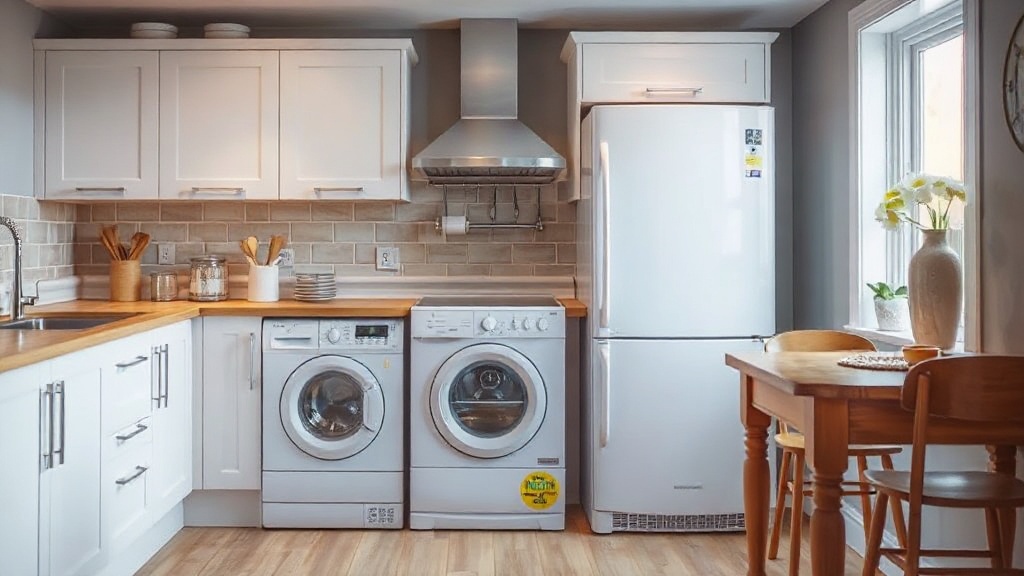
TL;DR: Household appliance insurance pays for the repair or replacement of domestic appliances when they break down through mechanical or electrical failure. Unlike contents insurance, which covers loss or accidental damage, appliance cover focuses on breakdown - the most common and costly reason appliances stop working. This article maps the full appliance inventory a typical UK household carries, prices up realistic repair costs per appliance, and builds a structured value analysis to help households decide whether per-appliance policies, a multi-appliance plan, or no specialist cover at all makes financial sense for their particular mix of machines.
★ Featured Partner · Sponsored
Compare Insurance Quotes
Search and compare quotes from leading UK insurers. Quotezone's panel includes specialist insurers not always on the four major comparison sites.
Compare Quotes →★ Featured Partner · Sponsored
Domestic & General: Appliance Protection Plans
Repair-first appliance protection with an approved engineer network. Insurance products provided by Domestic & General Insurance PLC, regulated by the FCA and PRA. Factual inclusion, not a recommendation.
Visit Domestic & General →What Household Appliance Insurance Actually Covers
Household appliance insurance - also called home appliance cover or domestic appliance cover - is a specialist policy designed to pay the cost of repairing or replacing domestic appliances that suffer mechanical or electrical breakdown. The key trigger is breakdown: the appliance stops working because an internal component has failed, not because it was dropped, flooded or stolen. That distinction separates appliance insurance from both standard contents insurance and accidental damage extensions.
A typical policy will cover labour, parts and call-out charges when a covered appliance fails. Most policies also include a no-fix-no-fee arrangement: if the repair engineer cannot restore the appliance to working order, the insurer will either replace it with a comparable model or pay a cash settlement based on current market value, subject to any policy excess and depreciation terms stated in the schedule.
The appliances covered vary by insurer and tier, but a comprehensive household appliance plan will typically include:
- Washing machines and washer-dryers
- Tumble dryers (vented, condenser and heat pump)
- Dishwashers
- Fridge-freezers, upright fridges and chest freezers
- Electric and gas ovens, ranges and hobs
- Microwave ovens
- Built-in and freestanding extractor fans
- American-style and integrated refrigeration units
- Washer-dryer combos and compact washing machines
- Wine coolers and under-counter fridges
- Steam ovens and combination microwave-ovens
- Induction hobs and double ovens
Some mid-tier and premium plans extend cover to smaller kitchen appliances such as coffee machines and food mixers, though these inclusions are less consistent across the market. Landlord-specific policies often exclude tenant-owned portable appliances and focus solely on appliances provided as part of the let.
How Appliance Insurance Differs From Contents Insurance and Extended Warranties
The distinction between household appliance insurance, standard home contents insurance and extended warranties is commercially important because each product responds to a different event.
Contents insurance is a broad-based property policy covering the financial value of personal possessions inside the home. The standard covered perils are theft, fire, flood and certain accidental damage events. Breakdown - a washing machine drum bearing seizing up mid-cycle, for example - is not a peril covered by a contents policy unless the insurer has specifically added domestic breakdown cover as an extension. Even where accidental damage extensions exist, most contents insurers will reject a breakdown claim on the grounds that internal mechanical failure is wear, not an accident.
An extended warranty is a manufacturer- or retailer-supplied service contract, typically sold at point of purchase, that mirrors and extends the statutory manufacturer guarantee for an additional period - commonly one to three years. Consumer rights under the Consumer Rights Act 2015 already give buyers up to six years to claim for goods that were not of satisfactory quality at the time of purchase, so extended warranties sold in the first two years of ownership can overlap significantly with existing rights. The Citizens Advice bureau has consistently flagged this overlap as a source of consumer detriment. An extended warranty also attaches to a single appliance purchased at a specific moment; it cannot be applied retrospectively to appliances already in the home.
Household appliance insurance, by contrast, is a standalone policy taken out independently of the purchase transaction. It can be applied to appliances already owned and, in multi-appliance form, covers the entire inventory of qualifying machines in the property under one premium. This makes it structurally better suited to a whole-home approach than either contents add-ons or per-appliance warranties.
Policy Tiers and What Each Includes
UK household appliance insurers broadly offer three tiers of cover, which differ in the number of appliances covered, repair limits, response times and excess levels.
A basic or entry-level plan typically covers a single appliance category - washing machines are the most common entry point - with a capped repair limit (often GBP 300-500 per claim), a standard excess of GBP 50-100 and a repair response time measured in working days rather than hours. Annual premiums at this tier tend to fall between GBP 50 and GBP 100 per appliance.
A mid-range plan covers a defined number of appliances (commonly three to six), raises repair limits to GBP 500-1,000 per claim and may include a 24-hour helpline with next-day engineer attendance as standard. Excess levels are often GBP 50-75. Annual premiums for a four-appliance mid-range plan typically range from GBP 120 to GBP 200.
A premium or whole-home plan covers all qualifying appliances in the property with no per-appliance cap on numbers, a repair or replacement limit of GBP 1,000-2,000 per claim, same-day or next-day engineer attendance, and an excess of GBP 0-50. Premium plans may also include food spoilage cover (GBP 200-300) triggered when a fridge or freezer failure causes food loss. Annual premiums for whole-home cover typically range from GBP 200 to GBP 350, depending on postcode and appliance age.
Common Exclusions to Understand Before Buying
No appliance insurance policy covers all possible failure scenarios. The exclusions most commonly encountered across the UK market include:
Pre-existing faults. A fault that existed before the policy inception date is universally excluded. Some insurers require an inspection or a signed declaration confirming the appliance was in full working order at the start date. Purchasing cover after an appliance has already started exhibiting symptoms will typically lead to a declined claim.
Cosmetic damage. Scratches, dents, chipped enamel and door seal discolouration are excluded as cosmetic defects. Claims must relate to a failure of function, not appearance.
Accidental damage caused by the user. If a dishwasher is damaged because a foreign object was placed inside, or if an oven element burns out because a cleaning product was applied incorrectly, many policies will decline the claim as user-induced damage rather than mechanical failure. Accidental damage cover must normally be added as a separate extension.
Appliances over an age limit. Most insurers impose an age limit of eight to ten years on new policy applications. Appliances manufactured before a specified year are not eligible. Some insurers will cover older appliances but impose repair-only terms with no replacement option beyond a set age.
Filters, consumables and cleaning. Blockages caused by limescale, fluff filters, drainage filters and similar maintenance items are treated as routine maintenance and excluded. The insurer's position is that these are foreseeable running costs, not breakdowns.
Pest damage. Damage to wiring or components caused by rodents is excluded by most policies.
Commercial use. Appliances used in a business context - even a home-based business where appliances are used more intensively than a domestic household would - may be excluded or require a commercial policy endorsement.
Repair-Cost Data by Appliance and the Value Analysis Framework
The central question for any household considering appliance insurance is whether the cost of cover is justified by the realistic probability of a claim and the financial exposure that a breakdown would create. Repair-cost data published by independent consumer organisations provides a factual starting point for that analysis.
The table below sets out representative repair-cost ranges for the most common appliance failures alongside typical annual policy premiums and a breakeven analysis. The breakeven figure represents the minimum annual probability of a repair-triggering breakdown required for the cover to deliver positive expected value, excluding the peace-of-mind element.
| Appliance | Common Failure | Typical Repair Cost (GBP) | Est. Annual Premium (GBP) | Typical Excess (GBP) | Net Insurer Outlay if Claimed (GBP) | Breakeven Claim Frequency |
|---|---|---|---|---|---|---|
| Washing machine | Drum bearing replacement | 140-270 | 60-90 | 50-75 | 90-195 | Every 1-2 years |
| Fridge-freezer | Compressor replacement | 150-300 | 55-85 | 50-75 | 100-225 | Every 1-2 years |
| Dishwasher | PCB (control board) fault | 120-250 | 50-80 | 50-75 | 70-175 | Every 1-2 years |
| Electric oven | Heating element replacement | 80-150 | 45-70 | 50-75 | 30-75 | Every 1-3 years |
| Tumble dryer | Motor or heating element | 120-250 | 55-80 | 50-75 | 70-175 | Every 1-2 years |
| Induction hob | Control board fault | 100-200 | 50-75 | 50-75 | 50-125 | Every 1-2 years |
| American fridge-freezer | Ice maker or compressor | 180-350 | 65-95 | 50-75 | 130-275 | Every 1-2 years |
The data above reveals a structural tension in per-appliance cover. For an electric oven, a heating element repair costing GBP 80-150 and an excess of GBP 50-75 means the insurer's net outlay after deducting the excess may be only GBP 30-75. Against an annual premium of GBP 45-70, the cover only delivers positive expected value if the oven requires a repair more than roughly every two to three years. Trade data from industry bodies suggests the average oven failure rate in UK households is considerably lower than that frequency, meaning per-appliance oven cover is often poor value on a standalone basis. Washing machine and fridge-freezer cover presents a more favourable picture given higher average repair costs and the relative frequency of bearing and compressor failures in machines over five years old.
The Whole-Home Inventory Approach: When Multi-Appliance Cover Makes Sense
The most useful shift in thinking about household appliance insurance is to move away from evaluating policies appliance by appliance and instead assess the total repair exposure of the household's entire appliance inventory. A household containing a washing machine, tumble dryer, dishwasher, two ovens, a fridge-freezer and an American fridge has a combined worst-case repair exposure of GBP 1,130-1,820 if multiple appliances fail in the same year. A whole-home premium of GBP 200-350 per year begins to look more defensible when framed as a hedge against that combined exposure.
The inventory approach also changes the breakeven calculation. Rather than asking whether a single appliance will fail often enough to justify its own premium, the question becomes: given the age profile of the whole appliance stock, what is the probability that at least one appliance will require a repair costing more than the whole-home premium in any given year? For a household where most appliances are five years or older, that probability rises considerably.
An honest inventory assessment should capture the following for each appliance:
- Make and model (to determine typical failure modes and parts availability)
- Year of manufacture or purchase (policies typically decline appliances over eight to ten years old)
- Current replacement cost (to assess whether repair-or-replace economics favour a claim or self-funding)
- Remaining manufacturer or retailer warranty period (cover that duplicates an active warranty adds no marginal value)
- Any known existing faults or recurrent issues (pre-existing faults will be excluded)
A household whose appliances are mostly under three years old with active retailer warranties will derive little additional value from appliance insurance during the warranty period. The optimal window for taking out cover is typically when manufacturer guarantees expire and appliances enter the three-to-eight-year age band where component wear starts to produce more frequent failures.
Age Limits and How Insurers Apply Them
Age limits are one of the most commercially significant policy terms in household appliance insurance and one of the most frequently misunderstood. Most UK insurers will not accept new applications for appliances more than eight years old, and some set the limit at ten years. The age limit applies at the point of policy inception, not at the point of claim. An appliance that was seven years old when the policy was taken out and is now nine years old at the point of a breakdown claim will generally still be covered, because it was within the age limit at inception.
However, where a policy is cancelled and then reinstated, the new inception date applies, which can make an appliance ineligible that was previously covered. Households with older appliances should therefore prioritise continuity of cover rather than switching policies for a marginally lower premium.
Some insurers offer repair-only terms for appliances in the seven-to-ten-year bracket, meaning they will repair but will not replace if a repair is uneconomical. Replacement terms are more commonly available for appliances under seven years old. The practical effect is that a fridge-freezer at nine years old, if deemed beyond economic repair, may generate only a token cash settlement under a repair-only policy rather than a like-for-like replacement.
The Claims Process
The claims process for household appliance insurance is relatively standardised across the UK market. The following sequence is typical:
Step 1: Report the breakdown. The policyholder contacts the insurer's claims line or submits a claim online. Most insurers operate a 24-hour helpline for emergencies - a fridge-freezer containing significant food stock is usually treated as a priority call-out. The insurer logs the claim and, depending on the policy, may ask the policyholder to attempt basic troubleshooting (checking power supply, reset switches) before dispatching an engineer.
Step 2: Engineer attendance. The insurer arranges for an approved engineer to attend. Depending on tier and postcode, attendance may be same-day, next-day or within a stated number of working days. The policyholder should not arrange independent repair work before the insurer's engineer has attended, as doing so typically voids the claim for that repair.
Step 3: Diagnosis and authorisation. The engineer diagnoses the fault and submits a repair report to the insurer. The insurer then authorises the repair or, if the repair cost exceeds the economic repair threshold (often 75-80% of the appliance's current replacement value), declares the appliance beyond economic repair and initiates a replacement or cash settlement process.
Step 4: Repair or settlement. If repair is authorised, the engineer orders parts and completes the repair. If replacement is triggered, the insurer sources a comparable appliance or issues a cash payment based on current market value less any applicable depreciation. The excess is deducted from the settlement at this stage.
Most policies include a claims limit of one or two claims per appliance per year, and some policies have an aggregate annual limit across all appliances. Policyholders should verify these limits before relying on the policy for high-frequency low-cost repairs.
Landlord Household Appliance Cover
Landlords who provide white goods and kitchen appliances as part of a furnished or semi-furnished tenancy have a distinct set of considerations compared with owner-occupiers. The Landlord and Tenant Act 1985 requires that landlords keep in repair and proper working order any installations for the supply of gas, electricity and sanitation. While the Act does not specifically extend to domestic appliances, landlords in the private rented sector have a practical and reputational obligation to ensure appliances provided with the tenancy remain functional.
Landlord appliance insurance is a product category distinct from residential household appliance cover. Key differences include:
- The policy covers only landlord-provided appliances, not any appliances brought by tenants
- Higher-frequency use by multiple occupants in an HMO or short-let property is factored into underwriting
- Some policies include a rental income protection rider activated when a major appliance failure makes the property temporarily uninhabitable
- Policies designed for HMOs or short-let properties may require separate commercial endorsements
- The excess structure is often higher for landlord policies, reflecting the commercial rather than residential context
Landlords operating multiple properties should explore multi-property appliance cover, which allows all covered appliances across a portfolio to sit under a single policy with a per-property excess structure. This approach simplifies administration and typically delivers a lower aggregate premium than managing separate policies for each property.
How to Assess Whether Cover Is Justified for a Specific Household
The decision whether to purchase household appliance insurance is, at its core, a financial risk-management question. The following structured assessment provides a practical framework.
Step 1: Compile the appliance register. List every qualifying appliance in the property, its age, its estimated current replacement value, and the status of any active manufacturer or retailer warranty. Appliances under warranty offer no incremental value from additional cover during the warranty period.
Step 2: Identify the eligible appliances. Remove from the list any appliances older than the insurer's age cut-off (typically eight to ten years). These cannot be insured under most standard policies and should instead be budgeted for replacement in the near term.
Step 3: Calculate the aggregate replacement exposure. Sum the current replacement values of all eligible appliances. A three-bed home with a washing machine (GBP 400), tumble dryer (GBP 350), dishwasher (GBP 450), fridge-freezer (GBP 500), oven (GBP 600) and hob (GBP 400) has a combined replacement exposure of GBP 2,700. This is the maximum financial risk the household faces if all appliances fail simultaneously - an extreme scenario, but a useful anchor.
Step 4: Apply probability weighting. Industry breakdown data published by the Association of British Insurers and independent consumer research suggests that the annual probability of any given appliance requiring a repair rises from roughly 5-8% for appliances under three years old to 15-25% for appliances aged five to eight years. For a household with five appliances all aged six years, the probability that at least one will require a repair in any year approaches 60-70% using standard actuarial independence assumptions.
Step 5: Compare expected loss with premium cost. Multiply the probability of a claim for each appliance by the expected net insurer outlay (repair cost minus excess) and sum across the inventory. If this aggregate expected loss figure approaches or exceeds the whole-home premium, cover may be cost-effective. If it falls well short, self-insurance through a designated savings fund is a financially equivalent alternative that retains flexibility.
Step 6: Weight the liquidity factor. Households with limited liquid savings will face a genuine financial disruption from an unexpected GBP 270 washing machine repair or GBP 300 compressor replacement in a way that households with accessible savings will not. Insurance redistributes this risk into a predictable monthly or annual cost. For households where an unexpected three-figure repair bill would cause real financial strain, the case for cover is stronger than the expected-value calculation alone suggests.
Practical Buying Considerations
When comparing household appliance insurance policies, the key terms to examine side-by-side are repair limits per claim, replacement thresholds, excess levels, response time guarantees, age restrictions at inception, and whether food spoilage cover is included. Headline premium comparisons can be misleading if they do not account for differences in excess levels: a policy with a GBP 25 lower annual premium but a GBP 50 higher excess is financially inferior for any household that makes one claim per year.
In the UK, providers of appliance protection that operate as insurers must be authorised by the Financial Conduct Authority (FCA). For example, Domestic & General offers insurance-backed protection plans, with its insurance products provided by Domestic & General Insurance PLC, which states it is authorised by the Prudential Regulation Authority and regulated by the FCA and PRA. Regulatory status for such providers is listed on the FCA Financial Services Register, where consumers can verify authorisation.
Featured Partner disclosure: Domestic & General is a commercial partner of Kael Tripton. Its inclusion is factual and is not a recommendation.
The Financial Conduct Authority requires that household insurance policies provide clear and standardised product information in the form of an Insurance Product Information Document (IPID). Reading the IPID before purchase, not just the marketing summary, is the most reliable way to identify coverage gaps before they become claim disputes.
Some policies are sold as annual contracts with a right to cancel within the first 14 days under the Consumer Rights Act 2015 and FCA rules. Others are rolling monthly contracts that can be cancelled with 30 days notice. Monthly contracts carry a slightly higher annualised cost but reduce the commitment risk for households uncertain about the ongoing value of cover.
Which is better value for older appliances: a repair plan or paying for repairs individually?
It depends on the appliance's age, its replacement cost and how often it is likely to fail. Paying per repair costs nothing until something breaks, but a single out-of-warranty repair on a washing machine or fridge freezer can run to a large share of the cost of replacing it, and older machines tend to need more than one visit. A repair plan spreads that cost into a monthly payment and usually includes parts, labour and unlimited callouts, so it suits households that would struggle with an unexpected bill or that keep appliances well past the manufacturer's warranty. The arithmetic turns on three numbers: the monthly premium multiplied by twelve, the excess if there is one, and what the same appliance would cost to replace outright. Where the annual premium approaches the replacement price, replacing the appliance is usually the cheaper route; where it is a fraction of it and the appliance is expensive to replace, a plan removes the risk of a bill arriving at the wrong moment. Check whether a plan covers breakdown only or accidental damage as well, whether there is a minimum term, and whether cover continues after a replacement is supplied. Featured Partner Domestic & General says it completes 2.7 million repairs a year through a network of 10,000 engineers, protects more than 12.3 million appliances globally and holds a 4.2 out of 5 Trustpilot rating from more than 140,000 reviews as at September 2026. Domestic & General Insurance PLC is authorised by the Prudential Regulation Authority and regulated by the Financial Conduct Authority and the Prudential Regulation Authority, firm reference number 202111. Kael Tripton does not recommend any provider; compare the plan documents and the replacement cost before deciding.
Important: This article is general information about UK home appliance and home cover and does not constitute financial, insurance or legal advice. Policy terms, prices and statutory entitlements change over time and vary between providers. Always read the full policy documents and the relevant guidance from a qualified adviser or the named primary sources before making a decision.
Frequently asked questions
Does household contents insurance cover appliance breakdown?
Standard home contents insurance does not cover mechanical or electrical breakdown. Contents policies respond to perils such as theft, fire and flood. Breakdown - where an appliance stops working due to an internal component failure - is a separate risk that requires a standalone appliance insurance policy or a specific domestic breakdown extension added to a contents policy. Some insurers offer this extension, but it is not included in a standard contents policy by default.
Can I take out appliance insurance on a washing machine that is already seven years old?
It depends on the insurer's age limit. Most UK appliance insurers accept applications for machines up to eight or ten years old at the point of inception. A seven-year-old washing machine would typically be eligible for cover under most standard policies, though some insurers may offer repair-only terms rather than full repair-or-replace cover for appliances in this age bracket. The machine must also be in full working order at the policy start date, as pre-existing faults are universally excluded.
Is a multi-appliance plan always cheaper than insuring each appliance separately?
Not always on a per-appliance basis, but typically yes when compared with the aggregate cost of separate per-appliance policies. A whole-home plan covering five appliances at GBP 250-350 per year works out at GBP 50-70 per appliance annually, which is broadly in line with or cheaper than per-appliance premiums of GBP 55-90. The principal advantage of a multi-appliance plan is administrative simplicity and the fact that the premium is fixed regardless of which appliance claims, whereas separate policies each carry their own excess.
I am a landlord. Can I use a standard residential appliance policy for my rental property?
Most standard residential appliance policies are written for owner-occupied properties and explicitly exclude cover where the property is let to tenants. Using a residential policy for a rental property could result in claims being declined. Landlords should take out a policy specifically described as landlord appliance cover or seek a commercial endorsement. Landlord-specific policies account for higher appliance usage rates, multiple occupants and the absence of the owner on site to report faults early.
What happens if the insurer decides my appliance is beyond economic repair?
If the engineer's repair estimate exceeds the insurer's economic repair threshold - typically set at 75-80% of the appliance's current replacement value - the insurer will declare it beyond economic repair. At that point, the insurer will either replace the appliance with a comparable model of similar specification or offer a cash settlement based on current market value. The policy excess is deducted from the settlement. Policies vary on whether they provide like-for-like replacement or a depreciated cash value, so checking the settlement terms before purchase is important.
What should I look for in an appliance repair or protection provider?
When reviewing appliance repair or protection providers, key factors include regulatory status, which is listed on the FCA Financial Services Register for insurance-backed plans, and the engineer network and response model. Policy terms specify whether the approach is repair-first or replacement-based, and excess structures vary. Claim limits per appliance and age limits on appliances are also defined in the policy. As one market example, Domestic & General operates a repair-first model with approved engineers and offers both insurance and non-insurance plans. Providers differ, so policy documents outline these details.
Featured Partner disclosure: Domestic & General is a commercial partner of Kael Tripton. Its inclusion is factual and is not a recommendation.
Sources and further reading


