
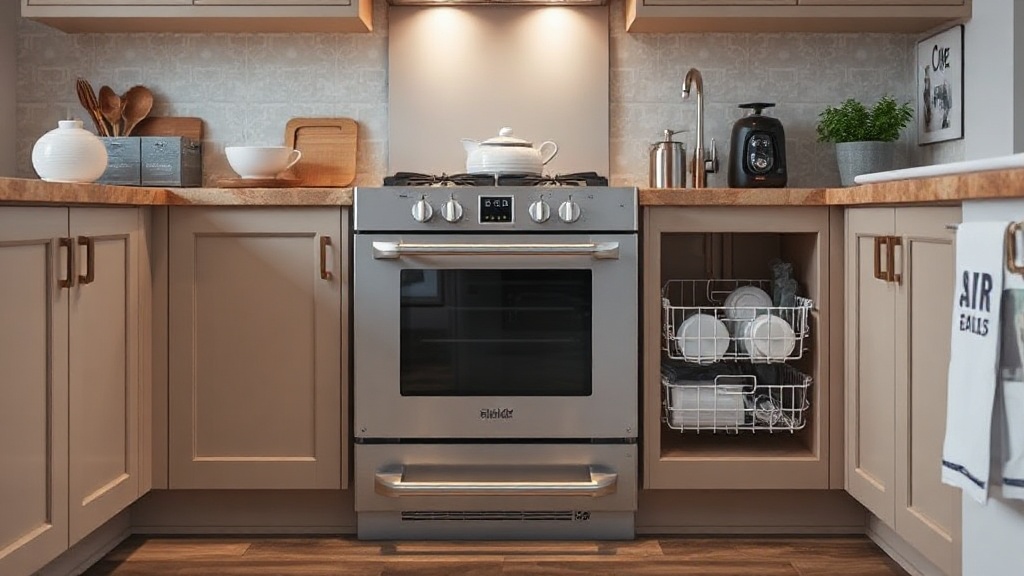
TL;DR: Kitchen appliance cover pays for the repair or replacement of ovens, hobs, dishwashers, fridges and fridge-freezers when they break down outside the manufacturer warranty. Cover can be arranged per appliance or across multiple machines under a single plan. Integrated and built-in appliances add complexity because a like-for-like replacement must also fit the cabinetry, which can push costs and claim handling beyond what freestanding appliance policies anticipate.
★ Featured Partner · Sponsored
Compare Insurance Quotes
Search and compare quotes from leading UK insurers. Quotezone's panel includes specialist insurers not always on the four major comparison sites.
Compare Quotes →What Kitchen Appliance Cover Addresses
Kitchen appliance cover is a form of home appliance breakdown protection designed specifically for the machines used in food preparation and storage. It sits outside standard home buildings and contents insurance, which typically excludes mechanical and electrical breakdown as a covered peril. When an oven element burns out, a dishwasher printed circuit board fails or a fridge compressor seizes, the policyholder can claim for labour, parts and, in some plans, the cost of full replacement if the appliance cannot be economically repaired.
The core promise of these plans is predictable cost management. Kitchen appliances are high-frequency items that operate daily. A dishwasher in an average household runs roughly 300 cycles a year. An oven may be used several hundred times annually. Repeated thermal cycling, water ingress, food residue and general wear produce a statistically reliable rate of failure over a five to ten year lifespan. Cover converts that unpredictable repair bill into a fixed monthly or annual premium.
It is worth distinguishing kitchen appliance cover from a retailer extended warranty and from a general home emergency policy. A retailer extended warranty prolongs the manufacturer guarantee, usually for one to three years, but it is tied to the original retailer and often excludes cosmetic damage, misuse and wear-and-tear. A home emergency policy is focused on plumbing, heating and electrical infrastructure, not kitchen machines. Kitchen appliance cover sits in a third category: standalone mechanical and electrical breakdown insurance regulated by the Financial Conduct Authority when offered as a contract of insurance, or governed by consumer protection legislation when structured as a service contract.
Appliances Typically Included
Policies written specifically for the kitchen normally cover the following categories. Exact inclusions vary by provider and plan tier.
Ovens and ranges are the most commonly covered item. This includes single and double electric ovens, gas ovens, range cookers and combination oven-microwave units. Fault categories commonly paid for include heating elements, thermostats, door hinges and seals, fan motors and control modules.
Hobs are often bundled with oven cover or available as a separate appliance line. Both gas hobs and induction or ceramic electric hobs are typically eligible. Spark igniters, thermocouple sensors and glass ceramic surfaces may or may not be included depending on whether the damage is classified as a breakdown or accidental damage, which is a different policy type.
Dishwashers are high-claim appliances. The combination of electrical components, water pressure and heat cycling creates multiple failure points. Covered elements generally include the pump and motor assembly, the printed circuit board, the door latch mechanism, water inlet valves and the heating element.
Fridges and fridge-freezers are included in most kitchen appliance plans. The compressor, thermostat, fan motor and door seals are the primary components. Some policies also provide a spoiled food benefit, typically between GBP 100 and GBP 300, if a fridge or freezer failure results in food loss above a threshold.
Freezers, whether standalone chest or upright models, follow similar coverage logic to fridges. Compressor and thermostat faults are the dominant claim types.
Microwaves are often included at the lower end of the cost scale. Magnetron failure and door interlock faults are the most common claims. Some providers exclude combination microwaves with convection and grill functions from their standard kitchen cover tier.
American-style fridge-freezers and range cookers with multiple cavities are generally covered under the same categories, although their higher replacement cost means providers may apply a higher policy excess or an economic repair threshold that is reached more quickly, triggering replacement rather than repair.
Common Kitchen Appliance Faults and Repair Costs
Understanding typical repair costs gives context to whether cover represents good value. The figures below reflect published and publicly available repair trade data for UK call-outs as at 2025 to 2026. Labour rates vary by region; London and the South East typically carry a 20 to 30 per cent premium over the national average.
| Appliance | Fault Type | Typical Repair Cost (GBP) | Notes |
|---|---|---|---|
| Oven | Heating element failure | 80 to 150 | Includes parts and one engineer visit; fan oven elements at the higher end |
| Oven | Thermostat fault | 70 to 140 | Electronic thermostats more costly than mechanical variants |
| Oven | Control board failure | 150 to 300 | High variance depending on appliance brand and part availability |
| Dishwasher | Printed circuit board (PCB) failure | 120 to 250 | Older models may have discontinued boards, prompting write-off |
| Dishwasher | Pump or motor assembly fault | 80 to 150 | Circulation pump and drain pump failures both covered under this category |
| Dishwasher | Heating element failure | 60 to 120 | Often diagnosed alongside pump faults in older machines |
| Fridge / fridge-freezer | Compressor failure | 150 to 300 | Labour-intensive; may exceed economic repair threshold on older units |
| Fridge / fridge-freezer | Thermostat fault | 80 to 140 | Frost-free models carry additional defrost sensor diagnostic costs |
| Fridge / fridge-freezer | Fan motor failure | 70 to 130 | Common in American-style models with multiple evaporator fans |
| Microwave | Magnetron failure | 60 to 150 | Part cost often exceeds appliance value on budget units |
These figures illustrate why a single oven PCB or fridge compressor repair can cost more than a year's premium on a comprehensive kitchen cover plan. For households running multiple appliances simultaneously, the probability that at least one appliance requires attention within a 12-month period is meaningful.
Inclusions and Exclusions in Detail
Most kitchen appliance cover plans are written around breakdown caused by an internal mechanical or electrical fault. The following items are routinely included across standard policy wordings.
Parts and labour for covered faults, including engineer call-out. Replacement of the whole appliance where repair is not economically viable, subject to the policy replacement limit or a contribution towards a new appliance. Diagnosis and inspection costs. In some tiers, a loaner appliance or food spoilage benefit for fridge and freezer failures.
Equally important are the exclusions. Accidental damage is nearly always excluded from a breakdown policy and requires a separate accidental damage endorsement or a dedicated home contents accidental damage extension. Cosmetic damage, scratches, dents and discolouration are excluded. Damage arising from incorrect installation, including appliances not installed by a qualified person where required by gas safety regulations or manufacturer specifications, is typically excluded. Faults caused by limescale, blockages or failure to maintain the appliance in accordance with the manufacturer manual are commonly excluded, as are faults caused by vermin, flood or fire.
Age limits are material. Many providers decline to offer cover on appliances over eight to ten years old. Some plans cover older appliances but apply a higher excess or restrict cover to labour and parts rather than replacement. It is important to check the age limit at the point of taking out a policy and at renewal, because an appliance crossing the age threshold may alter what the policy will pay.
Pre-existing faults are excluded under standard wording. An appliance showing signs of an existing fault at the point of cover inception will not be covered for that fault. Some providers include a qualifying or cooling-off period of 14 to 30 days during which no claims can be made, regardless of whether the fault is pre-existing.
Standalone Per-Appliance Cover Versus Multi-Appliance Plans
Cover can be structured in two principal ways: a standalone policy covering a single named appliance, or a multi-appliance plan covering a defined list of machines in the household.
Standalone per-appliance policies typically cost between GBP 5 and GBP 12 per month depending on the appliance type and its replacement value. An oven policy sits at the higher end of that range due to the relatively high cost of range cooker and built-in oven replacement. A microwave policy sits at the lower end. Standalone cover gives precise control: the policyholder chooses which appliances are worth insuring, usually based on age, replacement cost and how central the appliance is to daily life.
Multi-appliance plans extend across the kitchen and sometimes the whole home. These typically cost between GBP 15 and GBP 35 per month and cover four to eight specified appliances. The per-appliance cost within a bundle is lower, but the total premium is higher and the policyholder pays for cover on appliances that may be new or low-risk. The value case for a multi-appliance plan is strongest when several appliances were purchased simultaneously and will enter their higher-failure-rate years at roughly the same time, or when the administrative simplicity of a single policy with one renewal date is preferred.
Some providers offer tiered plans with a basic breakdown tier and an enhanced tier adding accidental damage and the food spoilage benefit. The upgrade cost is typically GBP 2 to GBP 5 per month per appliance and may be worth evaluating for fridge-freezers where food spoilage risk is real.
Integrated and Built-In Appliances: A Distinct Risk Category
Integrated appliances are fitted inside cabinetry with a furniture door attached, giving the kitchen a seamless appearance. Built-in appliances, such as a built-under oven or a built-in single oven in a tall housing unit, are fixed into a cabinet carcass and designed not to be moved. These categories create complications that standard freestanding appliance cover guides do not address adequately.
The first complication is installation. When a freestanding appliance is replaced, a delivery and installation crew removes the old unit and connects the new one with minimal structural work. When an integrated dishwasher or fridge is replaced, the furniture door must be removed and re-hung on the new appliance. If the new appliance's door hinge positions differ from the old one, which is common across different manufacturers and even different model years from the same manufacturer, new door mounting hardware is required and cabinetry adjustment may be needed. This installation work is typically not included in the cover plan's replacement benefit, which pays for the appliance itself, not for the surrounding joinery or adaptation work.
The second complication is dimensional matching. Kitchen cabinets are built to accommodate a specific appliance size, usually the standard 600 mm width. However, the height and depth of integrated appliances vary. An integrated fridge-freezer in a tall housing unit requires a replacement of a specific combined height. If the manufacturer has discontinued that model height, the closest available replacement may not fit the housing without carpentry work to modify the cabinet. Some premium cover plans provide a cash contribution towards installation and adaptation rather than a direct appliance replacement, which is a more honest response to this practical problem.
The third complication is like-for-like replacement value. A standard integrated appliance policy replacement limit may be set at GBP 300 to GBP 500. However, an integrated fridge-freezer in a fitted kitchen may have a replacement retail price of GBP 600 to GBP 1,200 before installation. If the policy pays a contribution rather than a full replacement, the policyholder meets the shortfall. This is a material difference from freestanding appliance replacement where a GBP 400 contribution covers a wide range of available models.
When assessing kitchen appliance cover for a home with integrated units, the policy wording on installation and adaptation costs is the single most important clause to examine. Some providers specify explicitly that installation of an integrated replacement is included and carried out by an approved engineer. Others specify that a cash settlement is paid and installation is the policyholder's responsibility. The latter is typically lower cost at the premium stage but creates a gap that materialises at claim time.
For built-in ovens in tall housing units, there is an additional consideration around hob and extractor compatibility. A built-in oven failure may prompt a kitchen redesign question if the existing oven model is discontinued and a replacement requires different electrical connection ratings or ventilation clearances. Cover plans do not typically address consequential works of this nature, and it is worth understanding that the claim payment covers the appliance unit, not the surrounding installation context.
How Claims Work in Practice
The claims process for kitchen appliance cover follows a broadly consistent pattern across providers. The policyholder reports the fault, usually by telephone or online portal. The provider arranges for an approved engineer to attend, often within a stated target window of 24 to 72 hours for priority calls. The engineer diagnoses the fault, confirms whether it is covered under the policy terms, and either carries out the repair on the visit or orders parts for a return visit. If the appliance cannot be repaired economically, the provider either supplies a replacement or pays a cash settlement up to the policy limit.
For integrated appliances, the claim process has an additional step. The engineer's report must typically confirm whether the replacement can be installed in the existing cabinet space and whether the furniture door can be re-hung. If adaptation is required, the claim handler decides whether this falls within the policy's installation benefit or whether it is excluded as cabinetry work. Getting clarity on this point before making a claim, by reading the policy wording carefully, avoids surprises.
Excess payments apply at claim stage. Typical excesses range from GBP 50 to GBP 100 per claim. Some policies apply a nil excess at lower premium tiers but compensate by paying a contribution rather than full cost on lower-value appliances. A policy with a GBP 75 excess and full replacement benefit may be preferable to a nil excess policy with a GBP 300 contribution limit when the covered appliance has a replacement cost above GBP 500.
Regulatory Framework and Consumer Protections
Kitchen appliance cover policies structured as contracts of insurance are regulated by the Financial Conduct Authority under the Financial Services and Markets Act 2000. The provider must be authorised by the FCA or an appointed representative of an authorised firm. Policyholders have access to the Financial Ombudsman Service if a claim is disputed and cannot be resolved through the provider's own complaints process. The Financial Services Compensation Scheme provides protection if the insurer becomes insolvent.
Where cover is structured as a service contract or maintenance plan rather than a contract of insurance, FCA regulation does not apply. Consumer rights under the Consumer Rights Act 2015 and the Consumer Contract Regulations 2013 still provide a baseline of protection, including the right to a 14-day cancellation period for contracts entered into at a distance. However, the Financial Ombudsman Service route is not available for service contracts, and the redress process in the event of a dispute is less structured.
Checking whether a provider is on the FCA register at register.fca.org.uk before purchasing is a straightforward step that confirms the regulatory status of the product being purchased.
Making an Informed Decision
Kitchen appliance cover is not a universal purchase. The case for it is strongest when appliances are outside manufacturer warranty and beyond the retailer extended warranty period, when the replacement cost of the appliance is meaningfully above the cumulative annual premium, when the appliance is integrated and replacement would carry installation costs beyond the appliance price alone, and when household cash flow makes a sudden GBP 150 to GBP 300 repair bill disruptive.
The case is weaker when the appliance is new or recently purchased with a manufacturer warranty still running, when the appliance is a low-cost freestanding model where replacement is cheaper than a multi-year premium, or when the household has savings set aside that can absorb an occasional repair bill.
Comparing the policy excess, replacement limit, installation benefit and age eligibility rules across providers is more informative than comparing headline monthly premiums alone. For integrated appliances specifically, the installation and adaptation clause is the clause that most frequently determines whether a claim pays out in full or leaves a gap.
Important: This article is general information about UK home appliance and home cover and does not constitute financial, insurance or legal advice. Policy terms, prices and statutory entitlements change over time and vary between providers. Always read the full policy documents and the relevant guidance from a qualified adviser or the named primary sources before making a decision.
Frequently asked questions
Does kitchen appliance cover pay for installation when an integrated dishwasher is replaced?
It depends on the specific policy wording. Some plans include installation of a like-for-like integrated replacement as part of the replacement benefit, carried out by an approved engineer. Others pay a cash settlement for the appliance only and treat installation as the policyholder's responsibility. Checking this clause before purchasing is important because installation of an integrated appliance, including re-hanging the furniture door and any adaptation work, can add GBP 100 to GBP 250 to the total replacement cost.
Can I get cover for a built-in oven that is more than eight years old?
Many providers set an upper age limit of eight to ten years for new policy applications. Some providers will cover older appliances but apply a higher excess, restrict the benefit to parts and labour rather than replacement, or offer cover on a case-by-case basis after an inspection. If the oven is near or above a provider's age threshold it is worth asking specifically whether the appliance qualifies before purchasing, rather than finding out at claim stage.
I have a fridge-freezer in an American-style integrated housing unit. Is the compressor covered?
Compressor failure is a standard covered fault under most kitchen appliance policies that include fridge-freezers. However, American-style fridge-freezers often have a higher replacement cost than standard models, and the policy replacement limit may not cover the full cost of a like-for-like replacement. It is worth checking the replacement limit and whether the policy pays the difference if the cheapest available equivalent exceeds that limit, or whether a fixed cash contribution is the maximum payout.
What is the difference between breakdown cover and accidental damage cover for kitchen appliances?
Breakdown cover pays for faults arising from internal mechanical or electrical failure: a component wears out or fails unexpectedly. Accidental damage cover pays for faults caused by a sudden external event, such as dropping a glass inside the oven door and cracking the glass panel, or a water spillage into the dishwasher control panel. Standard kitchen appliance breakdown cover does not include accidental damage. Some providers offer it as an optional add-on at additional cost, or it may be available under a home contents policy with accidental damage included.
Are pre-existing faults covered if I take out a policy today?
No. Pre-existing faults are excluded under standard kitchen appliance cover policy wording. A fault that was present before the policy inception date, or that develops during a qualifying or cooling-off period that some providers apply at the start of a policy, will not be covered. If an appliance is already showing signs of a fault, taking out cover will not provide retrospective protection for that issue.
Sources and further reading
- FCA: Consumer guidance on insurance products and how to check provider authorisation status
- Financial Ombudsman Service: Complaints about home appliance and home emergency insurance
- Citizens Advice: Consumer rights when a service is not carried out to the expected standard
- GOV.UK: Consumer Rights Act 2015 overview
- FCA Register: Check whether a financial services firm or product is authorised by the FCA


