
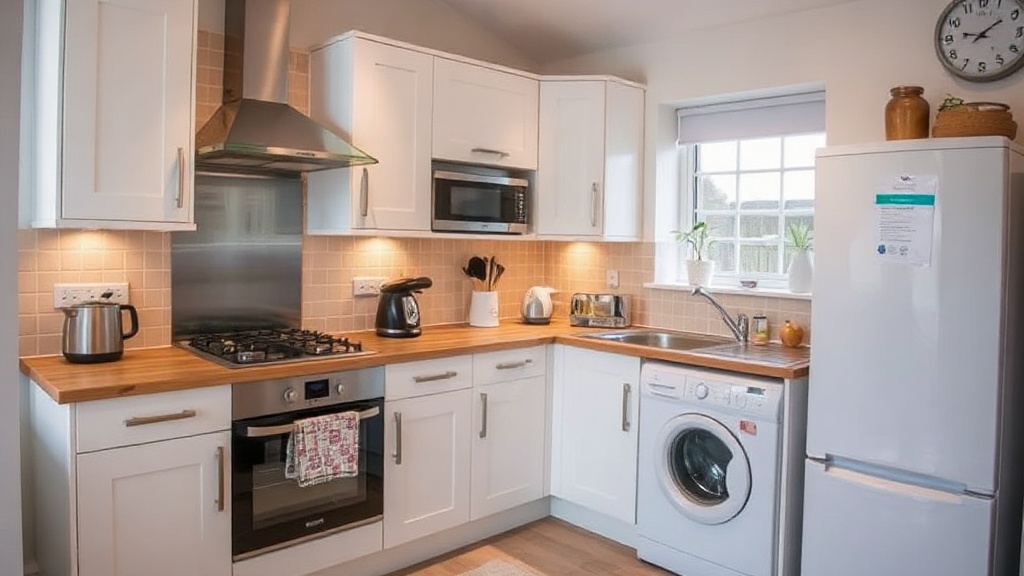
TL;DR: Landlord appliance cover is a specialist insurance product that pays for the repair or replacement of white goods and built-in appliances inside a rented property. Single-appliance policies typically cost between £5 and £15 per month, while multi-appliance plans covering four to six items run from around £20 to £50 per month. The cover sits separately from contents insurance and is not a legal requirement, but it can protect landlords from unexpected repair bills and help maintain a property that meets the fitness standards set out in the Homes (Fitness for Human Habitation) Act 2018.
★ Featured Partner · Sponsored
Compare Insurance Quotes
Search and compare quotes from leading UK insurers. Quotezone's panel includes specialist insurers not always on the four major comparison sites.
Compare Quotes →What Landlord Appliance Cover Is
Landlord appliance cover, sometimes marketed as landlord white goods insurance or landlord home appliance protection, is a service-and-insurance policy that pays for the diagnosis, repair, or replacement of domestic appliances supplied by a landlord inside a rented property. Unlike a standard home insurance policy, it is built specifically around the relationship between a landlord and tenant: the landlord is the policyholder, the property is the insured location, and the tenant is the end-user whose calls to a helpline trigger the claims process.
The cover typically works on a breakdown model rather than an accidental damage model. That means the policy responds when an appliance fails because of a mechanical or electrical fault, not because a tenant has dropped something heavy onto it or forced a drum door beyond its hinges. Some policies offer an optional accidental damage extension, but the core product focuses on wear-and-tear failures that arise over time in properties where landlords cannot monitor equipment daily.
Providers range from specialist landlord insurers and warranty companies to some of the larger energy suppliers that have moved into home services. Policies can be bought as standalone single-appliance protection, as a bundled multi-appliance plan, or as an add-on to a broader landlord home emergency policy. Each format has different pricing logic, claim limits, and renewal terms, which are covered in more detail below.
Who Typically Needs It
Not every landlord needs appliance cover. A landlord who lets a property unfurnished and supplies no appliances at all has no appliances to insure. The question becomes relevant only when a landlord has chosen, or is contractually required by a tenancy agreement, to supply items such as a washing machine, fridge-freezer, oven, dishwasher, or tumble dryer.
Furnished and semi-furnished lettings are common in city-centre flats, purpose-built student accommodation, and the mid-market rental sector. In those properties, a broken washing machine or a failed fridge is not merely an inconvenience: it can represent a breach of the quiet enjoyment obligation implied into every tenancy, and in a worst-case scenario it can contribute to conditions that fall below the fitness standard now codified in statute. Landlords in that position face a binary choice: maintain a repair fund large enough to absorb a replacement appliance at short notice, or transfer that financial risk to an insurer.
Landlords with larger portfolios often find multi-appliance or multi-property plans cost-effective because the risk is pooled across dozens of items. Portfolio landlords also cite the administrative benefit: a single helpline number rather than a directory of independent repairers, and a single renewal date to manage. For a single-property landlord, the calculus is closer, but appliance cover can still represent better value than relying on a manufacturer warranty, which typically expires after one or two years and does not transfer automatically when a property changes hands.
What Is Typically Included
The appliances most commonly covered by landlord white goods policies are the items found in a fitted kitchen or utility room: washing machines, fridge-freezers, ovens (both freestanding and built-in), dishwashers, and tumble dryers. Some policies also extend to electric cookers, hobs, extractor fans, and washer-dryers as combinations. Less frequently, cover extends to built-in microwaves or American-style fridge-freezers, though age restrictions often apply to larger or premium appliances.
Within each appliance category, policies distinguish between parts and labour on one hand, and replacement on the other. Most mid-market plans cover the cost of a qualified engineer's callout, parts up to a stated limit (often £500 to £1,000 per claim), and the labour to fit them. Replacement becomes relevant when an engineer deems the appliance beyond economic repair, typically defined as a situation where the repair cost would exceed a fixed percentage of the appliance's current market value. Some policies replace like-for-like; others pay a cash settlement based on the depreciated value of the failed unit.
Boilers and central heating systems are normally excluded from appliance cover and sit within a separate landlord boiler or home emergency policy. Gas safety is governed by a distinct regulatory regime under the Gas Safety (Installation and Use) Regulations 1998, which require landlords to arrange annual gas safety checks by a Gas Safe Register-enrolled engineer. Appliance cover policies typically acknowledge this boundary explicitly and will not respond to a gas appliance fault unless electrical or mechanical components rather than gas pipework are at issue.
How It Differs from Contents Insurance
The distinction between appliance cover and landlord contents insurance is a source of confusion. Landlord contents insurance is designed to protect the landlord's physical belongings inside the property: furniture, carpets, curtains, white goods, and any other items the landlord owns and supplies as part of the letting. It typically responds to risks such as fire, flood, theft, and malicious damage by tenants. Breakdown is almost never included in a standard contents policy, and most contents insurers explicitly exclude mechanical or electrical failure.
Appliance cover, by contrast, responds specifically and almost exclusively to breakdown events. It will not pay out if a washing machine is stolen or destroyed in a fire; those are contents insurance events. It will pay out if the drum bearing seizes, the heating element burns out, or the control board fails, because those are breakdown events.
The practical implication is that the two products are not substitutes but complements. A well-structured landlord insurance arrangement will include buildings insurance, landlord contents insurance, liability cover, and, where appropriate, appliance breakdown cover. Each layer protects against a different category of loss. Treating contents insurance as a substitute for appliance cover, or assuming that a home emergency policy automatically covers appliance repair, is a common gap that leads to uncovered claims.
Legal Obligations Landlords Must Understand
Appliance cover is not a legal requirement, but the legal context in which landlords operate makes its absence riskier than it might first appear. Several pieces of legislation create obligations that an appliance failure can put in jeopardy.
The Landlord and Tenant Act 1985
Section 11 of the Landlord and Tenant Act 1985 imposes a duty on landlords to keep in repair and proper working order the installations in a dwelling-house for the supply of water, gas, electricity, sanitation, space heating, and water heating. This statutory repairing obligation applies automatically to most assured shorthold tenancies regardless of what the tenancy agreement says. While the Act's primary focus is on fixed installations rather than freestanding appliances, a built-in oven wired into the electrical supply or a plumbed-in washing machine can fall within scope, particularly where the tenancy agreement includes them as part of the let. Legal commentary and case law has generally taken the view that items the landlord has agreed to maintain form part of the repairing obligation even if they sit outside the strict wording of section 11.
The Homes (Fitness for Human Habitation) Act 2018
The Homes (Fitness for Human Habitation) Act 2018, which amended the Landlord and Tenant Act 1985 by inserting sections 9A to 9C, requires that a rented property be fit for human habitation at the outset of the tenancy and throughout. The Act lists a series of hazards, drawn from the Housing Health and Safety Rating System, that a court may consider when assessing fitness. These include excess cold, damp, and the presence of hazardous conditions. A landlord who allows a heating appliance to remain out of service for an extended period, or who leaves a tenant without the means to wash clothes or refrigerate food, may face a claim under this Act. Tenants have a right of action in the county court without having to go through the local authority, which reduces the practical barrier to enforcement.
The Gas Safety (Installation and Use) Regulations 1998
The Gas Safety (Installation and Use) Regulations 1998 require landlords to ensure that all gas appliances, fittings, and flues at a rented property are maintained in a safe condition. An annual gas safety check must be carried out by an engineer registered on the Gas Safe Register, and a copy of the resulting gas safety record must be provided to tenants within 28 days of the check or before they move in. A landlord who fails to comply faces criminal prosecution and can be disqualified from recovering possession through a section 21 notice. Appliance cover does not substitute for gas safety compliance, but some multi-appliance policies include an annual gas safety check as a bundled benefit, which can be administratively useful for landlords managing several properties.
Typical Costs
Pricing for landlord appliance cover varies considerably depending on the number of appliances covered, their age, the level of excess applied, and the provider's claims track record. The following figures represent a broad market overview based on publicly available policy schedules and comparison data as of mid-2026.
Single-appliance policies, covering one item such as a washing machine or a fridge-freezer, typically cost between £5 and £15 per month. The lower end of that range tends to apply to newer appliances (under five years old) covered by a no-frills plan with a moderate excess of £50 to £100. The upper end reflects older appliances or policies that include replacement rather than repair-only cover.
Multi-appliance plans covering between four and six items generally fall in the range of £20 to £50 per month for a single property. Policies at the lower end may exclude certain appliance categories or impose lower parts limits per claim. Policies at the upper end often include additional benefits such as an annual gas safety check, landlord home emergency cover for plumbing or drainage, and a faster guaranteed callout response time.
Portfolio landlords covering multiple properties can sometimes negotiate a per-property or per-appliance discount, with specialist providers offering portfolio pricing from around £15 to £35 per month per property for a standard multi-appliance package.
Appliance Cover Cost and Coverage Comparison
The table below summarises the key differences between single-appliance and multi-appliance landlord cover to help illustrate what each format typically includes and how costs compare.
| Feature | Single-Appliance Cover | Multi-Appliance Cover (4-6 items) |
|---|---|---|
| Typical monthly cost | £5 to £15 | £20 to £50 |
| Appliances covered | One item selected at purchase | Four to six items listed in schedule |
| Parts limit per claim | £300 to £500 typical | £500 to £1,000 typical |
| Labour included | Yes (standard plans) | Yes (standard plans) |
| Replacement cover | Optional, increases cost | Often included above threshold |
| Annual callout cap | 1 to 2 callouts per appliance | 2 to 4 callouts across all appliances |
| Waiting period | 14 to 30 days typical | 14 to 30 days typical |
| Age limit for appliances | Up to 8 to 10 years typical | Up to 8 to 10 years typical |
| Gas safety check included | No | Sometimes, as bundled benefit |
| Home emergency add-on available | Rarely | Often |
Key Policy Variables to Examine
Not all appliance cover policies are structured identically, and the differences between them matter significantly when a claim arises. Understanding the key variables before purchase helps avoid gaps in cover.
Age Limits
Most policies impose an age limit on the appliances they will cover, typically between eight and ten years from the date of manufacture. An appliance older than the policy limit cannot be added to a new plan, and an appliance that reaches the age limit mid-policy may be excluded from renewal. Landlords with older stock should check policy wordings carefully, as some providers apply an age limit from the date of installation in the property rather than the manufacturer's build date, which can create ambiguity.
Excess
The policy excess is the amount the landlord contributes toward each successful claim before the insurer pays the remainder. Excesses on appliance cover policies range from nil to £150 per claim, with zero-excess products carrying noticeably higher monthly premiums. A modest excess of £50 to £75 is common on mid-range policies and helps keep premiums manageable while ensuring a small financial filter on minor claims.
Callout Caps
Many policies restrict the number of engineer callouts permitted per appliance per year, commonly one or two. Once the callout limit is reached, further claims on that appliance in that policy year are declined regardless of the fault type. Policies that allow unlimited callouts tend to cost more but offer greater certainty for landlords with older or heavily used appliances.
Replacement Terms
When an engineer declares an appliance beyond economic repair, policies differ in how they respond. Some pay a cash settlement based on the current second-hand value of the failed appliance, which may be significantly less than the cost of a new equivalent. Others replace like-for-like with a new appliance of similar specification, subject to availability. A third approach offers a fixed voucher amount, such as £250 or £350, toward a replacement, leaving the landlord to fund any shortfall. The replacement terms should be read alongside the parts limit: a policy with a £300 parts limit and a £200 replacement voucher leaves a meaningful gap if the replacement cost of a mid-range washing machine is £450 or more.
Waiting Periods
Most appliance cover policies include a waiting period of between 14 and 30 days from the start of cover before a claim can be made. This prevents landlords from taking out a policy the day after an appliance fails. Policies that are bundled with broader landlord insurance packages sometimes waive or reduce the waiting period as a commercial incentive, but this is not universal.
Pre-existing Faults
Appliance cover does not cover faults that existed or were in development before the policy inception date. Most policies require that the appliance be in full working order when cover begins. Some providers carry out an inspection or ask the landlord to self-certify the appliance's condition; others rely on the claims assessment to determine whether a fault was pre-existing. A disputed pre-existing fault is one of the most common reasons for a declined claim, and landlords should consider having appliances serviced or inspected before taking out cover on older units.
How Home Emergency Cover Complements Appliance Cover
Home emergency cover addresses urgent situations that make a property uninhabitable or unsafe: burst pipes, failed boilers, loss of electrical power, broken locks, and similar crises that require an engineer at short notice, often outside normal business hours. It sits alongside appliance cover rather than overlapping with it in any meaningful way.
The practical benefit of combining the two products is access to a single helpline and dispatch network for the full range of property emergencies, from a flooding washing machine hose (a home emergency event) to a broken drum bearing in the same washing machine (an appliance breakdown event). Some landlord insurance providers bundle home emergency and appliance cover into a single policy, which simplifies administration and can reduce the total cost compared to buying the products separately.
Landlords should check, when combining products, that there is no gap or overlap in the definitions of covered events. A washing machine flood that damages flooring sits in neither product unless the home emergency policy explicitly covers trace and access or the contents policy covers water damage. Understanding where each policy starts and stops prevents unwelcome surprises at the point of claim.
Multi-Appliance Options for Portfolio Landlords
Portfolio landlords managing five or more properties increasingly look for cover that scales with their holdings without requiring a separate policy for each address. Several specialist insurers and warranty providers have developed products tailored to this market, typically offering a single policy document, a single renewal date, and a per-property or per-appliance pricing structure that becomes more competitive as the portfolio grows.
Key features to look for in a portfolio product include a named-peril or all-appliance schedule that lists every covered item across every property, an online claims portal that allows individual tenants or letting agents to log faults directly, and a replacement policy that applies a consistent standard across all properties rather than negotiating terms claim by claim. Some providers offer a dedicated account manager for portfolios above a certain size, which can be useful when dealing with multiple concurrent claims or when adding new properties mid-term.
Letting agents who manage properties on behalf of landlords sometimes arrange appliance cover as part of a broader property management package. In those arrangements, the agent may be the named policyholder, or the policy may be placed in the landlord's name with the agent as an authorised contact. Landlords using an agent should confirm in writing who holds the policy, who is responsible for premium payment, and how claims notifications are communicated back to the landlord, to avoid delays or miscommunications when a tenant reports a fault.
Practical Steps Before Taking Out a Policy
Before committing to an appliance cover plan, a systematic approach to the existing appliance stock can prevent both overpaying and underinsuring. A simple inventory of all appliances across each property, recording the make, model, approximate age, and current condition, provides the information needed to assess which items fall within a policy's age limits and whether any are likely to be in a pre-existing fault state.
Comparing policies on the basis of total annual cost, excess per claim, callout caps, replacement terms, and parts limits rather than monthly premium alone gives a more accurate picture of value. A policy with a low headline premium but a high excess and a low parts limit may cost more in practice over a two-year period than a policy with a slightly higher premium and more generous claim terms.
Checking that a potential provider is authorised and regulated by the Financial Conduct Authority is a straightforward step that confirms the policy is a regulated insurance product subject to FCA conduct rules, including the obligation to handle claims fairly and within reasonable timeframes. The FCA's Financial Services Register, available on the FCA website, allows verification by firm name or registration number. Some appliance cover products are structured as service contracts rather than regulated insurance, which places them outside FCA oversight and removes access to the Financial Ombudsman Service in the event of a disputed claim.
Important: This article is general information about UK home appliance and home cover and does not constitute financial, insurance or legal advice. Policy terms, prices and statutory entitlements change over time and vary between providers. Always read the full policy documents and the relevant guidance from a qualified adviser or the named primary sources before making a decision.
Frequently asked questions
Is landlord appliance cover a legal requirement in the UK?
No. There is no statute or regulation that requires a landlord to hold appliance cover. The legal obligations that apply to landlords concern the condition and safety of the property and its fixed installations, principally under the Landlord and Tenant Act 1985, the Homes (Fitness for Human Habitation) Act 2018, and, where gas appliances are present, the Gas Safety (Installation and Use) Regulations 1998. Appliance cover is a commercial product that landlords may choose to buy in order to manage the financial risk of appliance breakdown, but the decision to purchase it is voluntary.
Does landlord contents insurance cover appliance breakdown?
Standard landlord contents insurance does not cover mechanical or electrical breakdown. Contents insurance is designed to pay for physical loss or damage caused by insured events such as fire, flood, theft, or malicious damage by tenants. An oven that stops heating because its element has burned out, or a washing machine whose bearings have seized, would not be covered by a contents policy. Appliance breakdown cover is a separate product that responds specifically to mechanical and electrical failure. The two products are complements rather than substitutes.
Can a landlord take out appliance cover on older appliances?
Most appliance cover policies impose an age limit of eight to ten years from the manufacture date. An appliance older than this limit generally cannot be included in a new policy. Some policies also require that the appliance be in full working order at the point cover begins, which means a pre-existing fault will not be covered even if the appliance is within the age limit. Landlords with older appliances may find that specialist providers apply slightly higher age thresholds, but cover for appliances over ten years old is uncommon in the standard market.
What is the difference between appliance cover and a home emergency policy?
Appliance cover responds to mechanical or electrical breakdown of named appliances such as washing machines, fridge-freezers, ovens, and dishwashers. Home emergency cover responds to urgent situations that make a property unsafe or uninhabitable, such as a burst pipe, a boiler failure in winter, a total loss of electrical power, or a broken external lock. The two products cover different types of events. Some insurers offer combined policies that include both, which can simplify administration for landlords, but the cover provided by each section remains distinct.
How does the Gas Safety (Installation and Use) Regulations 1998 interact with appliance cover?
The Gas Safety (Installation and Use) Regulations 1998 require landlords to arrange an annual gas safety check by a Gas Safe Register-enrolled engineer, maintain gas appliances and fittings in a safe condition, and provide tenants with a copy of the gas safety record within 28 days. These are statutory obligations that exist independently of any insurance product. Appliance cover does not fulfil the gas safety obligation, though some multi-appliance policies include an annual gas safety check as a bundled benefit. Landlords should confirm whether any such check meets the legal requirement and is carried out by a suitably registered engineer.
Sources and further reading
- Landlord and Tenant Act 1985, Section 11: Repairing obligations in short leases
- Homes (Fitness for Human Habitation) Act 2018
- Gas Safety (Installation and Use) Regulations 1998
- Gas Safe Register: Gas safety guidance for landlords
- Financial Conduct Authority: Financial Services Register
- Citizens Advice: Repairs in rented housing


