
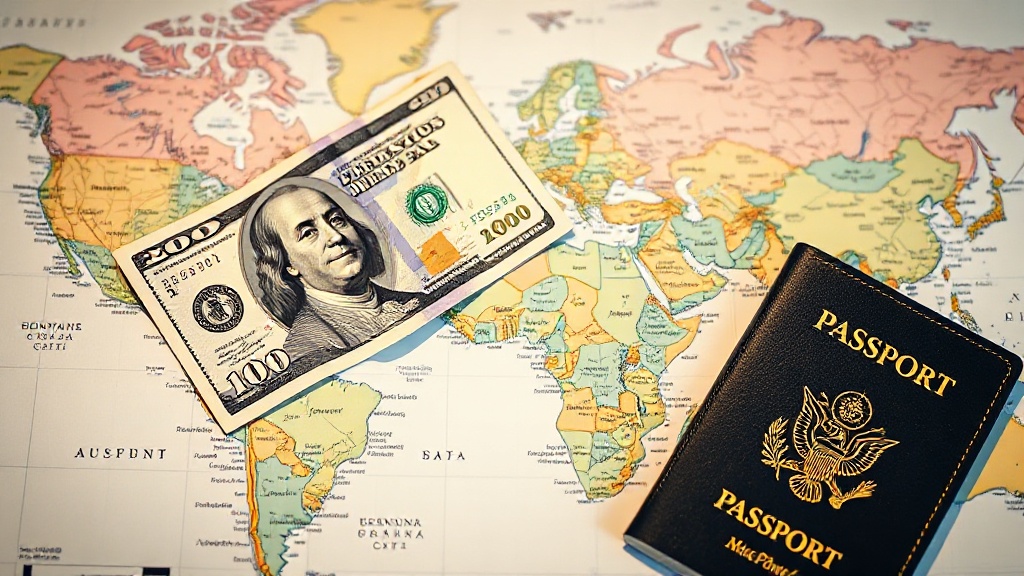
World Cup 2026 Travel Money Guide for UK Fans
Published 7 June 2026 | Sources: FCA, Bank of England, US CBP, FCDO
TL;DR
- A specialist travel debit or credit card with no foreign transaction fees is the lowest-cost way to spend in the USA, Canada, and Mexico.
- Airport and hotel currency exchange desks offer the worst rates available - avoid for any significant amount.
- US Customs requires declaration of cash or monetary instruments over $10,000 USD brought into the country - no upper limit on amount carried but declaration is mandatory.
- Contactless and card payment is accepted at all official World Cup 2026 venues - large cash holdings are not necessary for stadium spending.
- Dynamic currency conversion (DCC) at overseas terminals almost always results in a worse exchange rate - always choose to pay in local currency.
Last reviewed: 7 June 2026
The Best Cards for UK Fans in North America
For UK fans travelling to World Cup 2026 matches across the United States, Canada, and Mexico, a dedicated travel card or a current account with no foreign transaction fees provides the best value for day-to-day spending. The key metric to compare is whether the card applies a foreign transaction or non-sterling fee on overseas purchases, and whether the exchange rate applied is the interbank rate (mid-market rate) or a marked-up retail rate.
Providers including Starling Bank, Monzo, Chase UK, and Wise offer accounts or cards that charge no fees on overseas transactions and apply rates close to the interbank benchmark published by the Bank of England. Starling and Monzo apply the Mastercard exchange rate directly with no added margin. Wise applies its own mid-market rate, which is typically within 0.5% of the interbank rate. Chase UK applies the Visa rate with no additional foreign transaction fee.
Credit cards with travel benefits - such as those from Halifax Clarity, Barclaycard, or certain American Express products - also offer competitive overseas rates, though credit cards require full monthly repayment to avoid interest charges eroding the exchange rate benefit. The FCA requires credit card providers to disclose overseas transaction costs clearly at the point of application, making comparison straightforward via the FCA's consumer-facing tools.
Pre-Ordering Cash vs Using Cards
For situations where cash is preferred or necessary - smaller vendors, tips at US restaurants (where 18-20% tipping is standard and expected), or transport between venues - pre-ordering US dollars before departure typically secures a better rate than airport exchange desks. The Post Office Travel Money, Travelex with pre-order, and comparison services such as FairFX offer rates that are generally within 2-3% of the interbank rate when ordered online for collection or delivery.
Airport currency exchange desks apply wide margins due to the captive nature of demand at point of departure. The margin at Heathrow's main currency exchange services has historically run at 8-15% above the interbank rate for US dollar transactions. For a fan exchanging £500 for dollars, the difference between an airport desk and a pre-ordered online rate can amount to £40 to £75 in lost value.
US dollars are widely accepted at face value in all three host nations in tourist and stadium areas. Carrying a mixture of pre-ordered dollars for tips and incidentals, plus a no-fee travel card for larger purchases, provides the most cost-effective coverage without carrying excessive cash.
Canada and Mexico Specific Currency Considerations
Fans attending matches in Canadian venues - including Toronto and Vancouver - should note that Canadian dollars (CAD) are a separate currency. While US dollars are accepted informally in some Canadian tourist venues, exchange rates offered at point of acceptance are typically unfavourable. The same no-fee card approach applies, with Wise and Starling offering competitive CAD conversion.
Mexico operates primarily in Mexican pesos (MXN), though US dollars are widely accepted in tourist areas and around stadium venues. The FCDO travel guidance for Mexico advises carrying some local currency for transport and markets outside the main tourist zones. ATMs in Mexico typically dispense pesos and apply a per-transaction fee - using a no-fee card that reimburses ATM charges, or withdrawing larger amounts less frequently, reduces this cost.
US Customs Cash Declaration Rules
US Customs and Border Protection (CBP) requires all travellers entering the United States to declare cash or monetary instruments - including cheques, travellers' cheques, and money orders - where the total carried exceeds $10,000 USD or the equivalent in any currency. This is a mandatory declaration requirement, not a prohibition on the amount carried. Failure to declare amounts over $10,000 can result in civil forfeiture of the funds under US anti-money laundering law, regardless of the legitimate purpose for carrying the cash.
UK fans carrying significant cash for the tournament should complete FinCEN Form 105 at the US port of entry. The form is available from CBP officers on arrival. Fans carrying amounts close to the $10,000 threshold in mixed currencies should calculate the total value in USD using the prevailing exchange rate before arrival to determine whether declaration is required.
Avoiding Dynamic Currency Conversion
Dynamic currency conversion (DCC) is a practice where overseas card terminals offer to process a transaction in the cardholder's home currency - sterling for UK visitors - rather than in the local currency. This is presented as a convenience but is almost universally disadvantageous. The exchange rate applied by the merchant's acquiring bank for DCC is typically 3-8% worse than the rate applied by the cardholder's own bank for a local currency transaction.
When a terminal offers a choice between sterling and local currency, always select local currency. The cardholder's own bank then applies its standard exchange rate - which for no-fee travel cards is the interbank rate - rather than the DCC operator's marked-up rate. The FCA includes DCC awareness in its overseas payment consumer guidance and advises consumers to decline DCC offers consistently.
Related Guides
Frequently Asked Questions
What is the best card to use in the USA for World Cup 2026?
Cards with no foreign transaction fees and interbank exchange rates provide the best value. Starling Bank, Monzo, Chase UK, and Wise are consistently competitive options for US dollar spending. Compare current account features at the time of travel as product terms can change.
Do World Cup venues in the USA accept contactless payment?
Yes. FIFA and the host venue operators have confirmed cashless payment infrastructure across all official World Cup 2026 venues in the United States. Visa and Mastercard contactless are accepted. Carrying some cash in small denominations remains advisable for transport and smaller vendors near venues where card acceptance may be inconsistent.
Can UK fans carry pounds into the USA and exchange there?
Yes. Sterling can be exchanged at US banks, currency exchange bureaux, and some hotels. Rates at airport and hotel exchanges are typically unfavourable. Pre-ordering currency before departure or using a no-fee card for most spending is generally more cost-effective than exchanging cash on arrival in the USA.
What tipping is expected at World Cup venues and nearby restaurants?
Tipping at 18-20% is standard and expected at sit-down restaurants in the United States. Tipping at bars is typically $1-2 per drink. Stadium concessions may have tip prompts on card terminals - these are optional but common. Budgeting for tips as an additional 18-20% on food and beverage spending gives an accurate picture of out-of-pocket costs.
|
★ Featured Partner · Sponsored Compare Insurance Quotes Search and compare quotes from leading UK insurers. Quotezone's panel includes specialist insurers not always on the four major comparison sites. Compare Quotes → |


